Shodai Bizen Yasumitsu (備前康光) traces his lineage to Shigeyoshi (重吉) of the Kagen era (嘉元) of 1303, who descends from Mitsutada (光忠). Shigeyoshi (重吉) was the son of Kagehide (景秀) of the Kamakura era. During the Oei era (応永) beginning in about 1394, we find a sudden flourish of excellent sword making by Yasumitsu (康光) and Morimitsu (盛光) and Moromitsu (師光) . There were several generations of smiths in Bizen by the name of Yasumitsu (康光) but the shodaiis considered to have been the most skilled. Most of his works are signed in two characters but he did use a longer mei on occasion.
Yasumitsu (康光) worked from the latter part of the Oei era (応永 1394-1428) into the Eikyo era (永亨1429-1441) and the majority of his works will be dated. Yasumitsu(康光), together with the smiths Morimitsu(盛光) and Moromitsu(師光),were known as the Oei no san mitsu (応永の三光) smiths and all are considered very famous and excellent. The nidai Yasumitsu (康光) followed the shodai in the Eikyo era (永亨 1429-1441). It is thought that there were an additional two generations of Yasumitsu (康光) smiths but works by the generations after the nidai are not often seen.
The smiths, Yasumitsu (康光) and Morimitsu(盛光) are both regarded as the most skilled and representative smiths of the Oei Bizen (応永備前) period. Their works are very similar and differentiating between the two smiths can be very difficult. While there are a great many examples surviving from both of these smiths, there are a greater number of works of Morimitsu(盛光) remaining than those of Yasumitsu (康光). There are good pieces among the niji-mei works of both smiths.
The following are some of the major characteristics of Yasumitsu (康光) and the Oei-Bizen (応永備前) school:
SUGATA: There are tachi, katana, and wakizashi of both shinogi-zukuri and hira-zukuri, but tanto of less than 30 cm in length are rare. There are no extant examples of nagamaki. The exaggerated and ostentatious sugata that was in fashion in the preceding Nanbokucho period disappeared and was replaced by thinner blades exhibiting a pronounced saki-zori. These smiths seem to have set out to copy the tachi sugata of the Kamakura period, but theirs is differentiated by a shallow saki-zori. The nagasa is about 70 cm in tachi, and 50 cm in wakizashi. The large scale production of katanaand wakizashi was begun in this period. Katana are similar to tachi, but their saki-zori is deeper and the nagasa is shorter than seen in tachi.
Wakizashi generally have a narrow mihaba, small kissaki, and saki-zori. The nagasa of hira-zukuriko-wakizashi became longer than in the preceding period, but the mihaba grew narrower and the sori is very shallow, sometimes even mu-zori.
JIHADA: The jigane is soft and the jihada is generally itame hada with some areas of mokume-hada mixed with o-hada. Clear bo-utsuri and midare utsuri appears. Sometimes even when the hamon is midareba, the utsuri can be bo-utsuri, but midare utsuri is also seen on blades with this hamon. An important kantei point of the Shodai Yasumitsu is the fact that one often finds areas of partially straight grains mixed in with the typical itame.
HAMON: The hamon is nioi based. The thick nioi line is soft and hajimi (misty spots) are seen inside thehamon at times. The shape tends to be koshi-no-hiriata midare (hamon elements that widen near their base) mixed with choji-midare. Also suguha mixed with ko-midare is also seen. One also notices the Oei trait of a wide spacing between the midare patterns.
HORIMONO: Bo-hi with soe-hi or tsure-hi are is finished around the machi. Horimono are often seen on wakizashi, with the same design often appearing on both sides of the blade. Ken-maki-ryu or the names of the gods and deities are engraved on the omote and ken with dokko, tsume, or bonji on the ura, while bo-hi with soe-hi or tsure-hi whose bottoms are maru-dome are usually engraved in the above horimono.
NAKAGO: Shorter and less tapered nakago with kurijiri. Naga-mei (long signature) including the date is found but a great many swords have only the niji mei Yasumitsu (康光). Because of the great number of katana, wakizashi and tanto produced, the katana-mei became common yet tachi-mei is still found on tachi as is appropriate.
MEI:
BISHÛ OSAFUNE YASUMITSU 備州長船康光
BISHÛ OSAFUNE JÛ UEMONNOJÔ YASUMITSU 備州長船住右衛門尉康光
YASUMITSU 康光
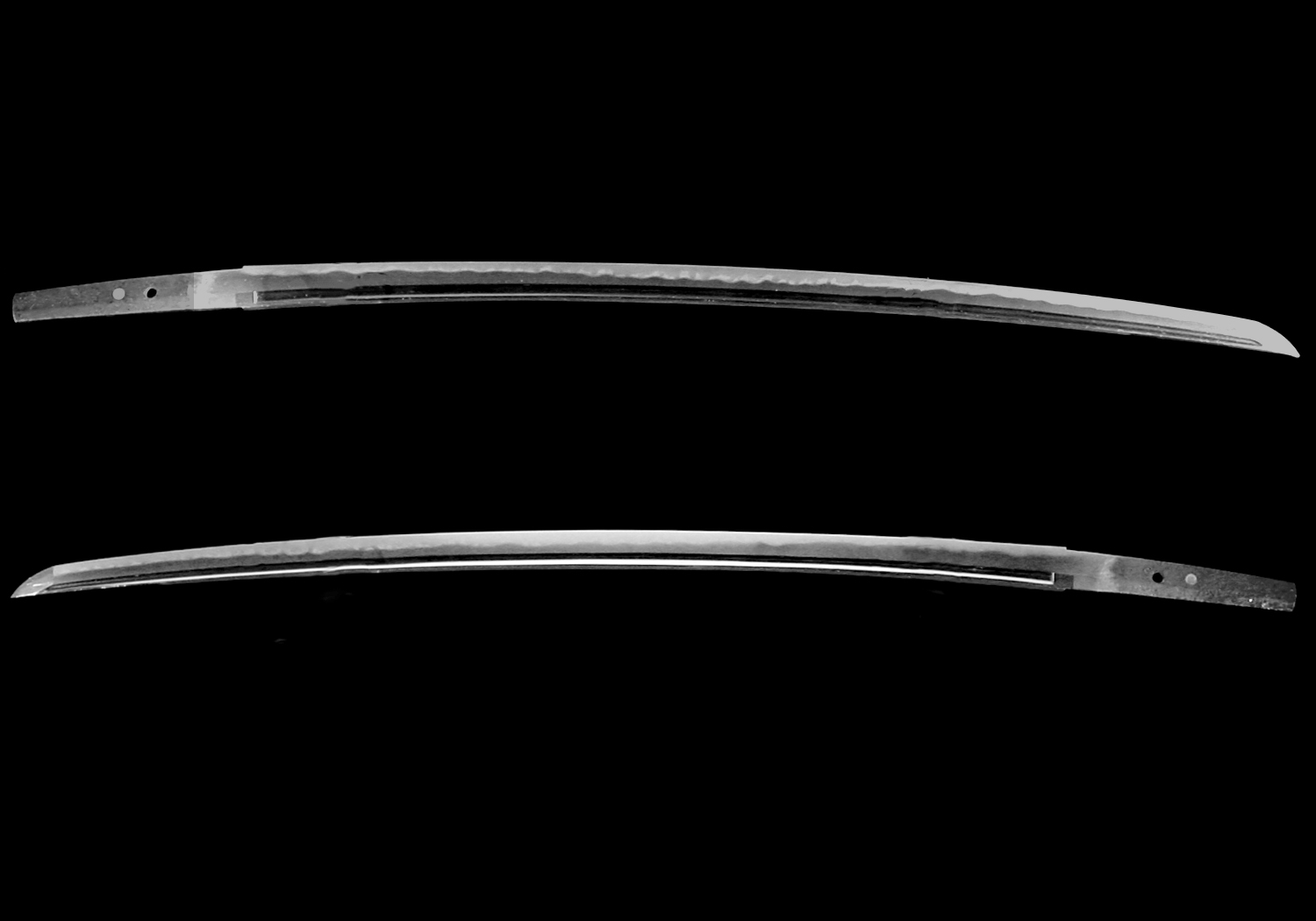
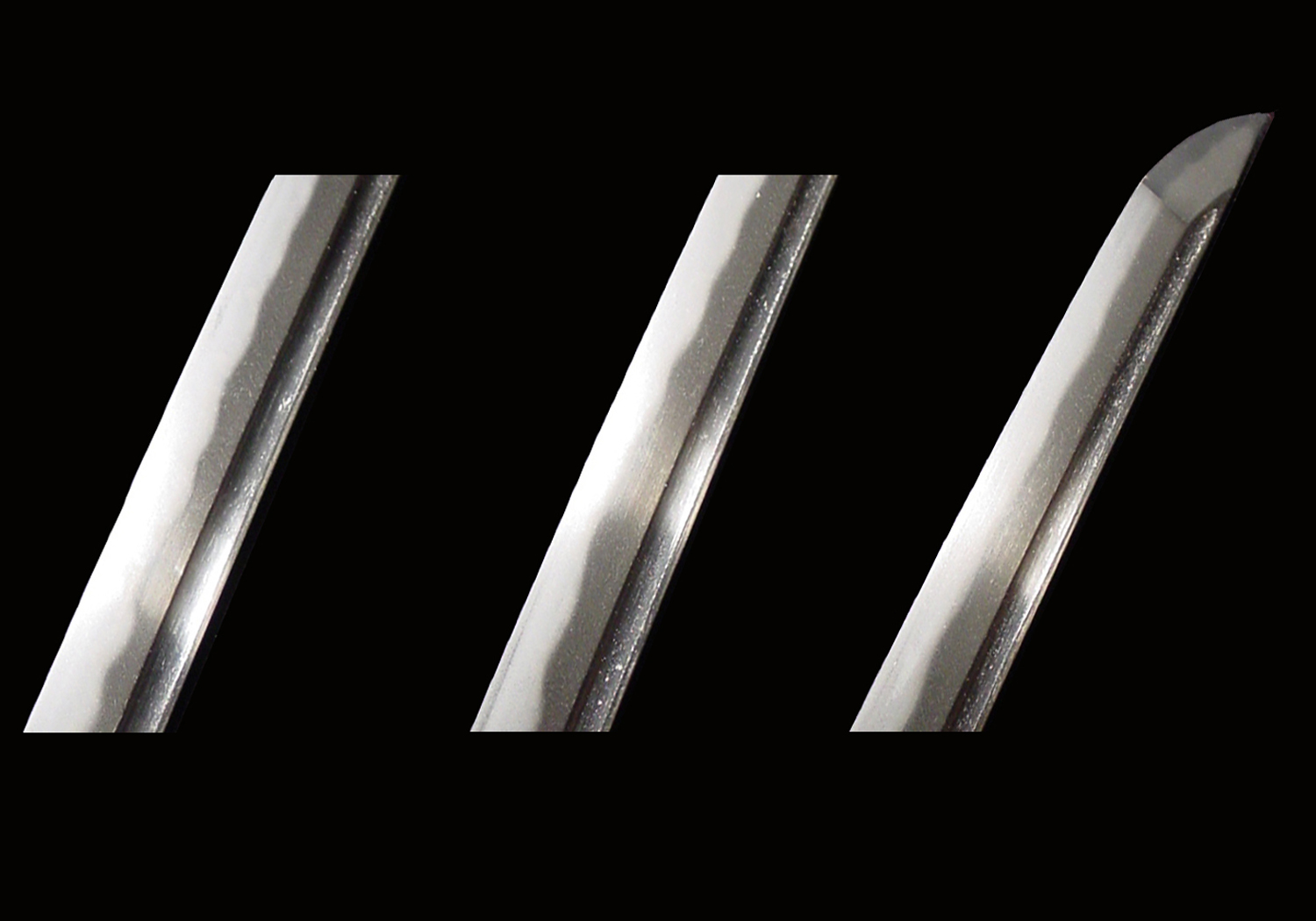
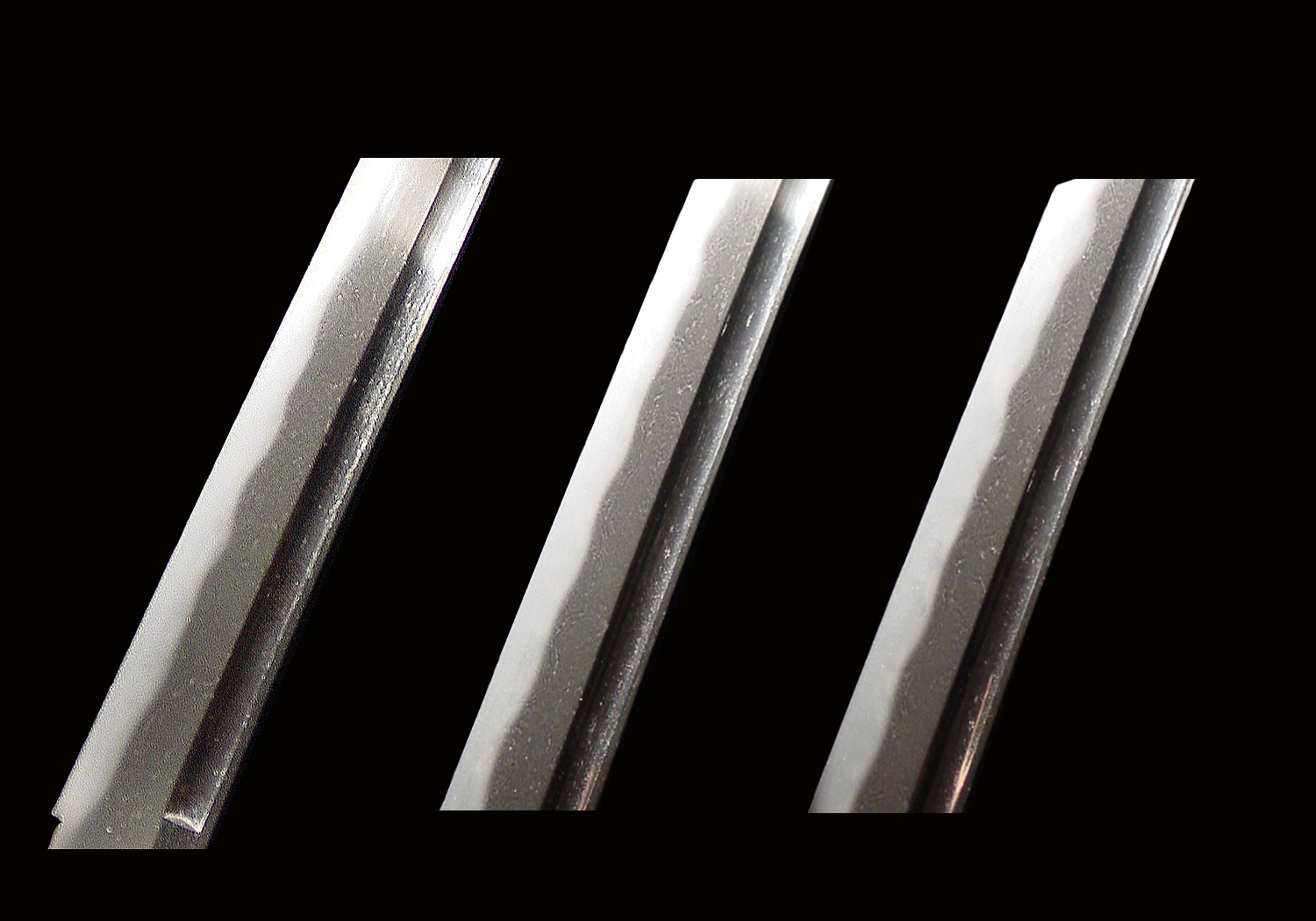
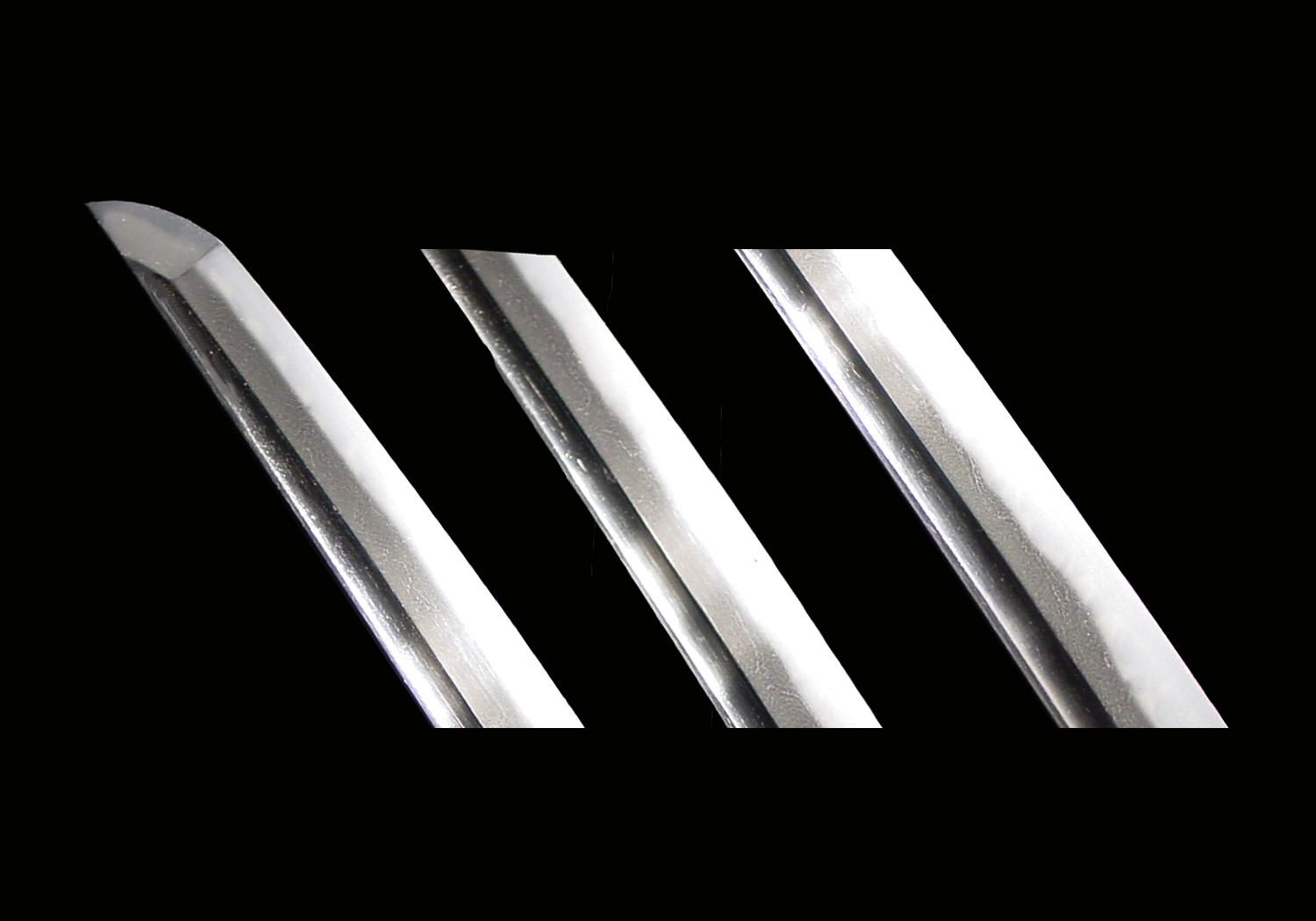
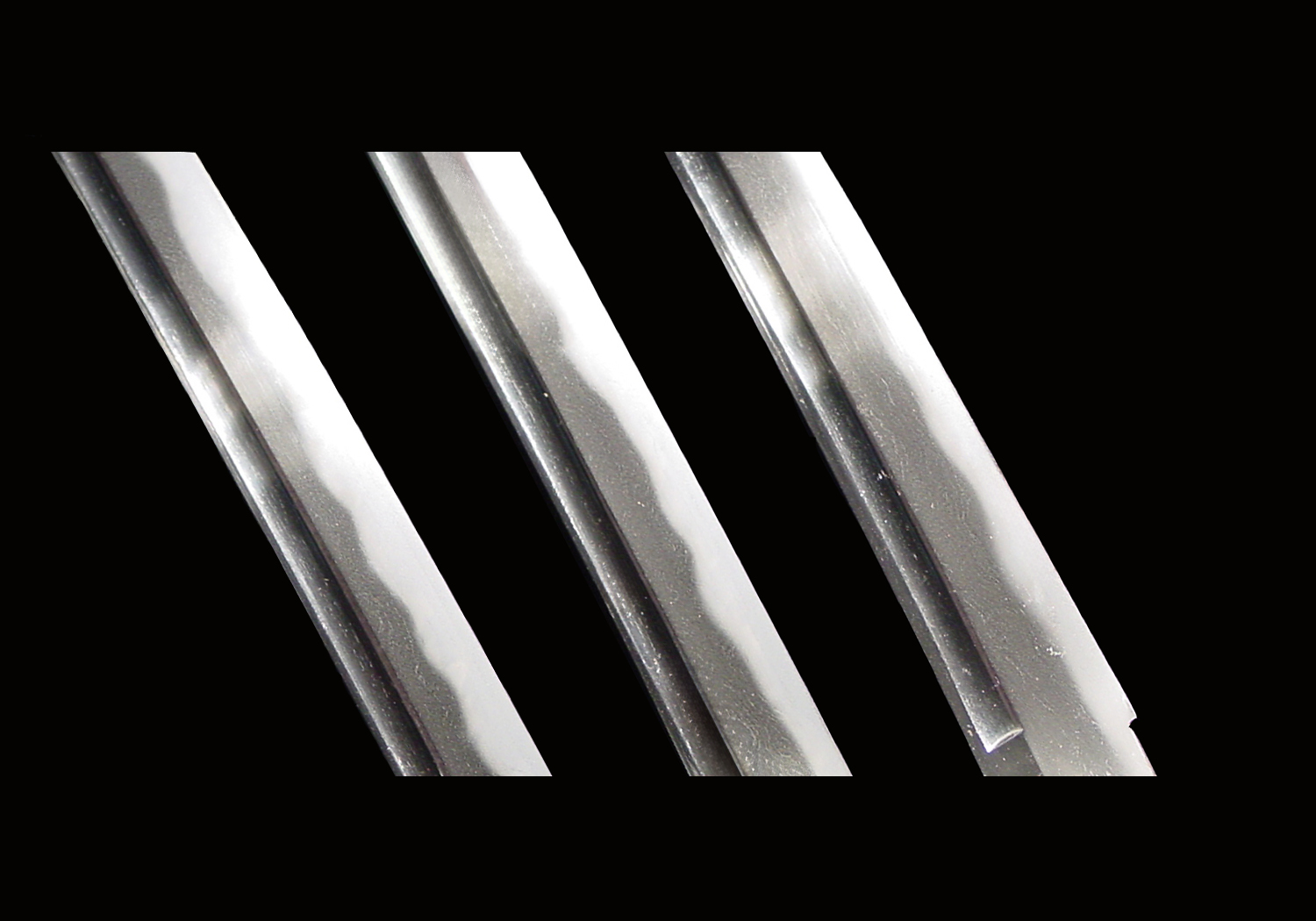
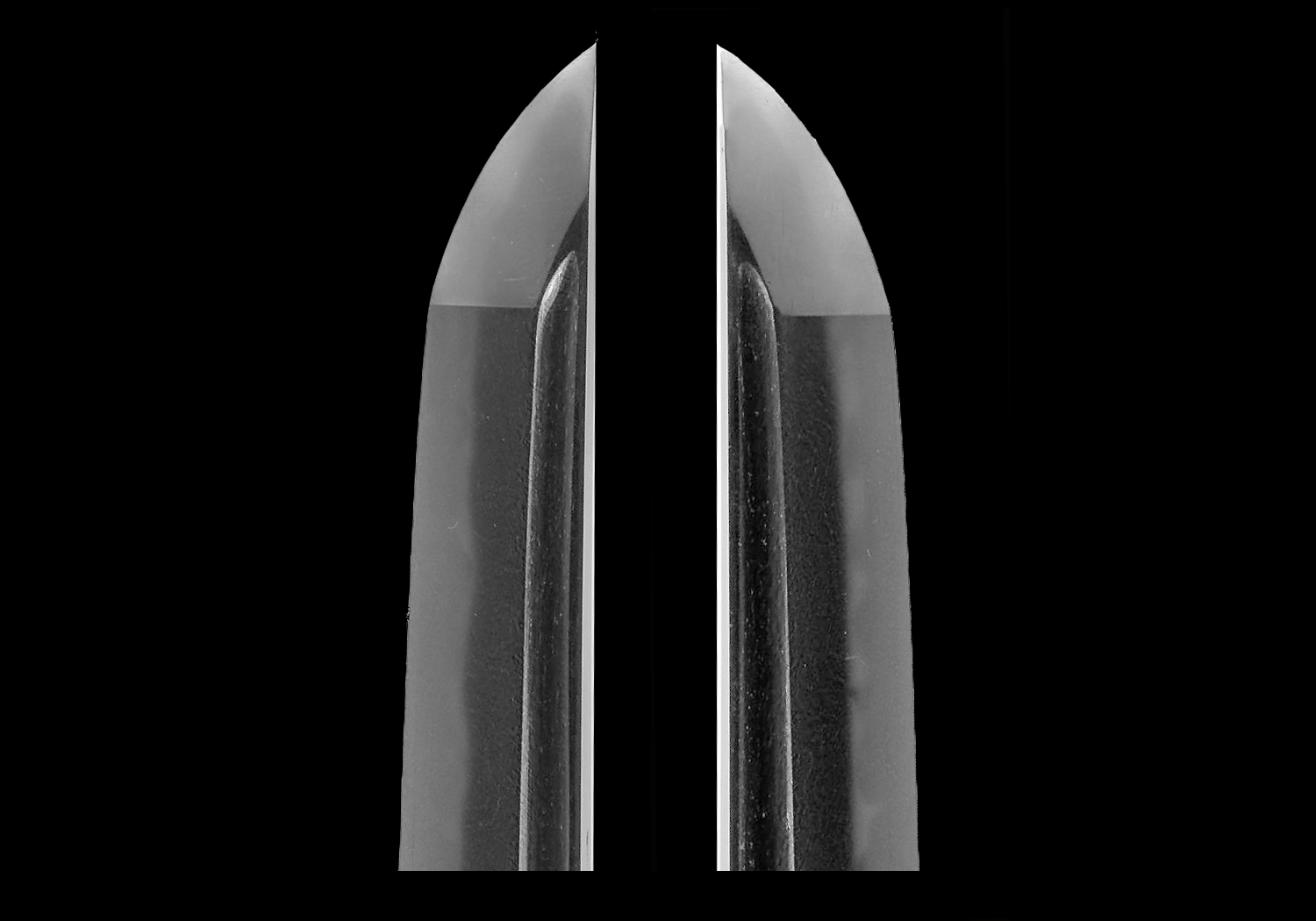
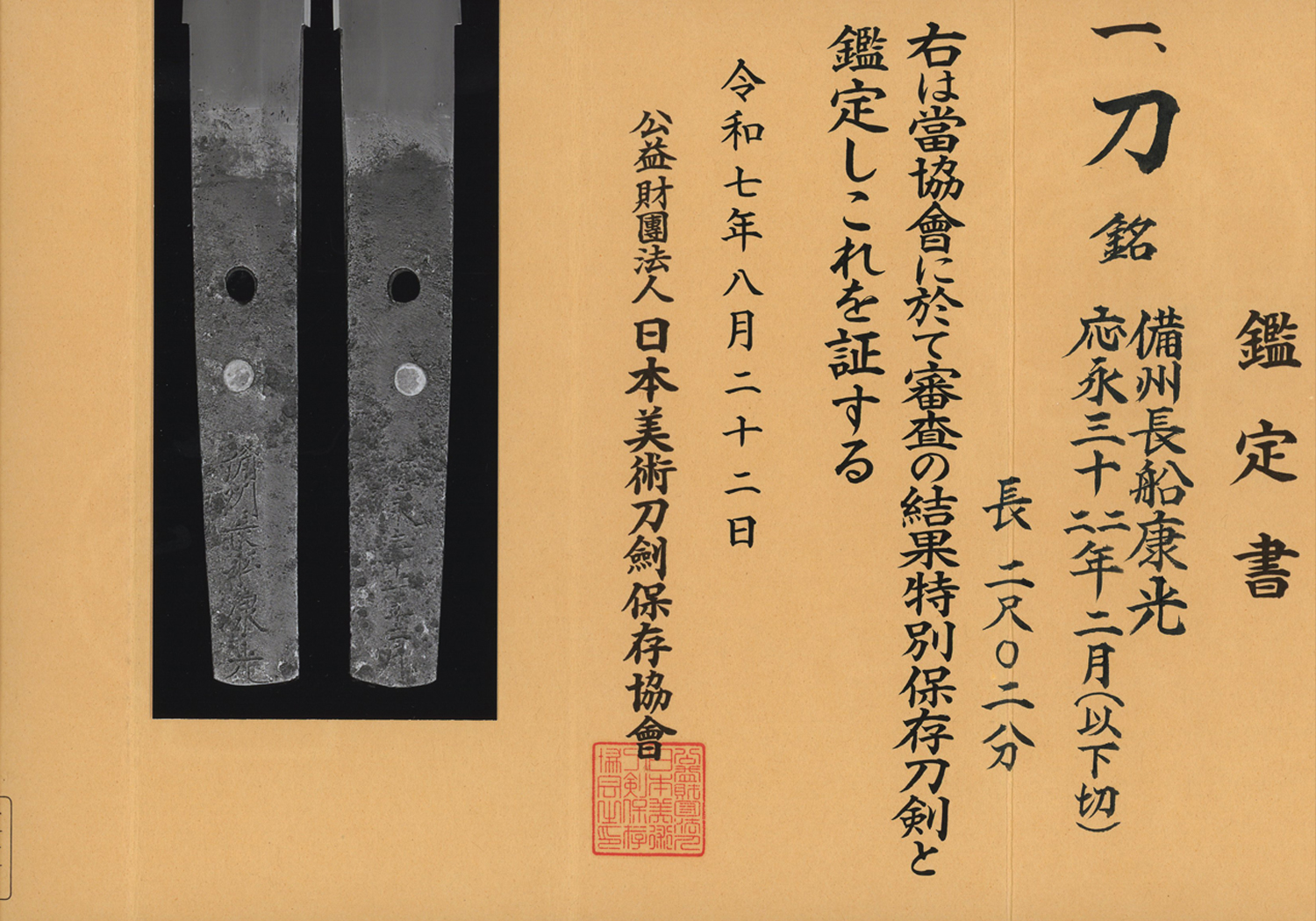
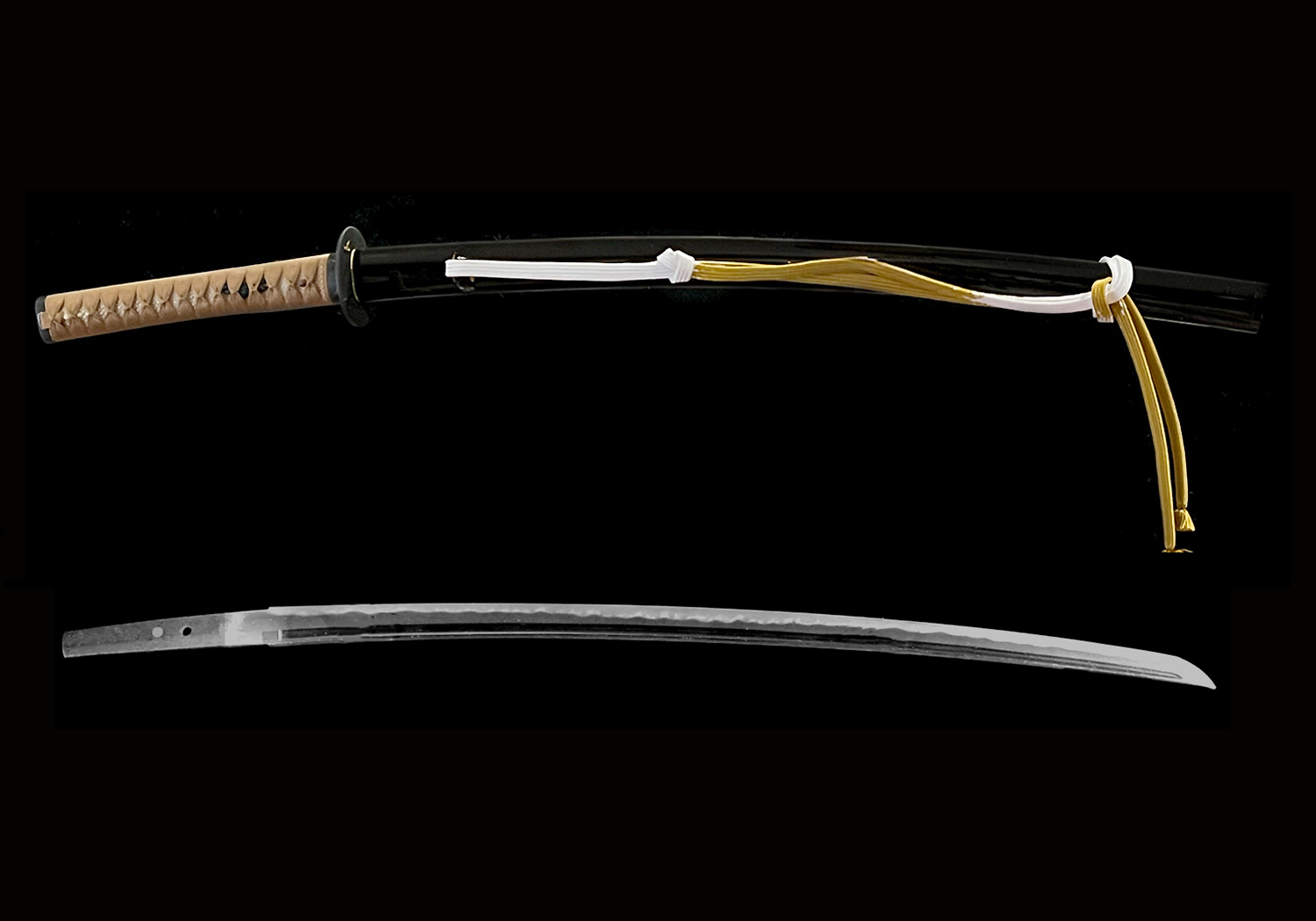
Nihonto.com is pleased to present a beautiful katana by Shodai Yasumitsu. It is slightly suriage with a mei of Bishû Osafune Yasumitsu (備州長船康光). The ura has a nengo of Ôei sanjû yon nen nigatsu ( February of the 34th year of Ôeior 1427). It has definite characteristics of the first generation Yasumitsu such as the fact that the jihada is primarily itamewith some small areas of masame mixed in on both sides. Also it has feint areas of midare utsuri throughout its length. Despite the fact that it is suriage, the strong torii sori tending toward saki zori shape is still quite evident as are the other characteristics of the Bizen school of the end of the Oei period of the late 1300’s to early 1400’s.
This katana has a nagasa (length) of 24.125 inches or 62.2 cm. As noted, it has been shortened a few inches but it still has its full signature and a beautiful sori (curvature) of 0.57 inches or 1.4 cm. It is a graceful blade with a moto-haba (width at the habaki of 1.01 inches or 2.6 cm and a saki-haba (width at the kissaki) of 0.66 inches or 1.7 cm. Yasumitsu was a Jo-saku (top quality) smith according to Fujishiro. The NBTHK awarded this katana Tokubetsu Hozon papers attesting to its quality and condition. It is in beautiful polish with no problems or flaws, whatsoever.
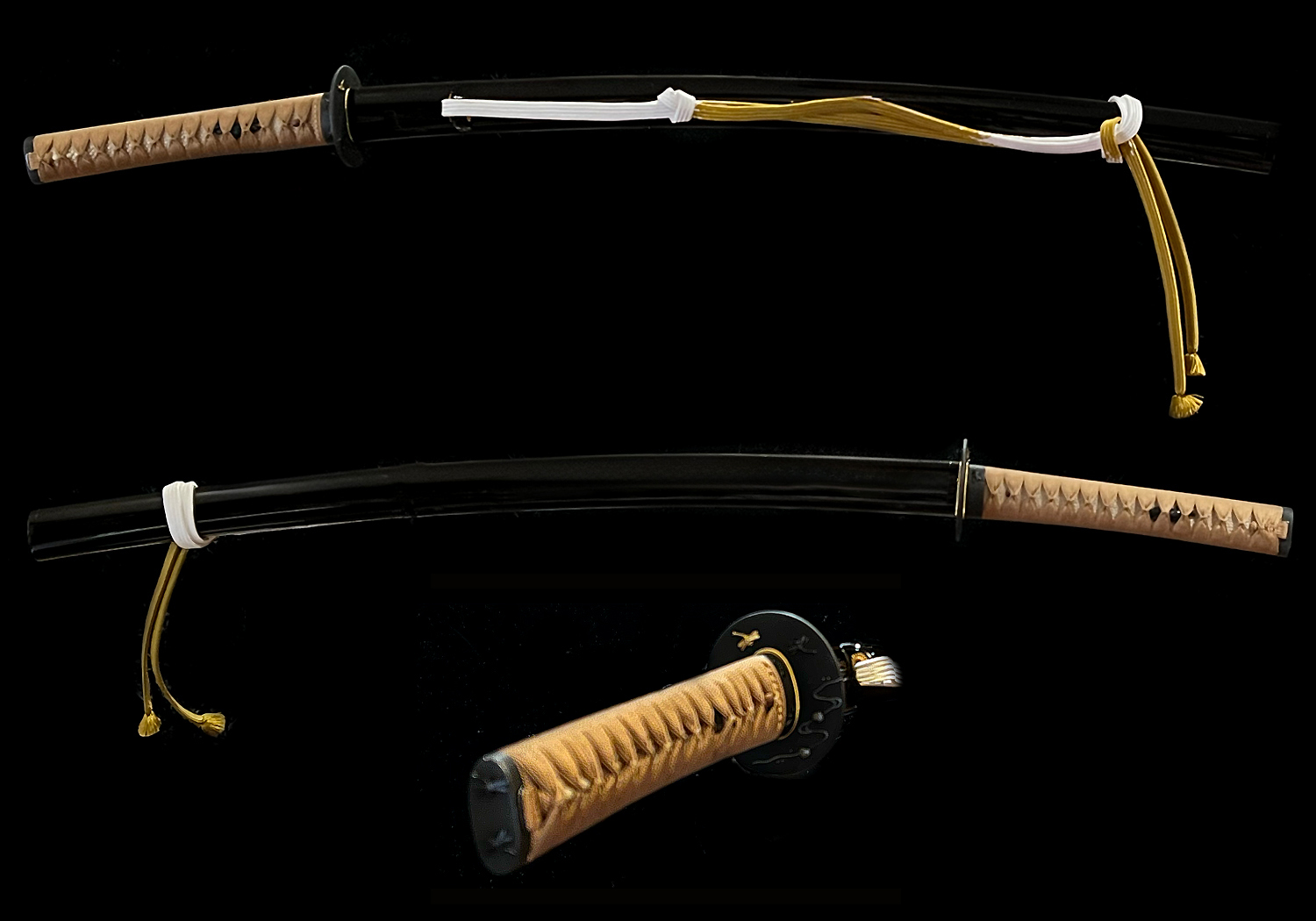
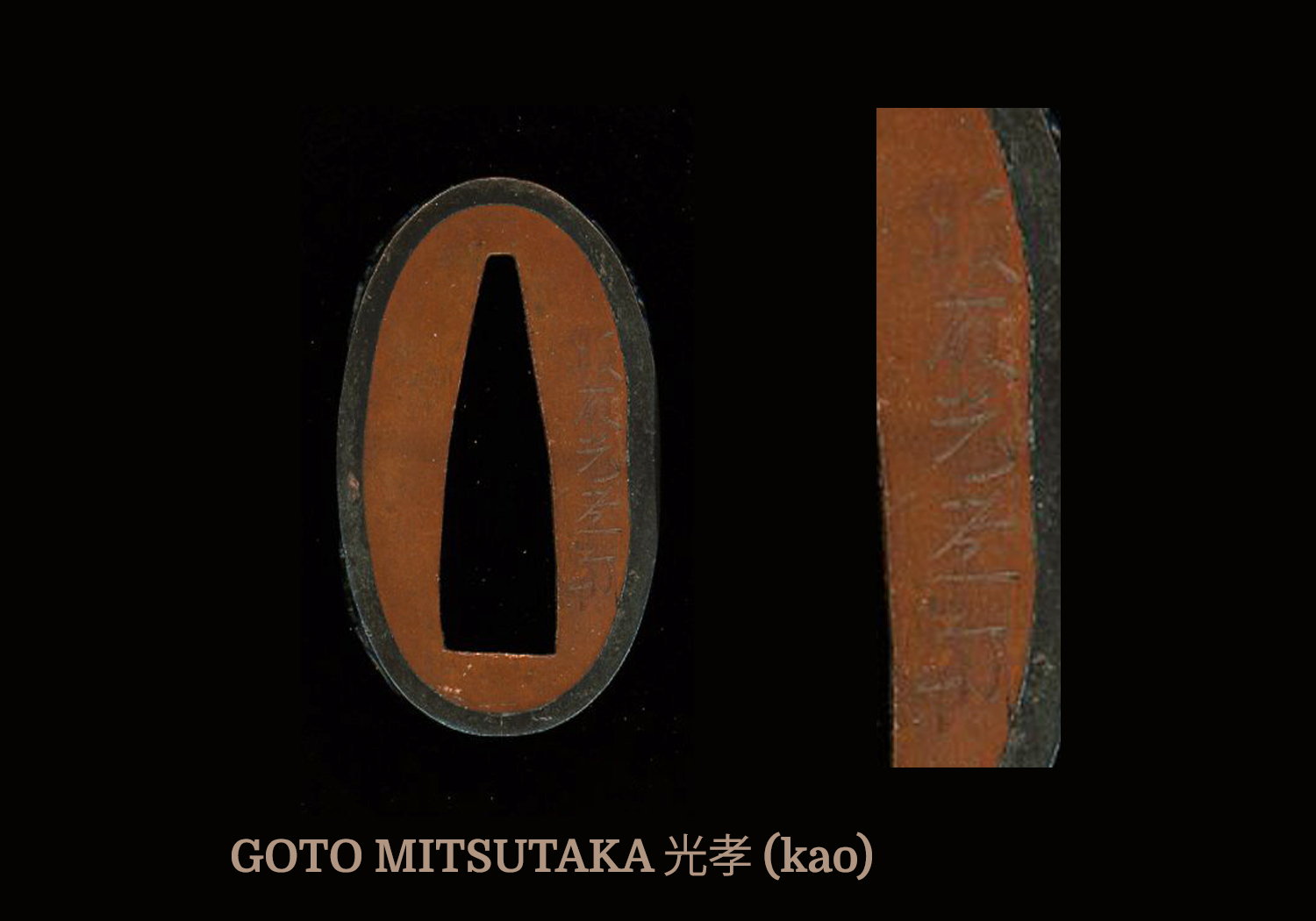
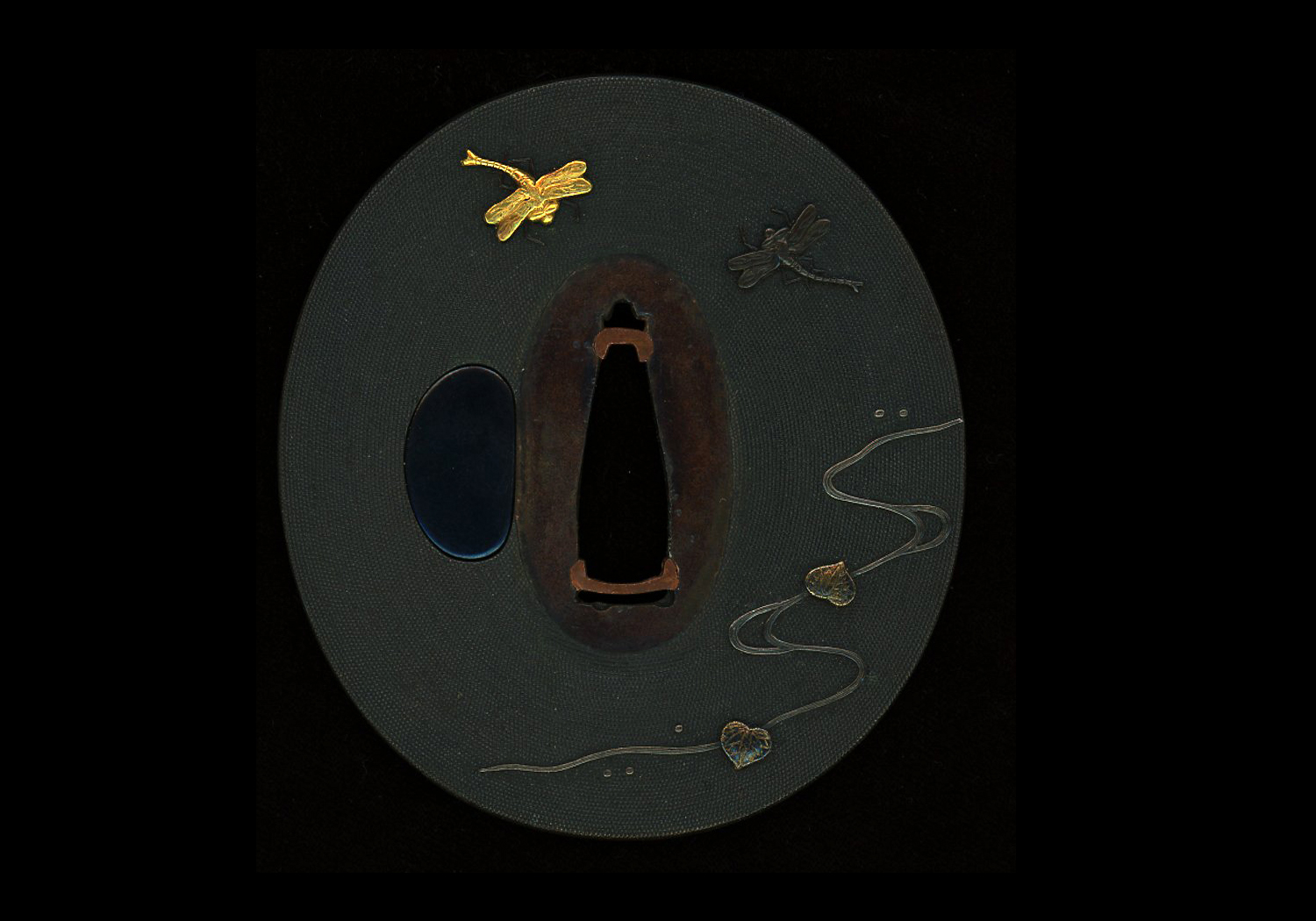
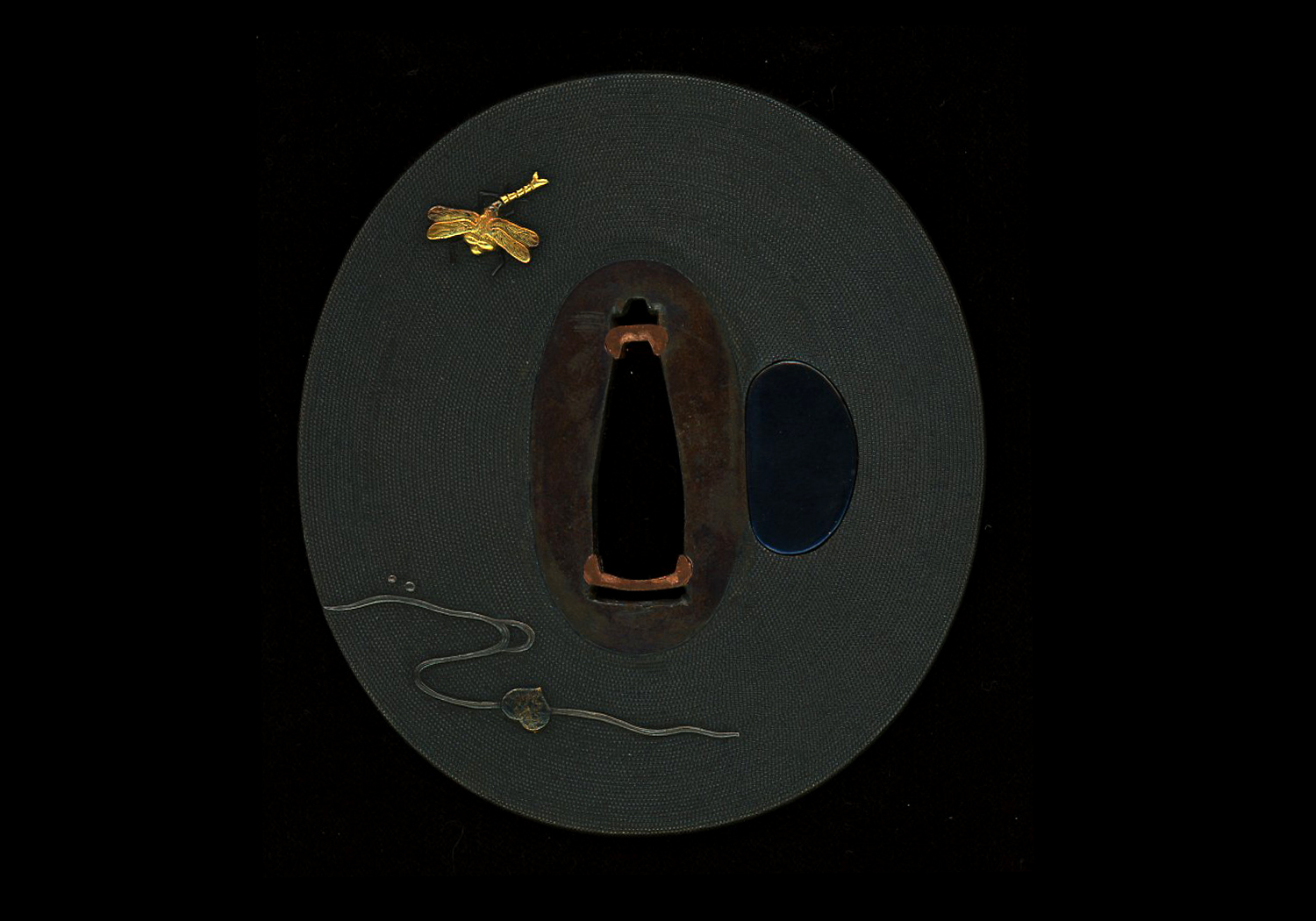
This katana comes in a very attractive koshirae with a black lacquered saya in excellent condition with no dings or cracks in the lacquer. The fuchi and kashira are of dark shakudo nanako of outstanding quality with the nanako being so fine that it has an almost wet look to it. On the fuchi are three delicate dragonflies carved in amazing detail and on the kashira there are two. These pieces are signed by the artist Mitsutaka. The tsuba is not signed but it is obvious that it was made by the same hand as the fuchi and kashira. The shakudo nanako work and the use of dragon flies is exactly the same. The only difference is that of the three dragon flies on the tsuba, one on the obverse and one on the reverse are made of gold and the second one on the obverse is made of shakudo exactly matching the five on the fuchi and kashira. Mitsutaka was the thirteenth mainline master of the Gotô family. He was also called Gennojô and later Shirobei and Mitsunari. He lived in Edo (Tokyo) and passed away in the fourth year of Tenmei (1784). The menuki are also made of shakudo and they depict cranes in flight. All in all, this is a beautiful koshirae that was undoubtedly owned by a high ranking individual. The blade is housed in an excellent shirasaya and it has a double gold wrapped habaki.
PRICE: $13,500.00