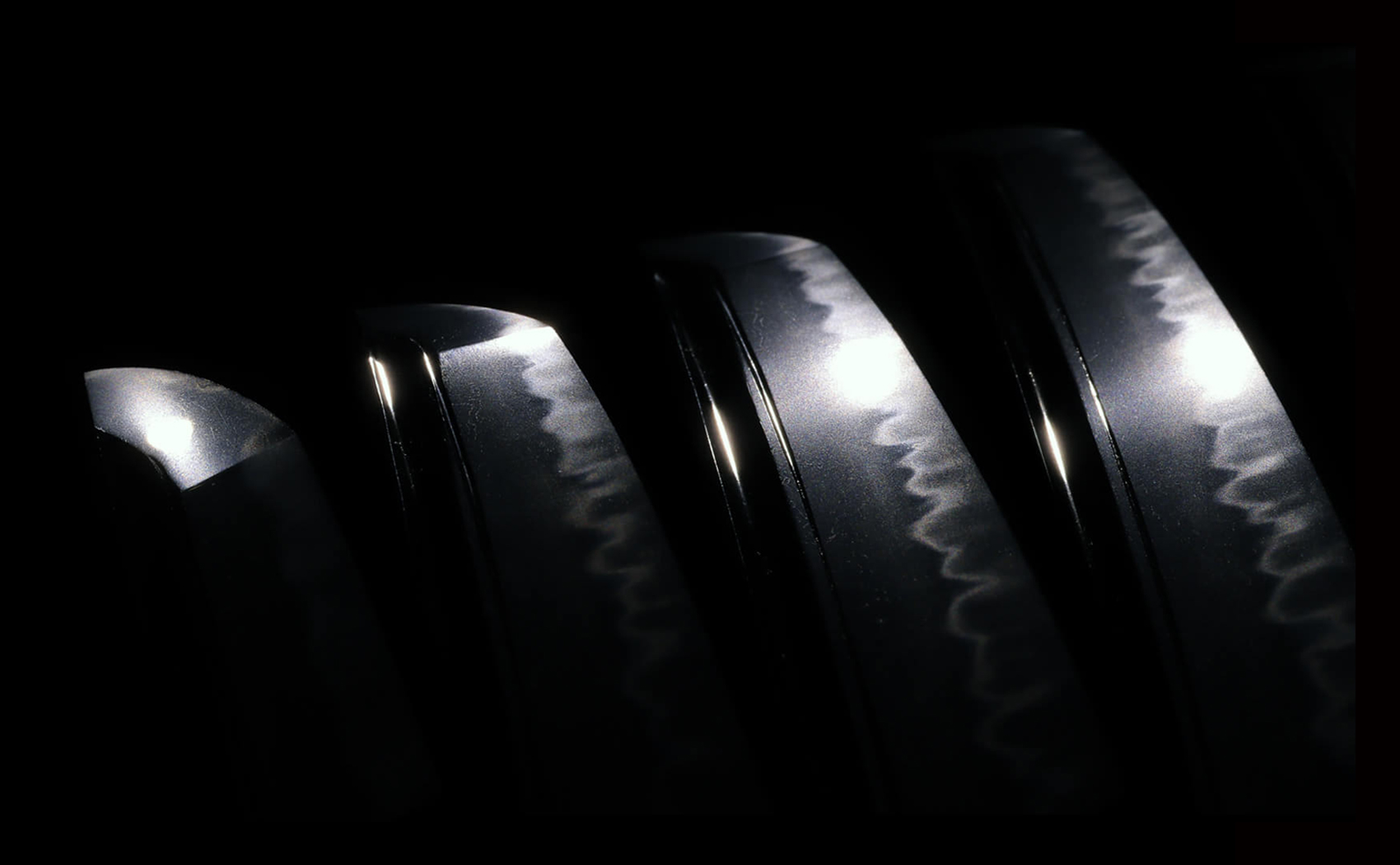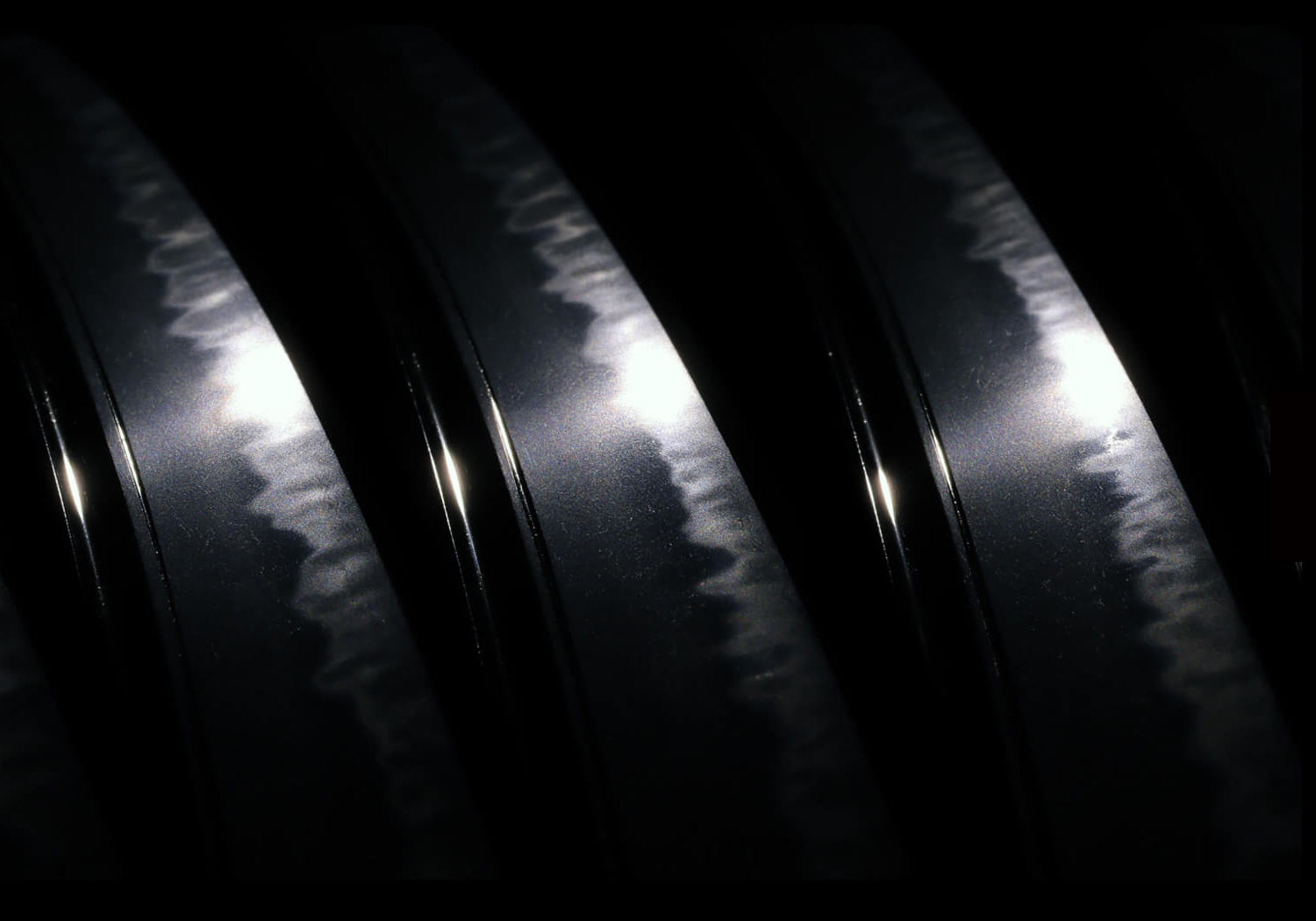


Bizen Nagamitsu (備前長光) was the son of Bizen Mitsutada (備前光忠) who was the founder of the Bizen Osafune School (備前長船). The works by Nagamitsu (長光) closely resemble the craftsmanship developed by Mitsutada. This is especially true in his early career. While they contain exuberant chôji-midare like Mitsutada’s (光忠) works, they differ, however, in that they also contain dominant gunome and more pointed variations of chôji.
The thinking in the past was that there were two generations of smiths who used the name Nagamitsu (長光). The first generation Nagamitsu (長光) was thought to have been productive in about the Bunei and Koan eras (1264-1287). The nidai was thought to be a smith who signed Sakonshôgen Nagamitsu with representative works from the Einin and Shoan eras (1293-1301).
The “two generation” theory stems in part from the fact that there was a distinct change in the style of workmanship of blades made around Einin and Shoan eras (1293-1301). That is, prior to the Einin era most of the hamon of his blades exhibited luxuriant, irregular patterns resembling Mitsutada’s (光忠), but after Einin, his blades have a quieter appearance with a somewhat more subdued irregular pattern; occasionally even a straight pattern (suguha).
The “one generation” theory assumes that there was only one generation of smith who used the Nagamitsu (長光) name, and that the former type of blade represents his earlier days and the blades change to the latter type as he went into the last half of his career.
Adding to the “two smith” theory is the fact that there was a slight change in the final stroke of the “mitsu” character when he incised his name on the tang. The style he used in the latter half of his career (or by the second generation depending on which school of thought you adhere to) continued to be used by important Osafune smiths following Nagamitsu (長光), i.e. Kagemitsu (景光), Morimitsu (盛光), Yasumitsu (康光), etc.
As with many areas of the history of the Japanese sword, the research continues and opinions will, without a doubt, be amended or changed in the future. Current opinion tends to lean toward the one-generation theory and a change in working styles by the smith. Irrespective of whether there were two generations or not, blades produced by the Nagamitsu (長光) smith(s) are of exceptional quality having six swords designated as National Treasures and no less than 28 blades designated as Important Cultural Properties. Additionally, there are 28 blades by Nagamitsu that are designated Tokubetsu Jûyô Tôken and 148 blades that are designated Jûyô Tôken.
This means that among the famous swords which exist today, there is no swordsmith who has left behind a greater number of outstanding works than Nagamitsu. This shows not only the high esteem in which his swords were always held, but also that fact that they were extremely well made and able to stand up to the rigors of battle for hundreds of years.
SUGATA: The sugata exhibits the features characteristic of the Kamakura period and is similar to the Ichimonji School of the same time. Generally, blades are shinogi-zukuri, iori mune with koshi-zori. There is a marked tapering approaching the point (funbari). Occasionally among Nagamitsu’s works an unusual sugata may be seen which resembles the works of the early Kamakura period. Others may have a shallow sori and a mihaba (width), which does not vary greatly from the bottom to the point.
JITETSU: The kitae is ko-itame mixed with small mokume, making a fine and beautiful grain. The ji-nie is also fine and the midare-utsuri or chôji-utsuri will appear in a pronounced manner.
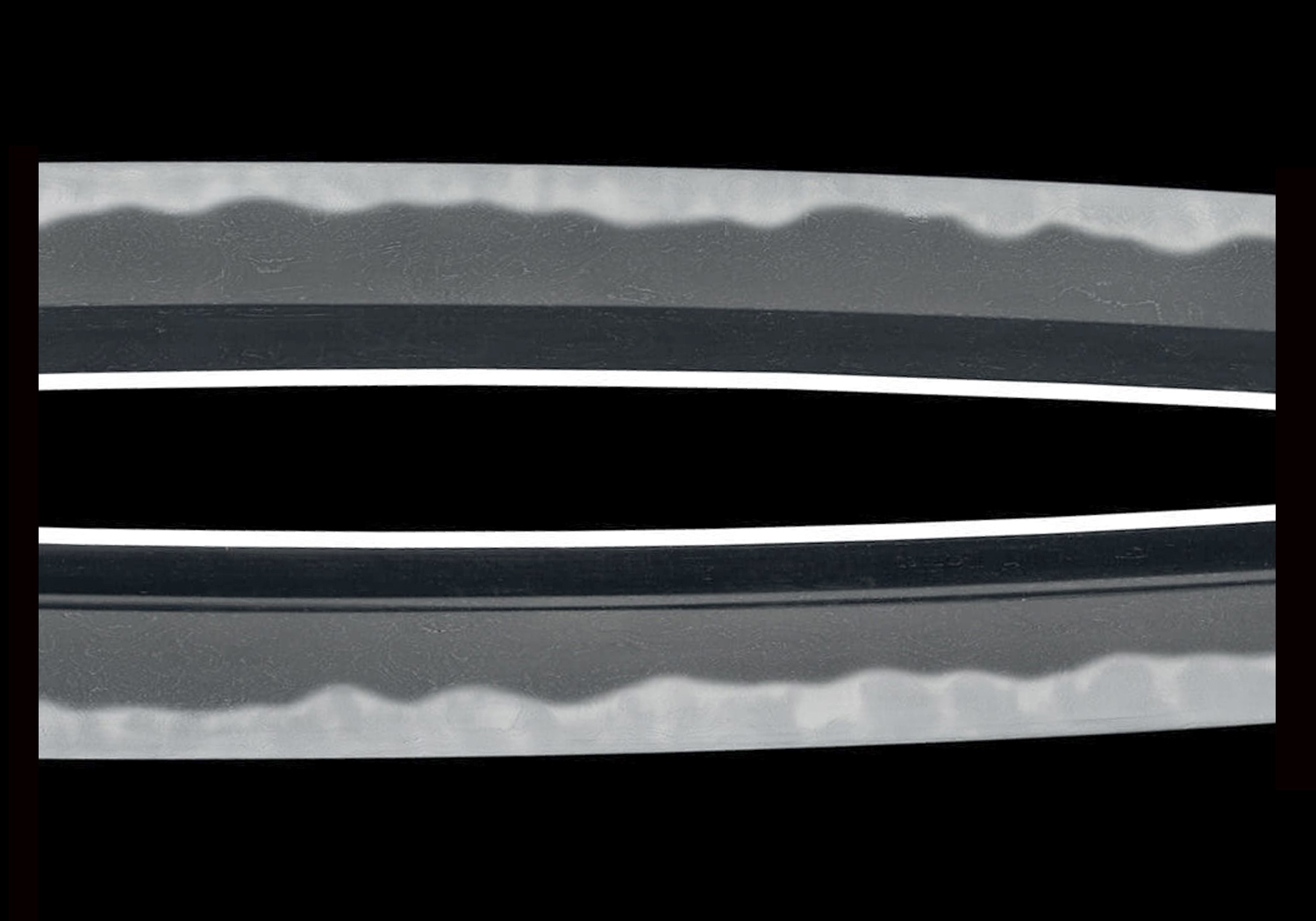
HAMON: The hamon will be nioi-based, as is the case with Bizen works. Nagamitsu’s hamon is distinctive in that while it resembles that of his father, Mitsutada, in that they have a mixture of various kinds of chôji mixed with occasional gunome. In Nagamitsu’s hamon, however, the gunome are much more profuse and will have rounded heads and, in effect, resemble chôji. Mitsutada never made hamon with any portion being suguba in nature, while Nagamitsu was known to make straight hamon on a rare occasion, especially in his later works.
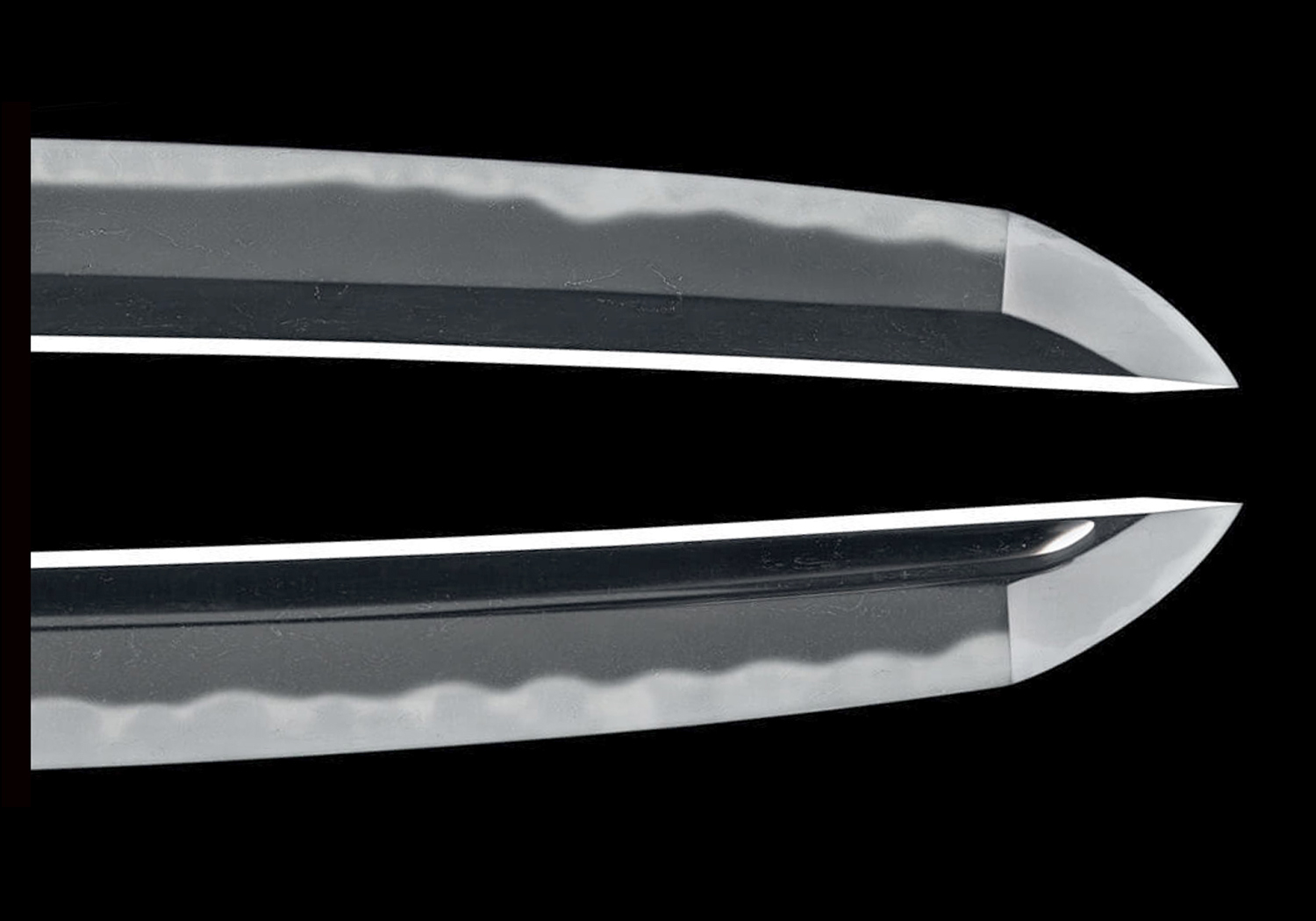
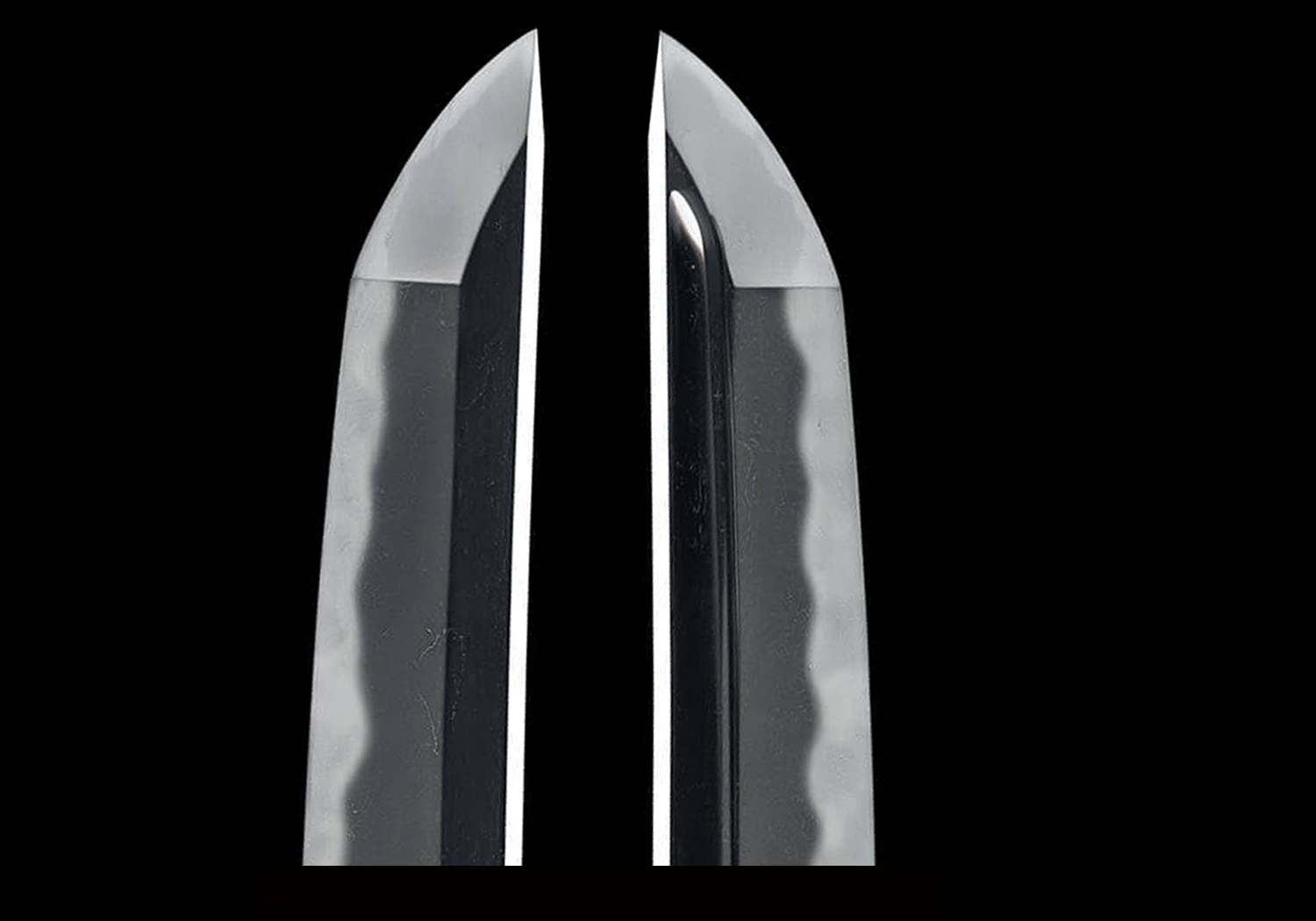
BÔSHI: The bôshi of Nagamitsu is an important kantei point. In most cases (there are always exceptions), he was known for what is called the “san-saku bôshi“. This bôshi is called a san-saku boshi since three swordsmiths, Nagamitsu, Kagemitsu, and Sanenaga made it. The characteristic of this type of bôshi is that it is fairly straight when crossing the yokote and then it slightly undulates in the mid-point ending in a maru shape with kaeri.
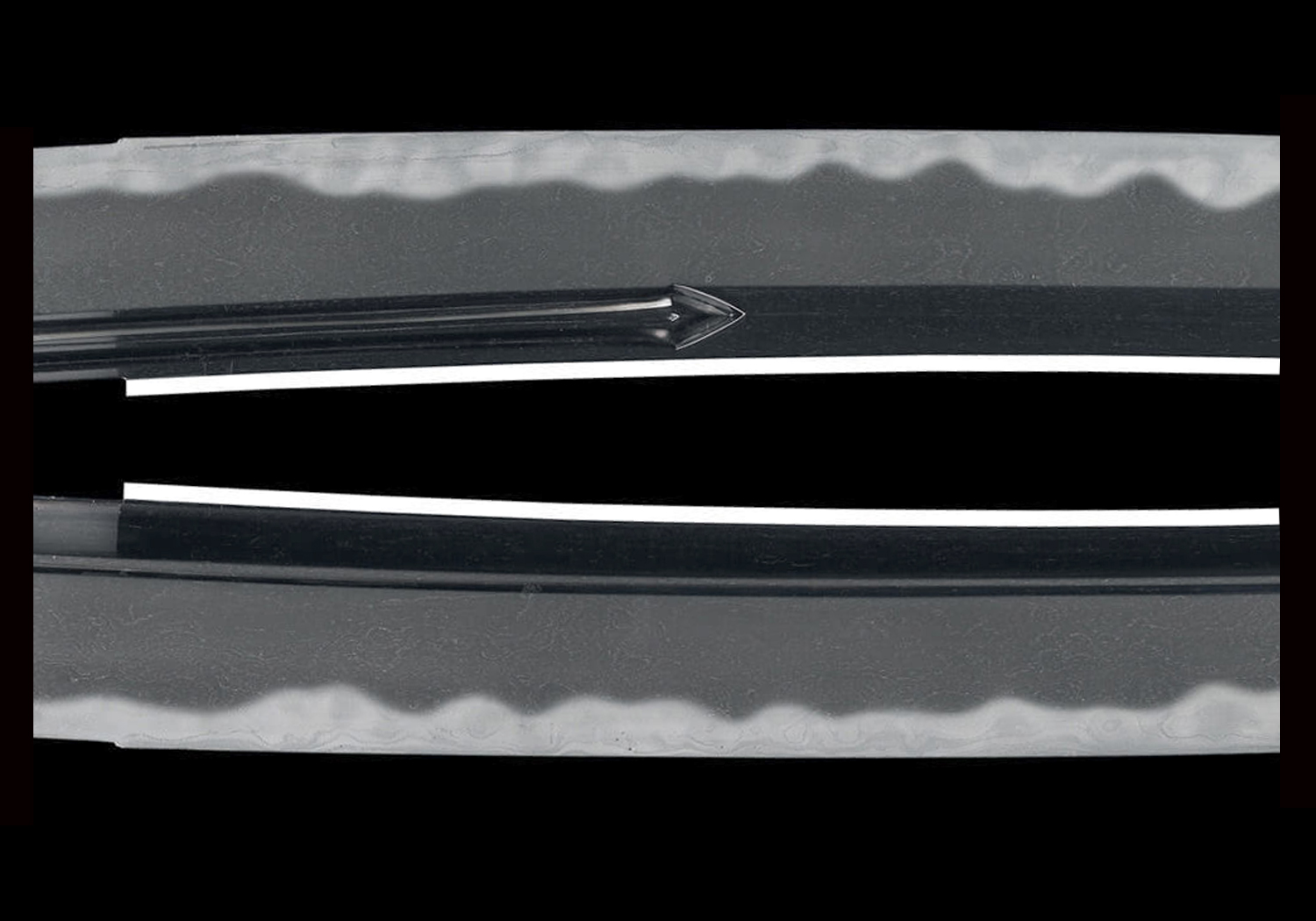
HORIMONO: Bo-hi are commonly seen with the tops of the hi being pointed in nature. Futatsu-hi is also seen. Bonji can be found on his works on occasion.
NAKAGO: Not many ubu blades exist, but in general the nakago will be made a little short with the tip in kurijiri or kijimomo. The yasurime will be kuri or sujikai. The mei will generally be given in two characters.
MEI: Nagamitsu has left behind a great number of works. His most common signature is the ni-ji mei, but he also used a few others.
NAGAMITSU 長光
OSAFUNE NAGAMITSU 長船長光
BIZEN KUNI OSAFUNE JÛ NAGAMITSU 備前国長船住長光
BIZEN KUNI OSAFUNE JÛ SAKONSHÔGEN NAGAMITSU TSUKURU 備前国長船住左近将監長光作
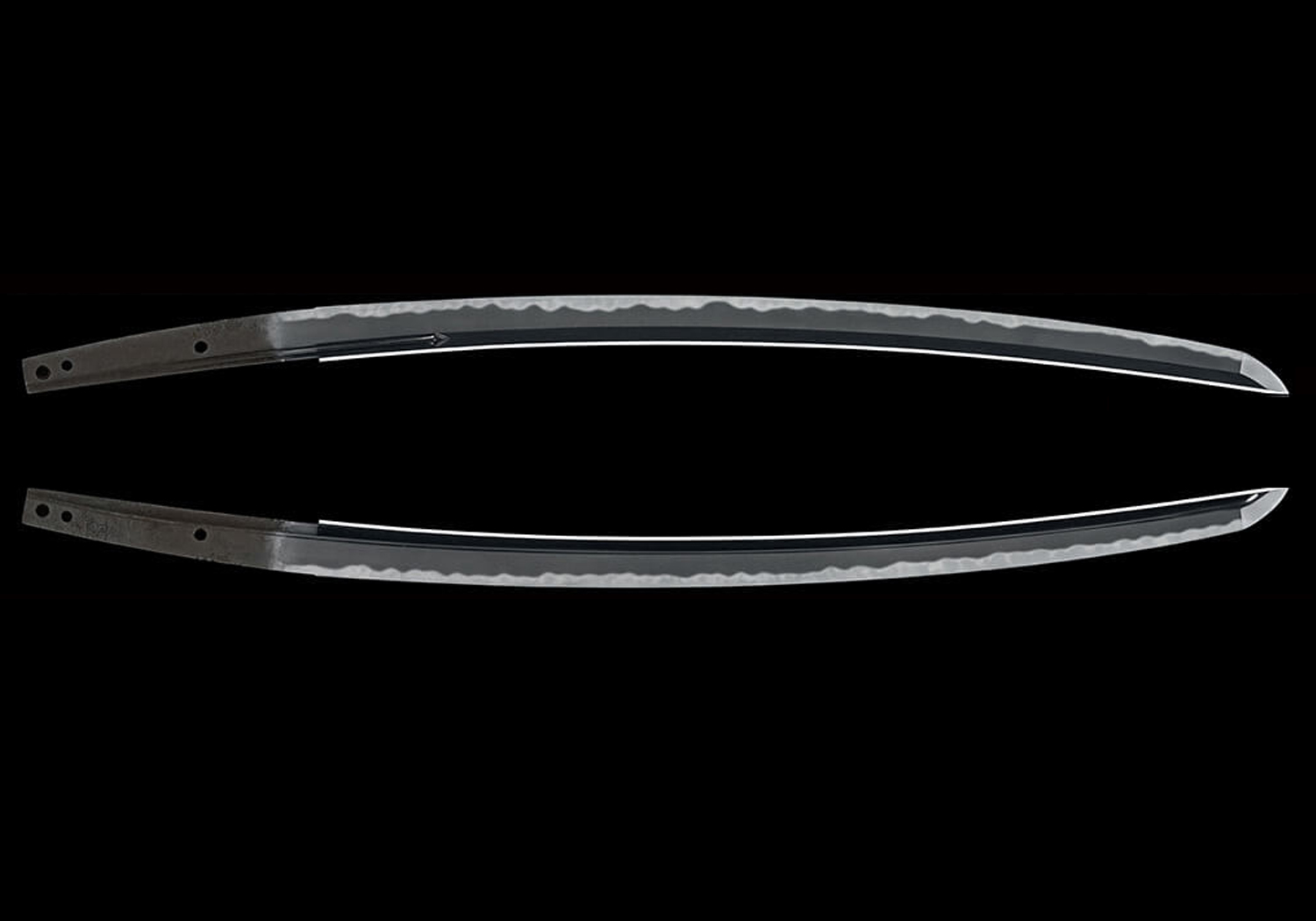
The blade presented here is an outstanding Jûyô Tôken kodachi that is signed with his two-character (ni-ji mei) signature, Nagamitsu (長光). It embodies all of the best characteristics of this famous smith and the kodachi sugata is a precious type of blade that he rarely produced. A theory says that the kodachi (small tachi) was born from the necessity of aristocrats wanting blades to wear for self-defense when traveling. They wanted blades that were longer than the standard koshigatana (about the length of a tantô) to wear when traveling in coaches (kago). One could also call these predecessors to the uchigatana (one-handed swords) that became prevalent in the Muromachi era.
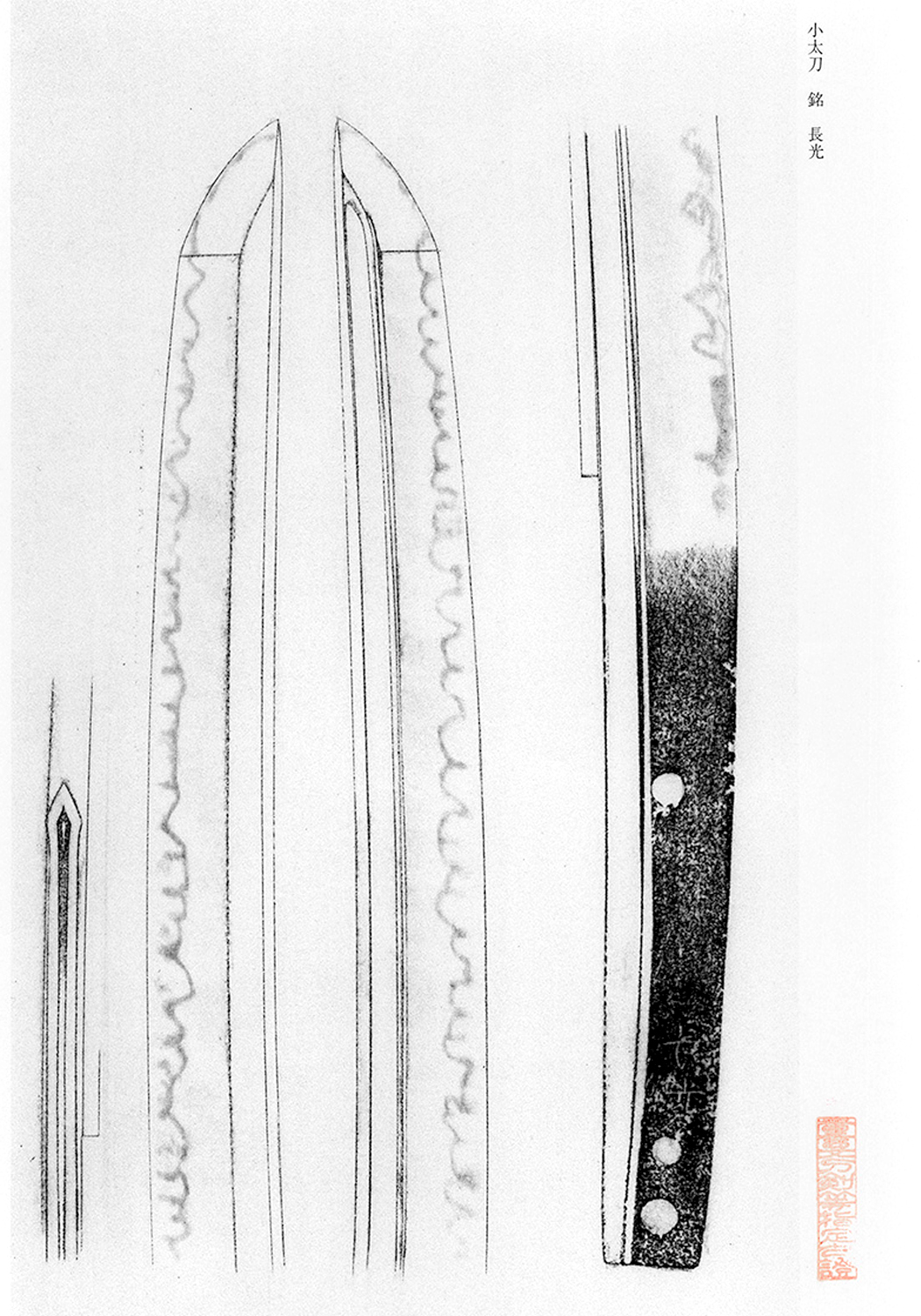
This sword was awarded Jûyô Tôken rank at the 35th Jûyô shinsa in April of 1989. A translation of the Jûyô description is as follows:
Jūyō-Tōken at the 35th Jūyō Shinsa held on April 14, 1989
Kodachi, mei: Nagamitsu (⻑光)
Chiba Prefecture, Nakata Tetsuo (中⽥哲⽣)
Measurements:
Nagasa 52.6 cm, sori 1.7 cm, motohaba 2.8 cm, sakihaba 1.9 cm, kissaki-nagasa 2.8 cm, nakago-nagasa 16.0 cm, only very little nakago-sori
Description:
Keijō: shinogi-zukuri, iori-mune, relatively deep sori, chū-kissaki
Kitae: itame that is mixed with mokume and that features ji-nie, fine chikei, and a midare-utsuri Hamon: chōji-midare, nie-deki that is mixed with some gunome and togariba, ashi, and with kinsuji and sunagashi
Bōshi: yakikomi protrusion at the yokote, runs out after that, but with some nie remaining
Horimono: on the omote side a bōhi with tsure-bi that run as kaki-tōshi through the tang, on the ura side a suken
Nakago: ubu, kirijiri, sujikai-yasurime, three mekugi-ana, the haki-omote side bears close to the tip of the tang a niji-mei
Explanation:
Nagamitsu (⻑光) was the son of Mitsutada (光忠) and succeeded as second generation of the Osafune (⻑船) School, and he one of the smiths, by whom the most signed works have survived from this time period. Judging from his existing body of work, it can be said that it is throughout of a high-quality level. The workmanship of Nagamitsu blades is either a flamboyant chōji-midare that can be directly linked to the style of Mitsutada, or is a calm suguha- chō, and it is possible that there were two generations Nagamitsu.
This kodachi displays a relatively flamboyant midareba, and both the ji and the ha clearly reflect the typical characteristics of Nagamitsu, particularly so through the plenty of nie within the ha and the abundance of hataraki like kinsuji and sunagashi. Also, the jiba is of an excellent deki.
As noted above, this sword embodies all of the finest characteristics of this famous smith, Nagamitsu. This is further verified by the extremely detailed sayagaki that was recently done by Tanobe Sensei formerly of the NBTHK. Tanobe Sensei is, without a doubt, the leading expert on Japanese swords alive today. His sayagaki can be translated as follows:
Front of the saya:
Nagamitsu, resident of Osafune in Bizen province.
This blade is shortened, bears a two-character signature, and is of the kodachi type. Ranked Jūyō at the 35thJūyō-Tōken Shinsa.
Blade length ~ 52.6 cm
Written by Tanzan [Tanobe Michihiro] in August in the year of the dragon of this era (2024) + monogram.
Back of the saya:
This blade is with its a wide mihaba, deep koshizori, and ikubi-kissaki of a magnificent shape, displays a forging structure in itame that features a prominent midare-utsuri, and is hardened in a busy and densely arranged chōji-chō with a clear and bright and “soft” looking nioiguchi that is interwoven with sunagashi and kinsuji. We are thus facing here a masterwork that is textbook for the prime of this smith’s career. Incidentally, we know some other kodachi by Nagamitsu, e.g., the meibutsu named Hachiya and Kannagiri.
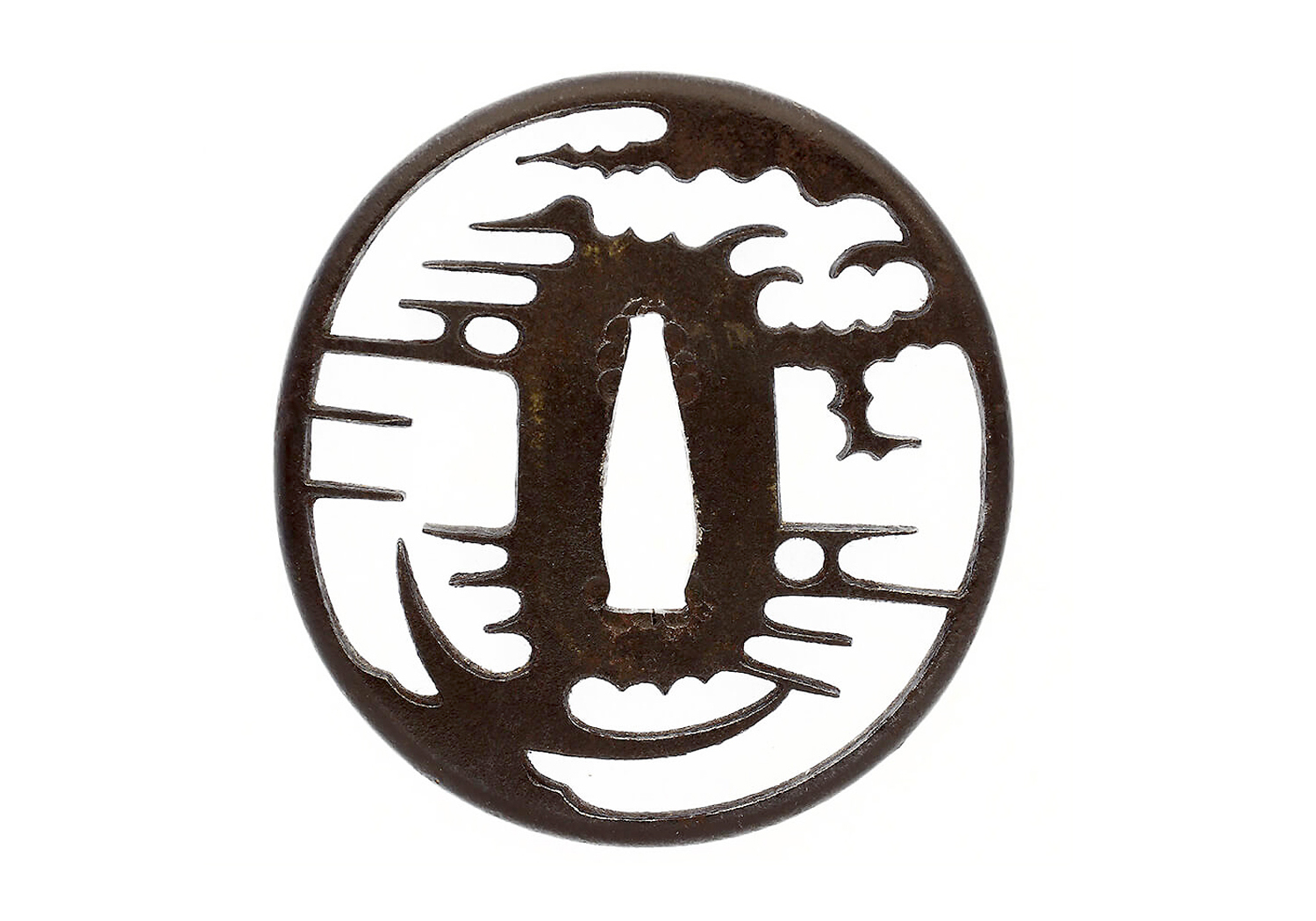
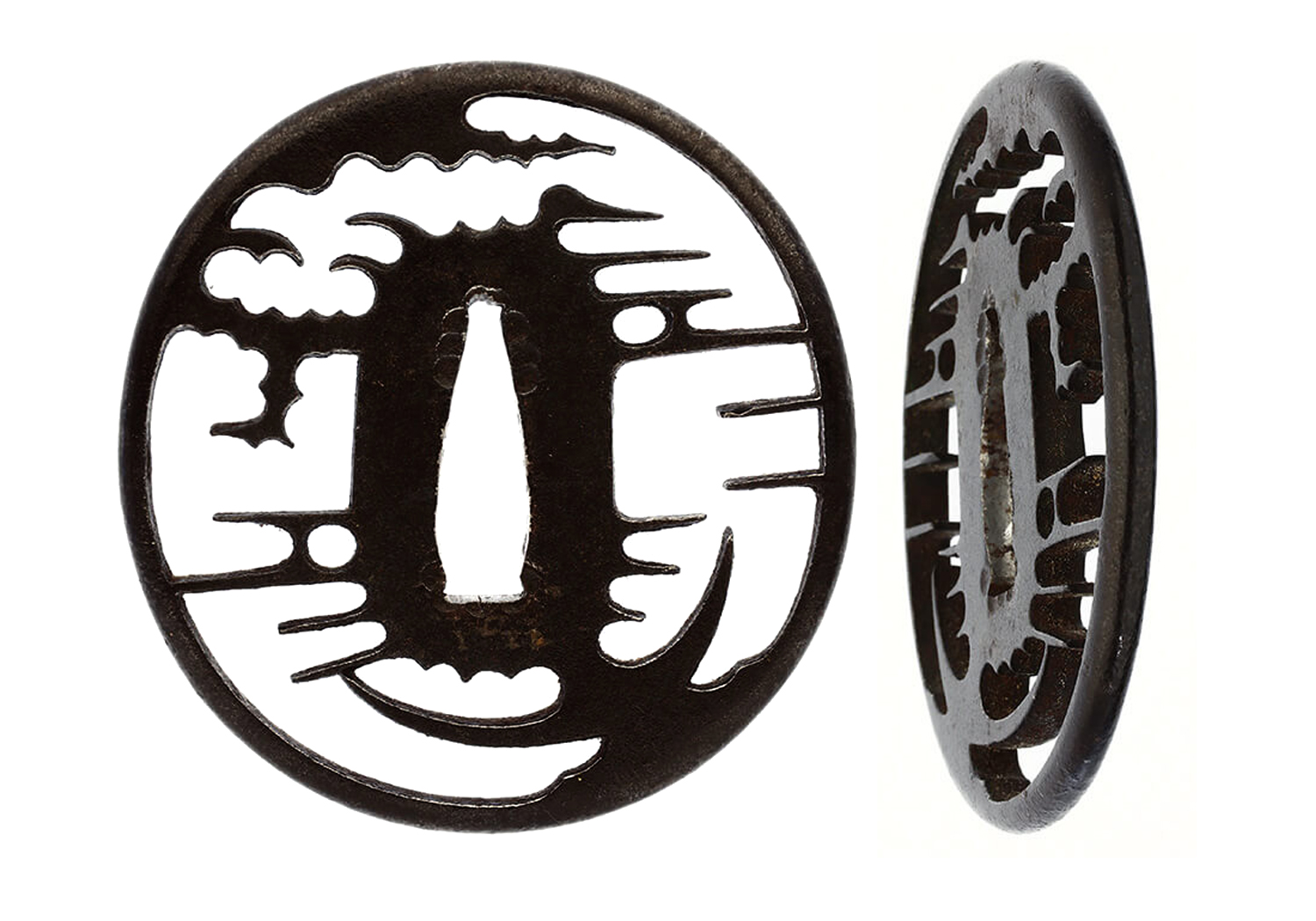
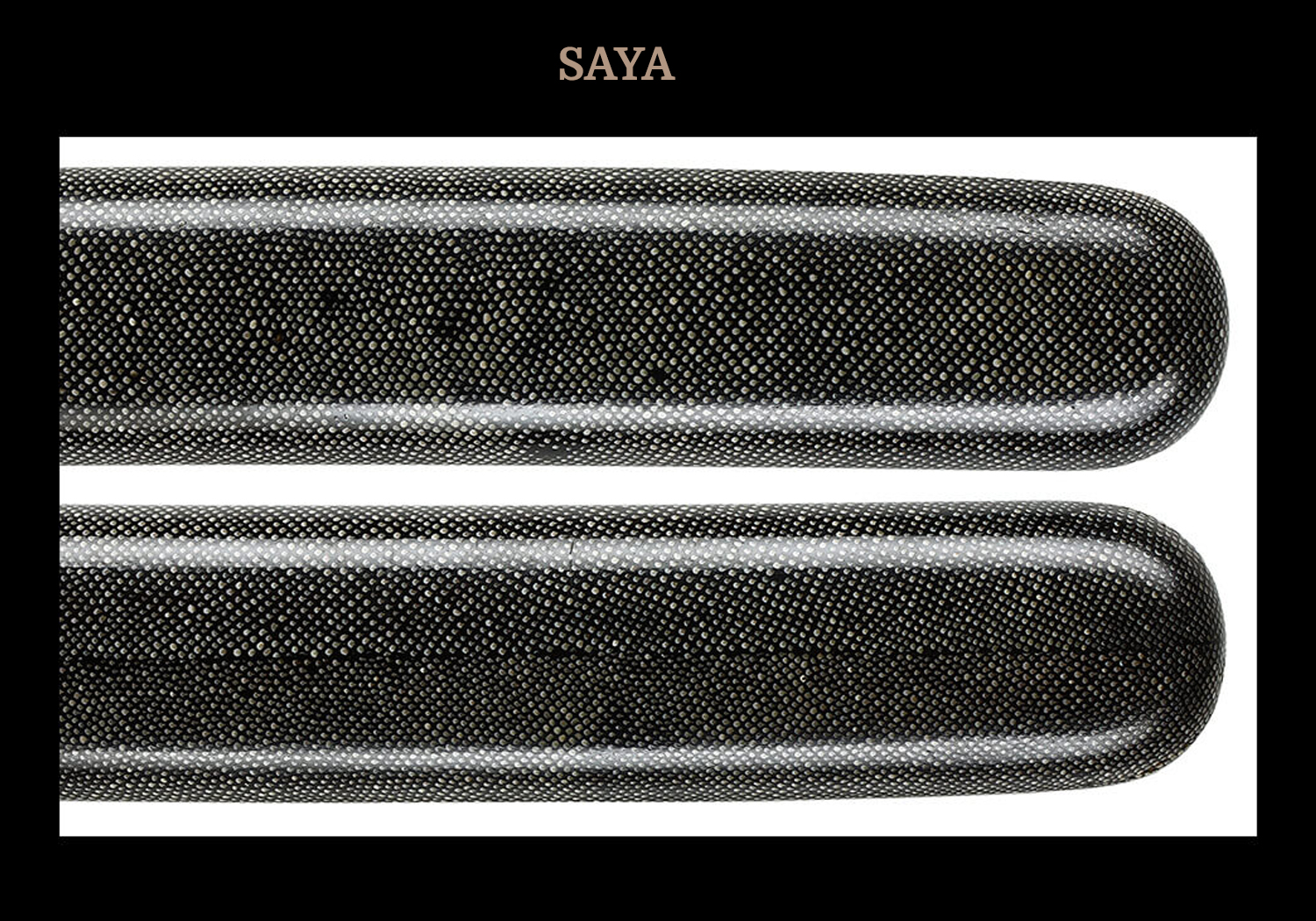
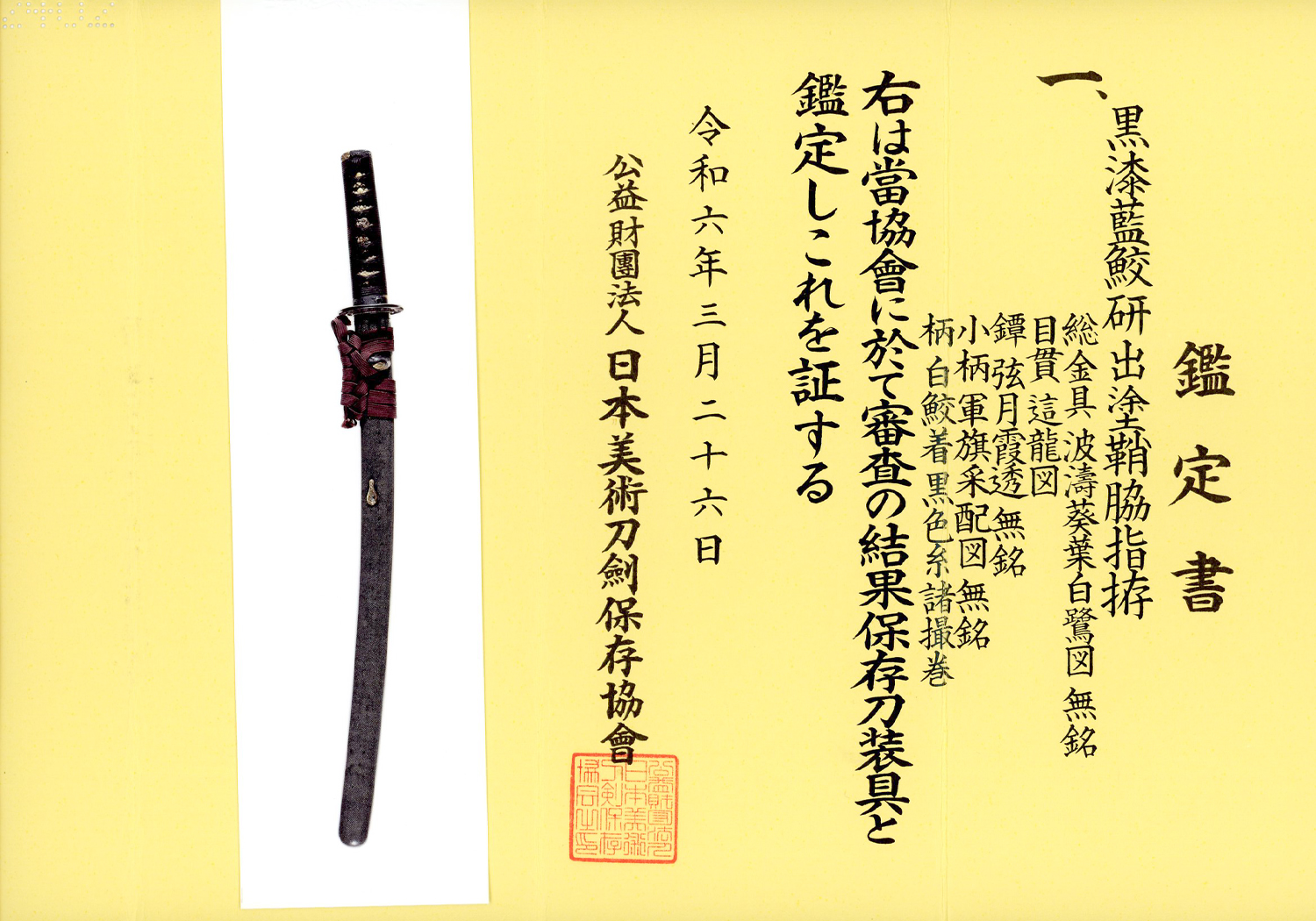
This sword comes with a very attractive koshirae that is in excellent condition. The saya is covered in shagreen (sharkskin) that has been painstakingly treasured and is without nicks, chips, etc. The tsuba is iron and of the Higo school done in sukashi (openwork) depicting clouds and a crescent moon. The fuchi/kashira are done in a combination of shakudo nanako and gold depicting sea birds in flight over waves. They are very impressive. The saya has a kurikata and kaerizuno done in suite with the fuchi and kashira. These pieces depict the same pattern and designs. The menuki are of dragons and appear to be solid gold. They are exquisitely carved and in superb condition. There is a kozuka made of shakudo nanako on the front and gold color on the reverse. There is a shakudo and gold war banner and commander’s baton on the front. All in all, a very nice set of koshirae worthy of housing this great Jûyô Tôken by Nagamitsu.
SOLD