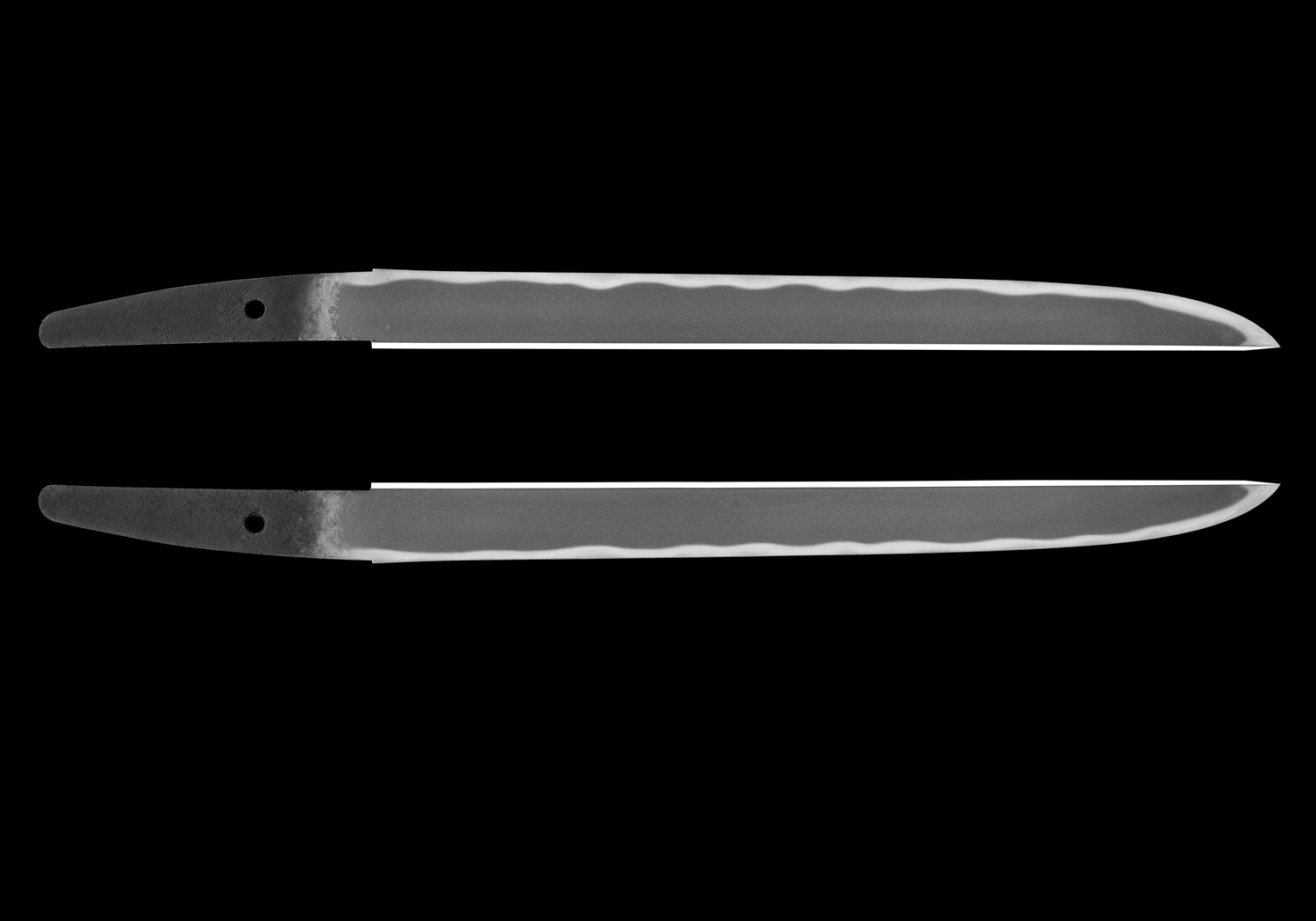

Yasuyoshi was the son of Samonji (左文字) who was also famously known as Ô-Sa (the Great Sa). Like his father, Yasuyoshi was born in Chikuzen Province. We find signed examples of his work starting around the Shohei era (circa 1346). The structure of Yasuyoshi’s work representing characteristics of the Enbun (1356-1361) and Jôji days (1362-1368) is large, and his craftsmanship usually produced a nioi dominant gunome-type hamon as a jigane with a whitish luster.
He is recorded in many old reference books as later having moved to Chôshû or Nagato Province (present day Yamaguchi Prefecture). This is verified by the fact that there is a tantô dated Jôji 1 (1362) that is signed Chôshû no jû Yasuyoshi (Yasuyoshi a resident of Chôshû).
He produced many hira zukuri, mitsu-mune tantô a good number of which were fairly wide with a somewhat extended length (sun-nobi). He also made tantô of a more delicate shape more like those of his father, Ô-Sa. His tantô had a thin kasane as was typical of the Nanbokuchô era. The kitae is tight itame containing nagare-masame. It is covered with ji-nie which forms tight chikei. The admirably clear metal has a bo-utsuri like misty area.
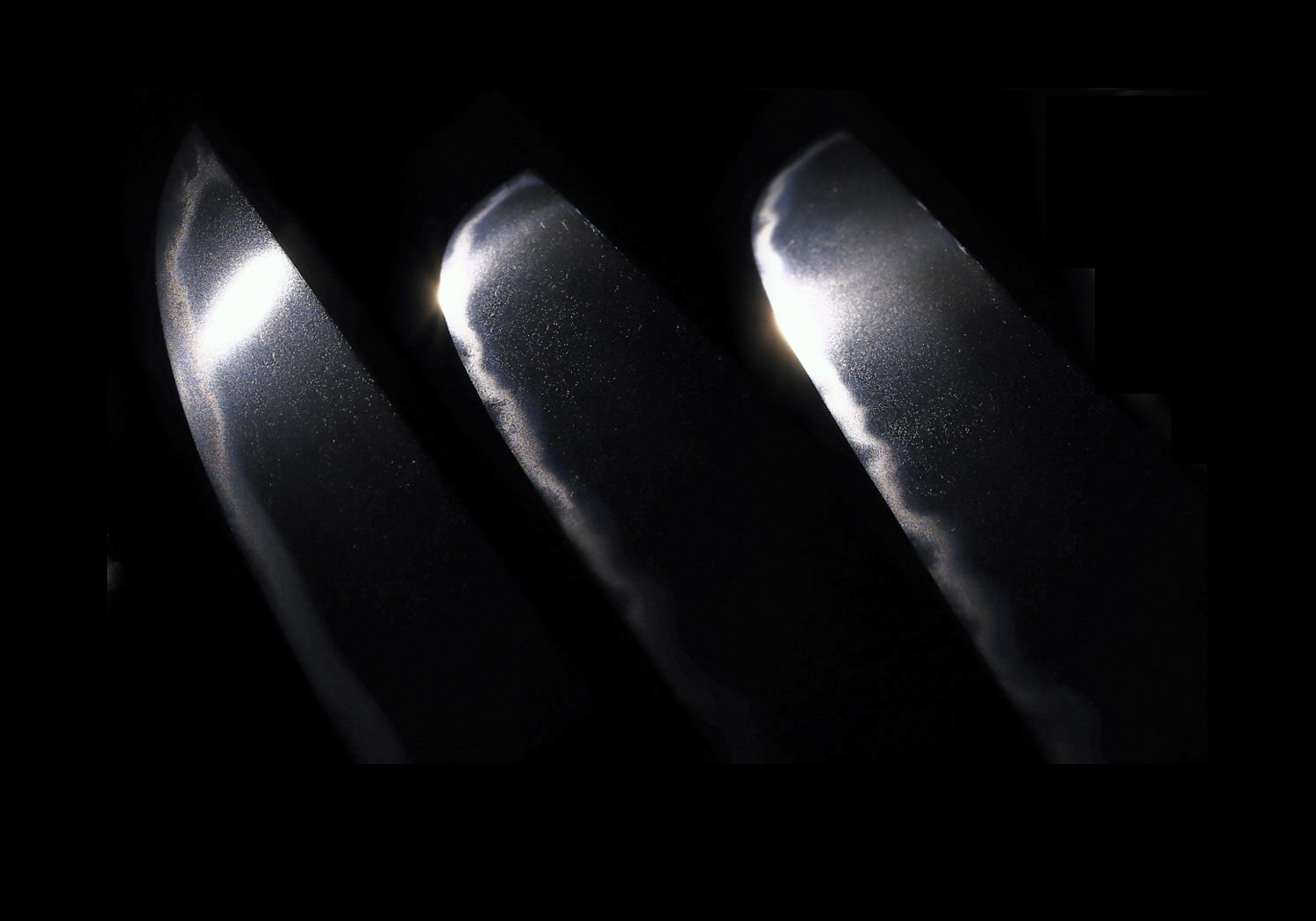
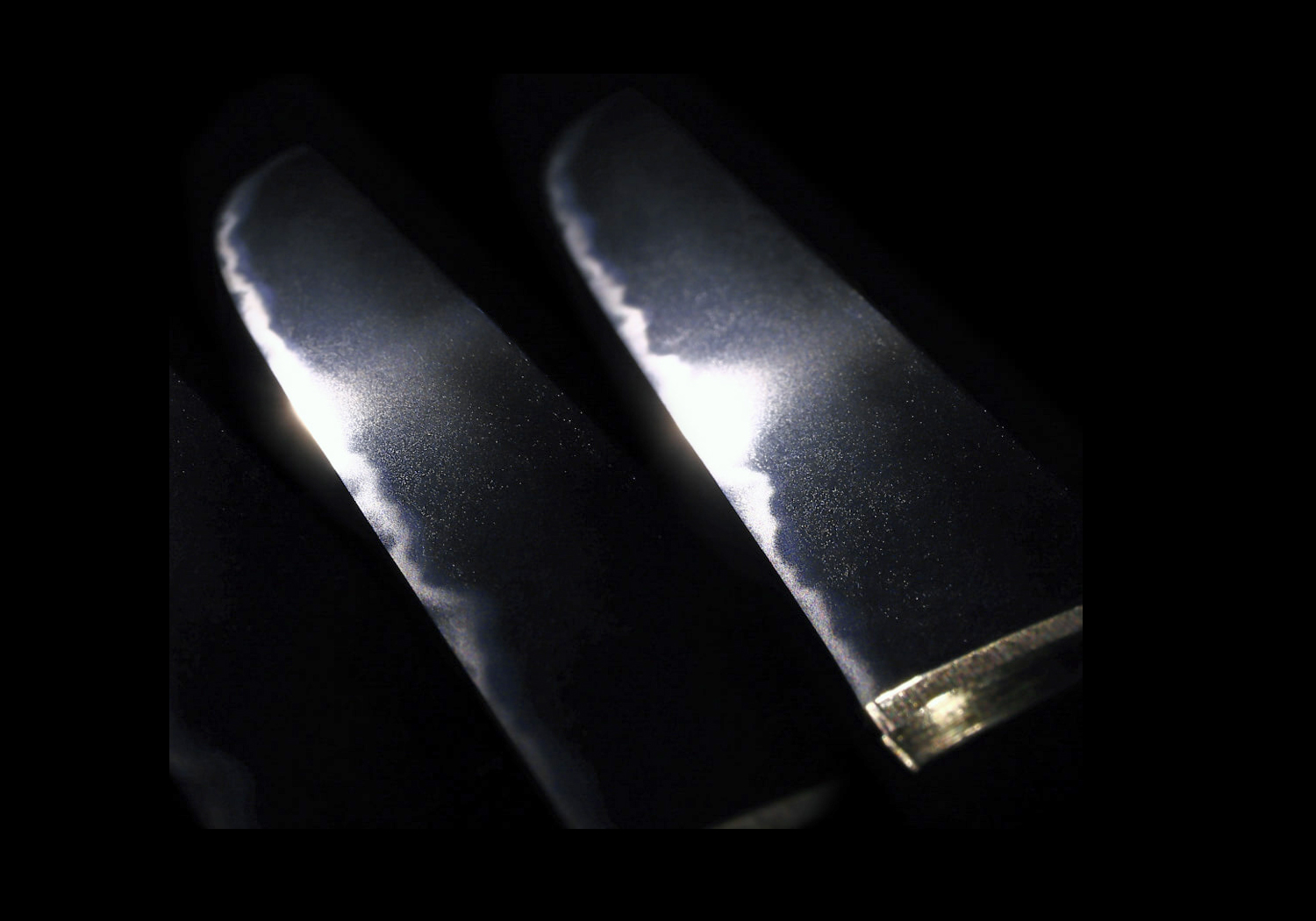
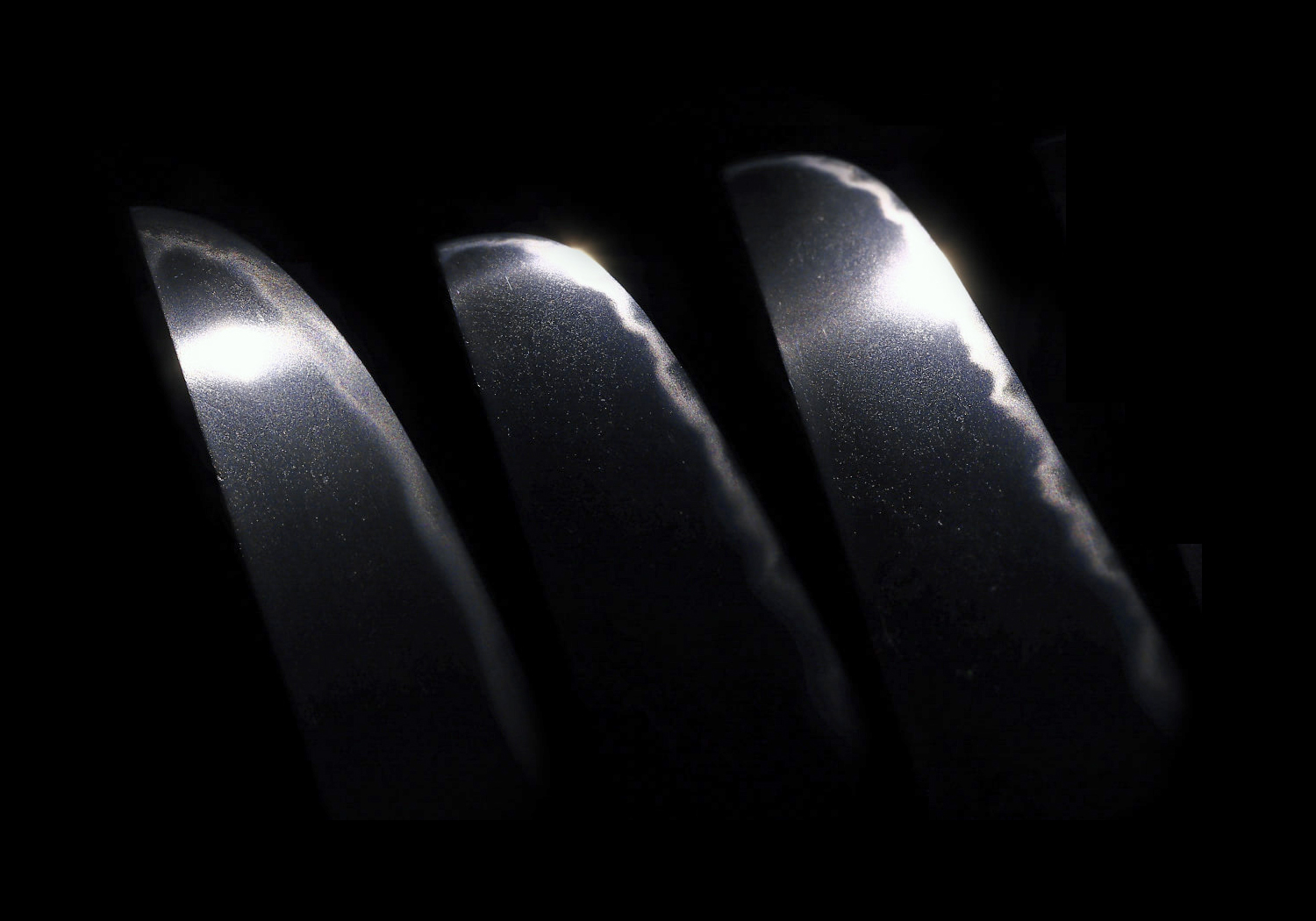
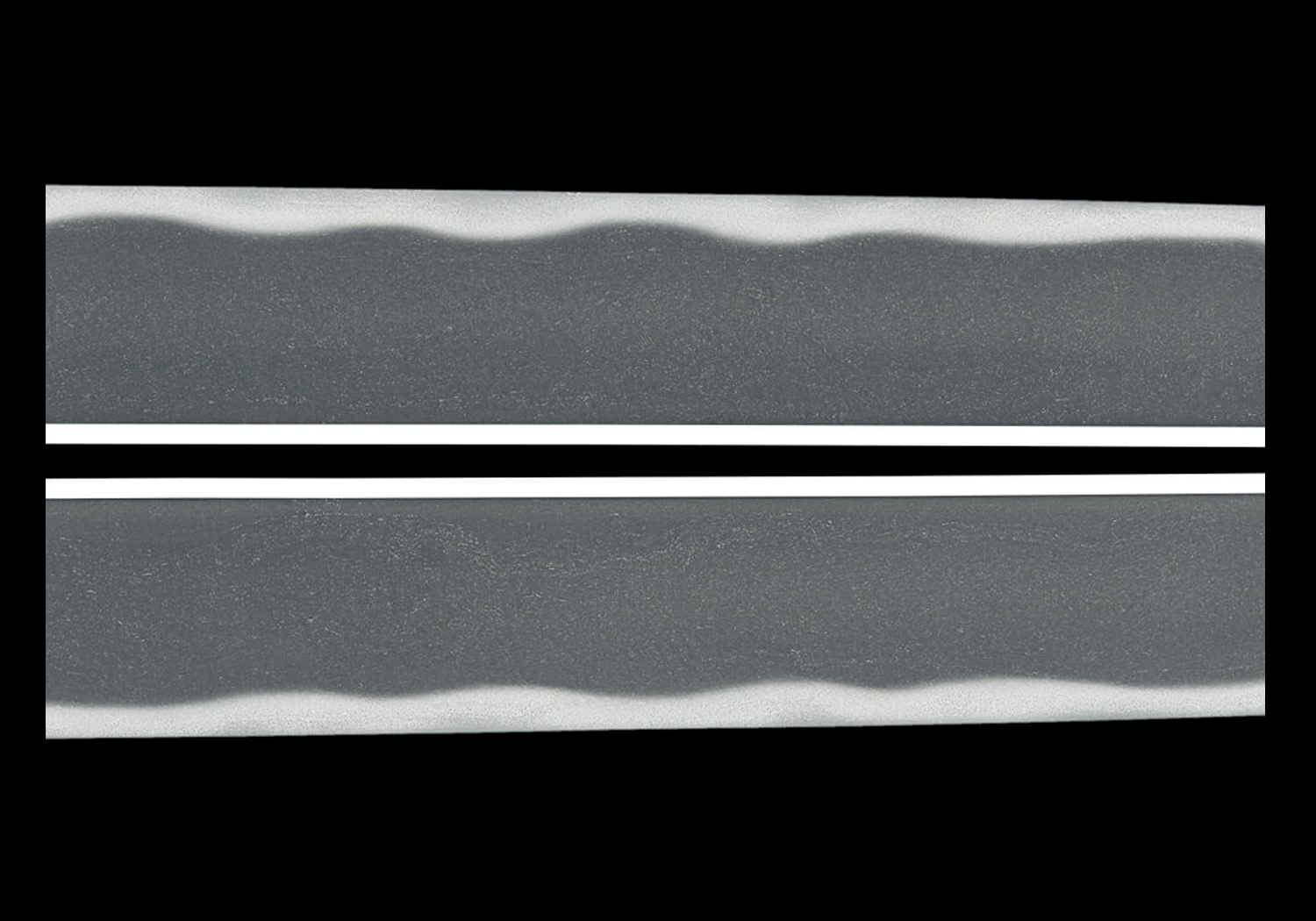
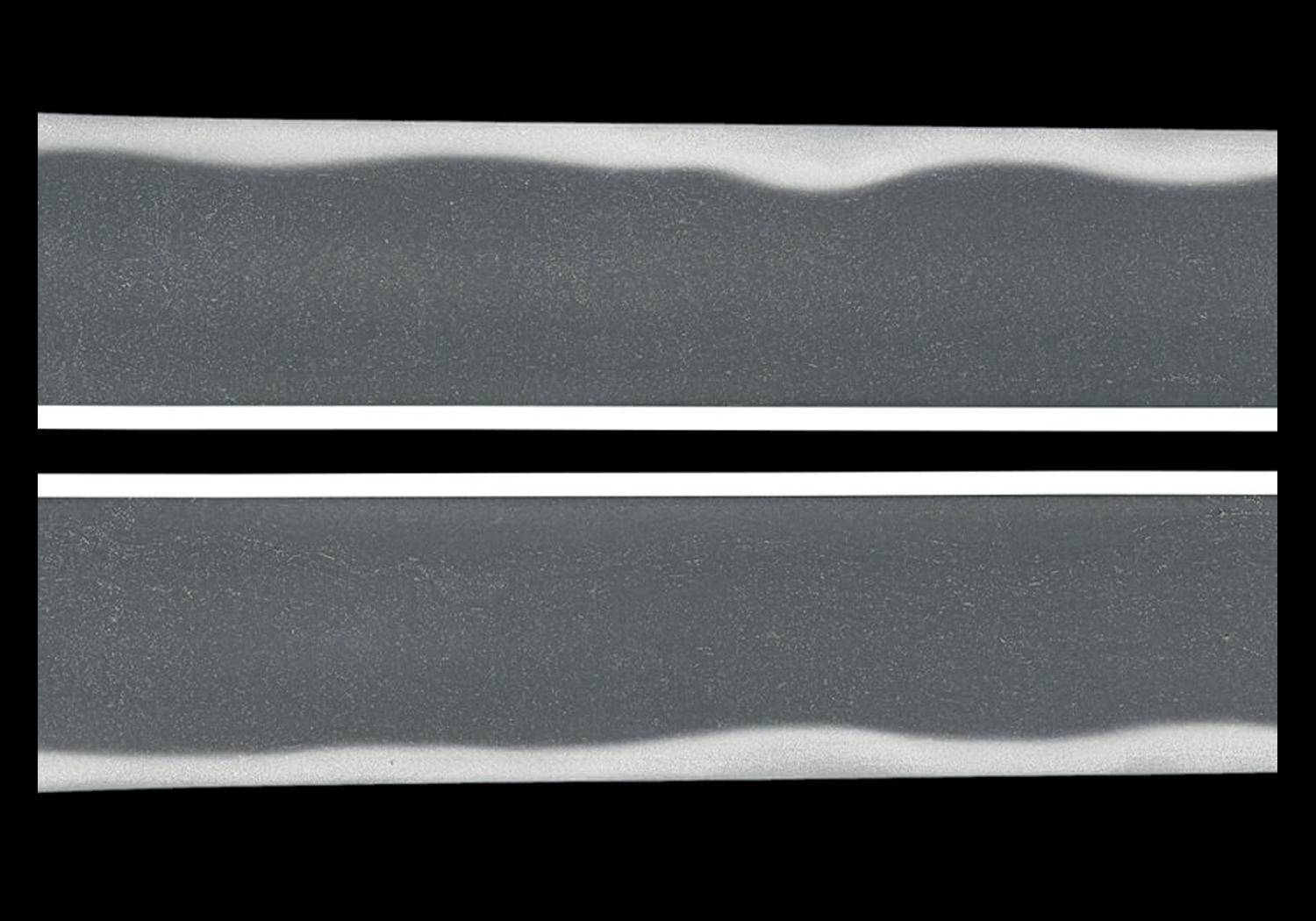
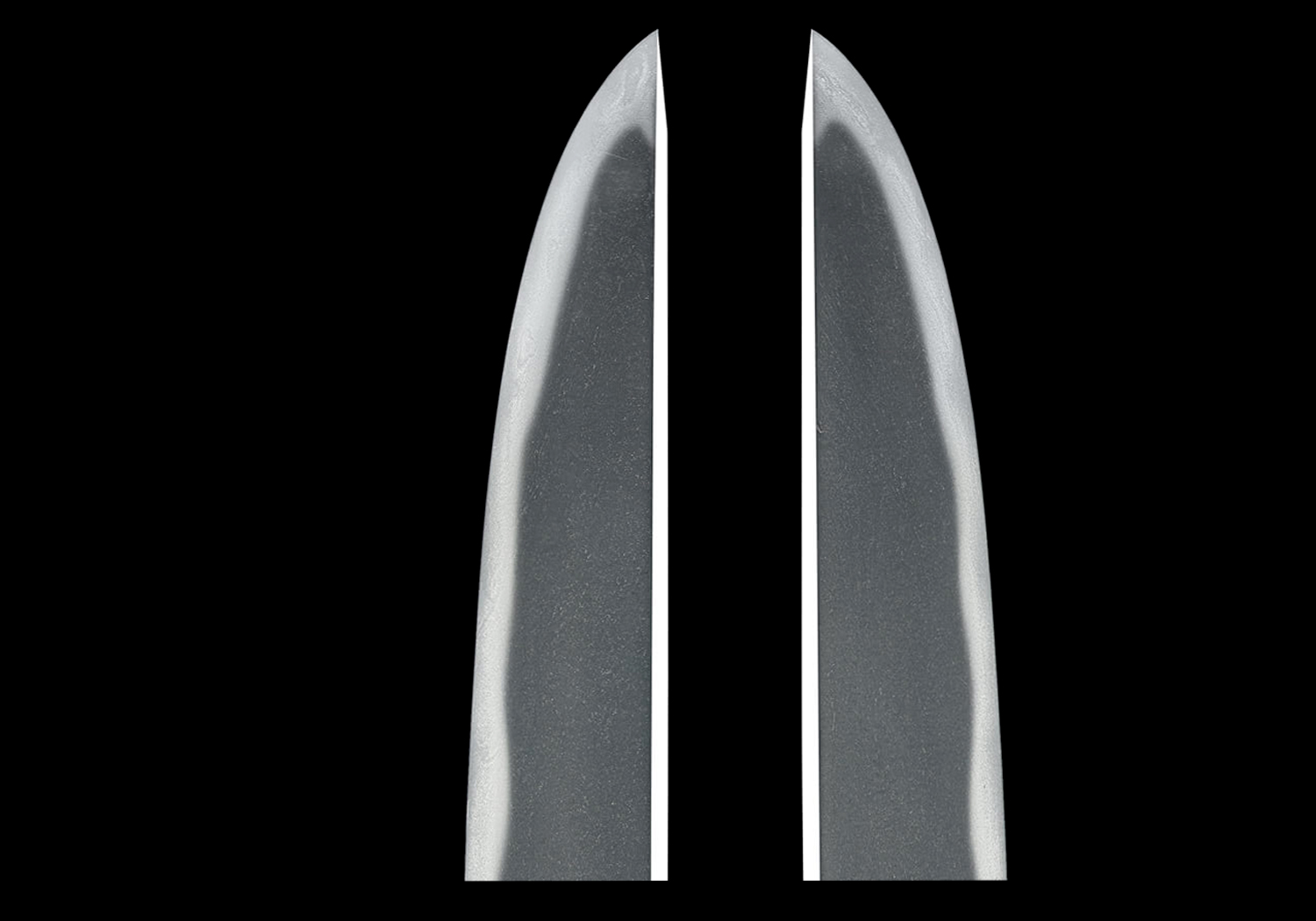
His hamon is ko-notare mixed with gunome. There are ashi as well as fine sunagashi and kinsuji in the ko-nie lined ha. The nioiguchi is clear with a soft luster. The bôshi is a continuation of the midare hamon with a thrusting line toward the tip, which is often pointed and stops with a powerful kaeri. It is stooped toward the edge.
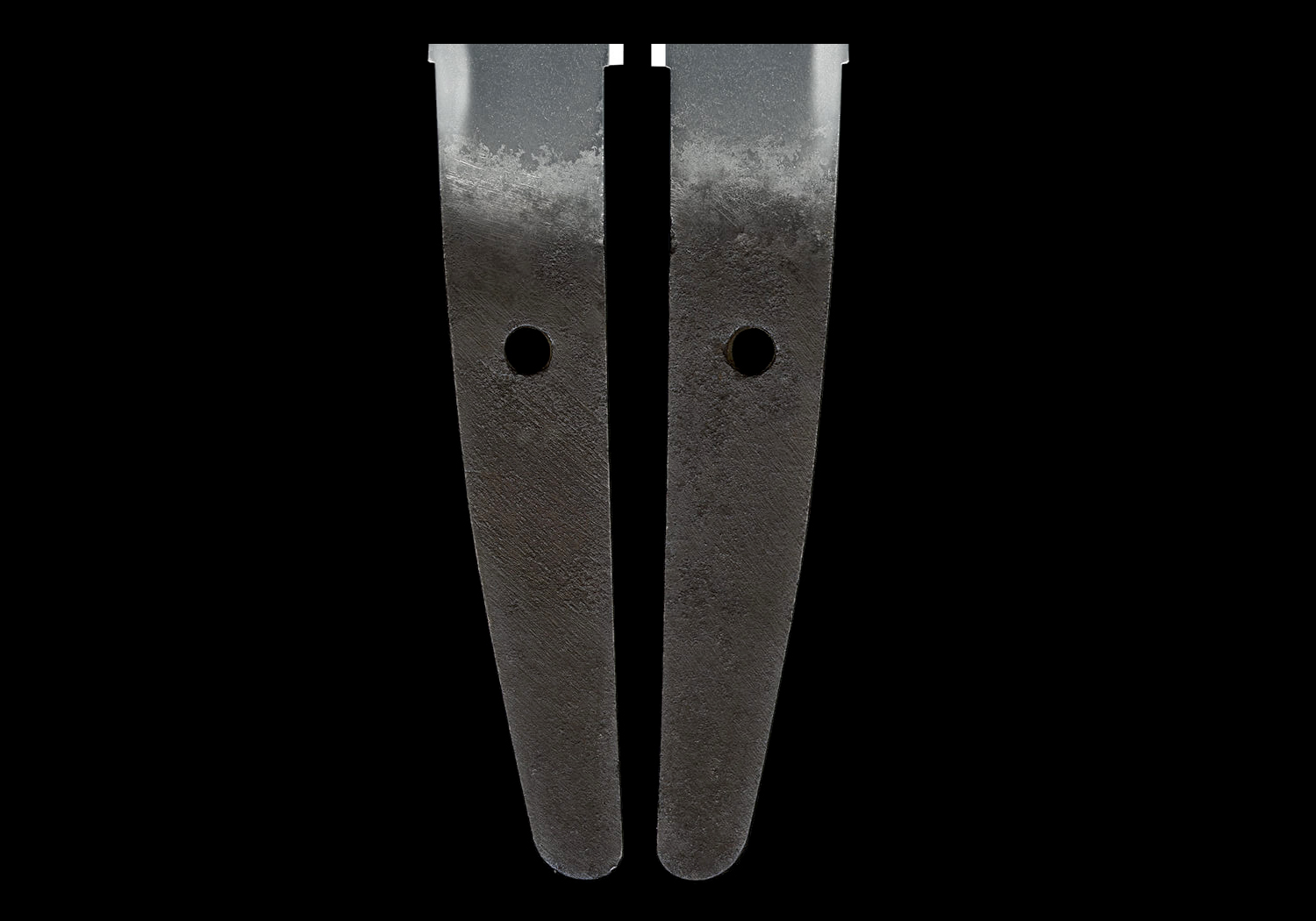
His nakago and typically tapers to form a kurijiri tip. His yasurimei tend to be sujikai or o-sujikai. While our example here is mumei, his typical mei (signature) is a large two-character (安吉) Yasuyoshi given in the middle of the tang, just below the mekugi-ana, on the obverse of the tang.
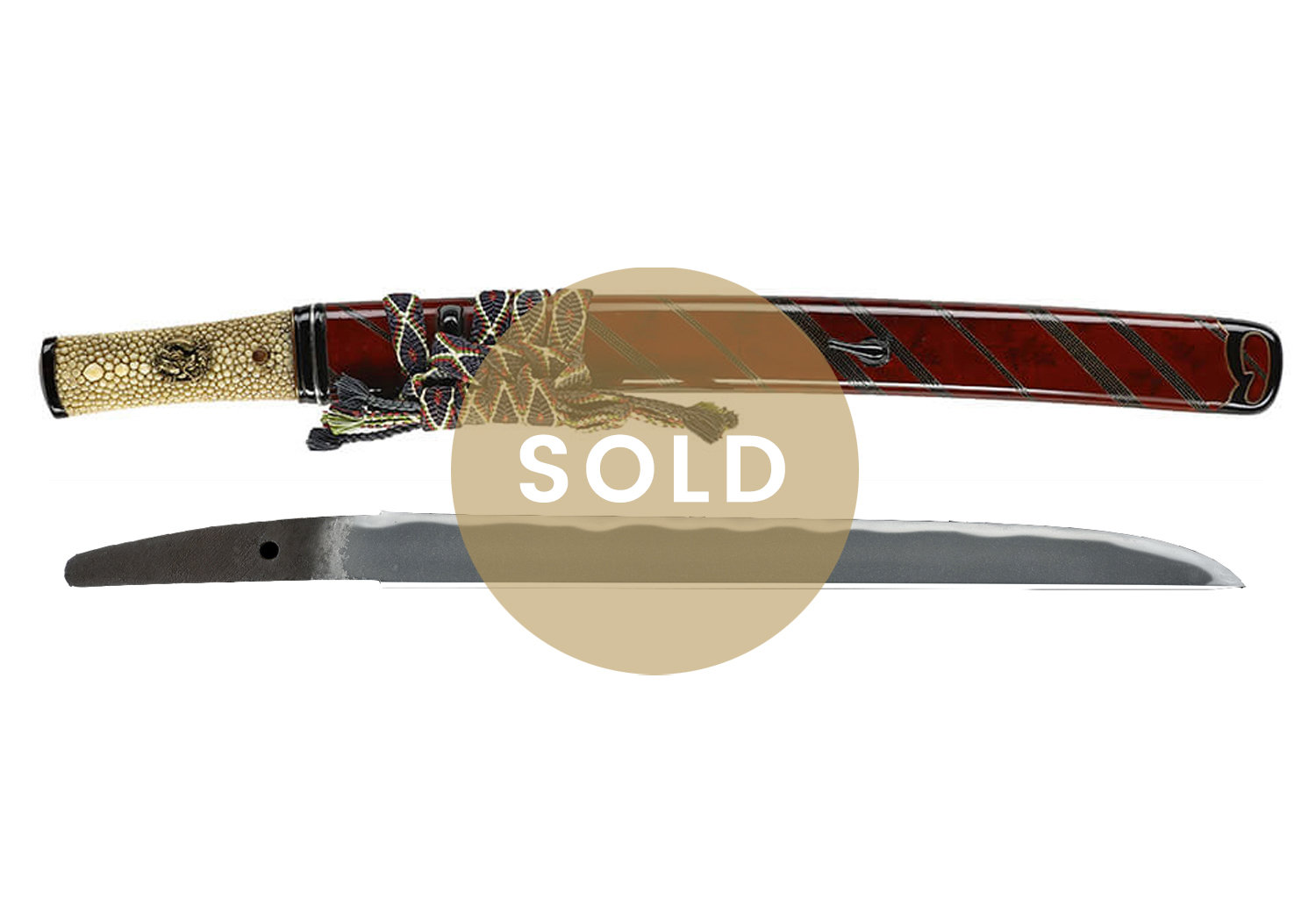
The blade presented for sale here is a fine example of his workmanship resembling that of his father. It is unsigned but the workmanship is obviously that of Yasuyoshi. Were it not so, it would never have reached the exalted rank of Jûyô Tôken as it did back in 1966 when it was awarded that rank at the 14th Jûyô shinsa.
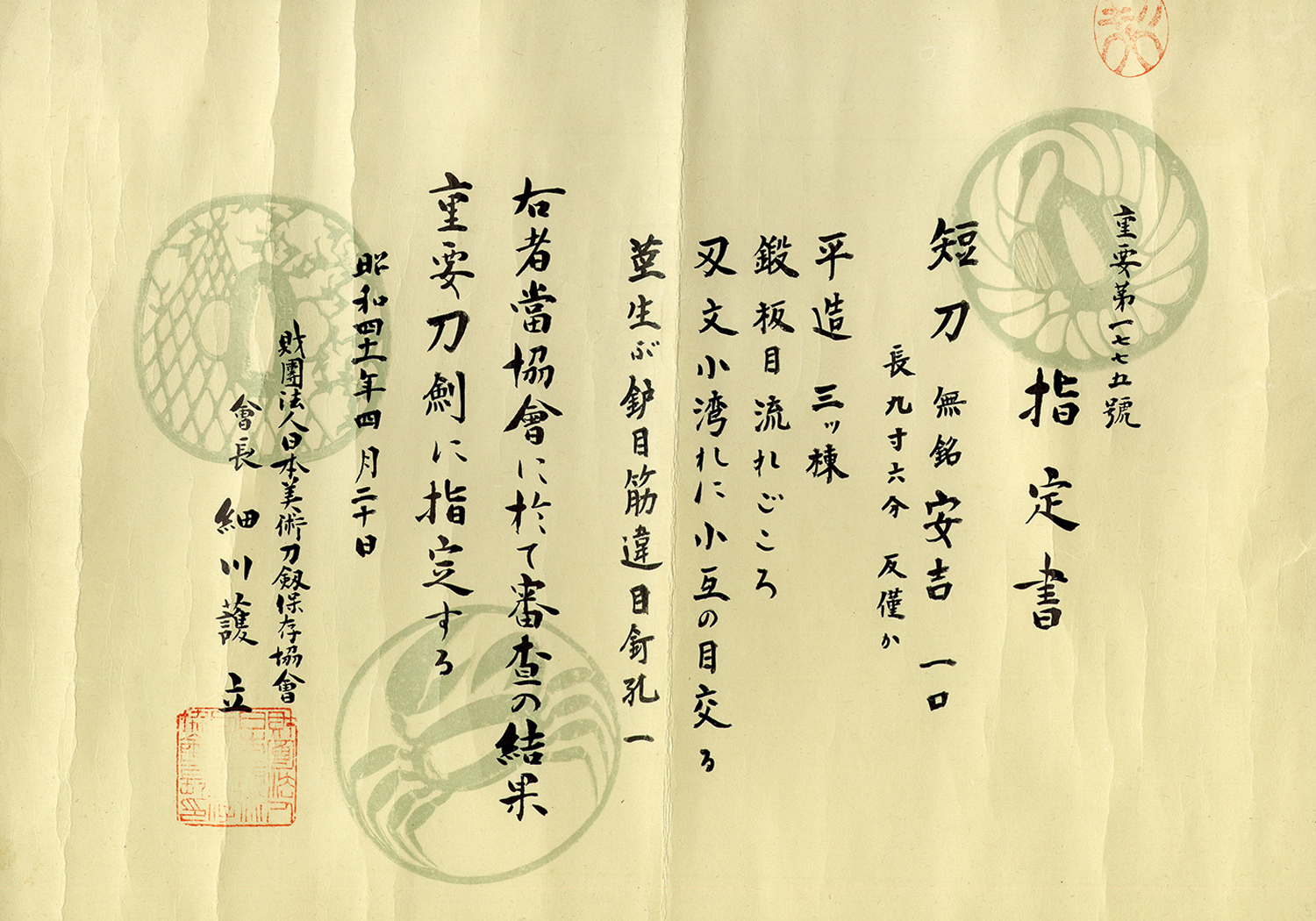
A translation of the Jûyô Tôken zufu for this blade is translated as follows:
Jūyō-Tōken at the 14th Jūyō Shinsa held on April 20, 1966
Tantō, mumei: Yasuyoshi (安吉)
Measurements:
Nagasa 29.1 cm, only a hint of sori, motohaba 2.35 cm, nakago-nagasa 10.6 cm, only very little nakago-sori.
Description:
Keijō: hira-zukuri, mitsu-mune, a hint of sori
Kitae: itame that is mixed with some nagare and that features plenty of ji-nie
Hamon: ko-notare in nie-deki with a clear nioiguchi that is mixed with ko-gunome and with Sunagashi.
Bōshi: ko-maru-kaeri with hakikake
Nakago: ubu, pronounced kurijiri, sujikai-yasurime, one mekugi-ana, mumei
Explanation:
Yasuyoshi (安吉) was the son of Samonji (左⽂字) and was a smith active in the Nanbokuchō period. This tantō is ubuand mumei, tends slightly to sunnobi, is with its hint of sori of the sugata of the Nanbokuchō period, and displays a hamon in ko-notare with ko-nie and with a clear nioiguchi. Accordingly, we are in agreement that the blade displays the typical characteristics that are traditionally associated with Yasuyoshi, and the jiba is of an excellent deki.
Further confirming the attribution to Sa Yasuyoshi, this blade comes in an older shirasaya with a sayagaki by the late Honma Sensei (Kunzan) the one of the founders of the NBTHK in Tokyo and foremost sword experts of the 20th century. He simply states that this is a sword by Sa Yasuyoshi and states its length.
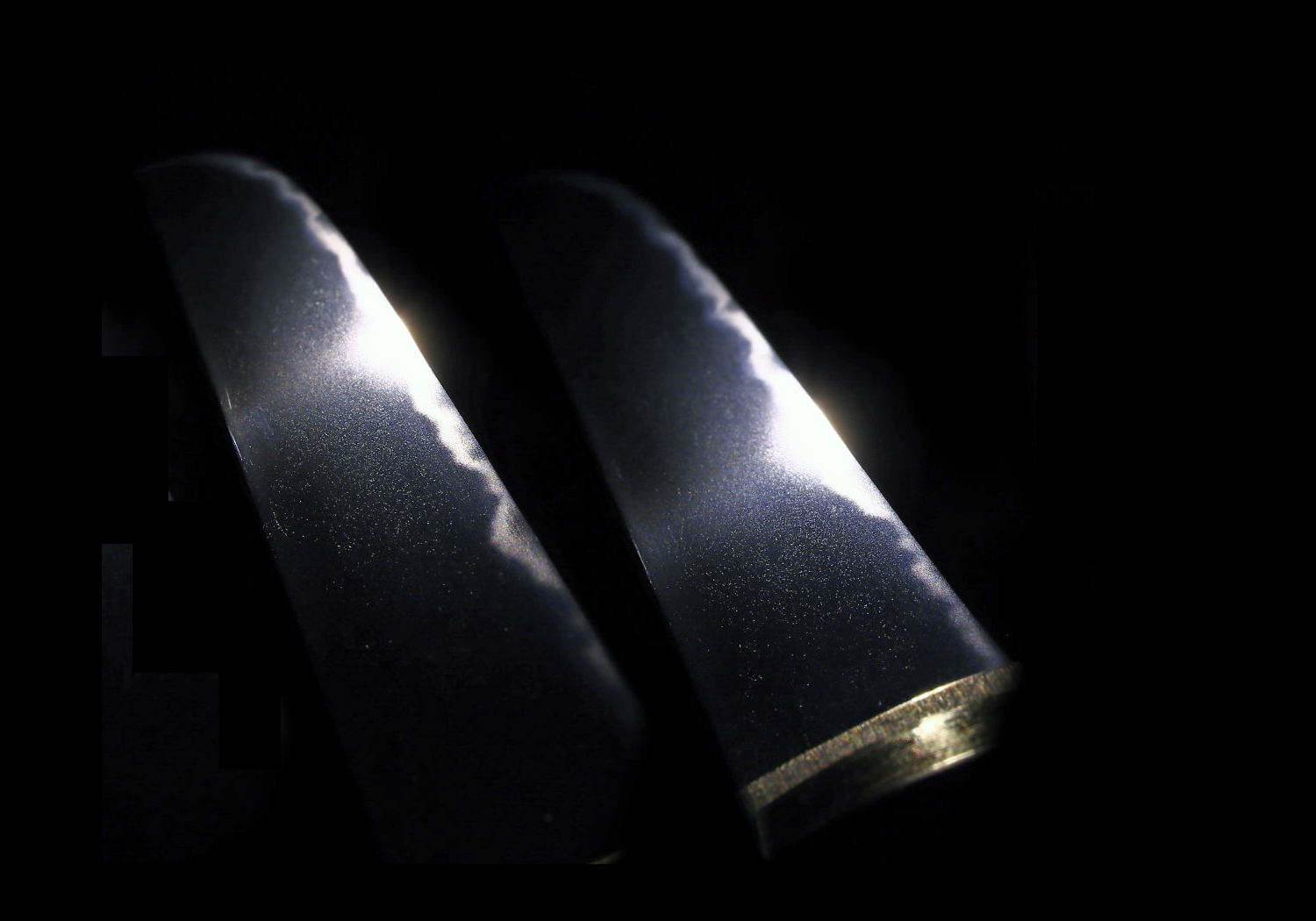
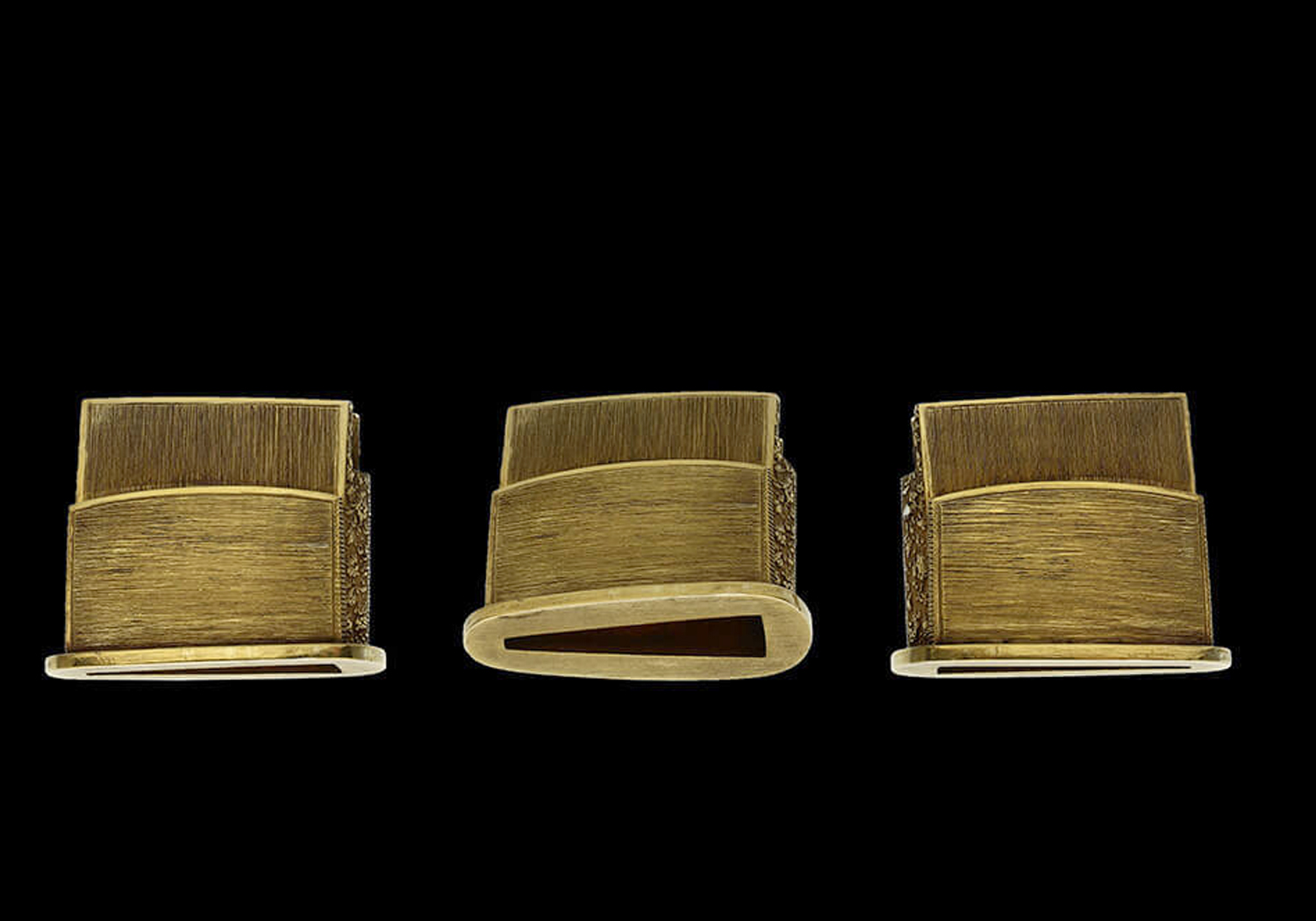
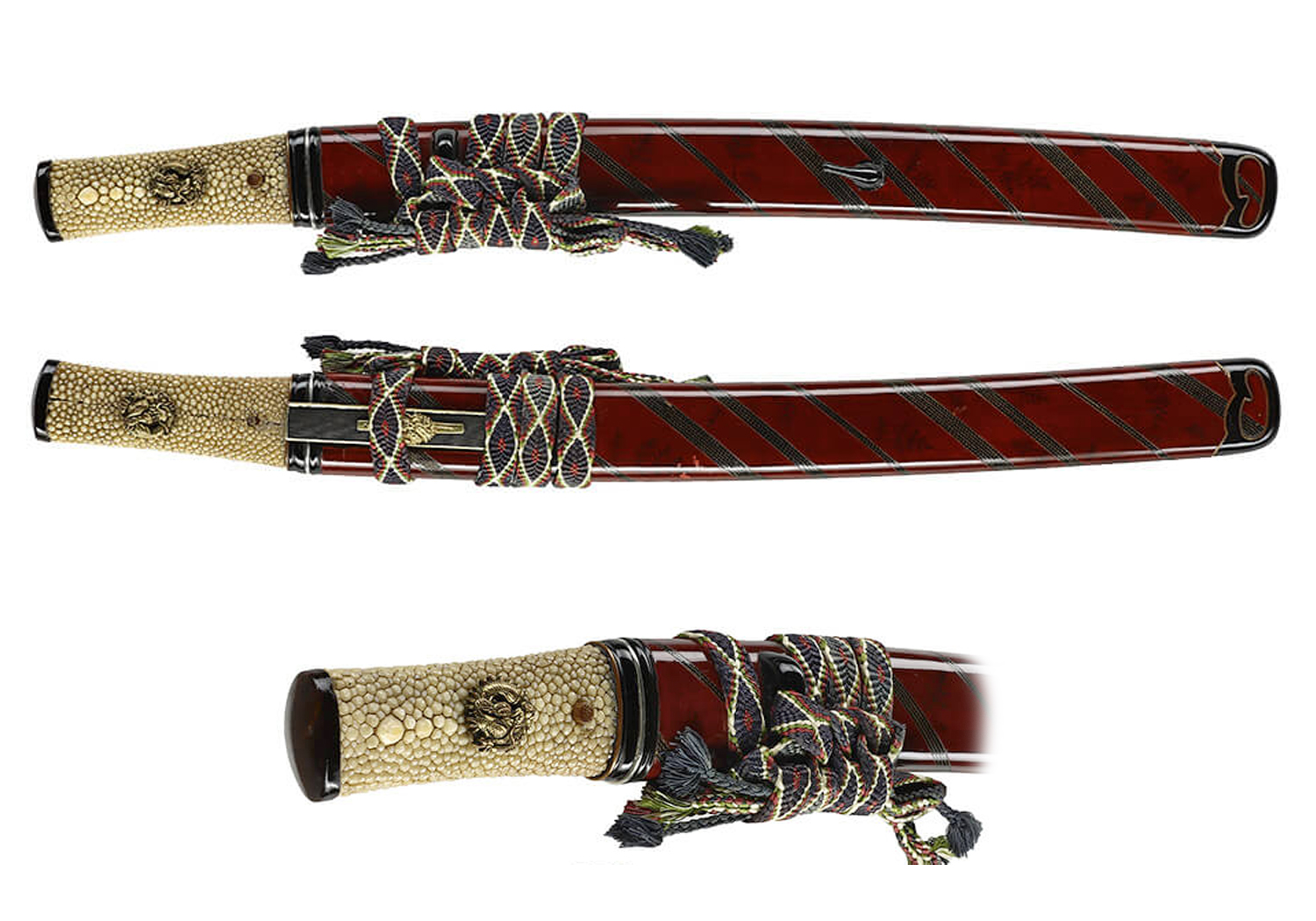
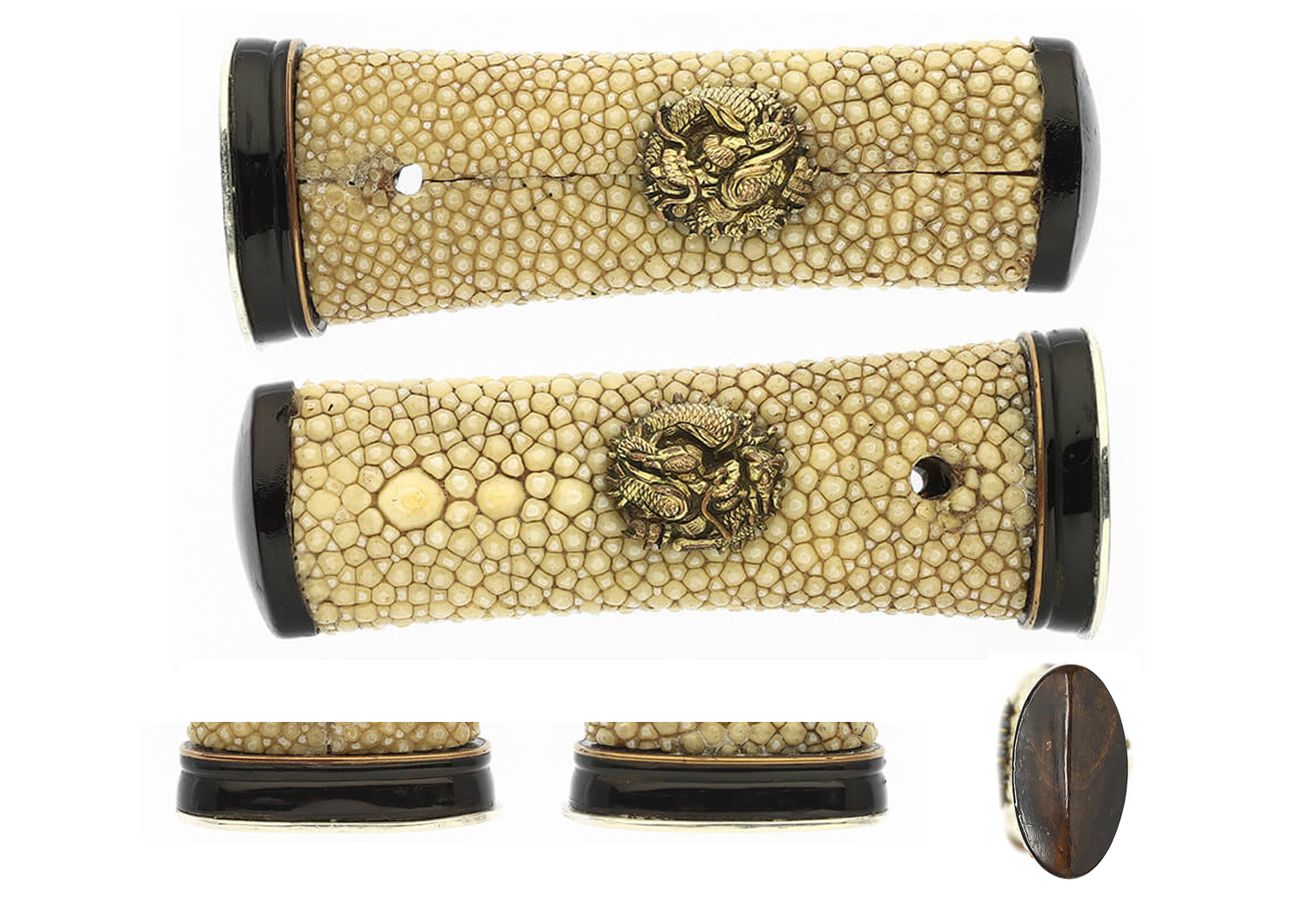
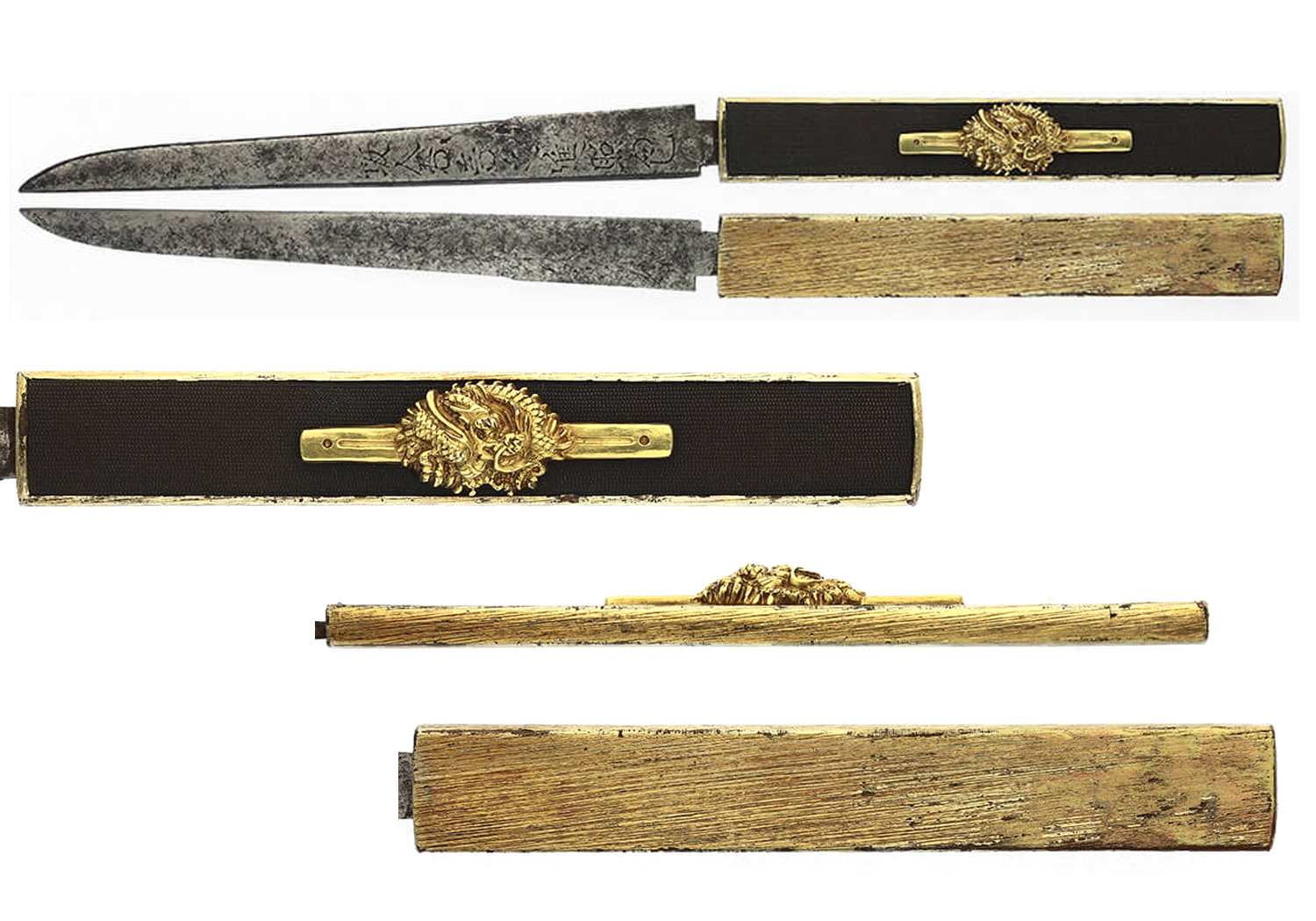
Accompanying this tantô is a very attractive koshirae that is in excellent condition. This koshirae is, in my humble opinion, probably made around the time of the Meiji Era or possibly even earlier. It is almost impossible to find craftsmen today who can create this extraordinary lacquer work. If someone could be found, the cost of making a koshirae like this would be cost prohibitive. It can be seen in the photos below.
This tantô would be a great addition to any collection.
SOLD