Godai Tadayoshi (五代忠吉), the fifth generation in the Tadayoshi lineage, was born in 1696. He was the son of the Omi Daijo Tadayoshi (近江大掾忠吉). He began working around 1716 and worked until his death in 1775. He signed Hizen Kuni Tadahiro (肥前国忠廣) while his father was alive. He is also known to have signed dai-mei for his father. After his father’s death in 1747 he changed his signature to read Hizen (no) Kuni Tadayoshi (肥前国忠吉). He received the title Omi (no) Kami (近江守) in 1750 after which he began signing Hizen Kuni Omi (no) Kami Tadayoshi (肥前国 近江守 忠吉). He is the first of the later smiths to sign “Omi (no) Kami” (近江守) and he is known by that nickname. He should not be confused with the second generation Tadahiro (忠廣) who is also known by the nickname “Omi no Kami” (近江守).
This smith had a long working life and produced a good number of swords. Although a later generation, his work is considered to resemble that of the first generation. He is considered the last of the “Shinto” Tadayoshi smiths. The next generation (6th) marks the beginning of the “Shinshinto” Tadayoshi smiths.
SUGATA: The fifth generation worked in the Yamashiro tradition like all the Tadayoshi smiths. The sori is shallow torii-sori with the shinogi being high. The kasane is thick and there is hiraniku.
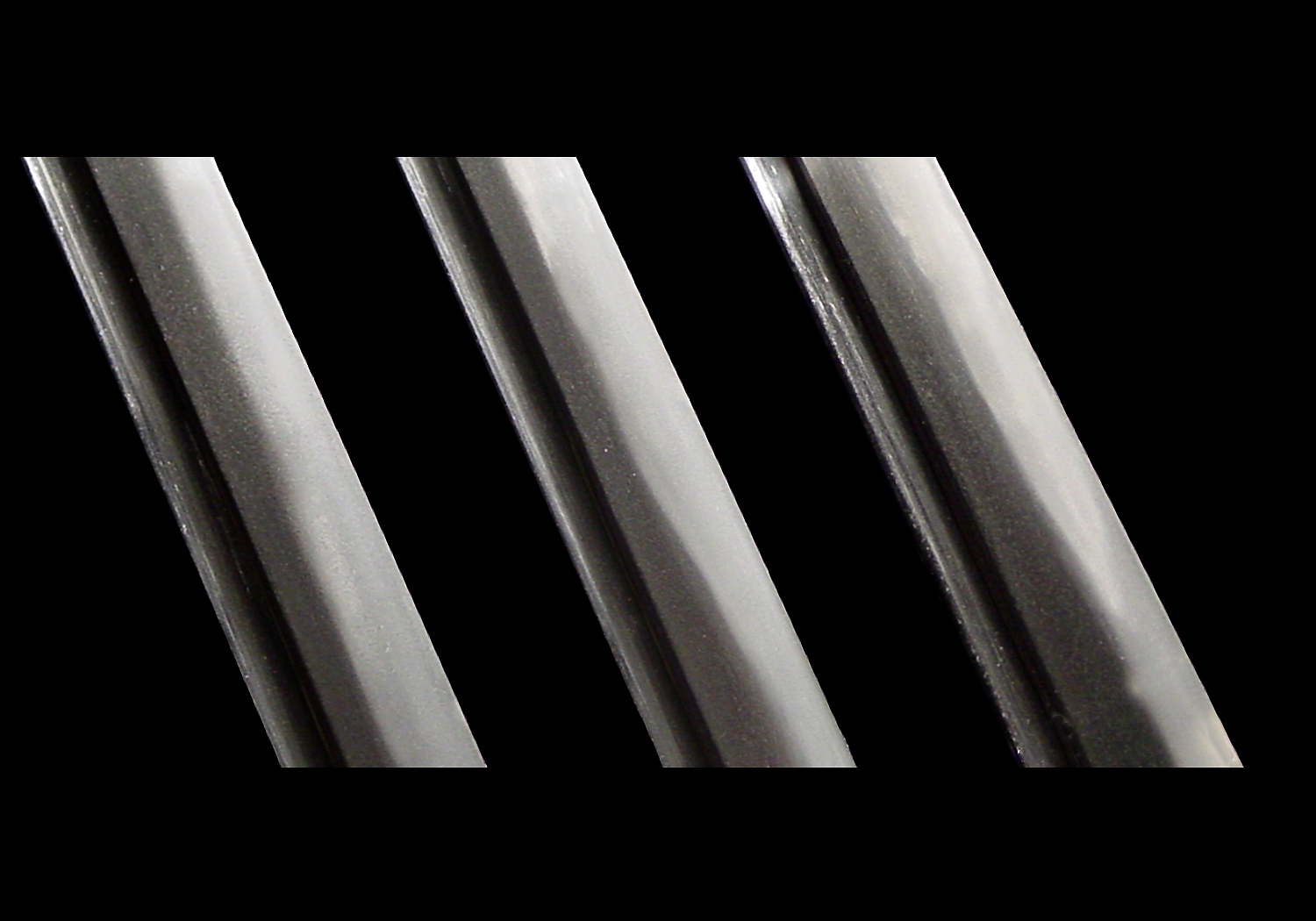
JITETSU: Two types of jihada are most commonly found on Hizen blades. They are the konuka-hada (rice grain) and the nukame-hada (misty drizzle). These types of hadaconsist of extremely tight mokume that has become known as the distinctive “Hizen-hada”.
HAMON: Chu-suguba is most frequent and it is nie-deki with abundant nie in the hamon. While other hamon such as notare, gunome, and choji can be found in the earlier generations, the later generations worked mostly in suguba. Occasionally there are exceptions, of course.
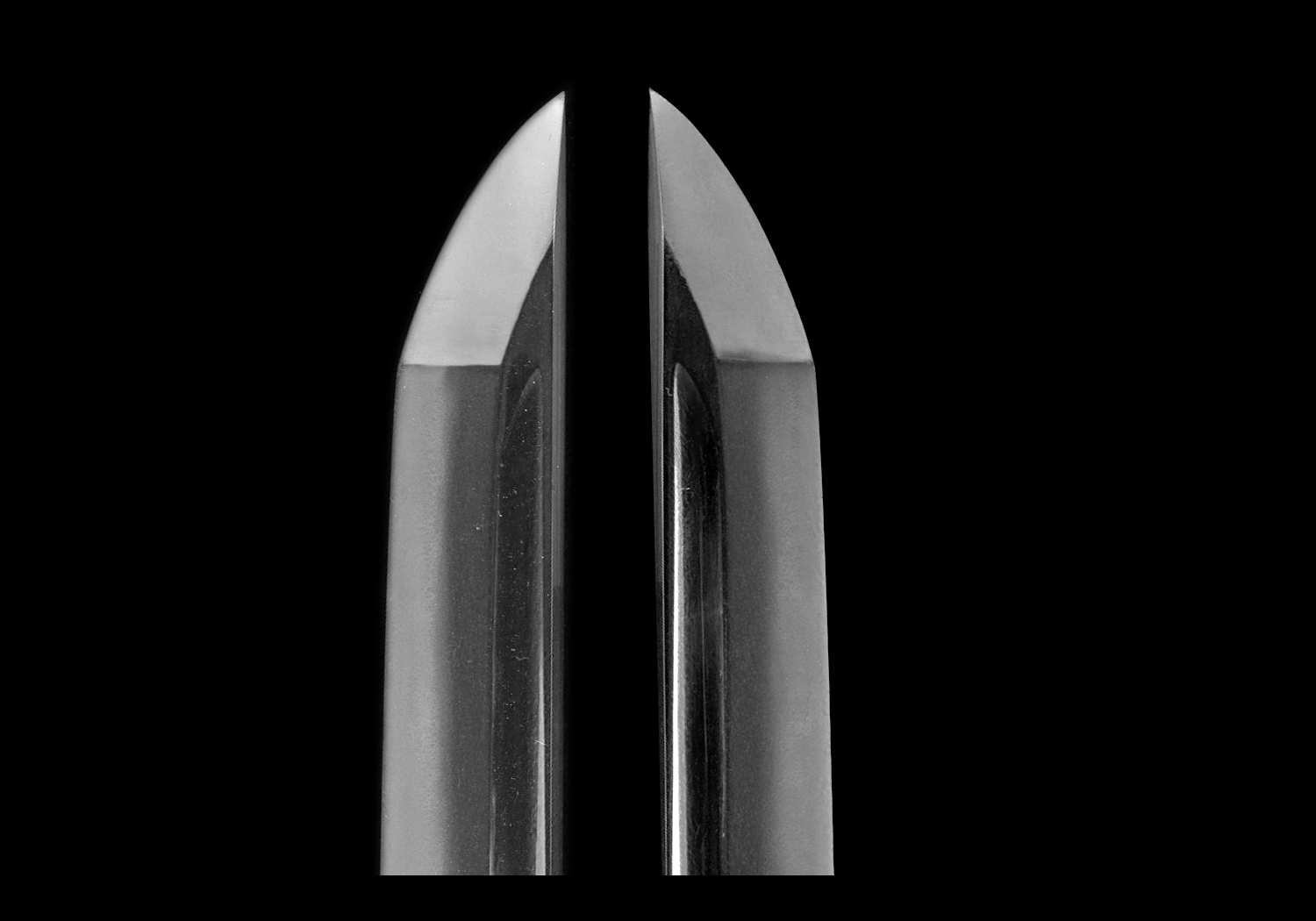
BÔSHI: The bôshi of the fifth generation tend to be on the long side (slightly stretched). The temper in the bôshi is wide with a komaru turn back and slight kaeri.
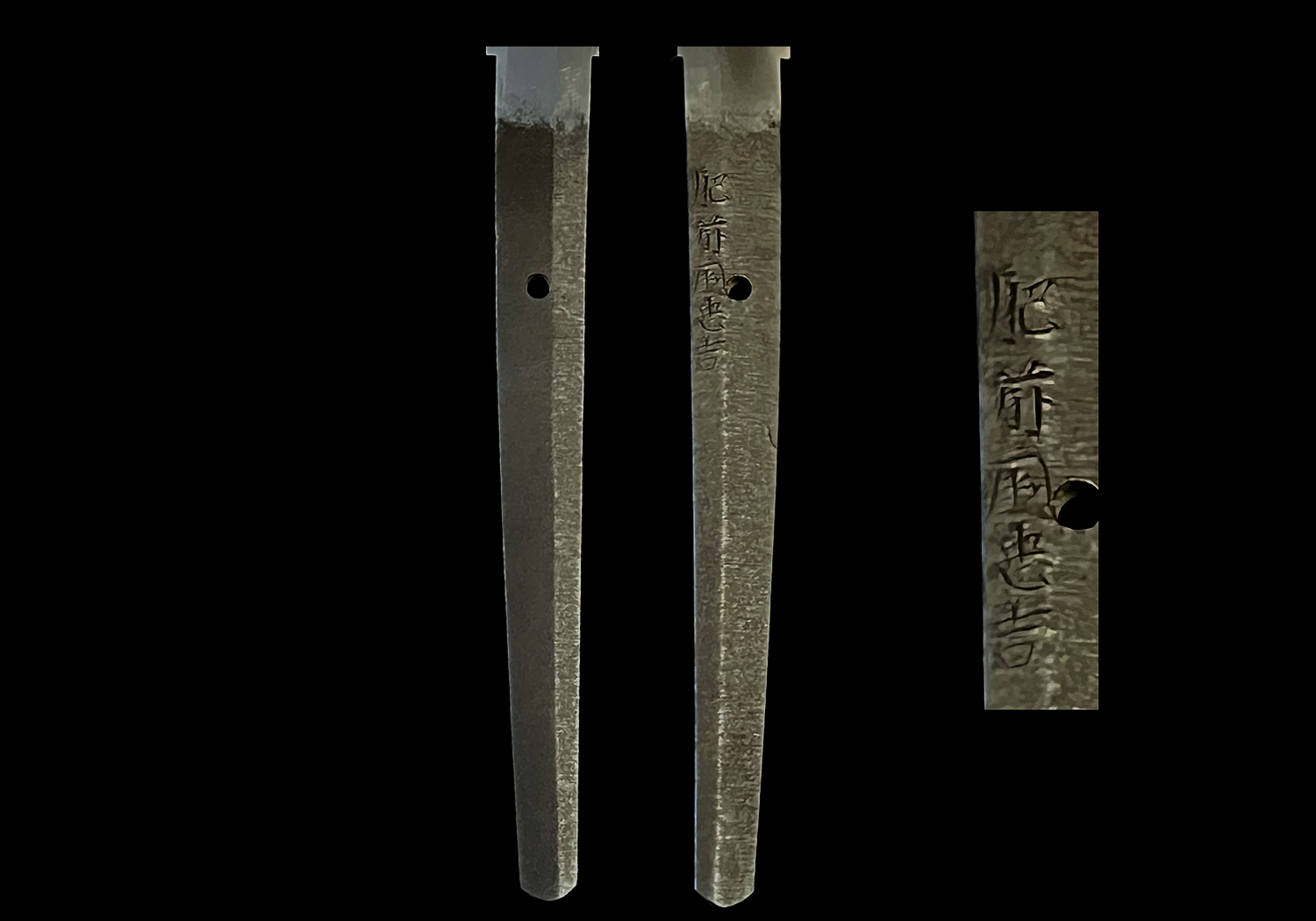
NAKAGO: The fifth generation’s Tadahiro nakago are iri-yamagata and all of his Tadayoshi nakago are kuri-jiri.
MEI: As with all the Tadayoshi smiths he signed his katana tachi-mei. His signatures were as follows:
Hizen Kuni Tadahiro (1716-1747) 肥前国忠廣
Hizen Kuni Tadayoshi (1747-1750) 肥前国忠吉
Hizen Kuni Ômi (no) Kami Tadayoshi (ca.1750) 肥前国近江守忠吉
Ômi (no) Kami Tadayoshi (ca.1770) 近江守忠吉
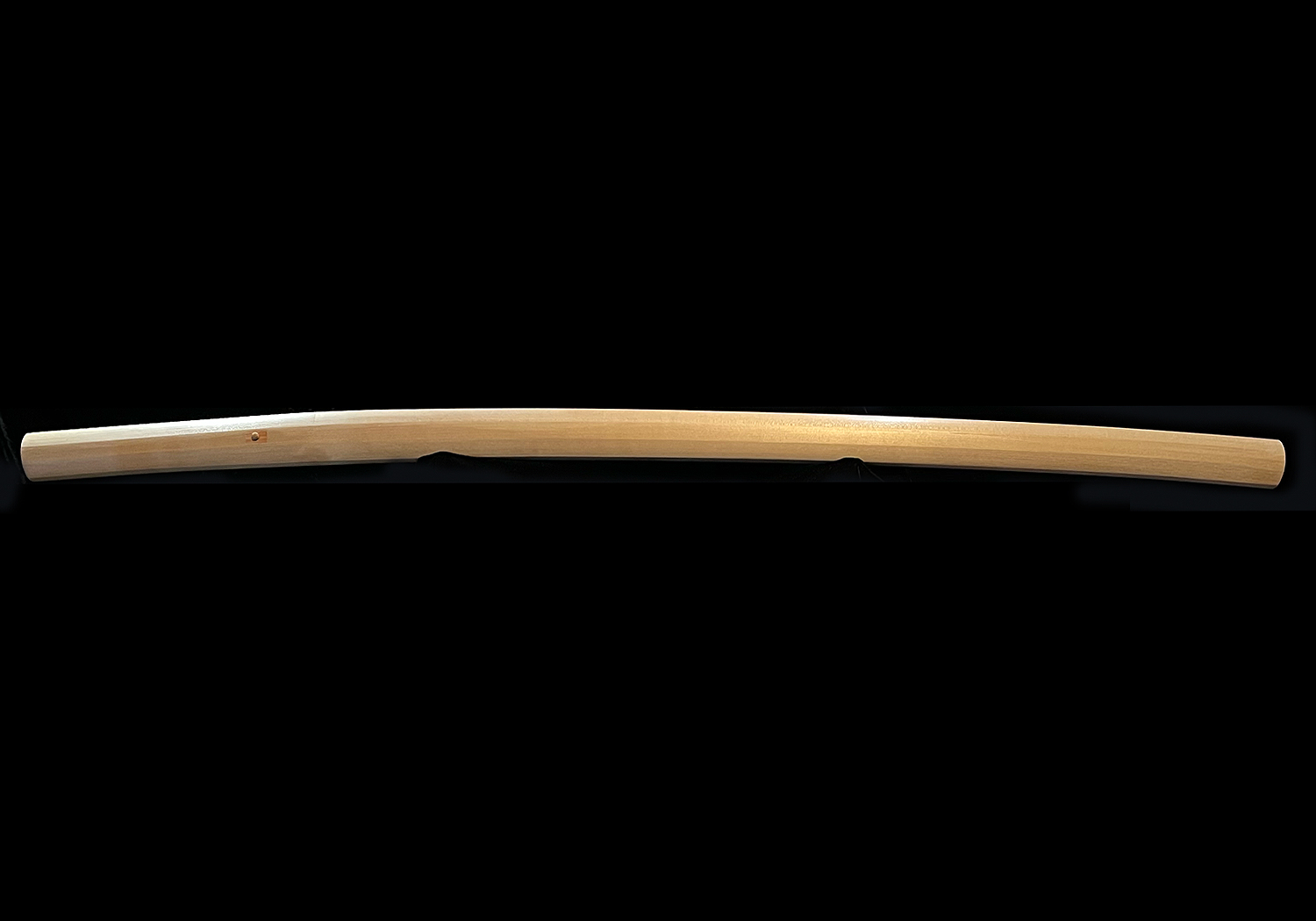
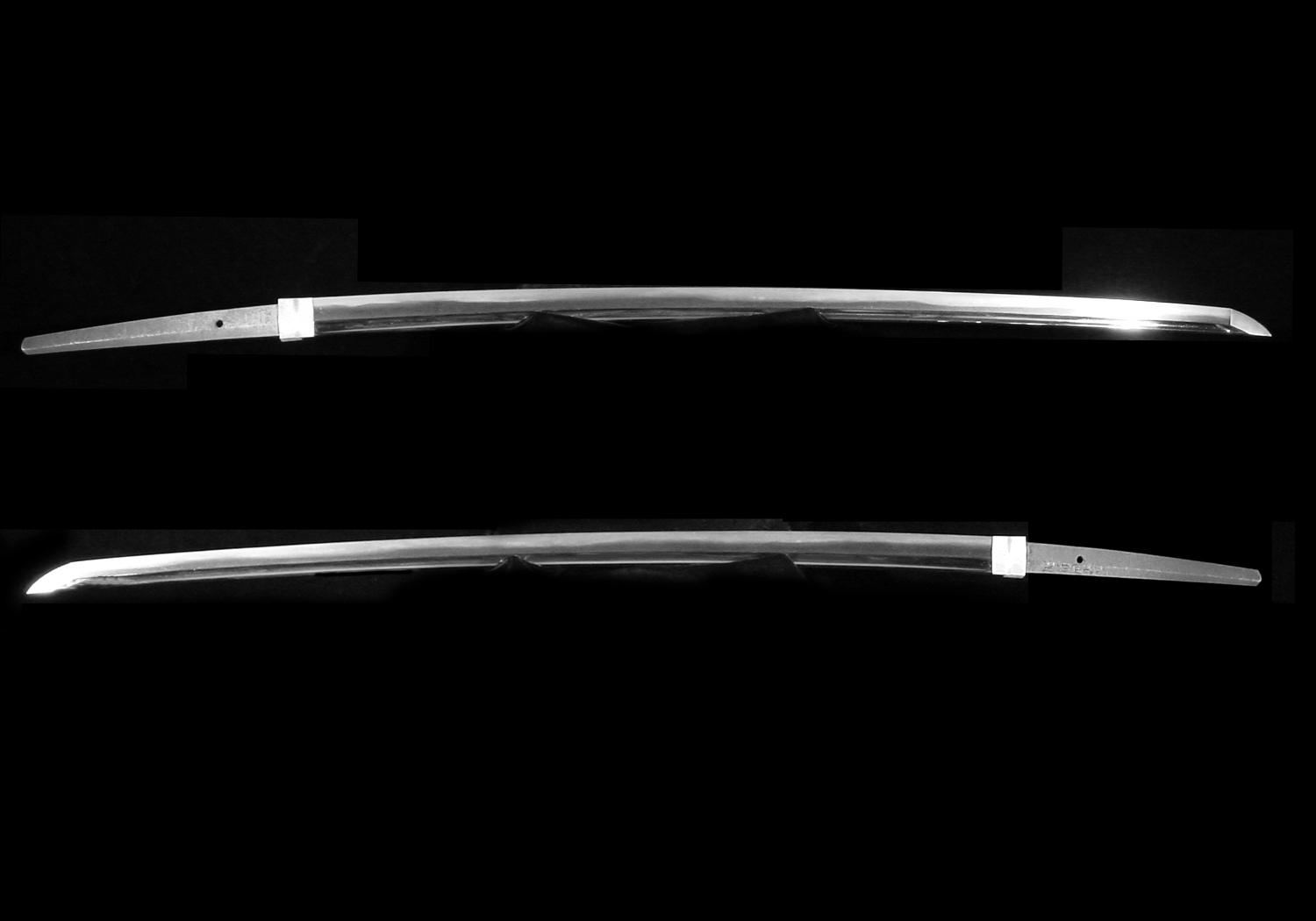
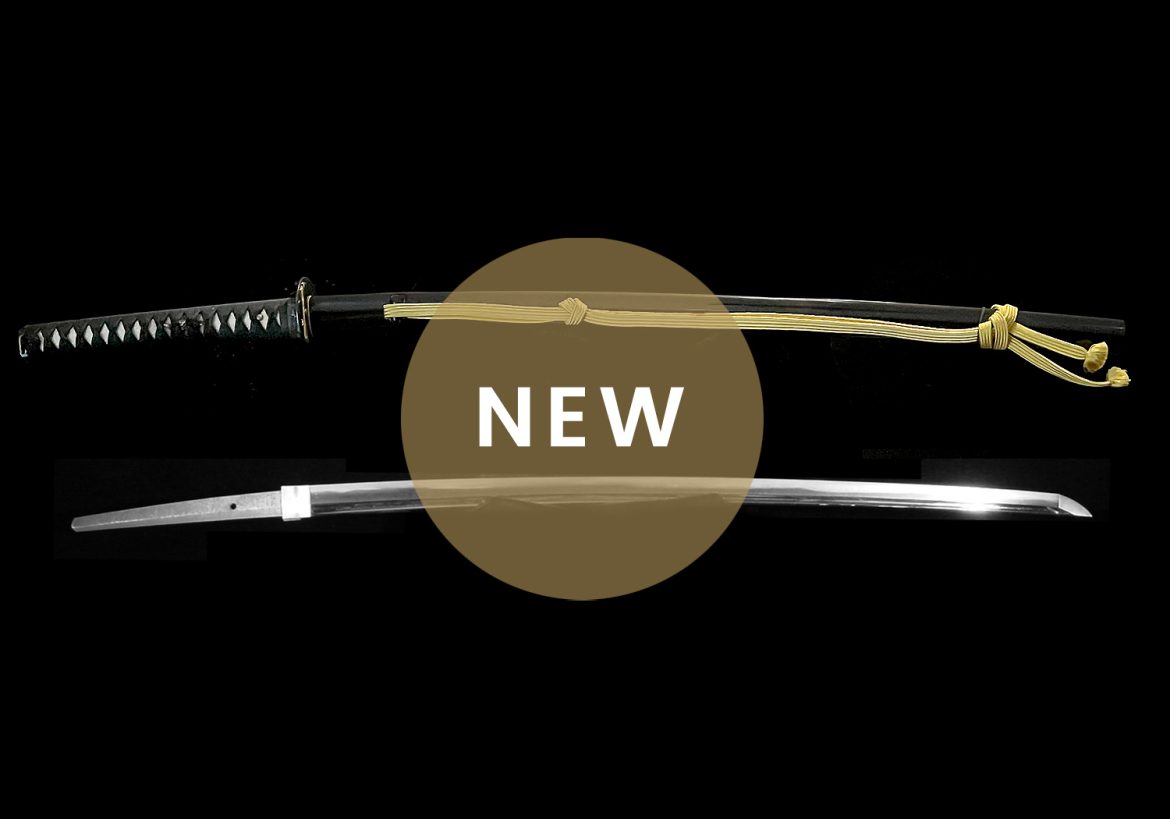
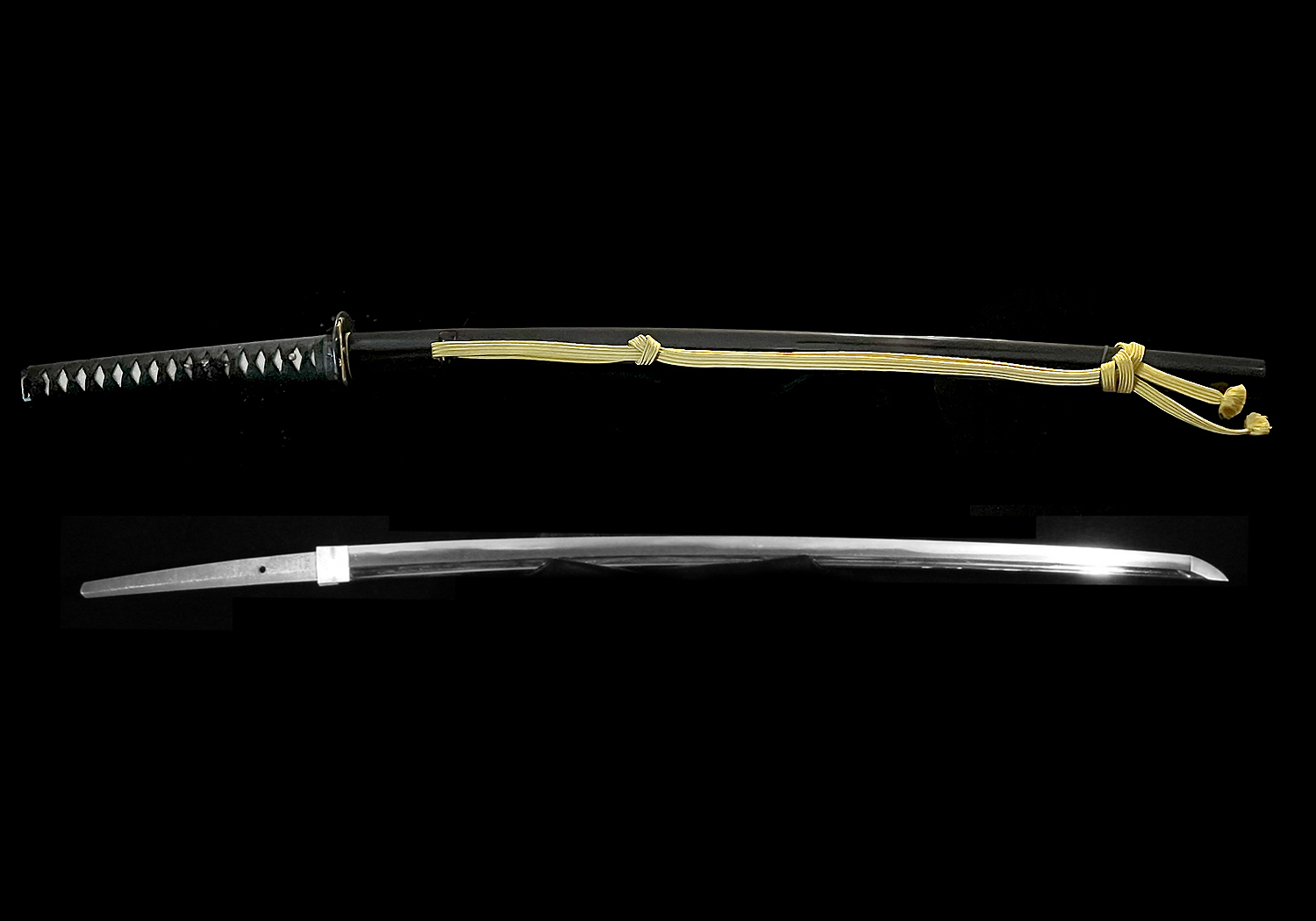
The blade presented here is a long katana by the fifth generation Tadayoshi. The nagasa (length) is 29 1/16 inches or 73.9 cm. The width at the moto-haba (hamachi) is 1.2 inches or 3.0 cm and the width at the saki-haba (yokote) is 0.52 inches or 1.3 cm. The kasane (thickness) of the blade is 0.3 inches or .08 cm. The blade has a typical Hizen shallow torii sori measuring 0.52 inches or 1.3 cm. This is a very well portioned graceful blade.
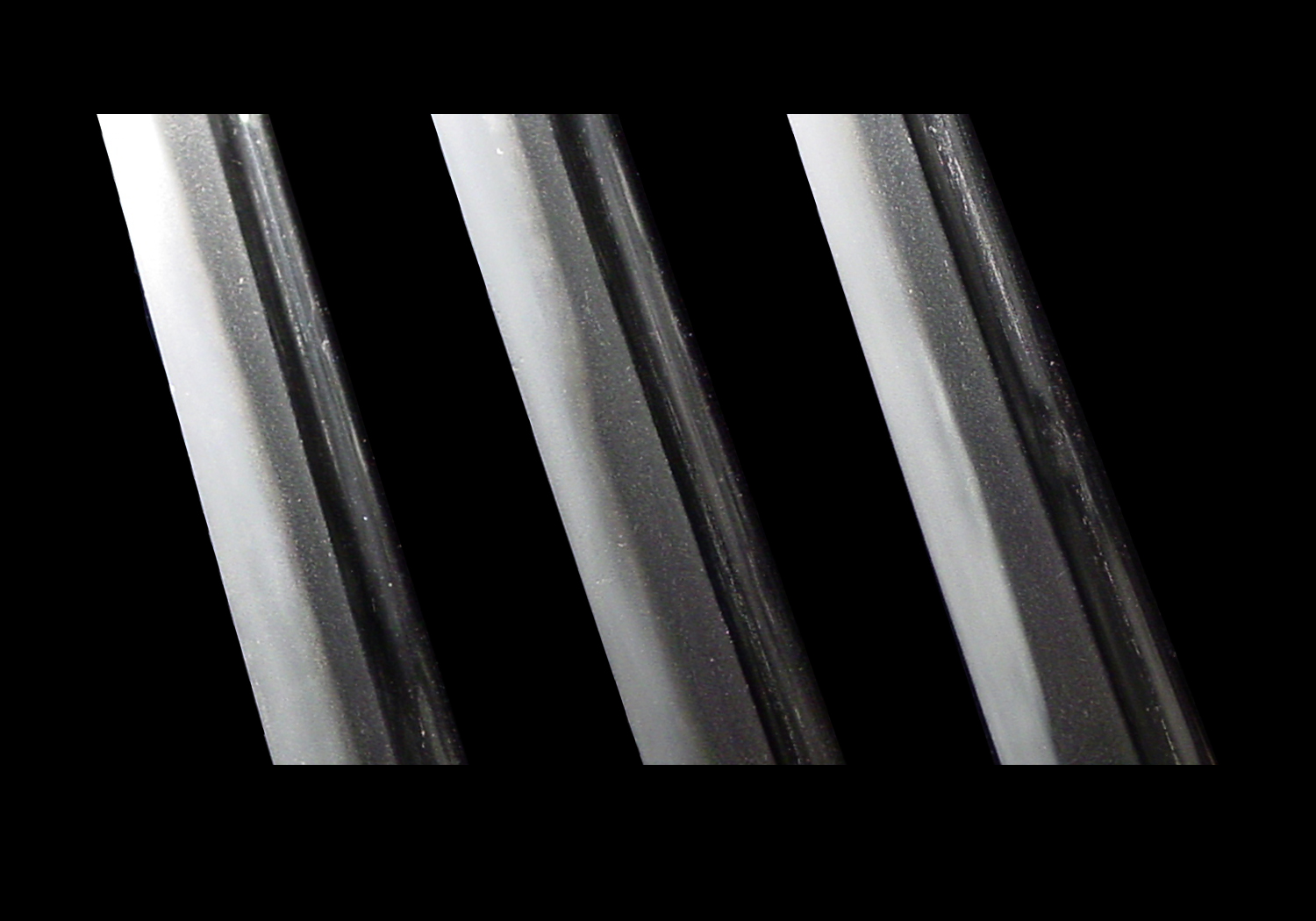
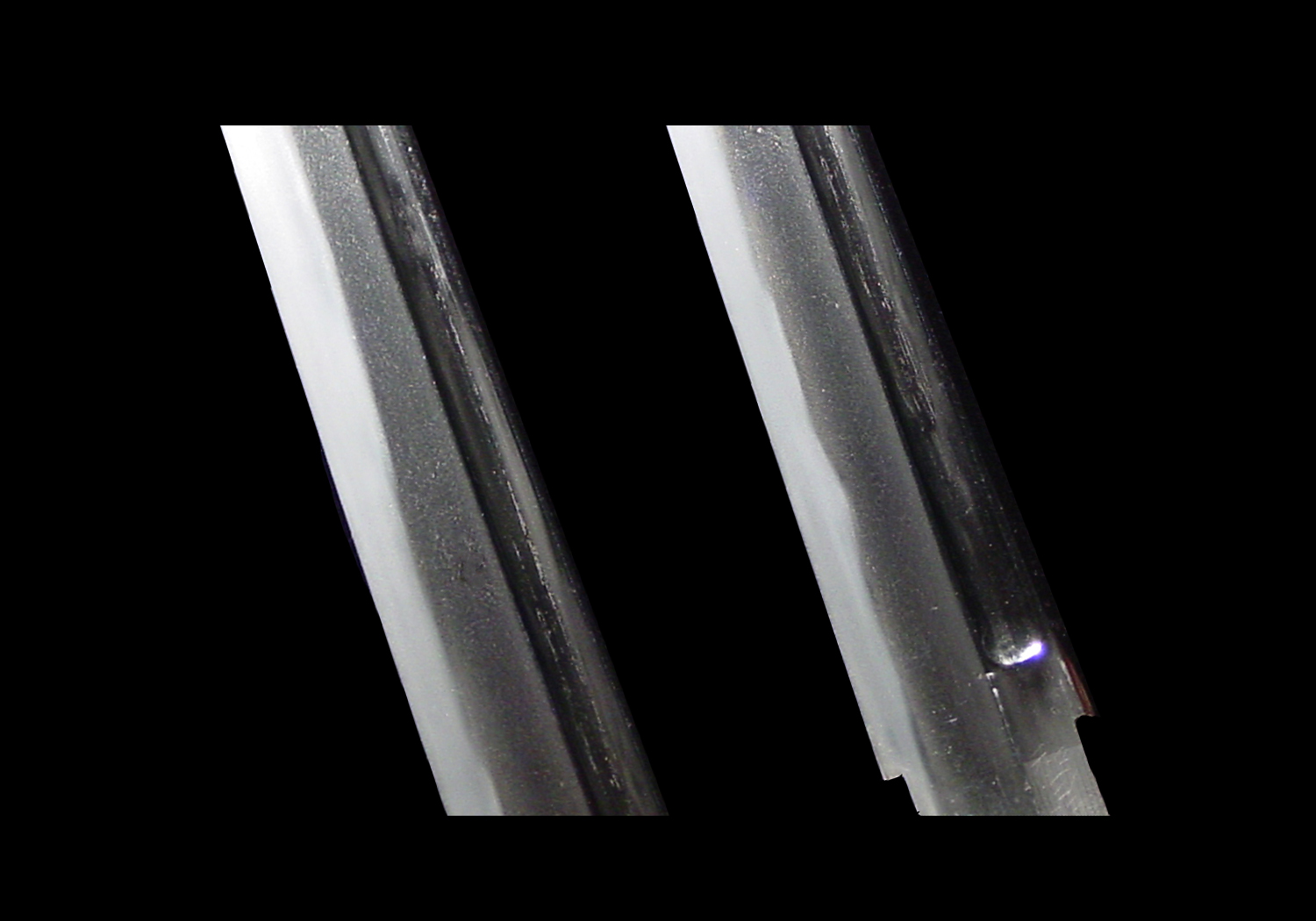
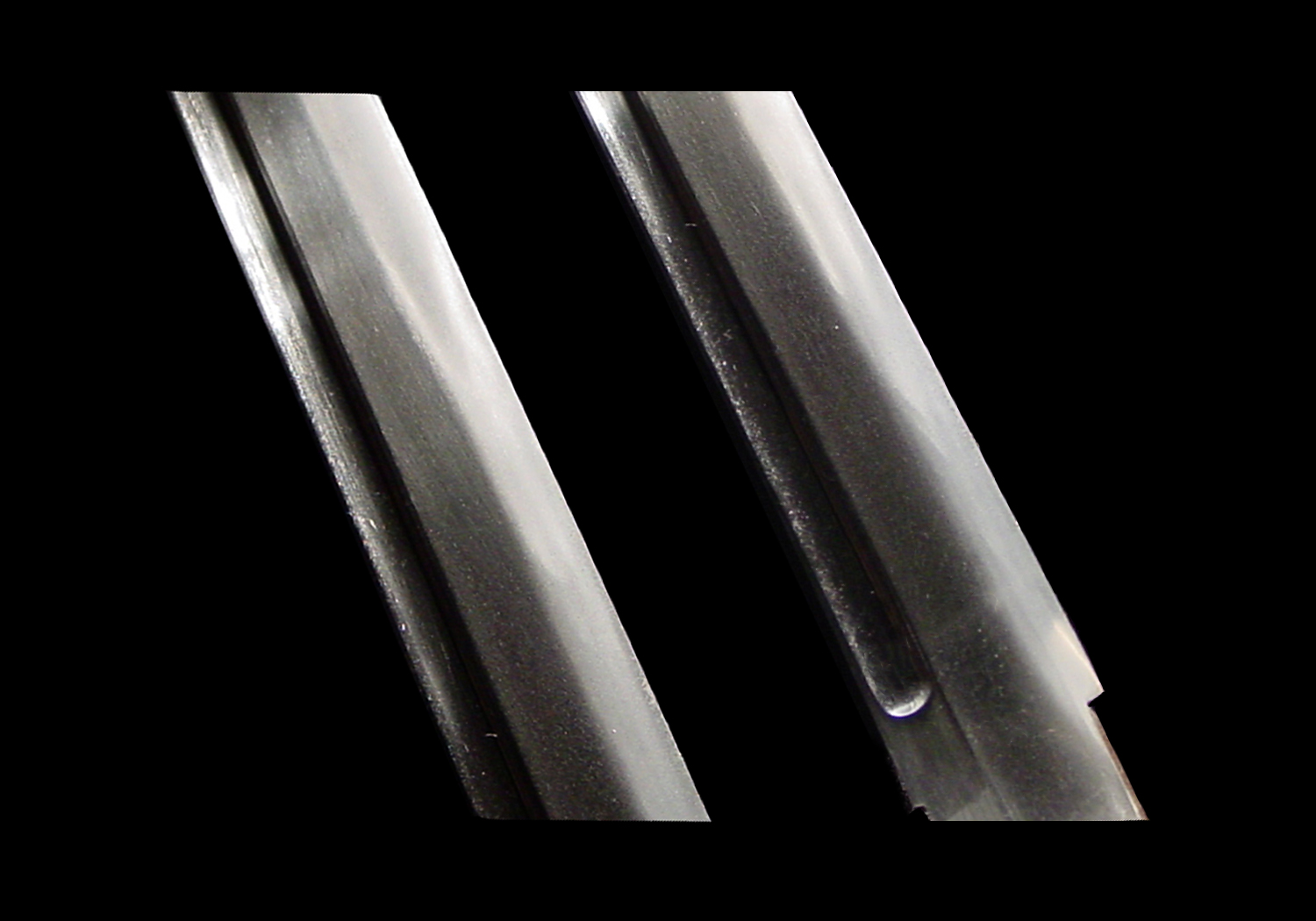
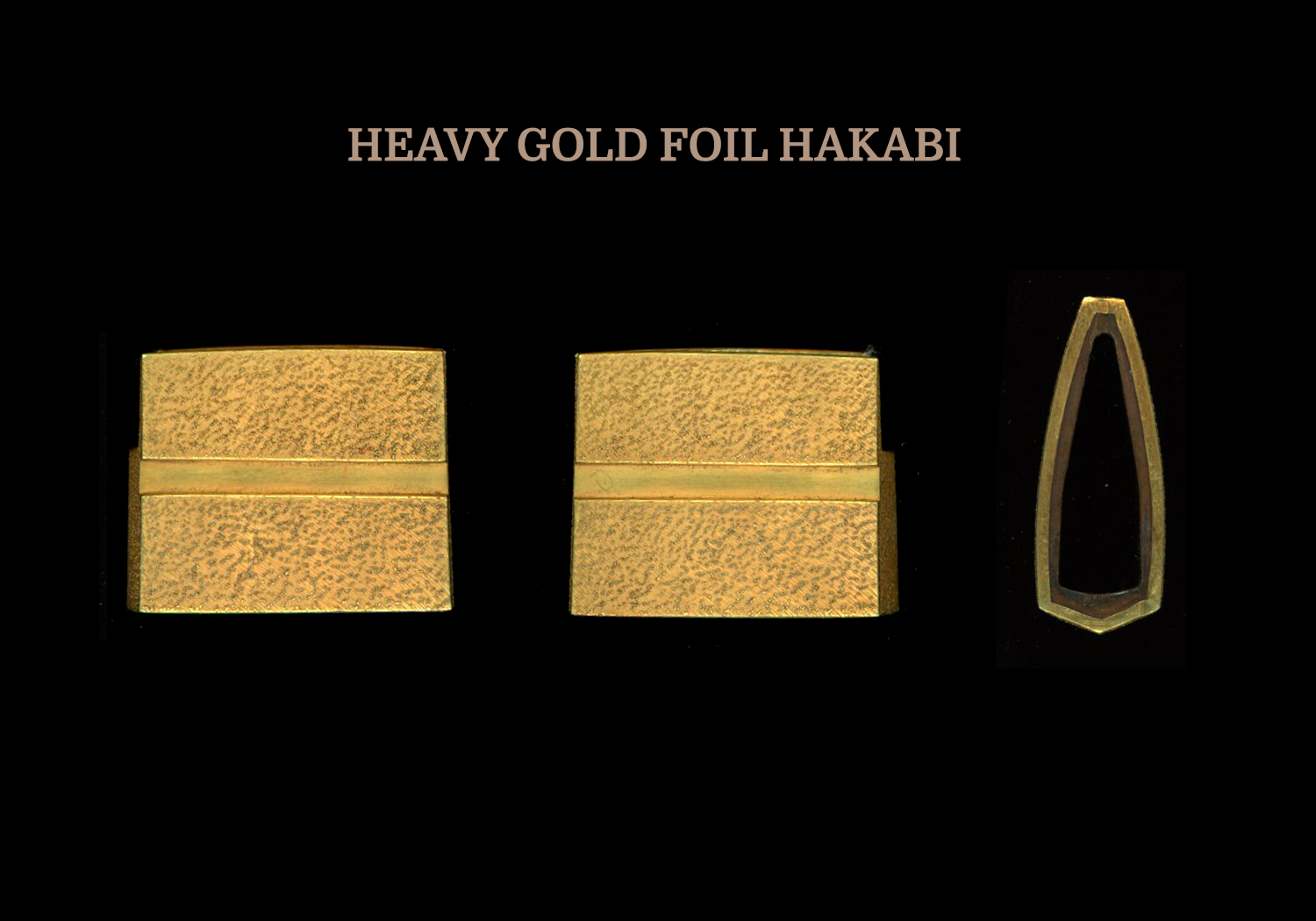
The kitae of the blade is typical konuka hada that presents itself beautifully as one would expect to find in a top quality Hizen blade. The hamon is a nie based shallow notare that flows up and down the blade like gentle sea swells. The habuchi is bright and clear and covered in profuse nie that continue down into the ha forming various patterns. There are bo-hi (large grooves) in the shinogi that run from the yokote to the mune-machi ending in a maru-dome (rounded end). The habaki is a wrapped in heavy gold foil giving it a feeling and appearance of solid gold.
The nakago is ubu (unshortened) and singed with the go-ji mei, Hizen (no) Kuni Tadayoshi which indicates that this blade was made around 1747-1750). This blade comes with NBTHK Tokubetsu Hozon papers specifically attributing it to the fifth generation of the Tadayoshi lineage.
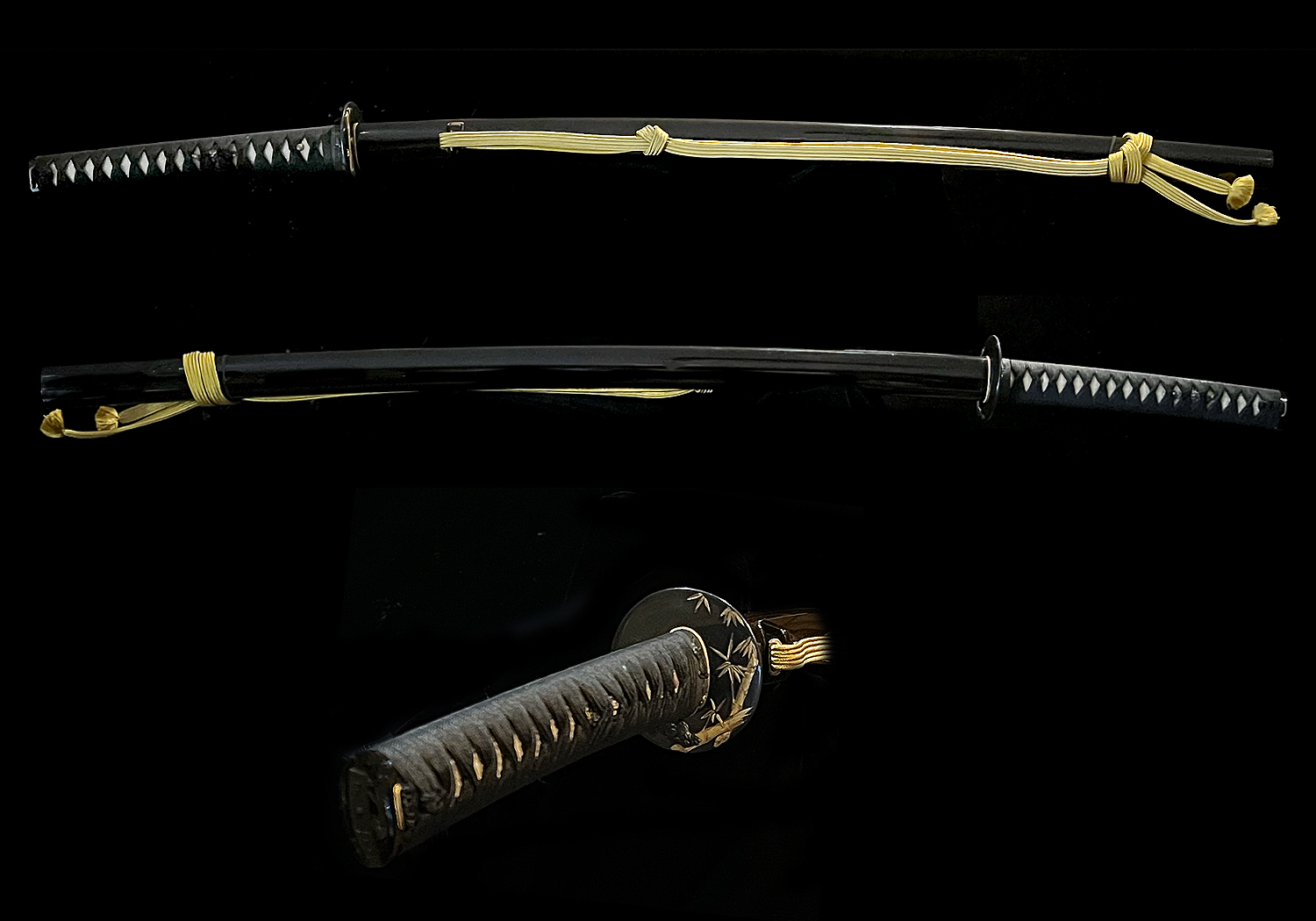
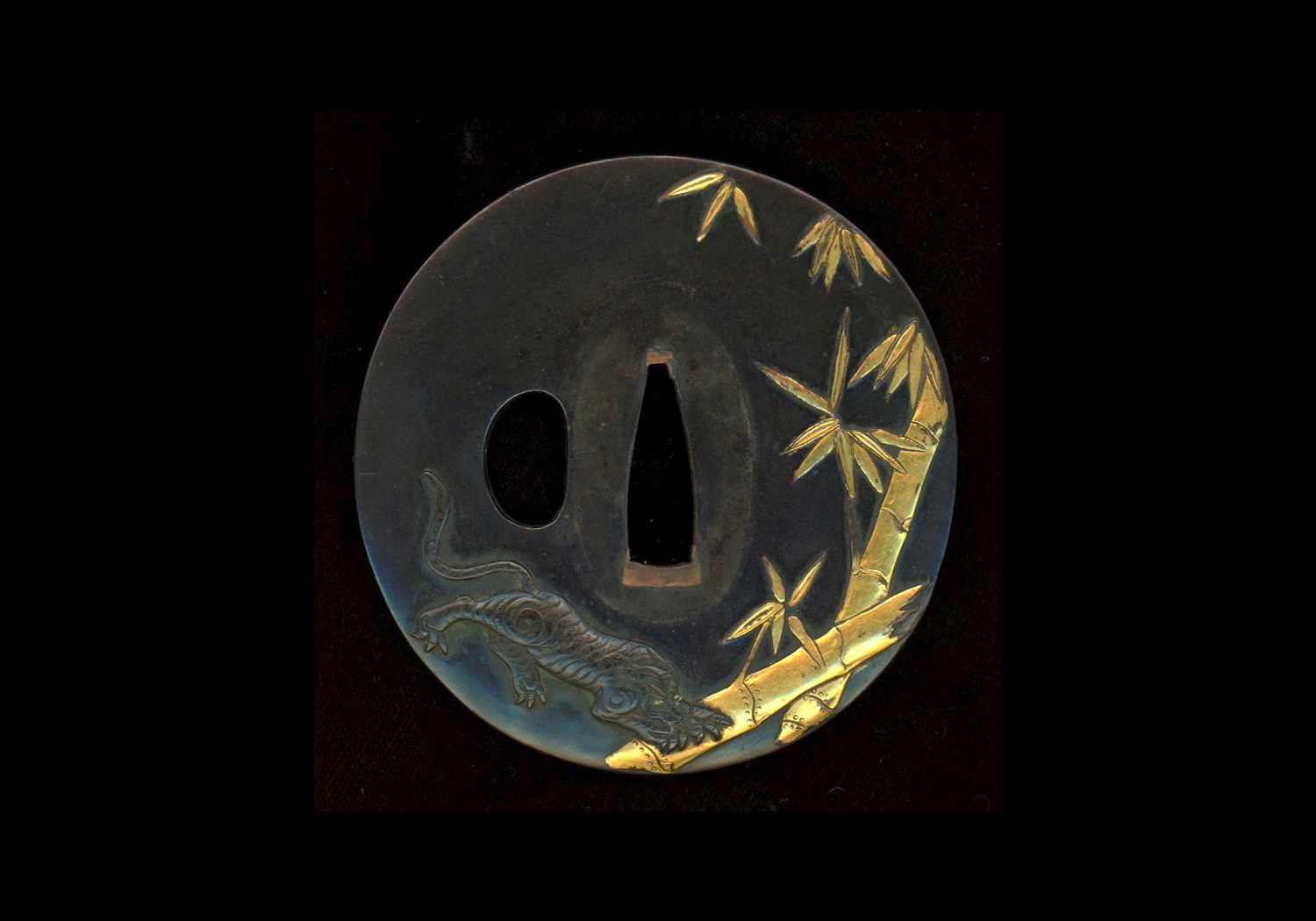
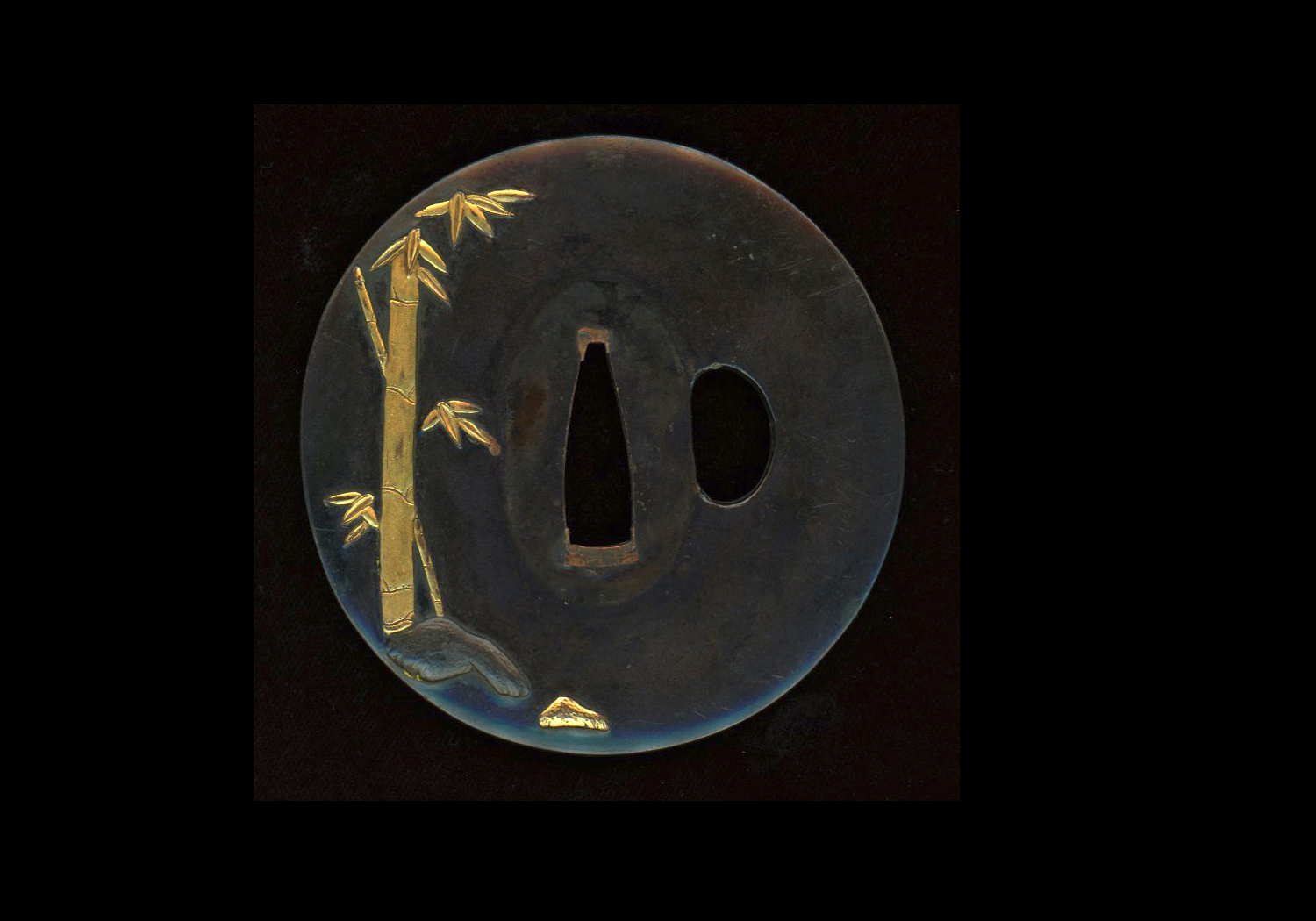
Accompanying this fine katana is a very attractive koshirae with an understated beauty such as would be worn by a high ranking Samurai of the Edo Era.
PRICE: $16,250.00