
The founder of the Shikkake (尻懸) School is traditionally said to have been Norihiro (則弘) who lived around the end of the Kamakura Era. However, since there are no authenticated extant examples by him, his son, Norinaga (則長) is most often given the title as founder of the Shikkake (尻懸) School. According to the Meikan, the first generation was active during the late Kamakura period, circa Shoô (正應) (1288-1293); however, it is believed that there are works dating to earlier periods than this, and there are later works dated Bunpô (文保) (1317-1319) and Ryakuô (曆應) (1338-1342).
Fortunately, Norinaga (則長) left us a good many examples of his work and some of them are dated, which aids us in placing him at the end of the Kamakura and the beginning of the Nanbokuchô period. One example, in fact, is signed in the year 1341 and states that he made this blade when he was sixty-nine years old. This would allow us to estimate his birth around 1272. While swords with Norinaga’s (則長) signature are not particularly rare, most other Yamato (大和)swords produced around this time are unsigned.
The name, Norinaga (則長), was handed down through several generations continuing into the beginning of the Muromachi Era. Other smiths of this school are Norihiro (則弘), Norizane (則真), Norinari (則成), Norisada (則貞), and Norinao (則直). Signed works by these smiths are exceedingly rare.
Below are the general traits of the Shikkake School:
SUGATA: Tachi are generally shinogi-zukuri with an iori-mune. The shinogi is high, and the shinogi-ji is wide. There will be torîzori with the curvature being relatively shallow. The thickness is average, and there is hira-niku. The kissaki have a long feeling. As for tantô, there are hira-zukuri and kanmuriotoshi-zukuri examples with iori-mune, but there will be some with shin-no-mune. The soriwill be mu-sori.
JITETSU: The jitetsu is flowing mokume mixed with masame. The mokume-hada appears along the shinogi and into the ji area with the masame-hada along the edge of the hamon. This is called Shikkake-hada. There is abundantly fine ji-nie.
HAMON: The hamon is a nie based suguha with hotsure and a mixing in of ko-midare and gunome that can be linked together in a line. There is ko-ashi, sunagashi, nijûba and a great deal of other activities within the hamon, such as uchinoke, brushing, small kinsuji, inazuma, and others are often found.
BÔSHI: Generally, ko-maru or yakizumi. There will be abundant nie and the tip will generally be hakikake.
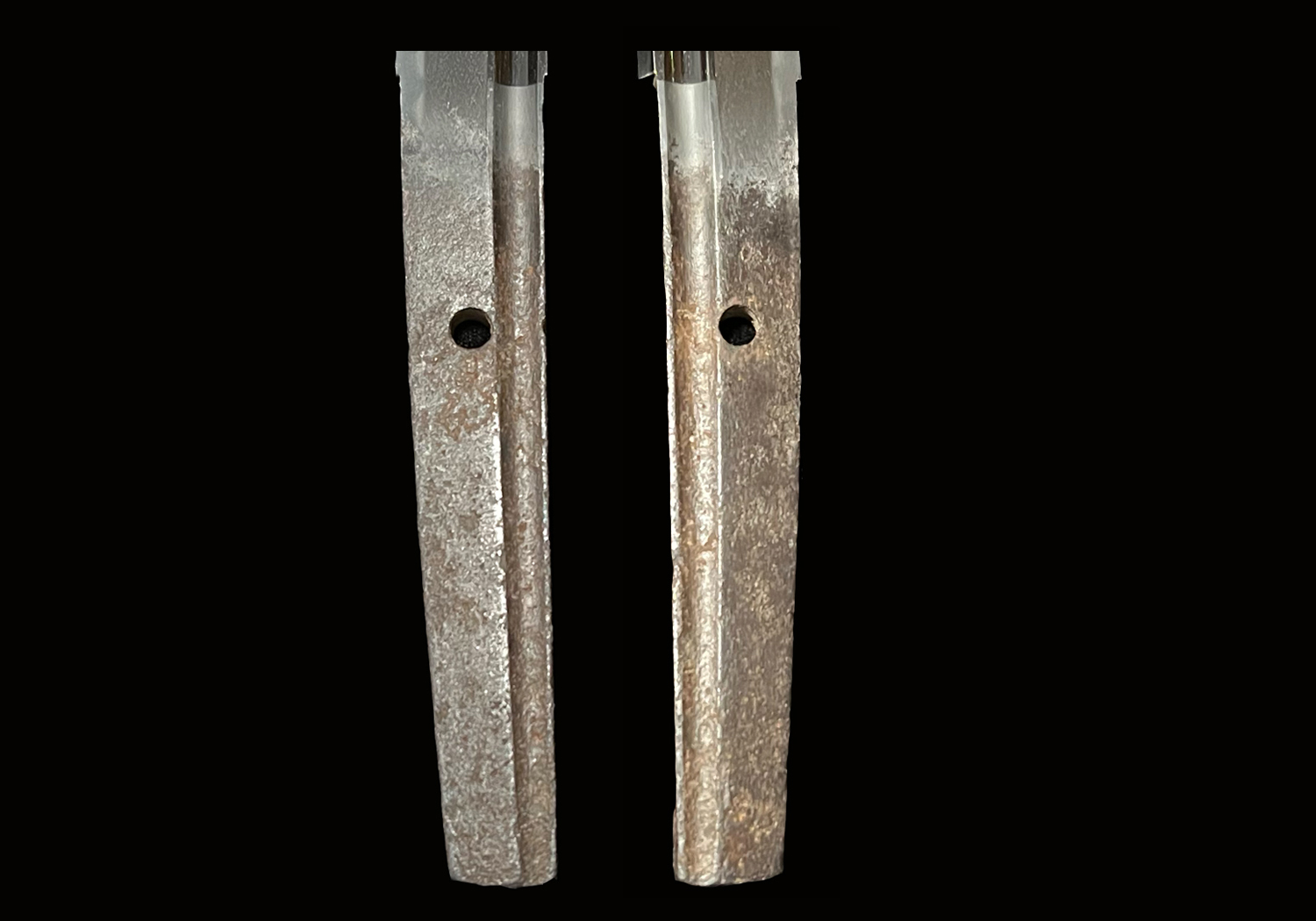
NAKAGO: The nakago are comparatively long ending in ha-agari kurijiri and kengyo in most cases. Tantô will also have iriyamagata that are conspicuously ha-agari. Yasurimei are sujikai, katte-sagari or kiri in most cases.
MEI: There are no ni-ji mei. All are naga-mei with some examples being: Yamato Norinaga (大和則長),Yamato no Kuni Norinaga (大和国則長), Yamato no Kuni Sakon Tochi Norinaga saku (大和国左近栃則長) Yamato no Kuni Shikkake jû Norinaga (大和国尻懸住則長). There is some debate as to exactly which generation signed which way, but it seems to be agreed that the first two signatures above were used by the first two generations.
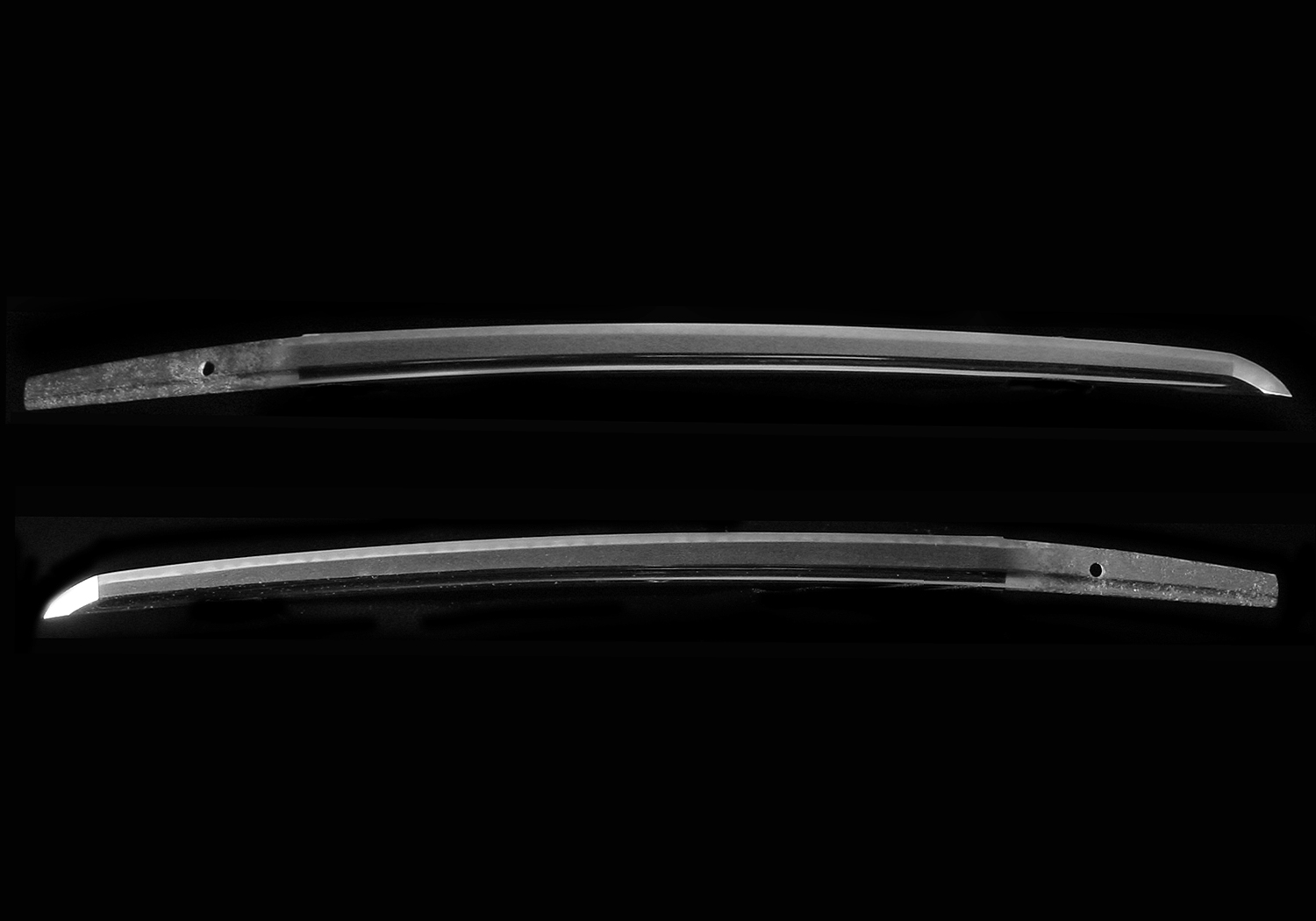
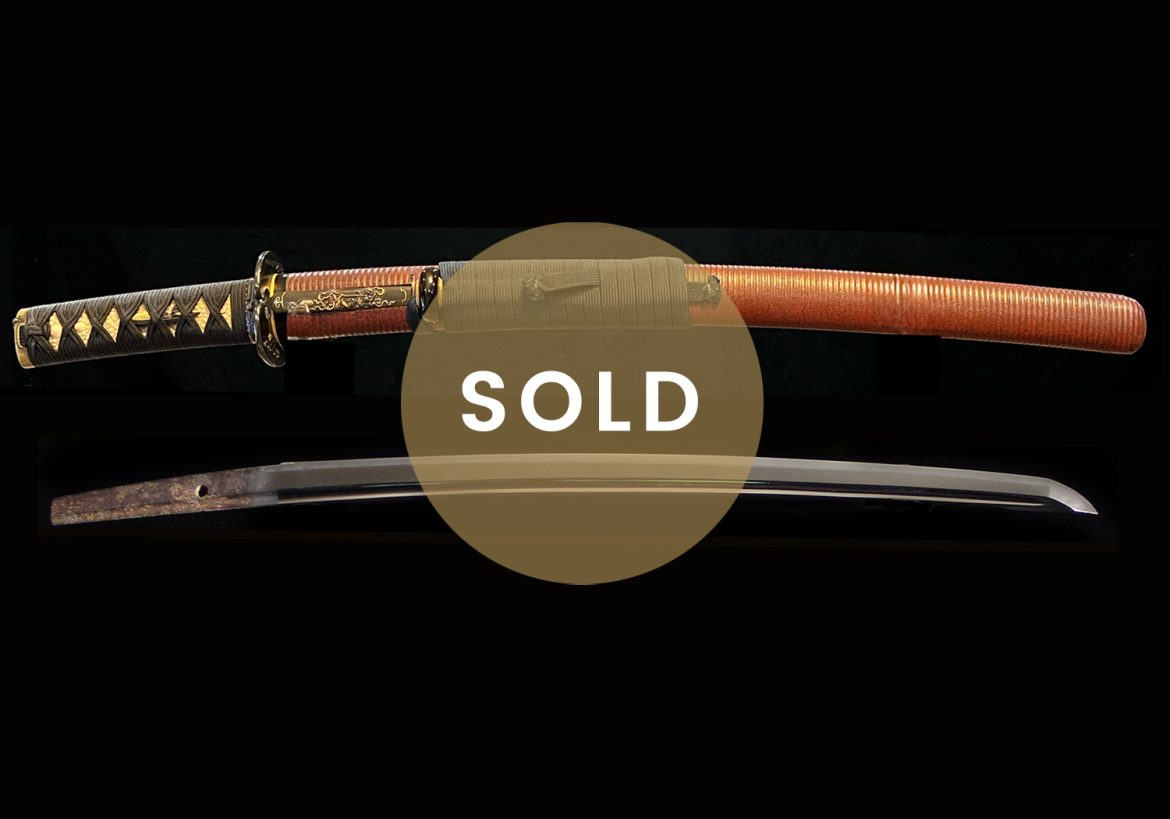
The blade presented for sale here is a beautiful example of the later Yamato Shikkake school of sword making. It is an o-suriage mumei wakizashi. The quality of the blade is superb and I am sure it was a knock-out blade when it was young. The cutting edge (nagasa) of this sword is 18 1/4 inches or 46.4 cm. The curvature (sori) is 0.35 inches or 0.9 cm. It has a width a the hamachi (moto-haba) of 1.09 inches or 2.78 cm and a width at the kissaki (saki-haba) of 0.73 inches or 1.85 cm. This type of hada where mokume hada appears along the shinogi with masame hada near the hamon is called Shikkake-hada. The hamon is a ko-gunome that is very regular and well-formed nie deki. Truly beautiful. This sword was made between 1400 and 1500 and is flawless.
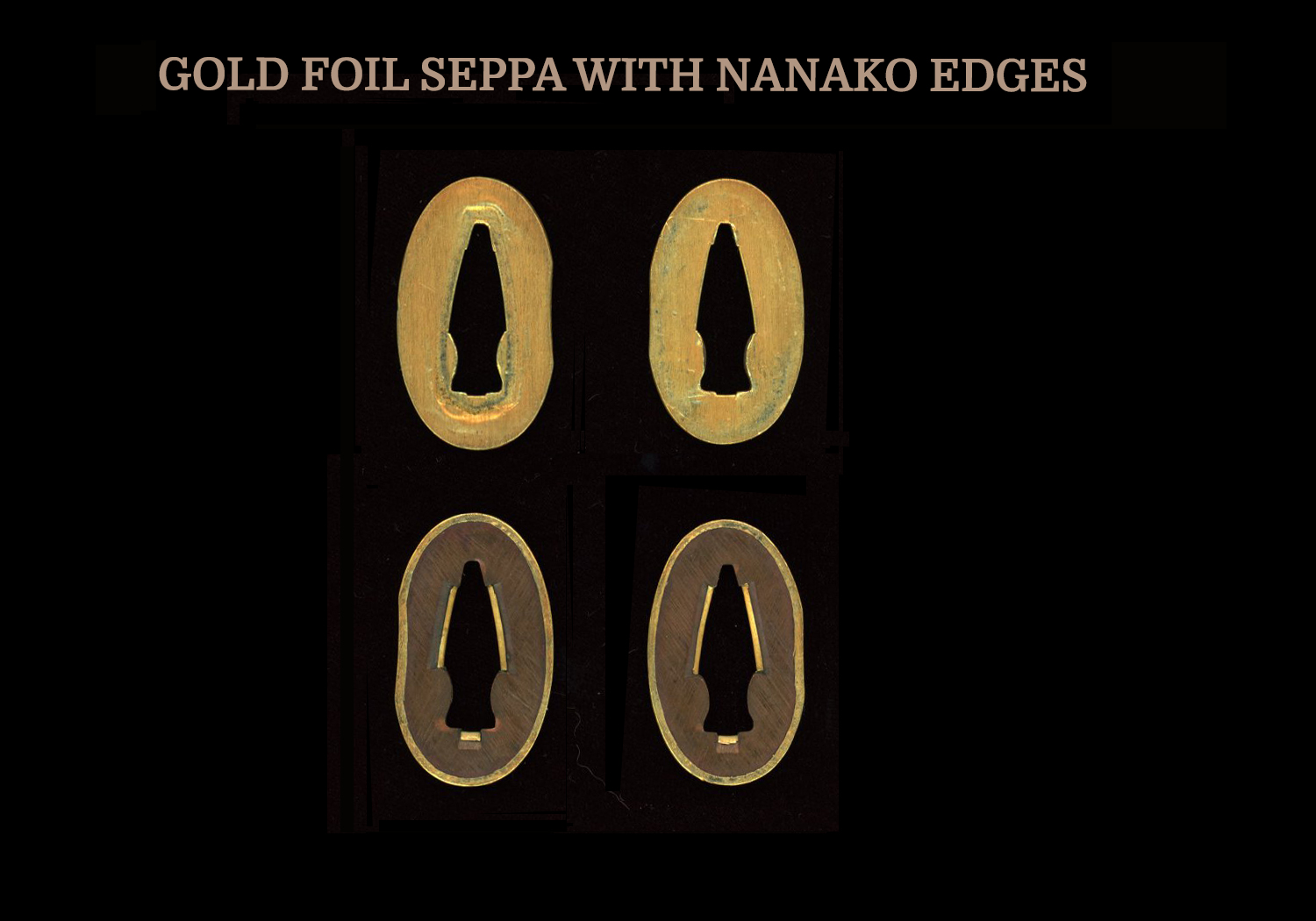
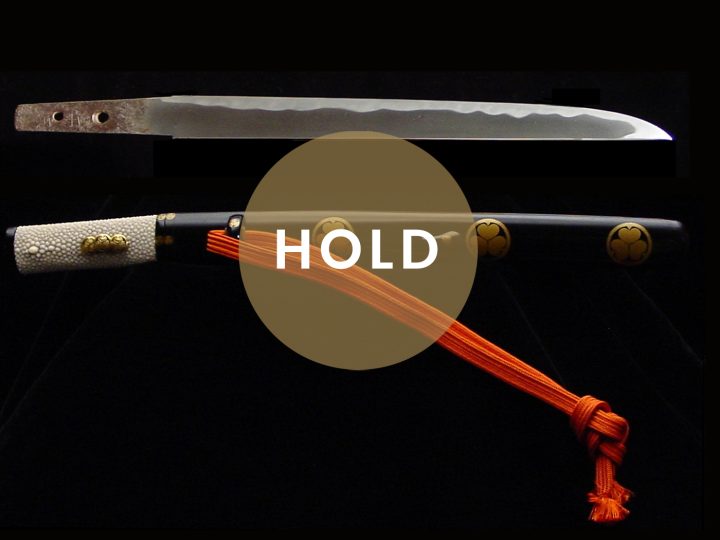
The mountings for this sword are also truly outstanding. The saya is a red lacquer which is ribbed and has no chips or cracks. The fuchi and kashira are signed by Yasuchika, I am not sure of the generation but the work is excellent. The menuki are shakudo and gold and depict river boats. The tsuba is a deep rich shakudo and is signed by its maker Shigemitsu. He was a Nara craftsman who worked around 1725-1750. The theme of the fuchi, kashira, tsuba and menuki are that of a man in a fishing boat and they are very well executed. The kozuka and kogai are of shibuichi and are both signed by their maker, Nukagawa Yasunori who worked around 1800. The depict two Nio wrestling. Beautiful!
This sword comes with NBTHK Hozon papers that attest to the attribution to the Shikkake school as well as the quality of the sword. If you are looking for a wonderfully mounted Koto sword in perfect condition, don’t miss out on this one.
SOLD