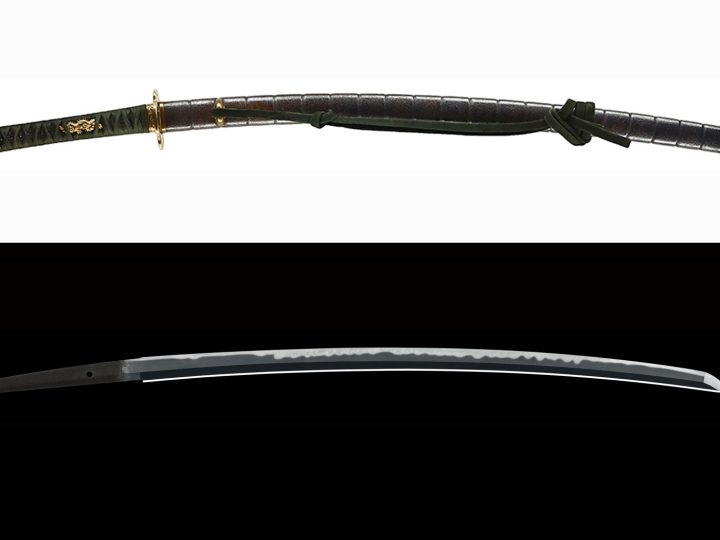


This is a nicely mounted katana from the northern part of Honshû Island directly across from Hokkaido. It is known as Rikuoku or Mutsu and is also called Ôshu. The full signature of this smith reads Ôshu Tsugaru Jû Kunihiro (奥州津軽住国広). Tsugaru is a small city in what is now Aomori Prefecture which was once called Mutsu. There were four listed smiths by the name of Kunihiro who lived in the Rikuoku part of Japan during the Edo era. Their working times ranged from 1661 to 1716. Since the latter three of these smiths all signed with the kanji, Rai (来), in their names, I am attributing this sword to the first generation who worked around Kanbun (1661). The sugata of this katana also seems to fit into this period of sword making.
This katana by Kunihiro is in wonderful condition. It is wide and strong with bo-hi (wide grooves) running down both sides of the blade. These tend to lighted the sword without it losing any of its strength or resilience. The length of the cutting edge (nagasa) is 27.375 inches or 69.1 cm. The width of the blade at its base (moto-haba) is 1.25 inches or 3.2 cm. At the point (saki-haba) it narrows to 0.87 inches or 2.2 cm. The curvature (sori) on the blade is koshi-zori (in the lower third of the blade) measuring 0.66 inches or 1.7 cm.
Almost all of the sword smiths who worked in this area at the far north of Honshû, seemed to derive their sword making characteristics from the kotô Yamato school with the use of masame grain in their blades and yet this katana is the exception. This blade has a very pronounced itame hada (wood grain) with areas of mokume hada rather than the typical masame hada (straight grain) that is typical with most Northern Honshû smiths. The hamon is very unique and beautiful. It can best be described as a unique form of koshi-no-haraita (wide hips) as the gunome formations tend to be wide at their base. They also have a pronounced flattening at their tops so that they resemble peaked plateaus. Occasionally, the top edges of these plateaus are somewhat pointed (togari-ba) in their formation.
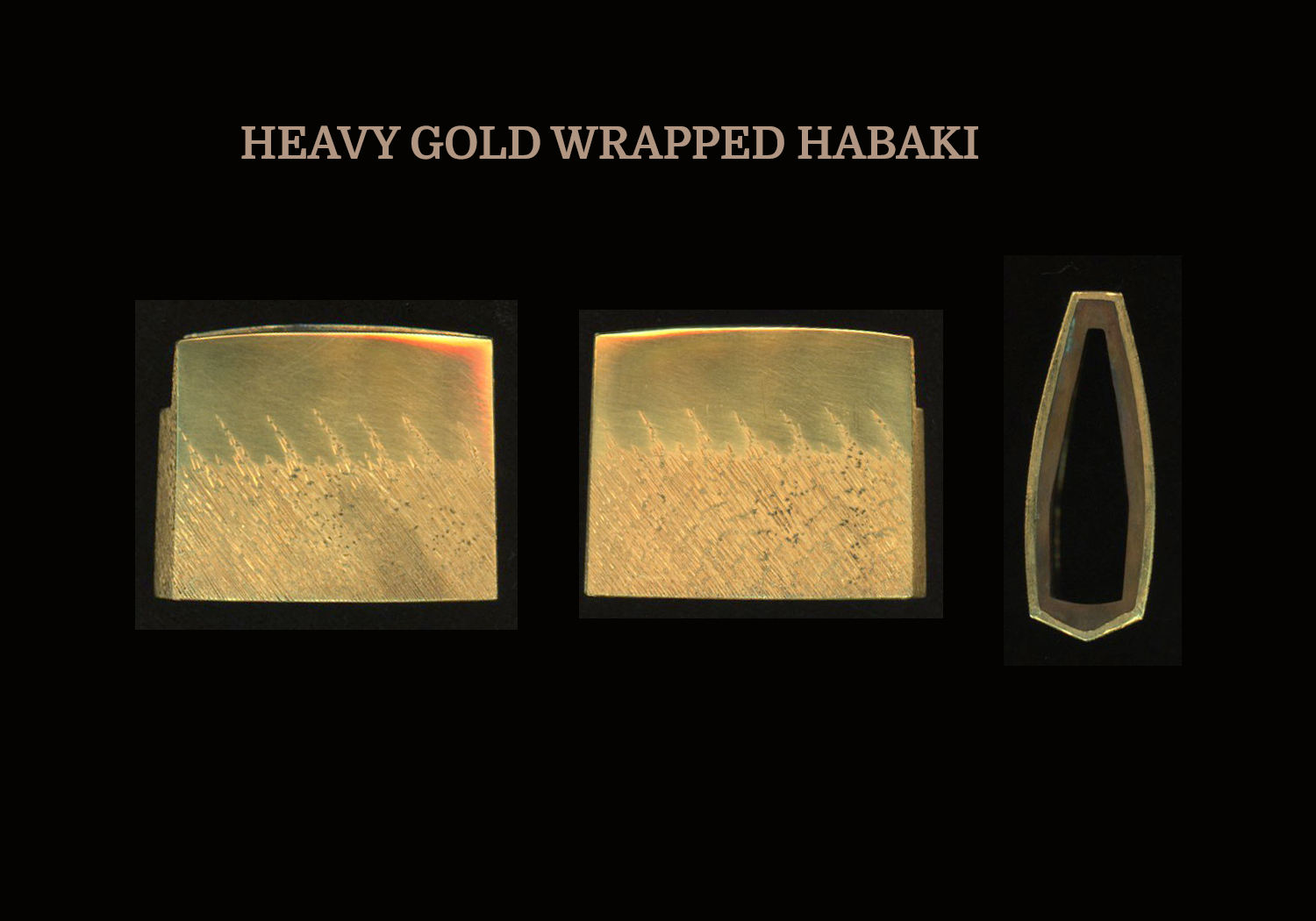
The nakago is ubu (unshortened) and signed Ôshu Tsugaru Jû Kunihiro (奥州津軽住国広). There is only one mekugi-ana (hole) in the nakago which is slightly machi-okuri. It has a single copper habaki (collar) that has been covered with a heavy gold foil. It comes in a Japanese made shirasaya that is in excellent condition.
This blade comes with NBTHK Tokubetsu Hozon papers attesting to its quality, condition, and authenticity of its maker’s signature. There are no defects or problems with this blade and it is in a beautiful polish and ready to enjoy.
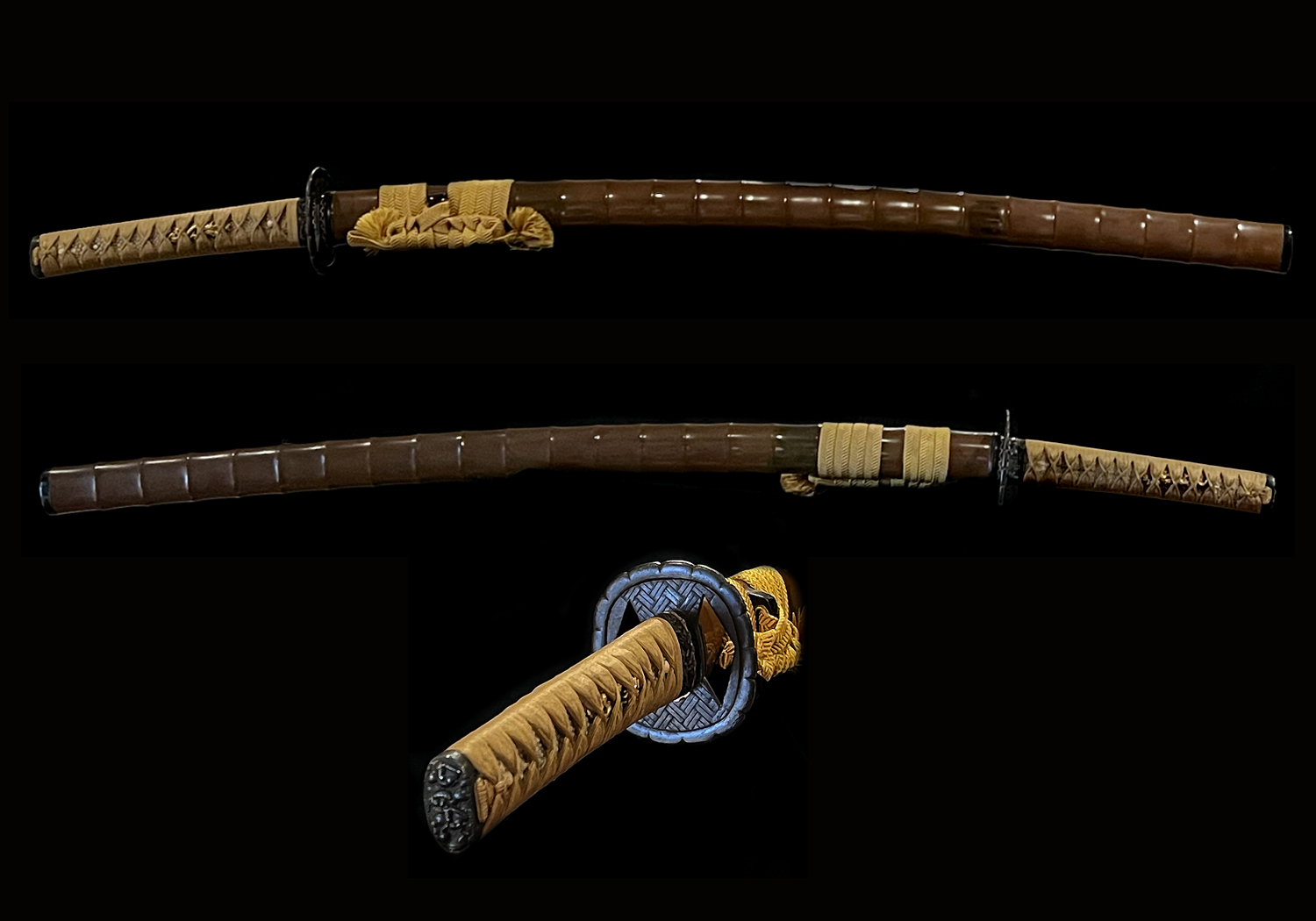
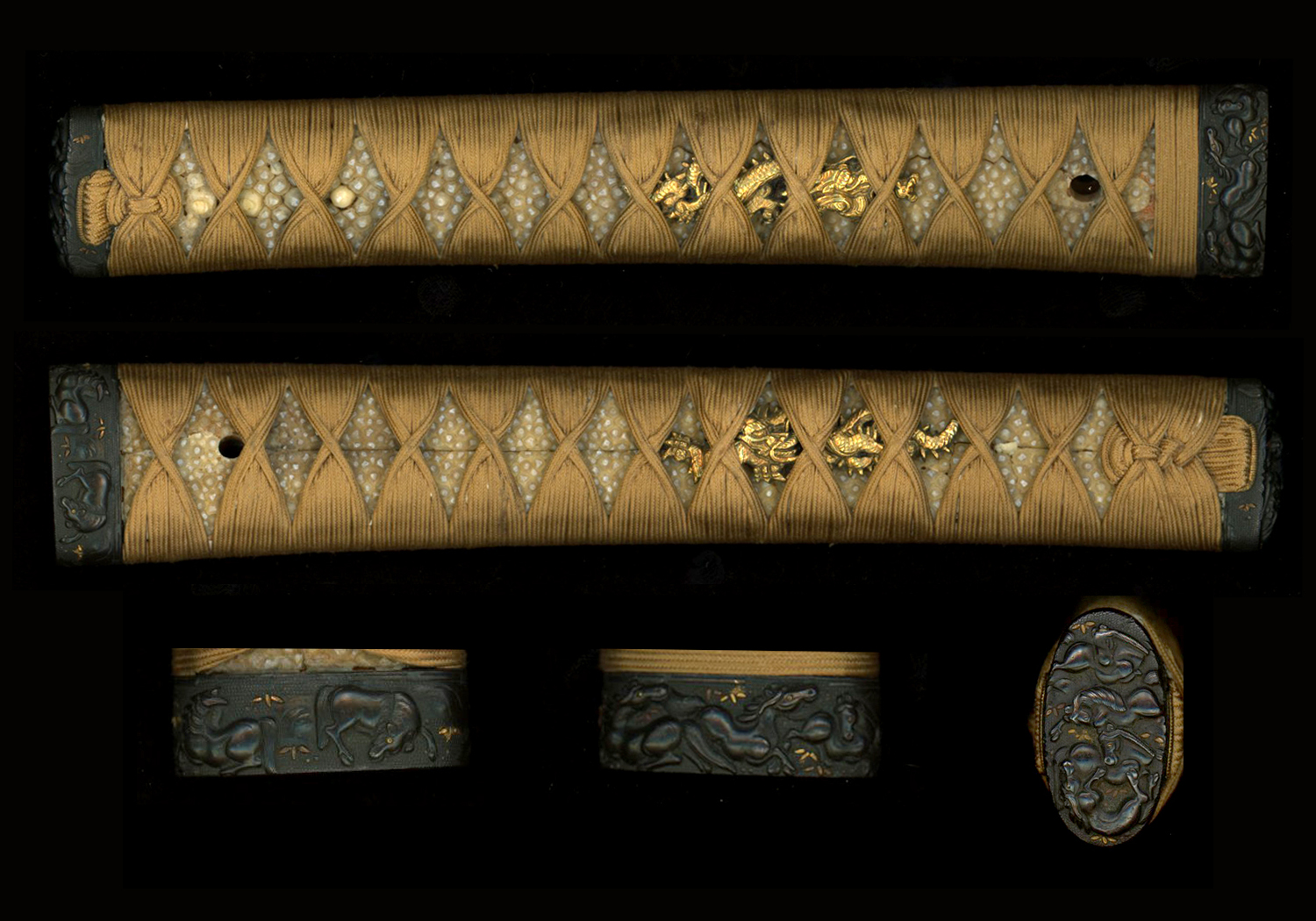
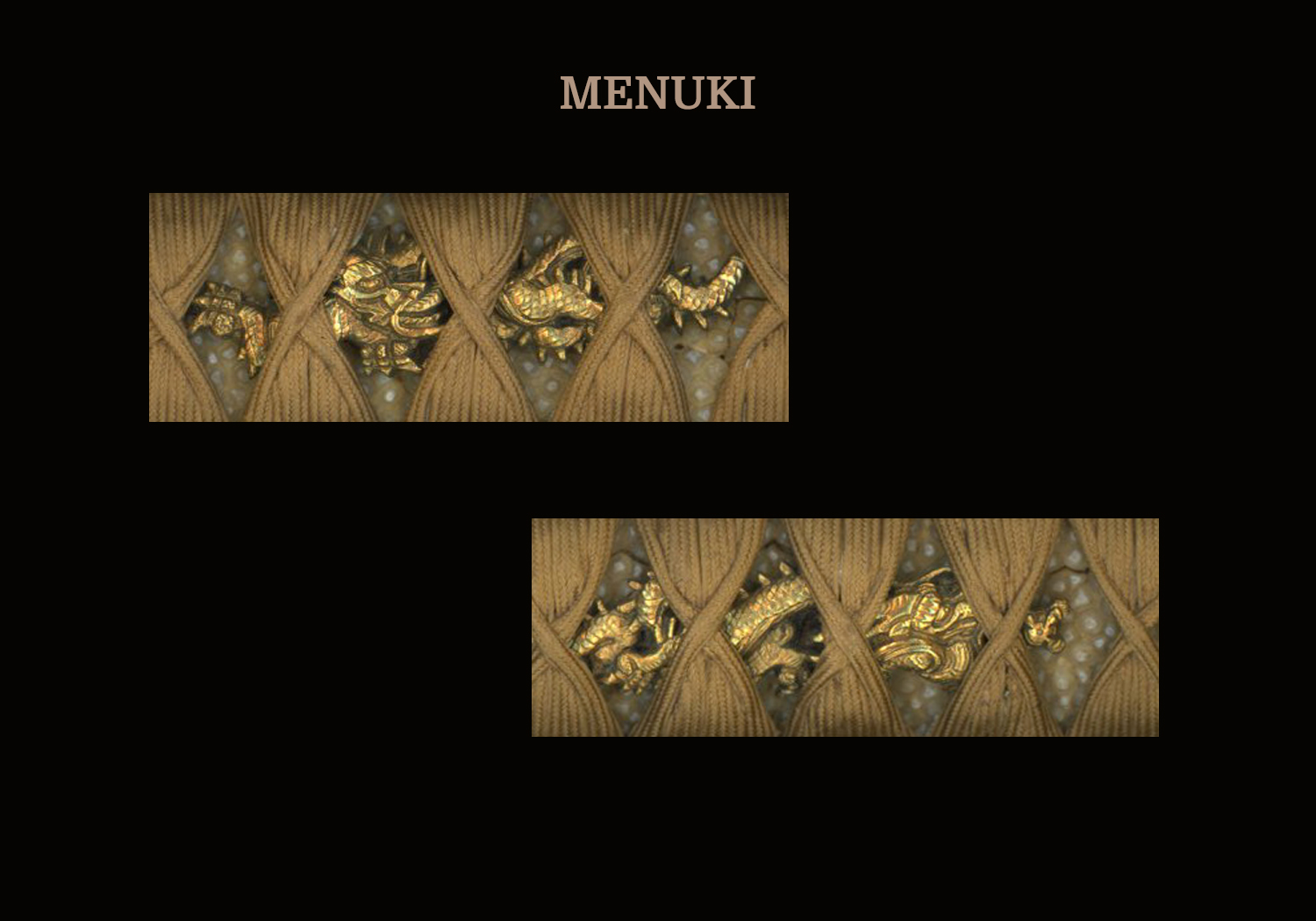
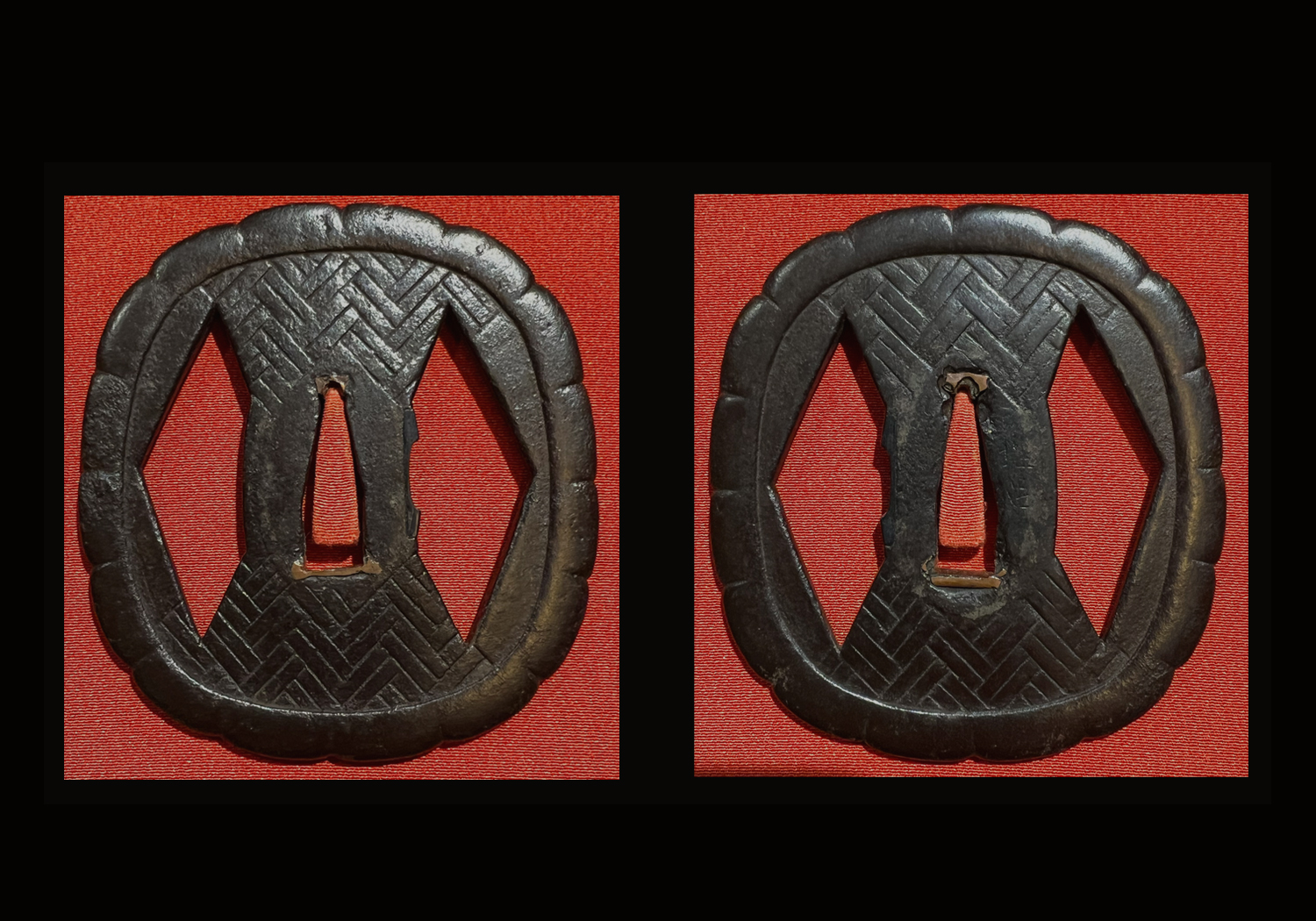
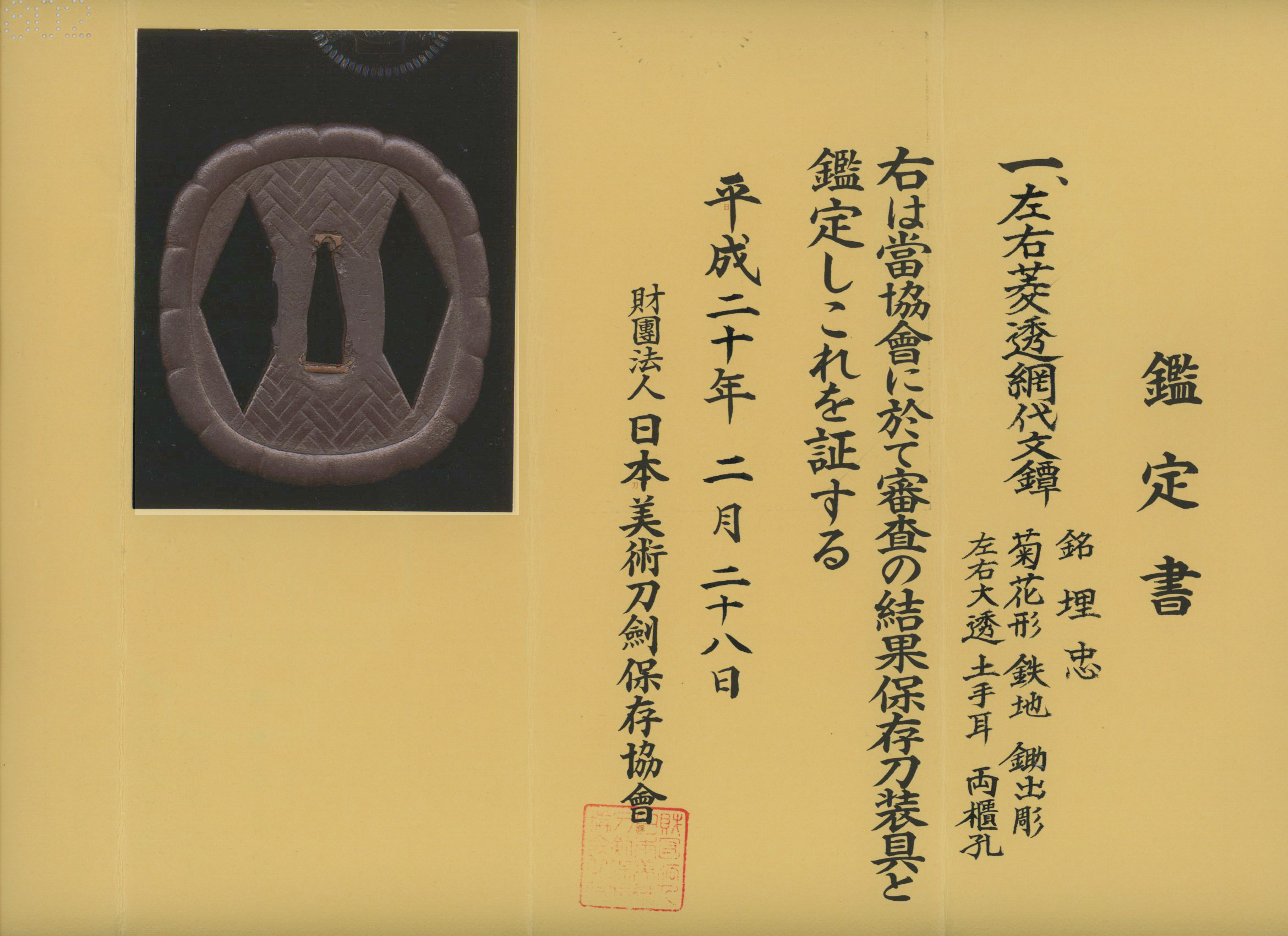
Accompanying this blade is a very attractive set of mountings (koshirae). The saya (scabbard) has been lacquered brown and carved into the shape of bamboo. The fuchi and kashira on the handle are made of shakudo and carved beautifully and deeply into many horses frolicking about. The menuki are of gold (possibly plated) carved in the form of two large dragons, one on each side. The tsuba is made of iron that has been carved into an intricate basket type design. It is signed Umetada. It tsuba comes with a Hozon Tosogu certification from the NBTHK verifying the signature to the Umetada school.
This is a very nice sword and koshirae, that would enhance any collection.
SOLD