The Mihara School was founded in Bingo Province by Masaie (正家). Swordsmiths of this school were active beginning in the Showa era (1312-1317) at the end of the Kamakura period, and continued through the end of the Muromachi period (around 1573). The Yamato tradition is clearly recognized in the workmanship of this school. There are also some forging characteristics that resemble the swords of the Bitchû Aoe school since the provinces of Bingo and Bitchû border on each other.
The Mihara school is divided into three parts according to the time of production. Swordsmiths working from the end of the Kamakura era through the Nanbokuchô era (1312-1394) are known as the Ko-Mihara smiths, early Muromachi period smiths are called Chu-Mihara, and the late Muromachi period smiths are called the Sue-Mihara smiths.
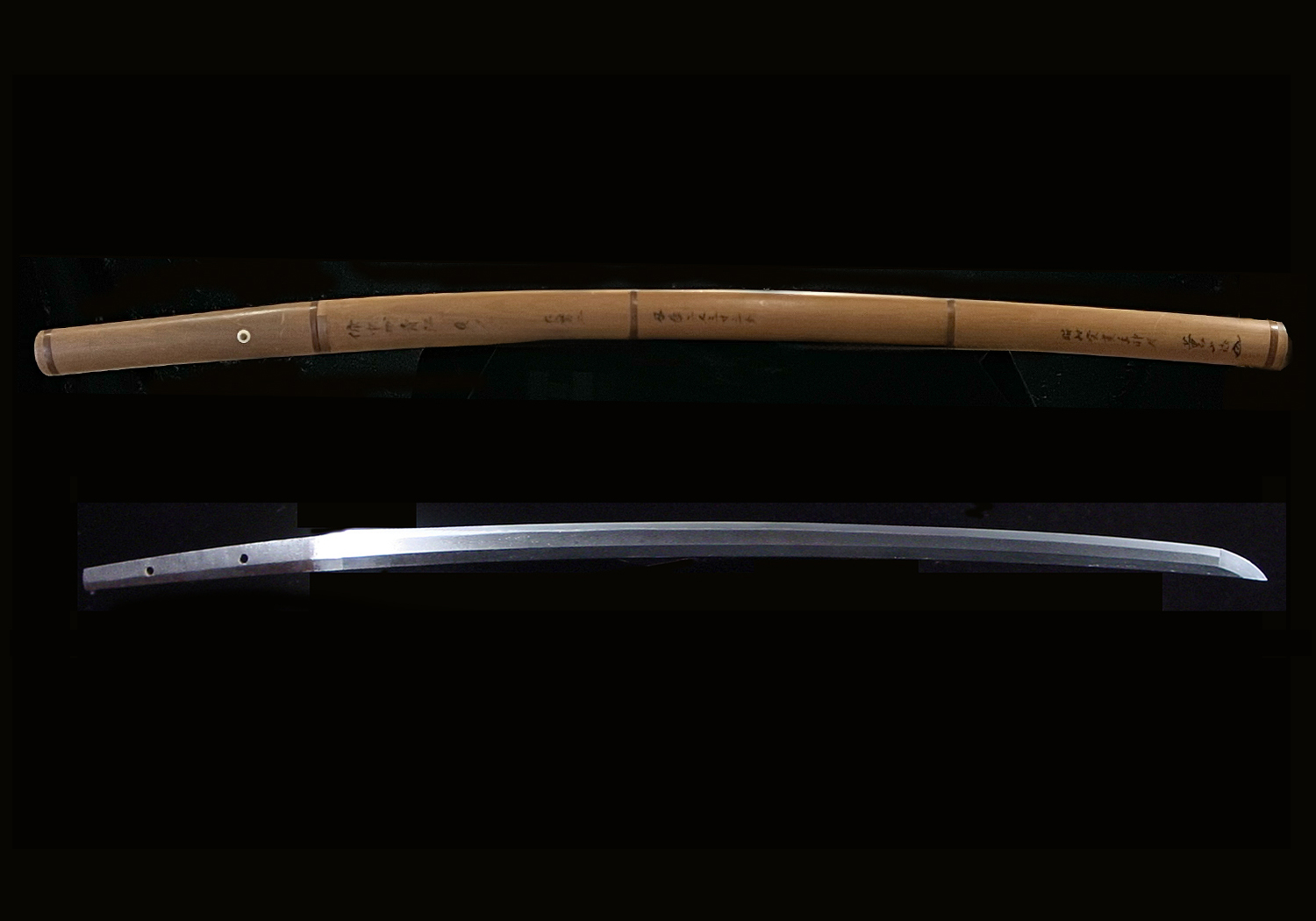
Nihonto.com is pleased to present this fine mumei (unsigned) blade attributed to the Ko-Mihara School of the late Kamakura era (circa 1325). This blade was awarded Jûyô Tôken status in 1998 at the 44thJûyô shinsa. It has a nagasa (length) of 70.8 cm or 27.87 inches. The sori (curvature) is 1.4 cm or 0.55 inches. The width at the hamachi (base of the blade) is 2.9 cm or 1.14 inches. The width at the kissaki (tip of the blade) is 2.1 cm or 0.83 inches.
The jigane (forging pattern) overall is a robust and beautiful itame that is mixed with mokume and towards the ha we find nagare-masame. The jigane also features ji-nie, chikei, and jifu.
The hamon (temper line) is chū-suguha formed in ko-nie-deki with a tight, bright, and clear nioiguchi that is mixed with ko-gunome, hotsure, kuichigai-ba, ko-ashi, yō. There are also a few kinsuji and sunagashi. The bôshi is a gently undulating notare-komi with a somewhat pointed ko-maru-kaeri and with hakikake.
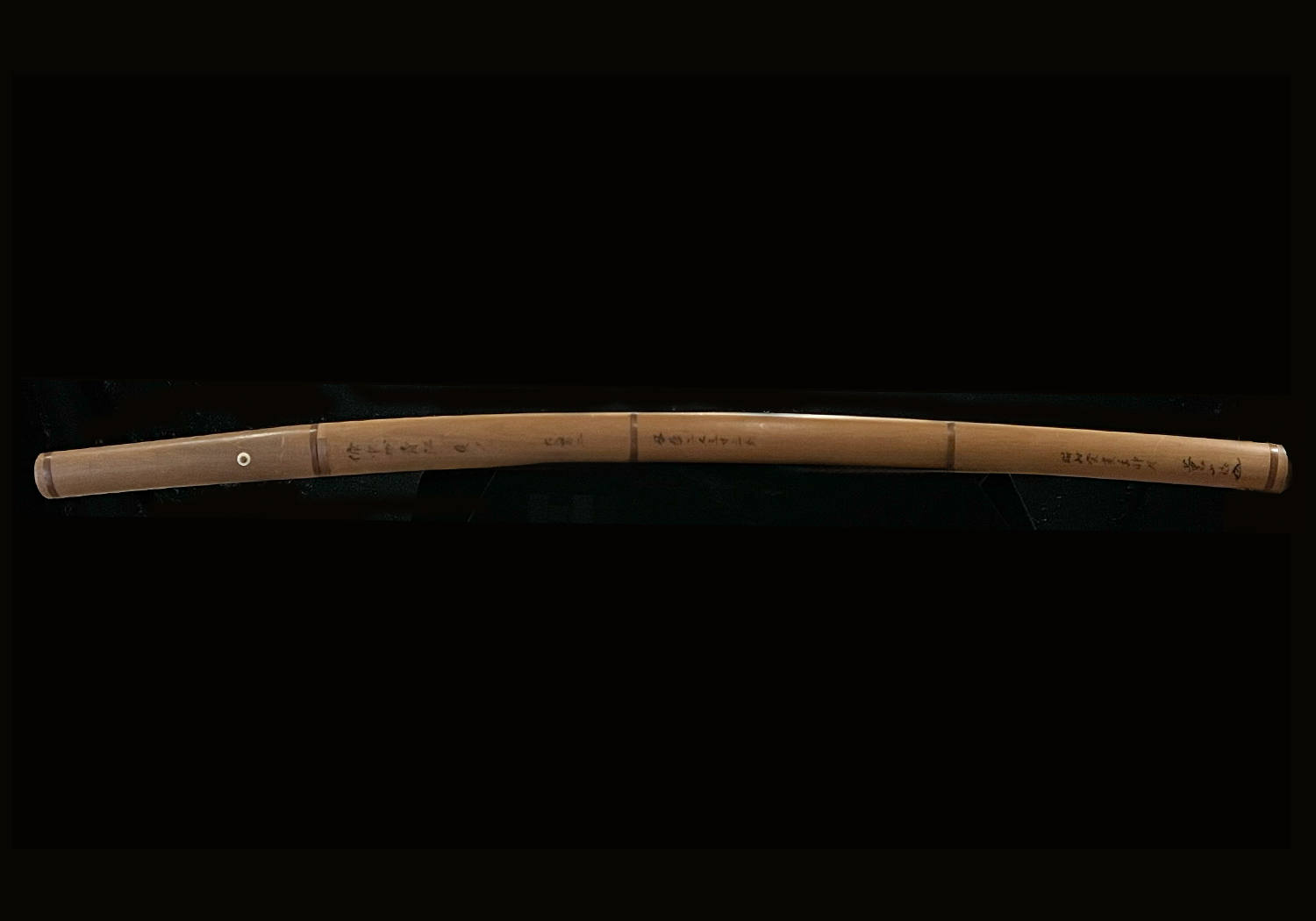
The overall shape is typical of the Kamakura era and even after shortening, it retains a beautiful and graceful sori (curvature) of 1.4 cm or 0.55 inches. The nakago has two mekugi-ana (holes).
The Kamakura and Nanbokuchô eras of sword making are considered by most to be the golden age of Japanese sword making. Blades from this time are greatly sought after. Finding a 700+ year old blade such as this from this historical era is exciting, especially when it is in such fine condition.
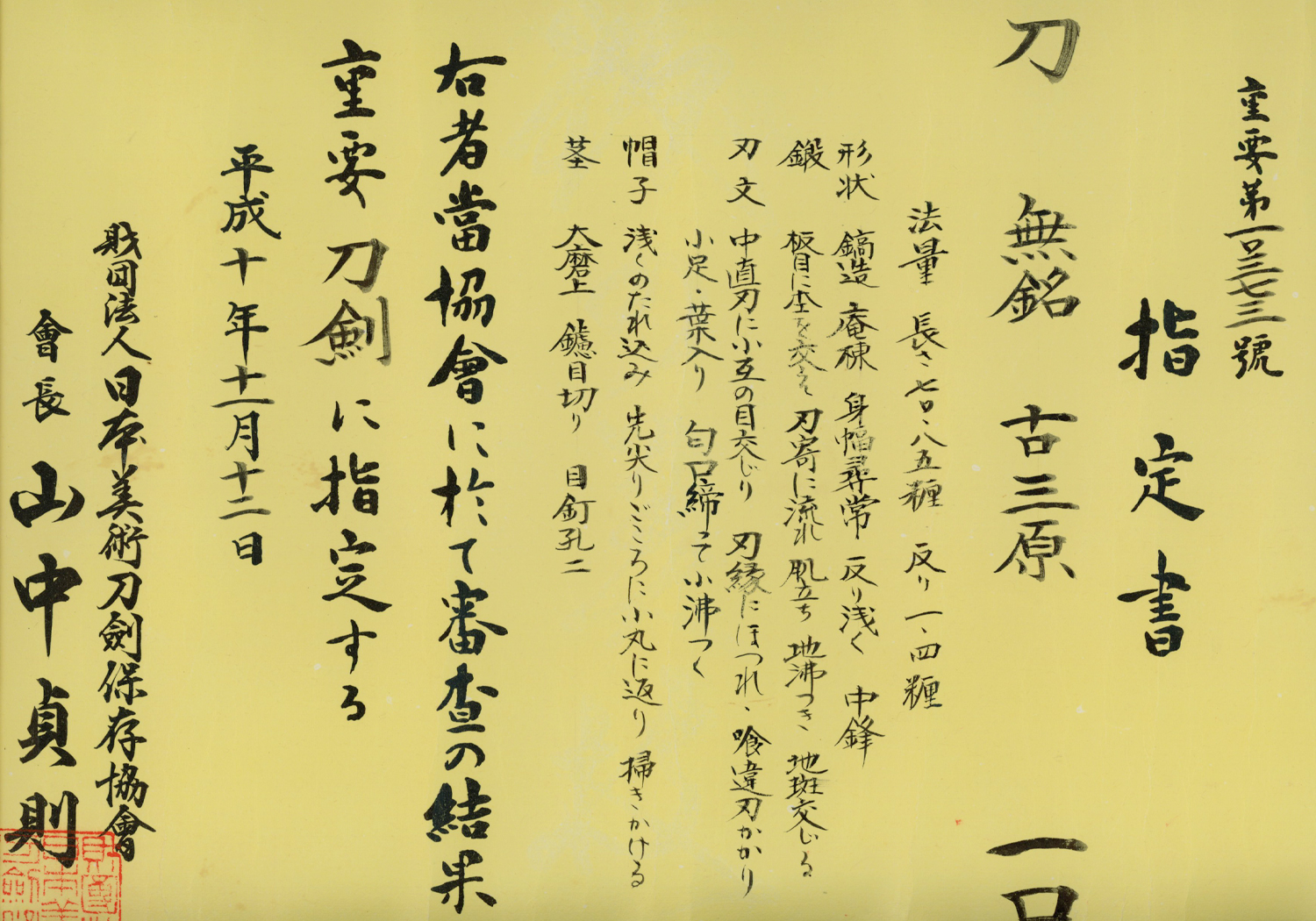
This sword comes with NBTHK Jûyô Tôken papers attesting to the quality, condition, and attribution. It is in excellent polish with no flaws or other problems. The following is the translation of the Jûyô Tôken certification papers:
Jūyō-Tōken at the 44th Jūyō Shinsa from November 12, 1998
Katana, mumei: Ko-Mihara (古三原)
Measurements:
Nagasa 70.8 cm, Sori 1.4 cm, Motohaba 2.9 cm, Sakihaba 2.1 cm, Kissaki-nagasa 3.8 cm, Nakago-nagasa 21.0 cm, Nakago-sori 0.1 cm
Description:
Keijō: shinogi-zukuri, iori-mune, normal mihaba, no noticeable taper, shallow sori, chū-kissaki
Kitae: overall standing-out itame that is mixed with mokume and towards the ha with nagare-masame and that features ji-nie, chikei, and jifu
Hamon: chū-suguha in ko-nie-deki with a tight, bright, and clear nioiguchi that is mixed with ko-gunome, hotsure, kuichigai-ba, ko-ashi, yō, and with a few kinsuji and sunagashi
Bōshi: gently undulating notare-komi with a somewhat pointed ko-maru-kaeri and with hakikake
Nakago: ō-suriage, shallow kurijiri, kiri-yasurime, two mekugi-ana, mumei
Explanation:
The Mihara School (三原) of Bingo province emerged at the end of the Kamakura period and flourished henceforth until the end of the Muromachi period. Works from the end of the Kamakura throughout the Nanbokuchō period are referred to as Ko-Mihara (古三原), lit. “early Mihara.” The workmanship of the Mihara School usually shows more or less Yamato features, but compared to works made directly in Yamato province, the nie of ji and ha are usually less pronounced, the kitae shows more shirake, there is prominent mokume along the itame-hada, the nioiguchi is somewhat tighter, and the bōshi is more calm.
This blade shows a jigane in a standing-out itame mixed with mokume, a bright and clear hamon in chū-suguha, and a bōshi that features hakikake, hence we clearly recognize the typical characteristics of the Ko-Mihara School. Also, the blade still has much niku preserved.
If you are a collector who is looking for a beautiful blade from the Kamakura Era (the golden age of sword making), this is your opportunity to own a wonderful example of one at a great price.
PRICE: $26,500.00


NBTHK JÛYÔ TÔKEN CERTIFICATION