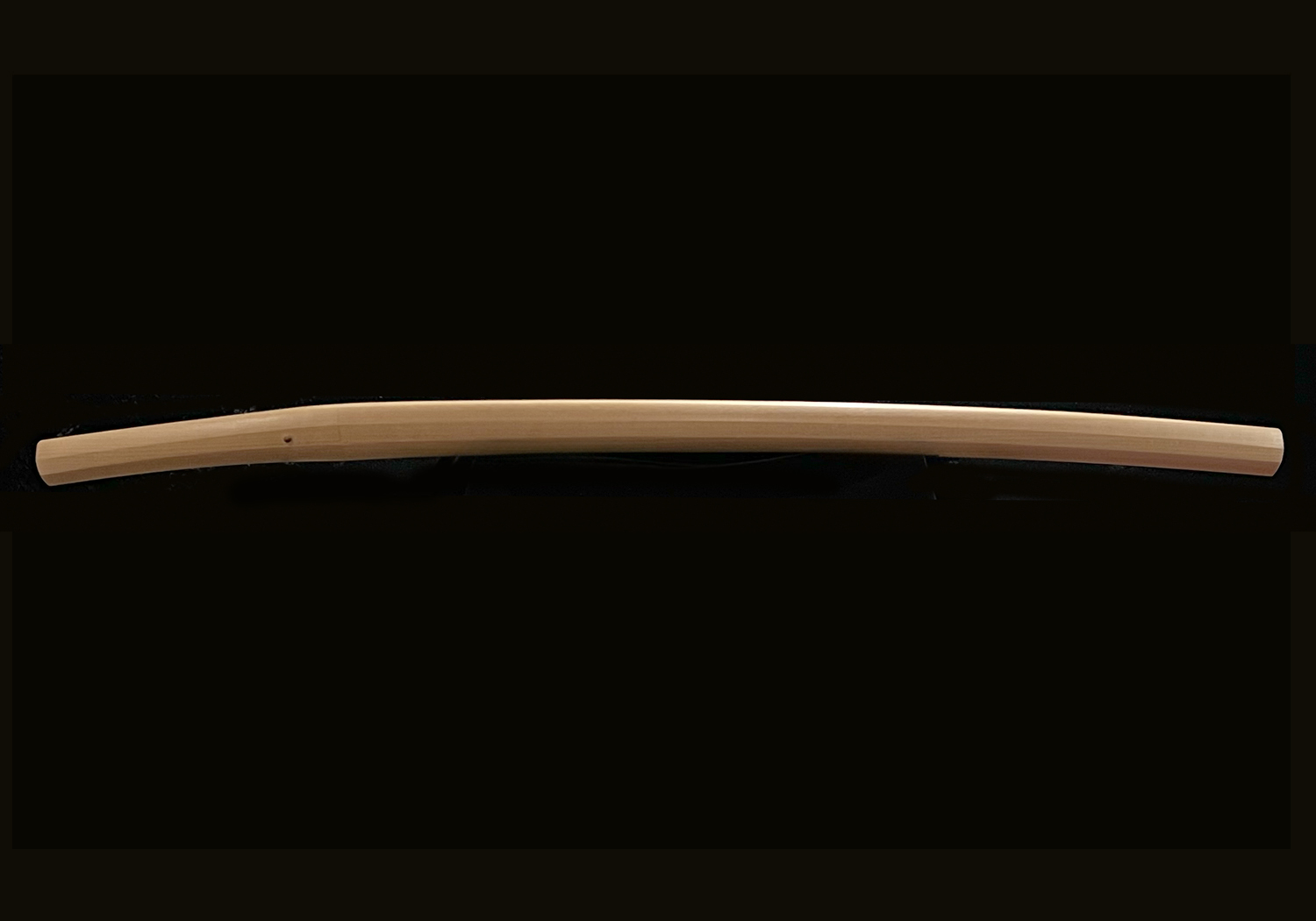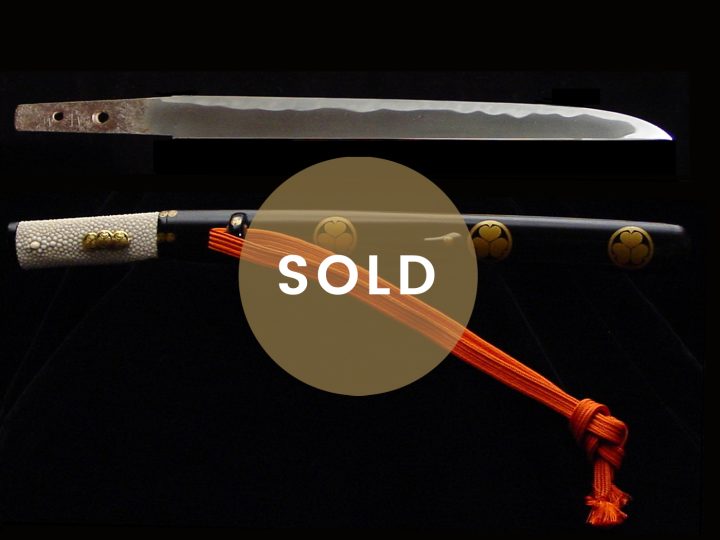

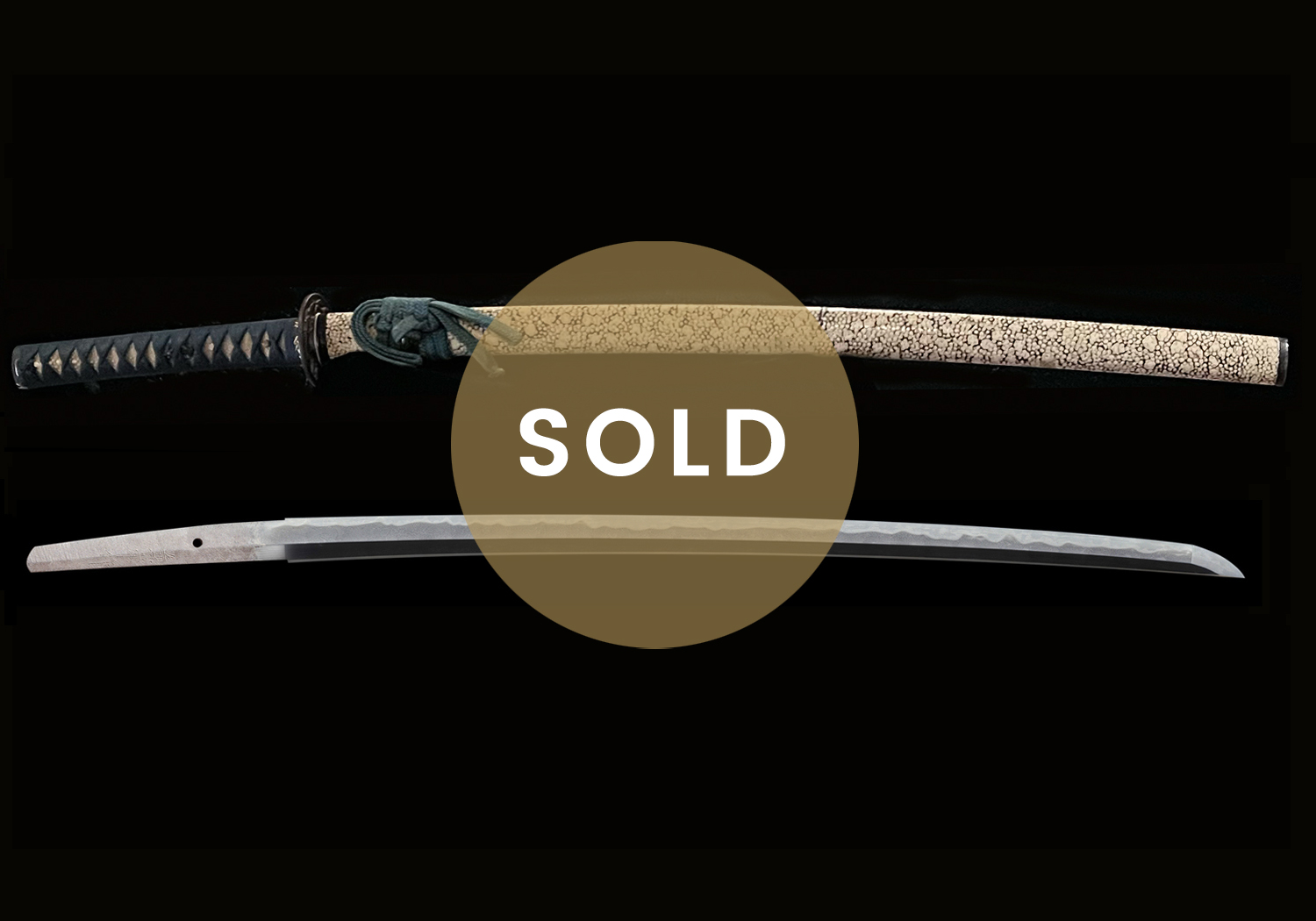
Nihonto.com is pleased to present this very well mounted katana by the Kotô smith, Kanetsune of the Mino school. He worked in the late kotô period around the Tenshô era (1573-1592). Several sub-schools existed in the Mino area and Kanetsune belonged to the Nara-Tarô School.
The Nara-Tarô School of Kanetsune (兼常) dates to circa Ôei (1394-1428); however, they are said to have originated from the Tegai School of Nara and taken their name from the first generation. The majority of extant works seen date from circa Eishô to Tenshô (1504-1592). Their style of workmanship consists of shinogi-zukuri katana and wakizashi, hira-zukuri wakizashi and tantô and rarely unokubi-zukuri wakizashi. The jigane (grain of the metal) is ko-itame mixed with masame. The hamon (temper style) are typically a nioi based suguha; however, ô-notare, gunome-midare and very rarely hitatsura-ba are also seen. The yasuri (file marks) on the nakago for katana is typically takanoha and for tantô it is typically higaki. Nakago-jiri (end of the tang) are kurijiri (rounded).
A detailed description of this sword and its koshirae is as follows:
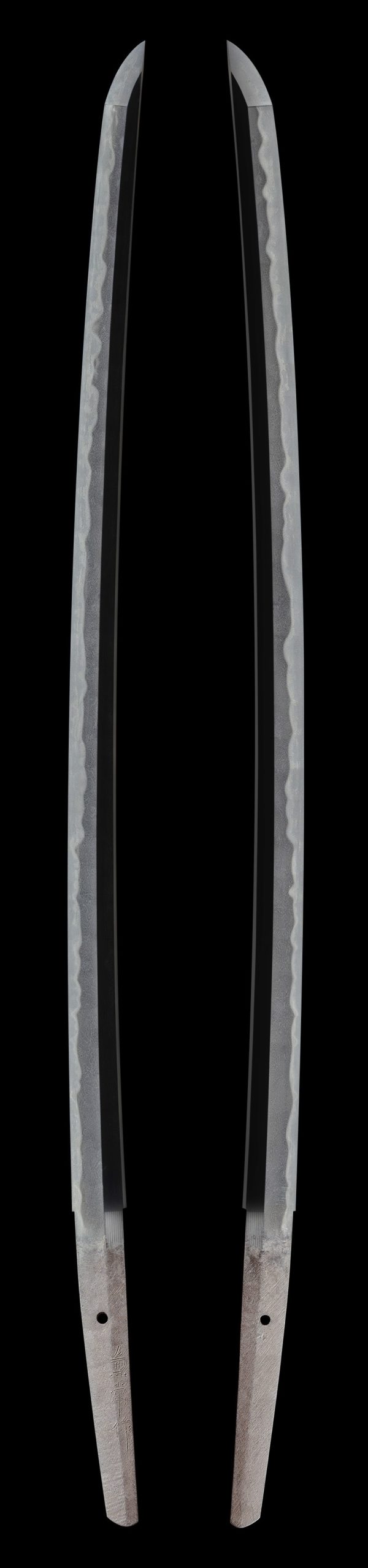
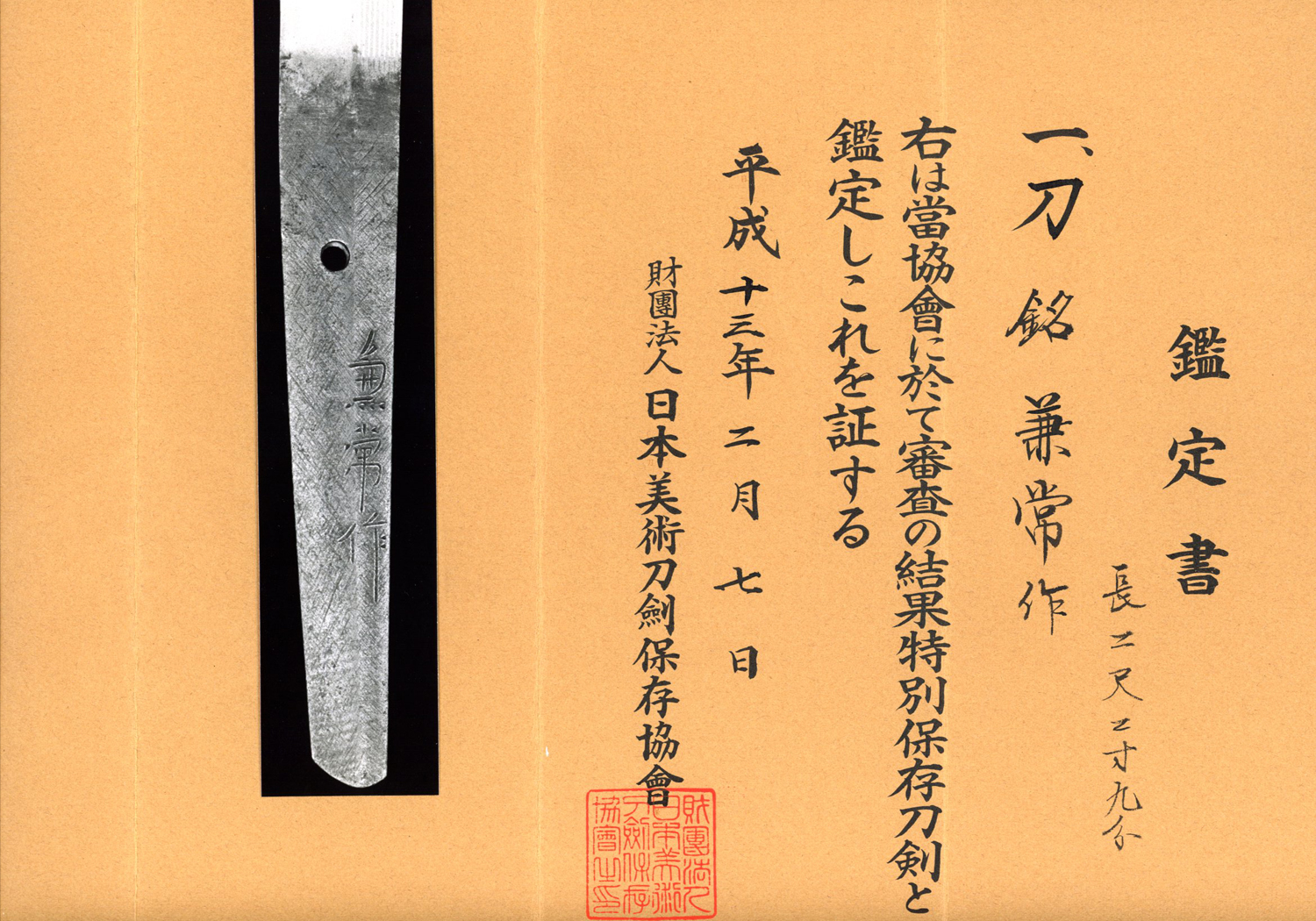
Signature: Kanetsune saku [兼常作] (attributed to eighth generation Sukeuemon [助右衛門] of the Nara Tarô School [奈良太郎系]).
Length: 2 Shaku, 2 Sun, 9 Bu. This equals 27 5/16 inches or 69.4 cm.
Sori: 4 Bu This equals 0.44 inches or 1.13 cm.
Moto-Haba: This is the width at the base of the sword. 1.22 inches or 3.1 cm.
Saki-Haba: This is the width at the point of the sword. 0.89 inches or 2.3 cm.
Province: Mino [美濃]
Period: c. Tenshô [天正] (1573-1592)
Description: The construction is hon-zukuri with an iori-mune. The blade is wide and thick. The shinogi (ridgeline) is high, and the ko-shinogi is long. The shape is stout with shallow curvature.
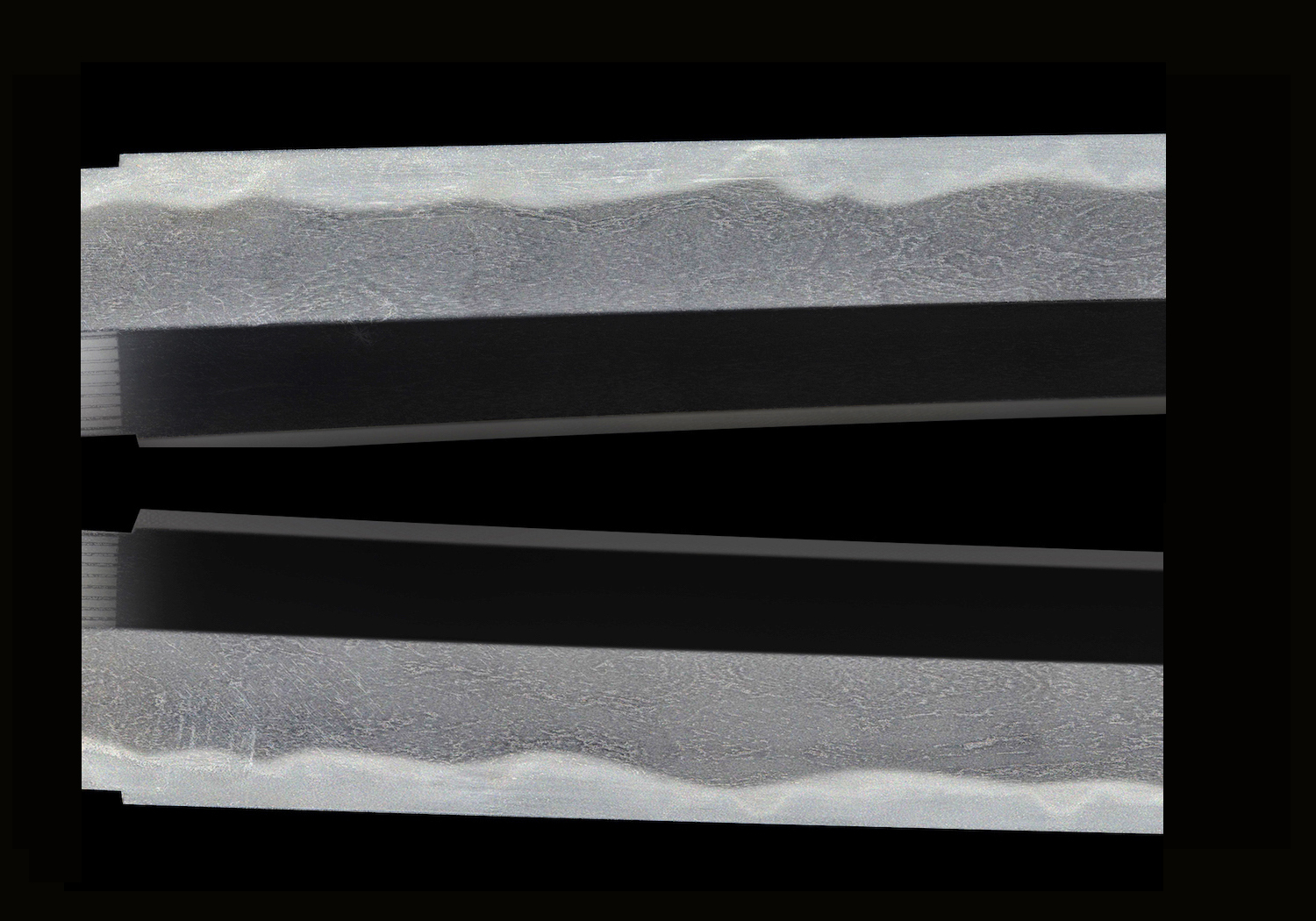
Kitae: The kitae is ko-mokume (small wood burl) mixed with masame (straight grain) that is very well worked, and the hada pattern is prominent and covered in ji-nie. There is a mixing in of tobiyaki from around the middle of the blade and mune-yaki. These give it an almost hitatsura (full temper) like feeling.
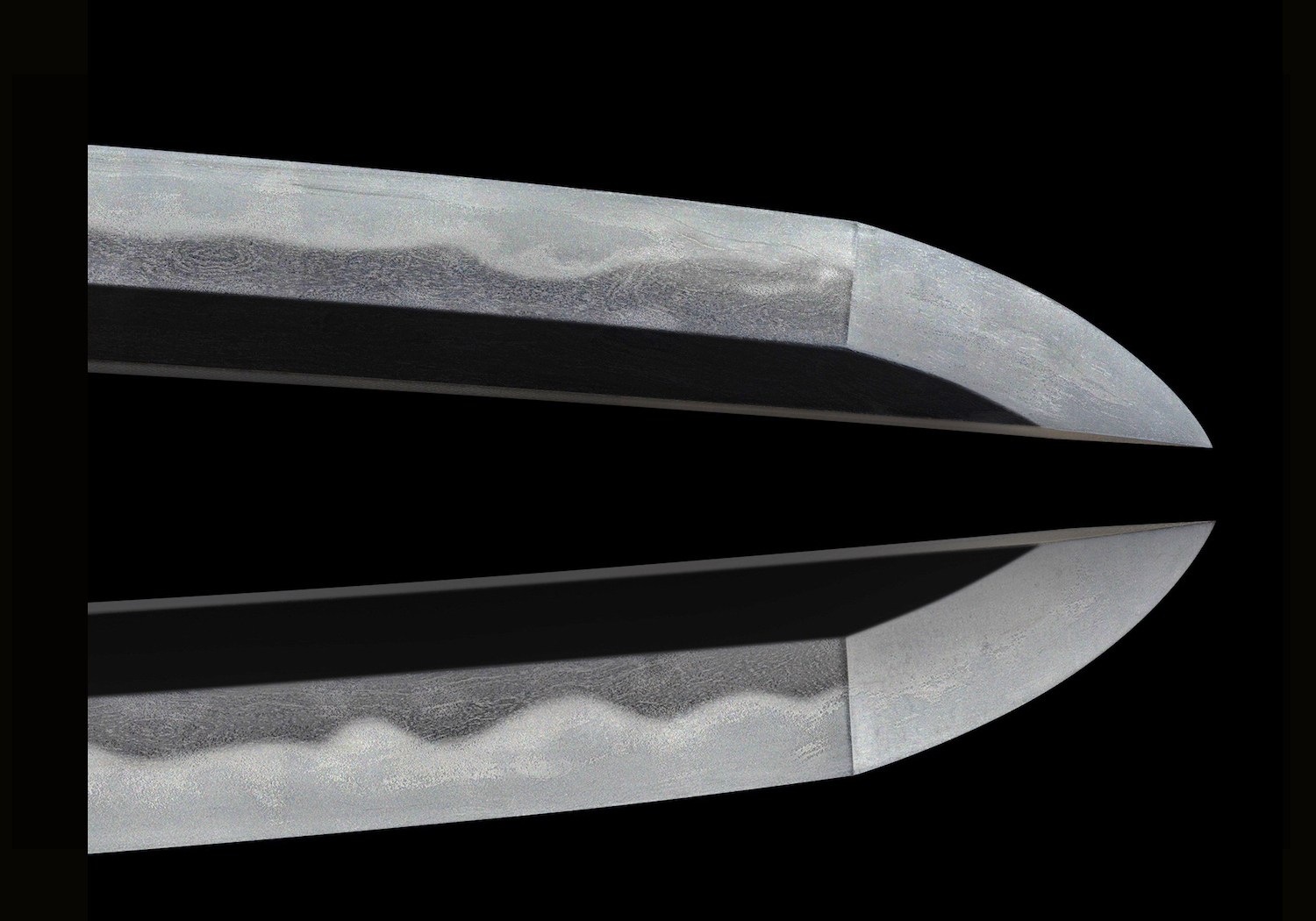
Hamon: The hamon (temper line) is a large patterned togari-gunome-midare with a mixing in of kake-dashi style sanbonsugi. The habuchi (top edge of the temper line where it meets the untempered part of the sword) is covered in nie with a mixing in of ara-nie, and there are streaks of sunagashi, brushing and kinsuji activity. The nioiguchi is tight, bright and vivid.
Bôshi: The bôshi (point of the sword) is midare-komi and kaen in style with powerful brushing.
Nakago: The nakago (tang) is ubu (unshortened), and the yasuri (file marks) are higaki. The signature is as noted above, and there is one mekugi-ana.
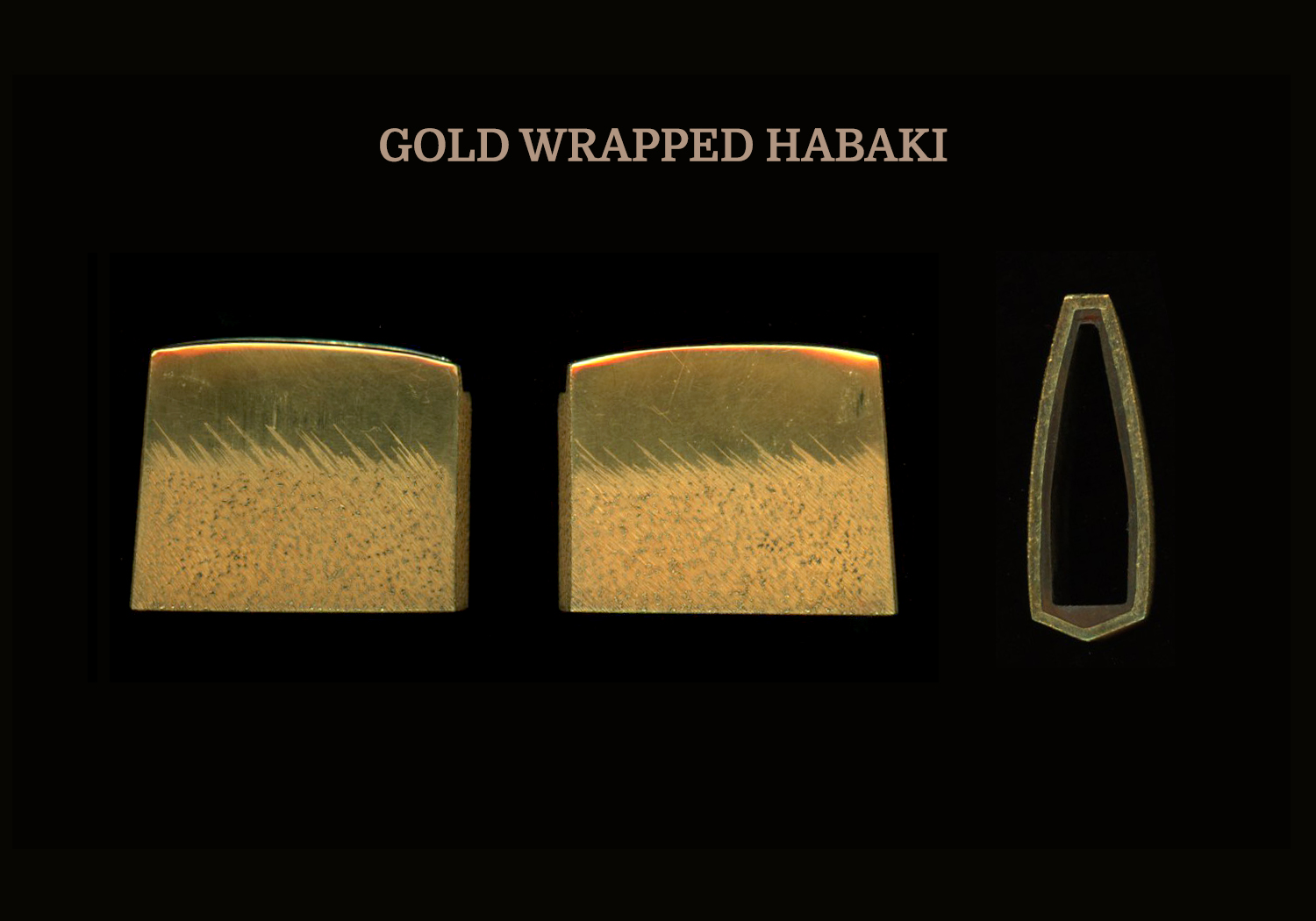
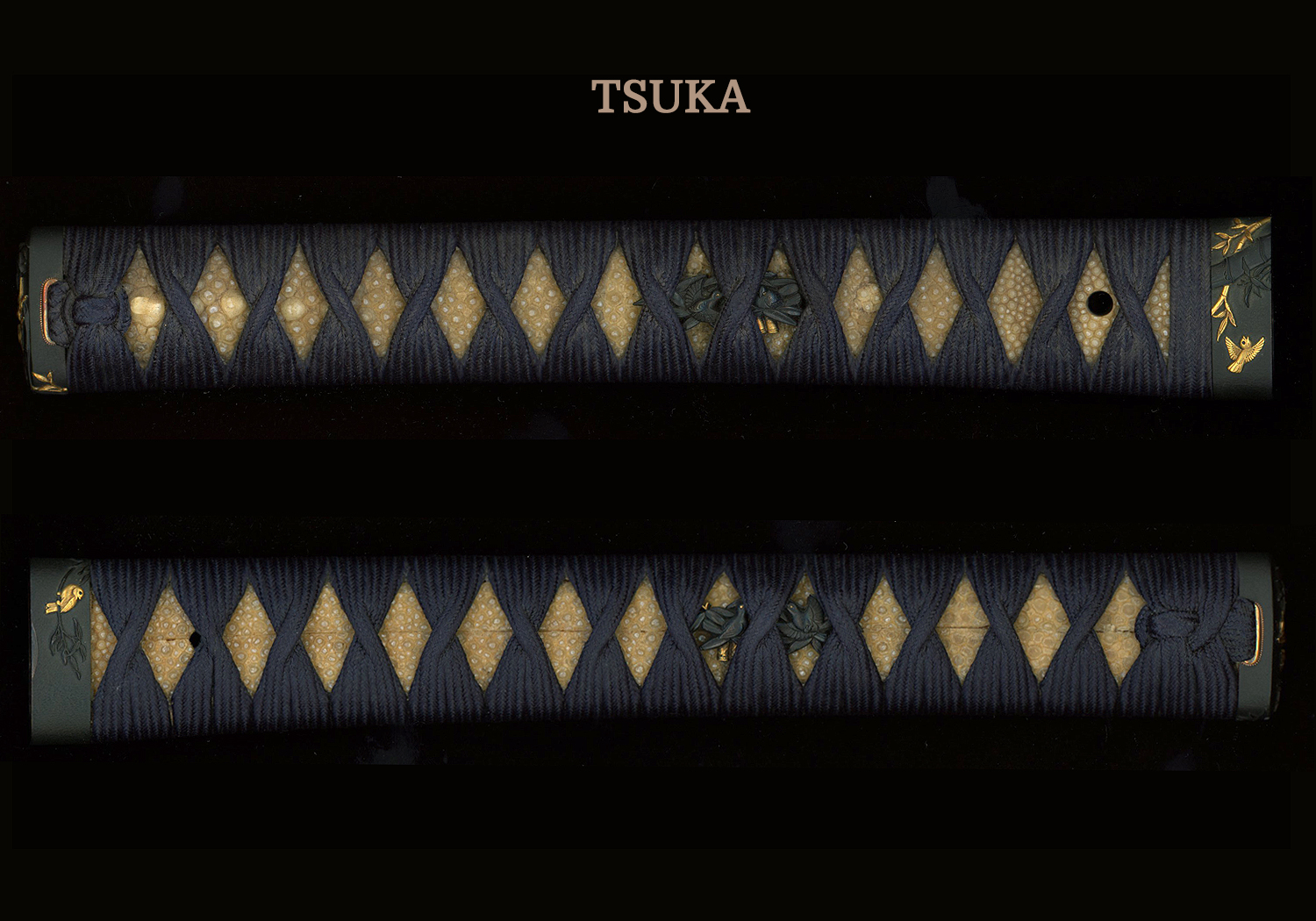
This blade comes with a beautiful koshirae (mountings). The saya is a striking hanakairagi-samezaya (plum blossom shaped ray skin scabbard). The tsuka is blue silk ito wrapped over a white same handle.
The tsuba is signed: Bushû jû Masatora [武州住正虎] (attributed to a member of either the Nishikawa [西川] or Sunagawa [砂川] families and with a connection to the Akasaka School; middle Edo period) maru-gata (round shape), iron, sukashi (with cut-outs) with gold numome-zôgan in the design of bamboo.
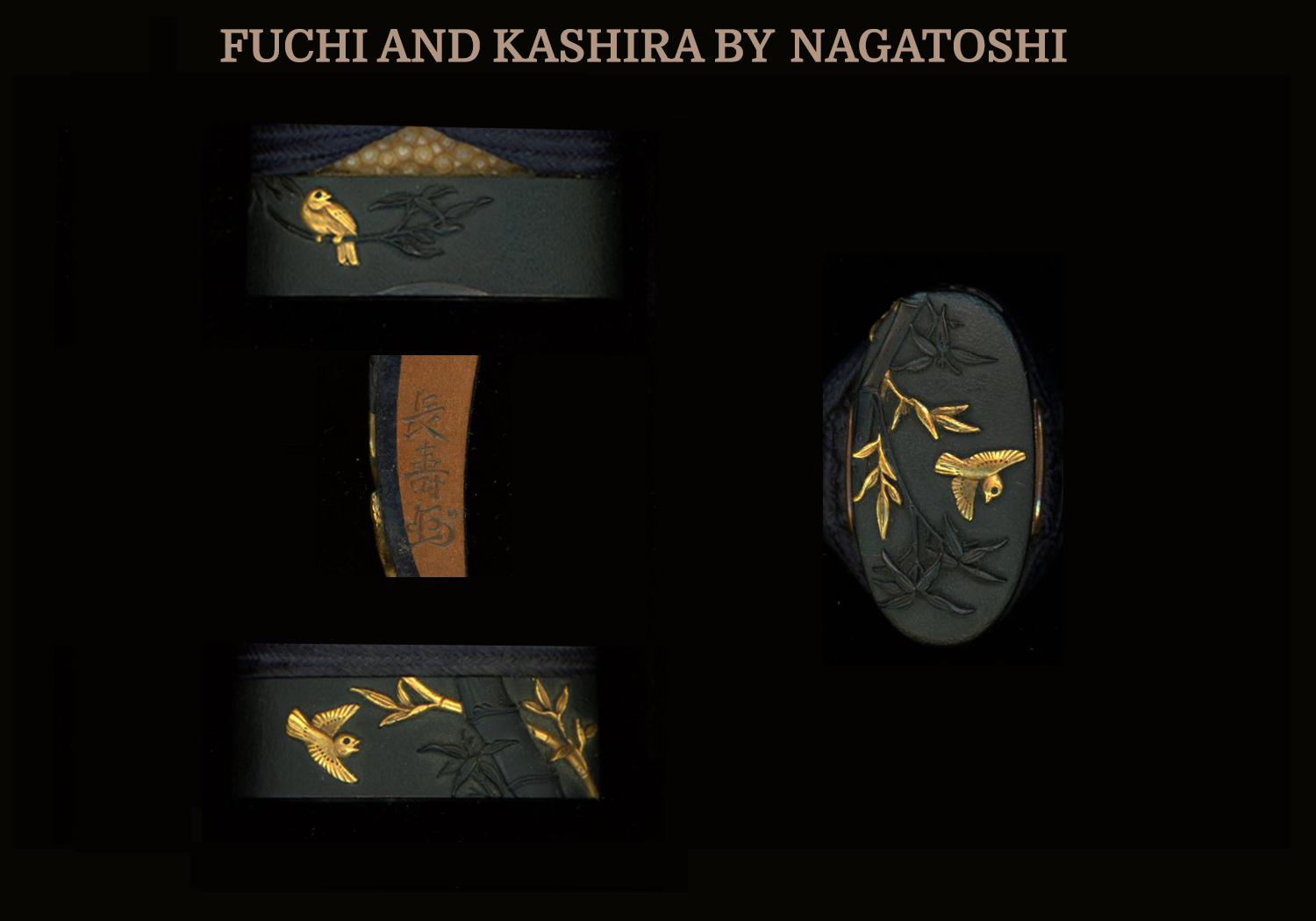
Fuchi-kashira are signed: Nagatoshi kaô [長寿(花押)]. Naotoshi worked in the late Edo period in Edo (present day Tokyo) and was a member of the Ido School. These kodogu (fittings) are exquisite with a shakudô ishime ground with high relief carvings and gold iroe of sparrows and bamboo.
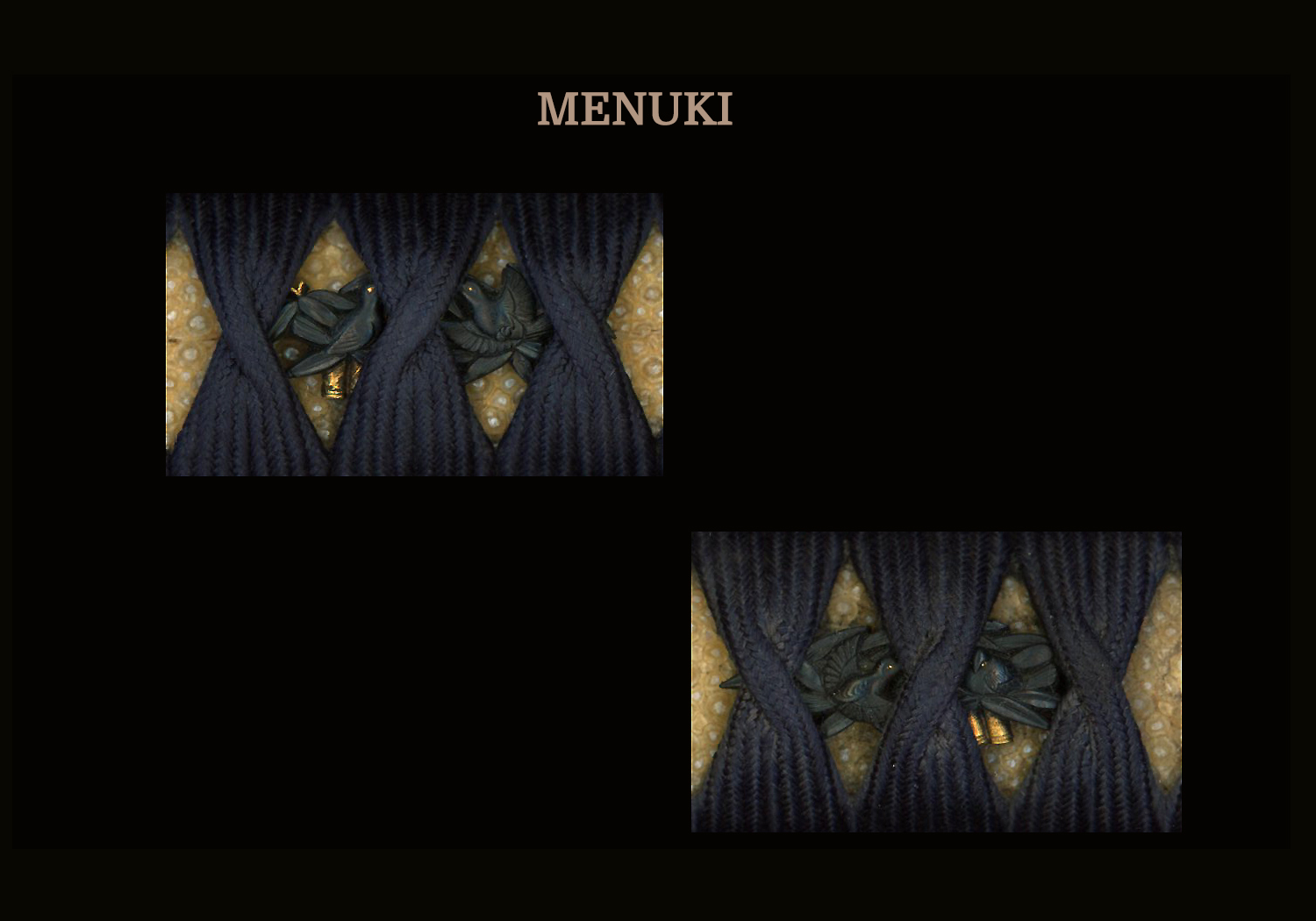
Menuki are unsigned and from the middle Edo period. They are made of shakudô ground katachi-bori with gold iroe in the shape of sparrows and bamboo.
This katana is in excellent polish with no problems or flaws. It comes with three sets of certification papers. The blade has both a Tokubetsu Hozon certification from the NBTHK and also a kanteisho certification from the NTHK. The set of fuchi and kashira also comes with a Tokubetsu Hozon kodôgu certification from the NBTHK. This is a wonderful sword with great koshirae that would be welcomed in any collection. We highly recommend this blade.
SOLD