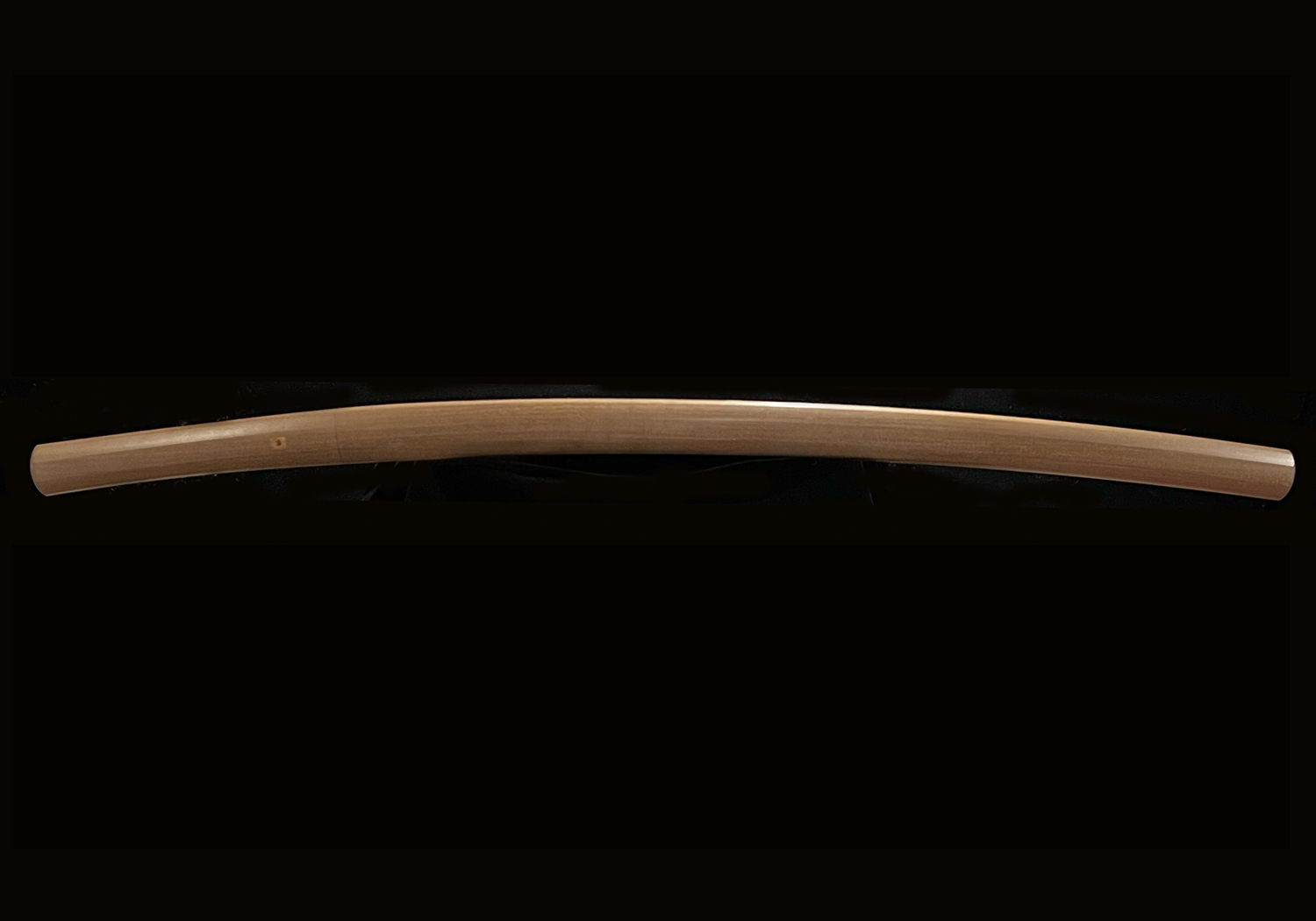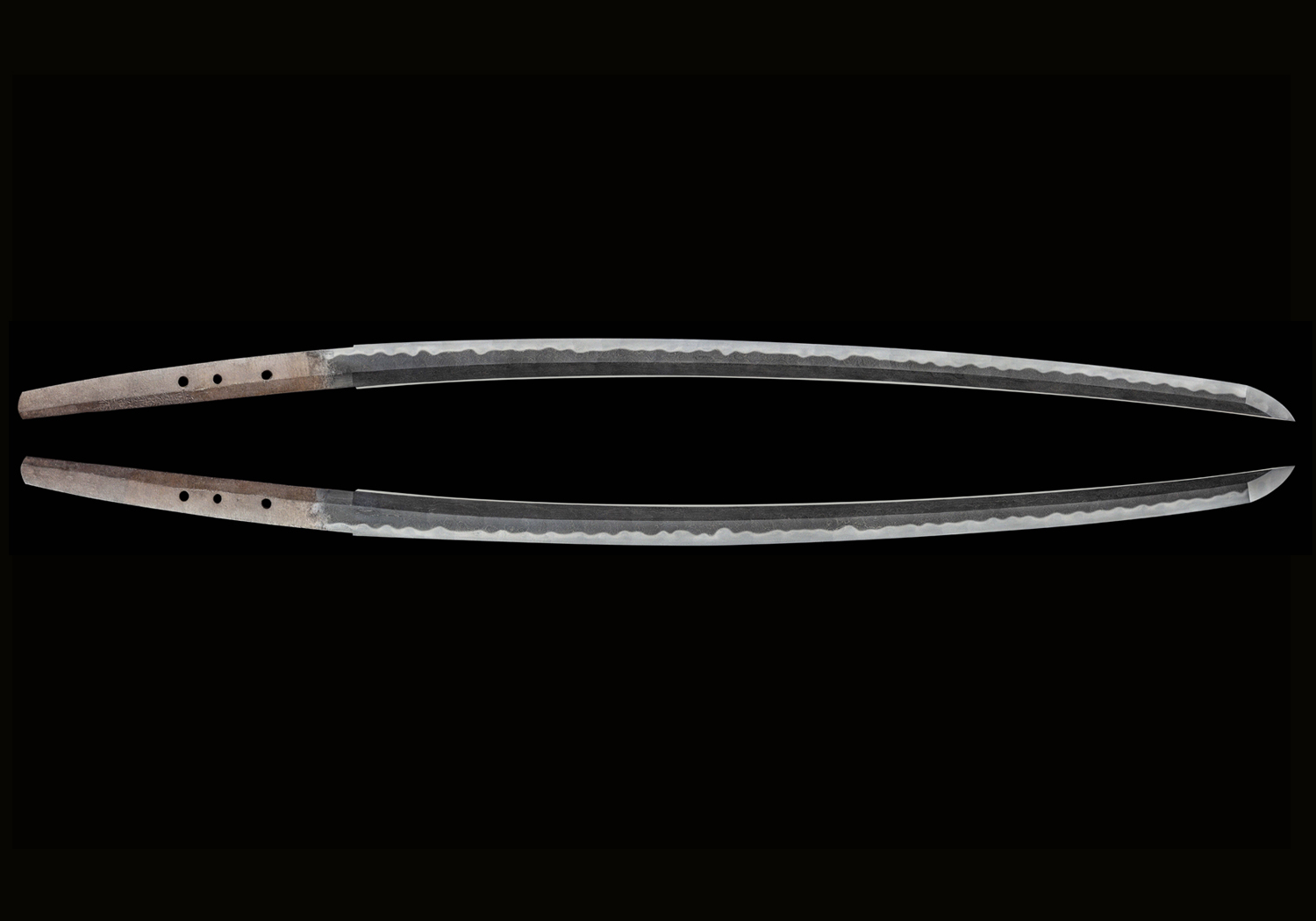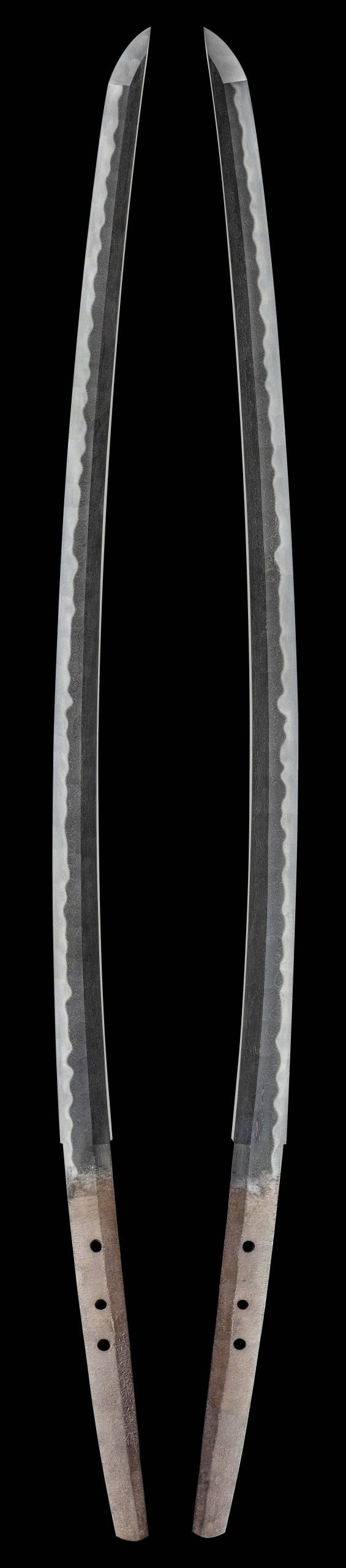

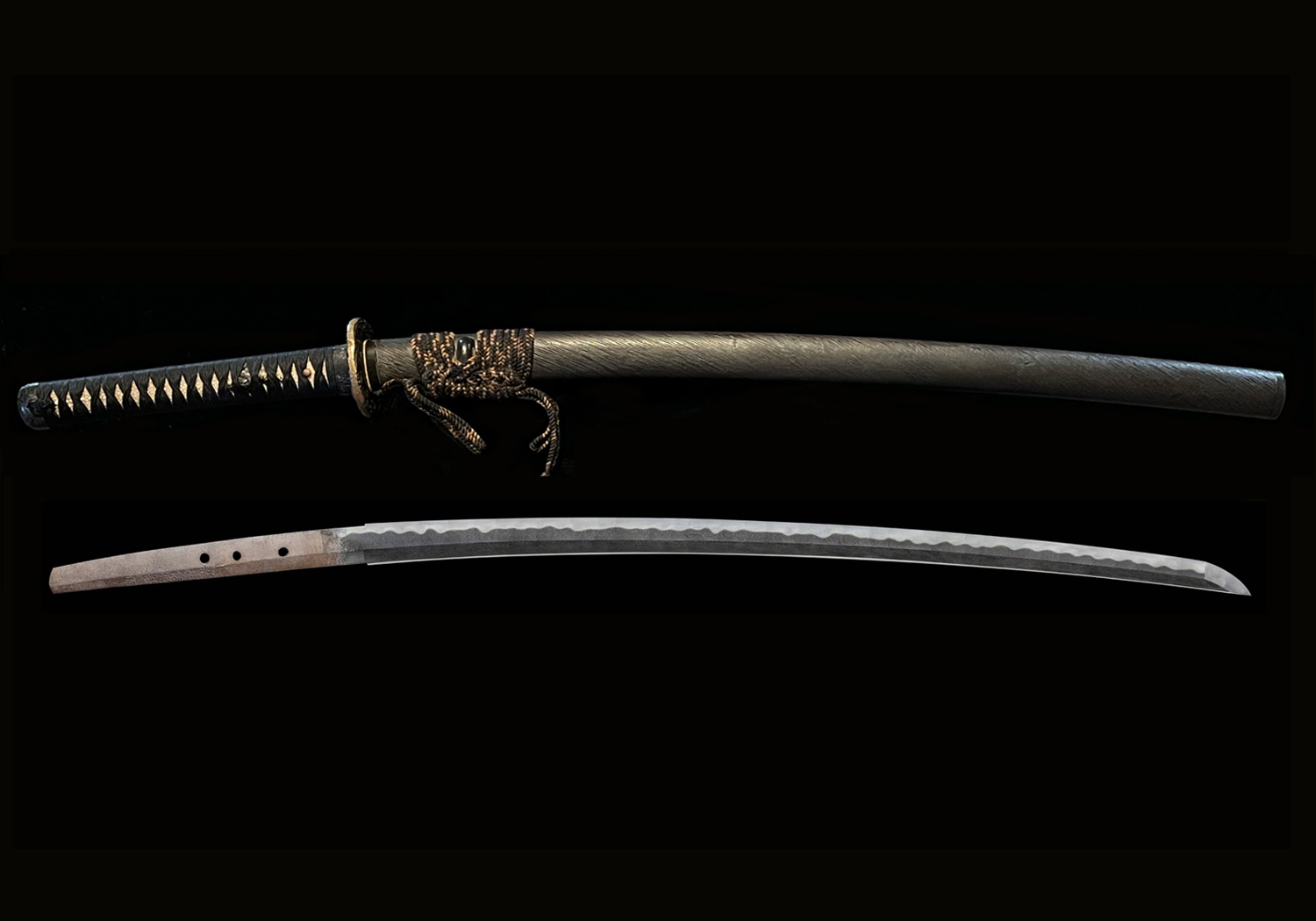
This katana by the Shitahara smith, Terushige, is a wonderful combination of grace and sheer power. It dates to the Tensho era (1573-1592), the climax of the Sengoku Period when the country was in a state of constant warfare and swords like this were highly valued.
The Shitahara School of Musashi province (Modern day Tokyo area) was founded in the late Muromachi period by Chikashige (周重) (circa Tenbun, 1532-1555) , an Odawara Sôshû smith who moved from Odawara to the Shitahara area of modern Hachiôji city, a suburb of Tokyo. The school first served the Odawara Hôjô Daimyo family until they were destroyed, and then went on to serve the Tokugawa government. There are very few extant works by Chikashige; however, the two representative smiths, Yasushige (康重) and Terushige (照重)have a fairly large number of remaining swords. The school continued to prosper into the Shintô period until the middle of the Edo period.
Their style of workmanship includes a construction of shinogi-zukuri katana and wakizashi as well as hira-zukuri wakizashi and tantô. The blades are wide and thin with shallow curvature. The jigane is typically the so-called “Shitahara-hada consisting of powerful mokume (wood burl) that has a swirling appearance down the center of the ji. They also produce a ko-itame that will show Shitahara-hada in some areas of the jigane. The hamon (temper line) are ô-midare, ô-notare, gunome-midare, hitatsura-ba, wide suguha and medium suguha. The habuchi (top edge of the temper line where it meets the un-tempered part of the sword) is nioi based with an uneven scattering of nie, and there is occasionally ashi and sunagashi activity. Bôshi are midare-komi with a kaeri (turn-back). The nakago (tang) are slightly tanago-bara with kiri- or kattesagari-yasuri. The nakago-jiri is kurijiri (end of the tang) are kurijiri (rounded).
.The detailed description of this particular sword are as follows:
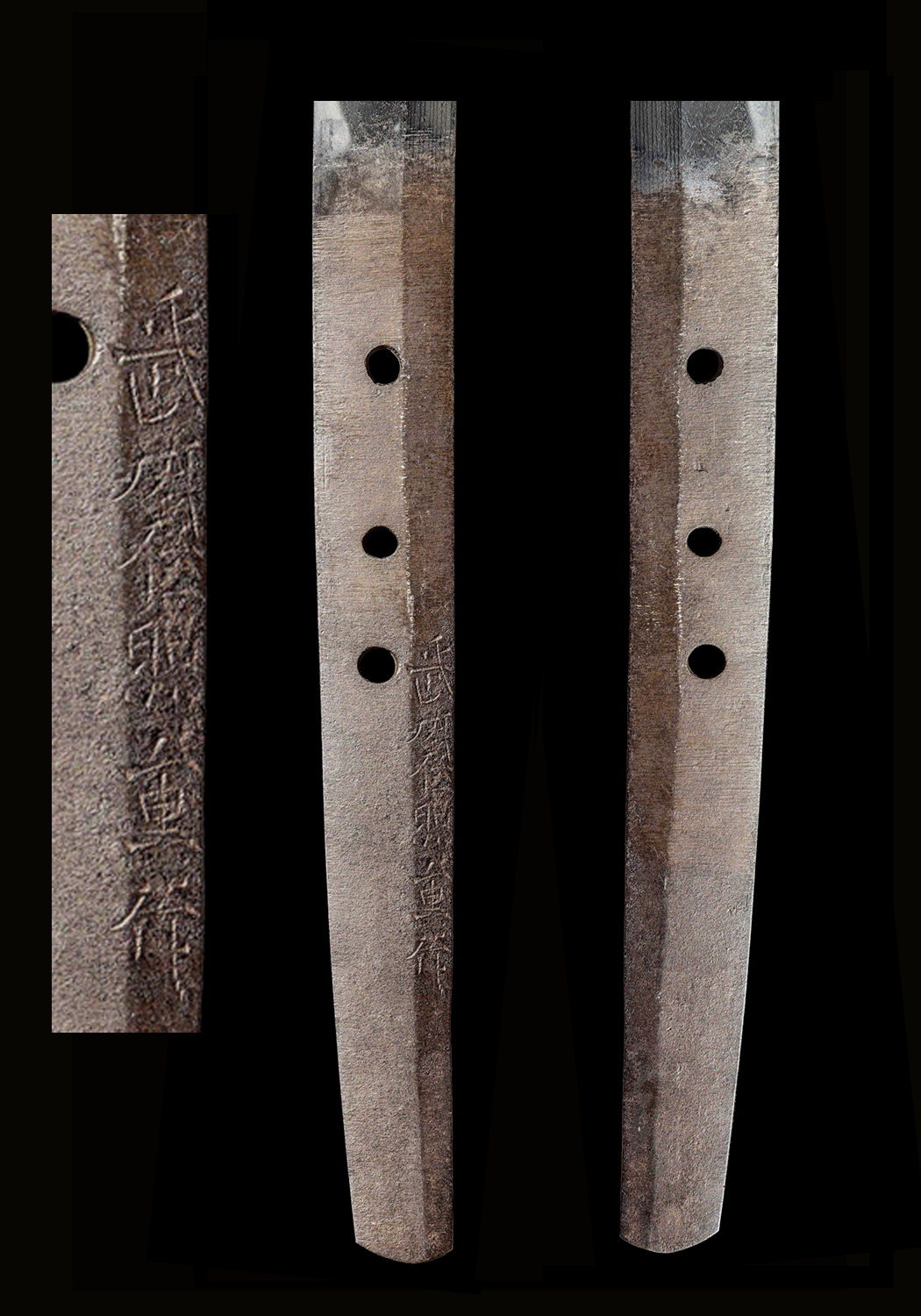
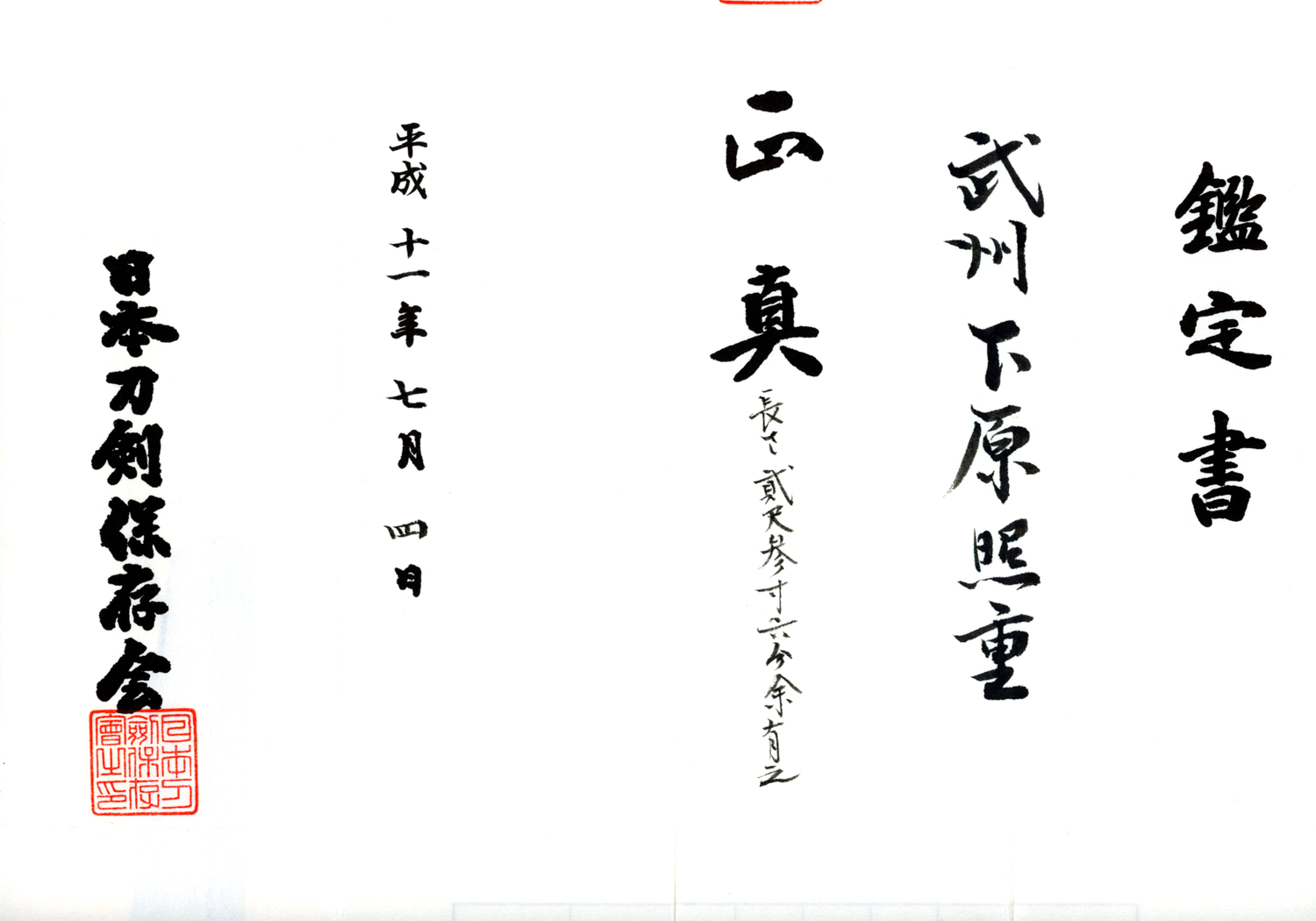
Signature: Bushû jû Terushige saku (武州住照重作) It has been attributed to second generation smith Terushige known as, Yamamoto Genjirô Shitahara Terushige (山本源二郎下原照重).
Length: 2 Shaku, 3 Sun, 6 Bu, 6 Rin. This equals 28.25 inches or 71.76 cm.
Sori: 6 Bu This equals 0.74 inches or 1.9 cm.
Moto-Haba: This is the width at the base of the sword. 1.22 inches or 3.1 cm.
Saki-Haba: This is the width at the point of the sword. 0.92 inches or 2.4 cm.
Province: Musashi (武蔵)
Period: c. Tenshô (天正) (1573-1592)
Description: The construction is hon-zukuri with an iori-mune. The blade is wide and thick. The point is broad, and the curvature is shallow. The shape is magnificent with an ô-kissaki.
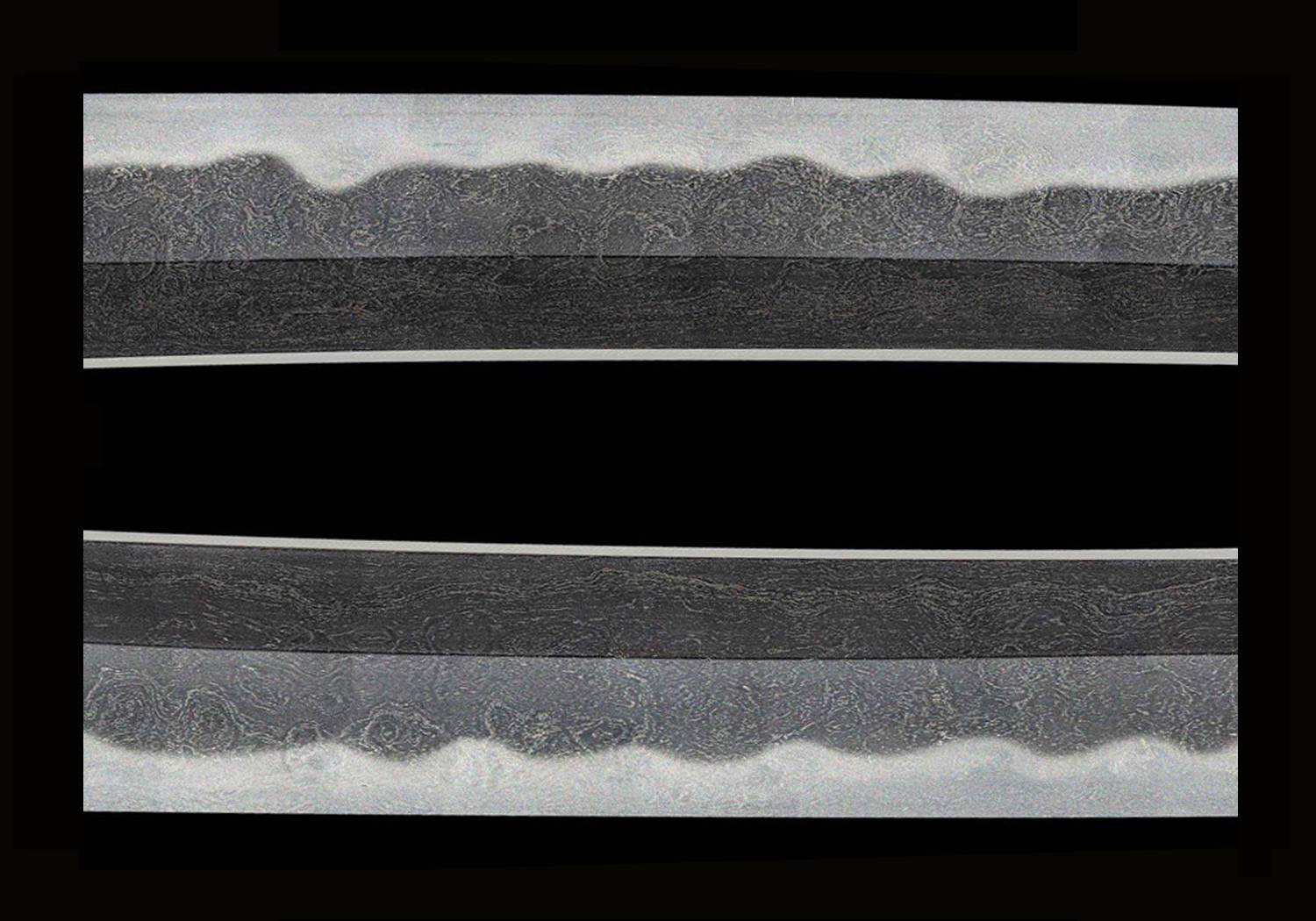
Kitae: The kitae is ayasugi style nyorin-mokume (uroko or fish-scale mokume) with swirling, whirlpool shapes that appears to be a fish-scale or keyaki (the zelkova tree) like wood grain. The hada pattern is prominent.
Hamon: The hamon is gunome-midare, and the habuchi is unevenly covered in nie; however, it is entirely nioi based. There is ko-ashi activity.
Bôshi: The bôshi is midare-komi with a brushed tip and kaeri.
Nakago: The nakago is machi-okuri, and the yasuri are kattesagari. The signature is as noted above, and there are three mekugi-ana.
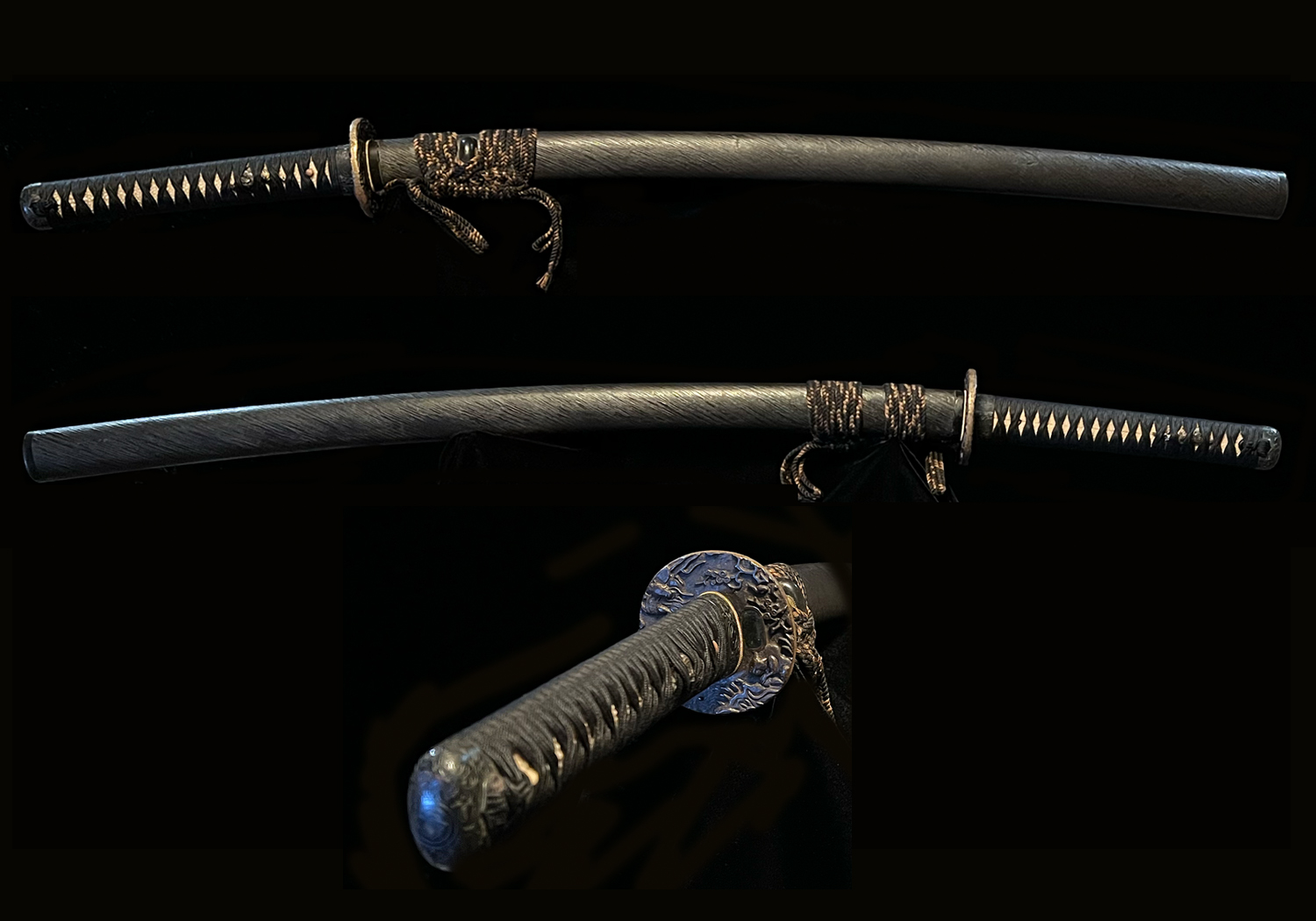
This katana comes in a true samurai’s style of koshirae. This koshirae was meant for use and not for show. It is a perfect match for the seriousness of the blade. The saya is done in a black lacquered nunome kizami-zaya with a black wrapped white same (ray skin) handle.
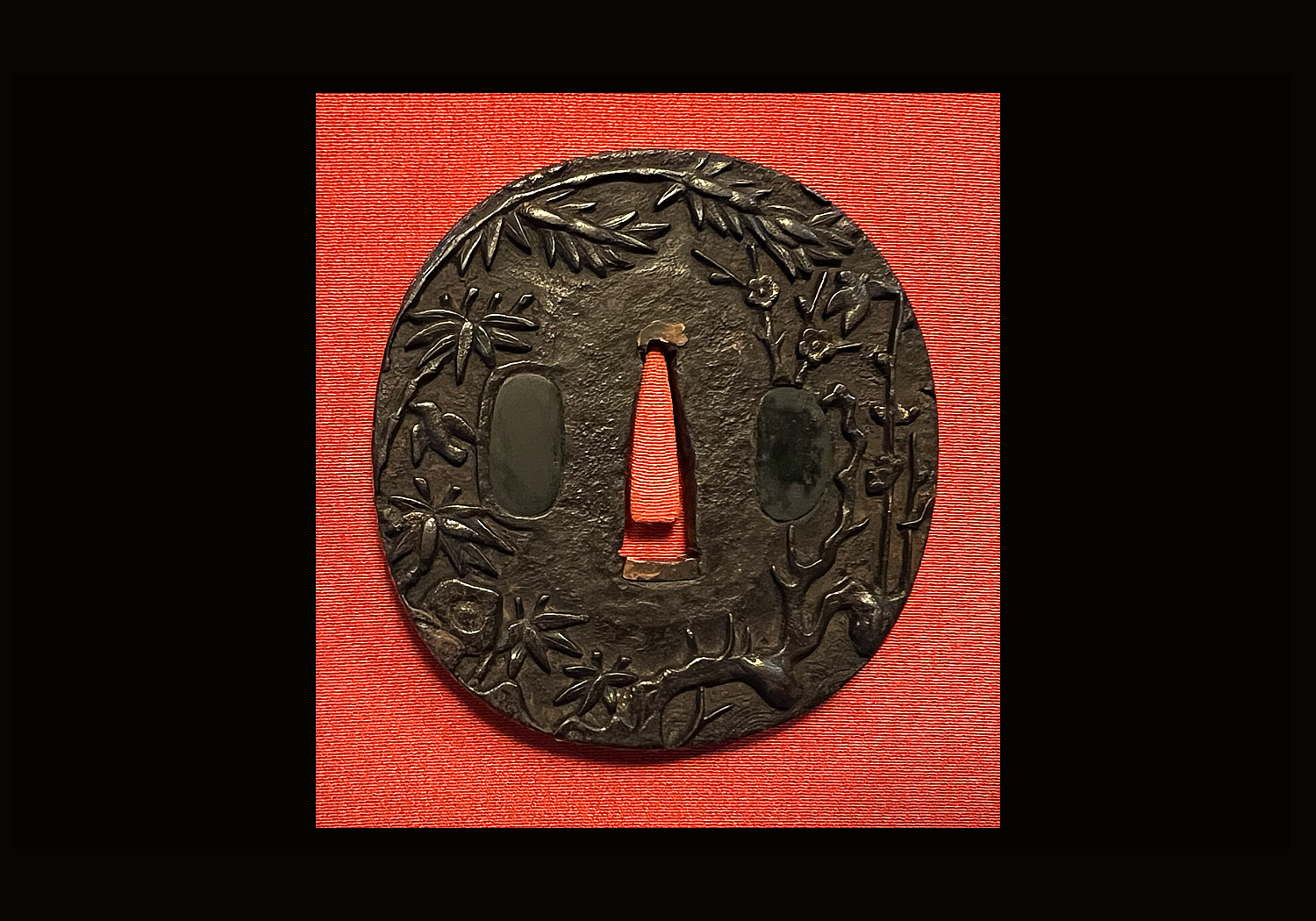
The tsuba is unsigned, iron ground, high relief carvings of a tiger, dragon and shochikubai (pine, bamboo, and plum) with gold nunome zogan (Namban School, late Edo).
The fuchi-kashira are unsigned, shakudô polished ground with family crests and foliage in hairline carvings (late Edo).
The menuki are copper based with gold iroe and katachi-bori tigers.
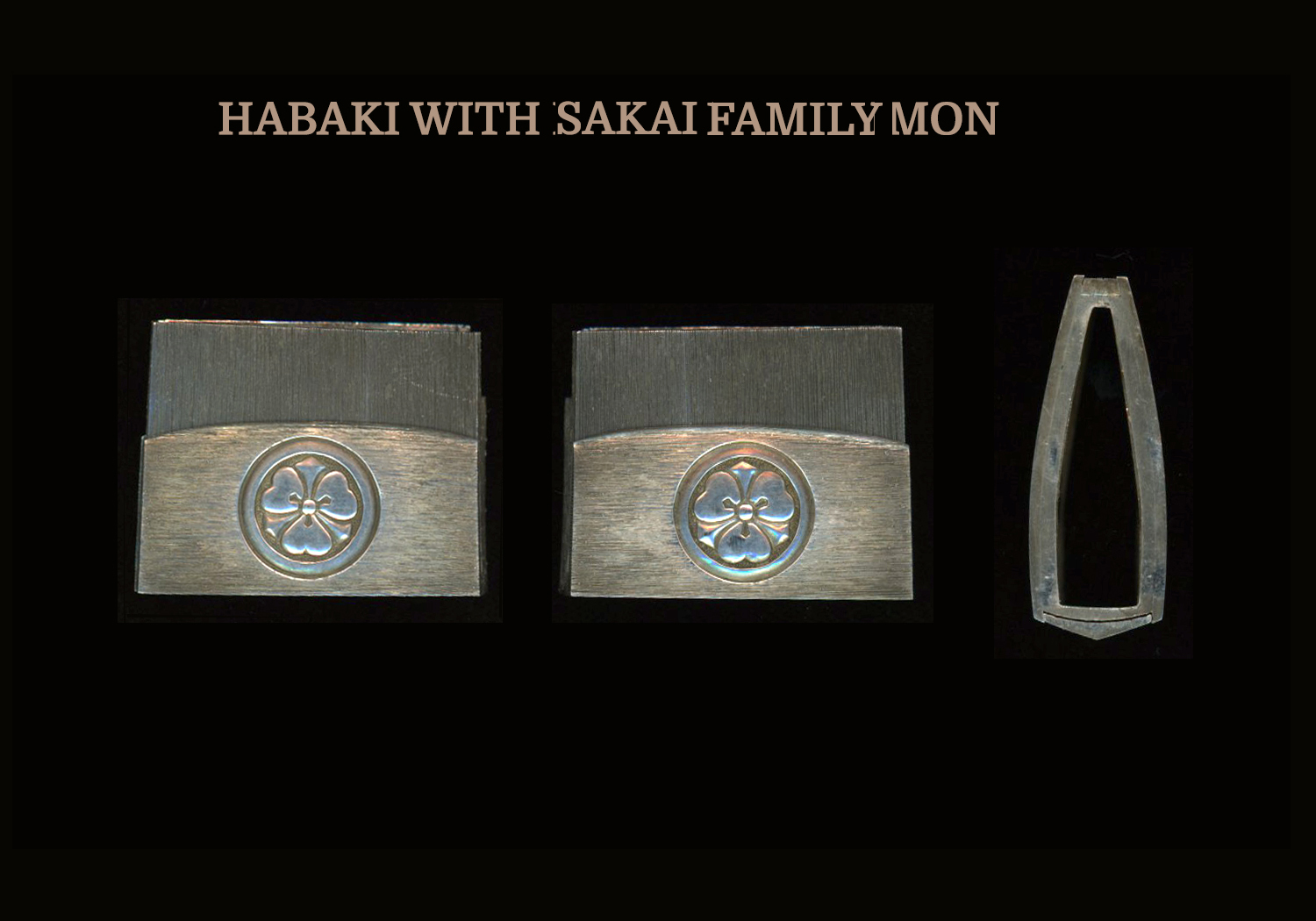
The blade comes with an excellent double silver habaki with the Sakai family mon.
This katana is in excellent polish with no problems or flaws. It comes with NTHK certification papers attesting to the quality and authenticity of this blade. If you are looking for a truly powerful sword that dates to a period of constant warfare in Japan when a samurai’s life depended on his blade, don’t miss this opportunity.
Price:14,000.00
SUPER SALE PRICE: $9,000.00 + SHIPPING