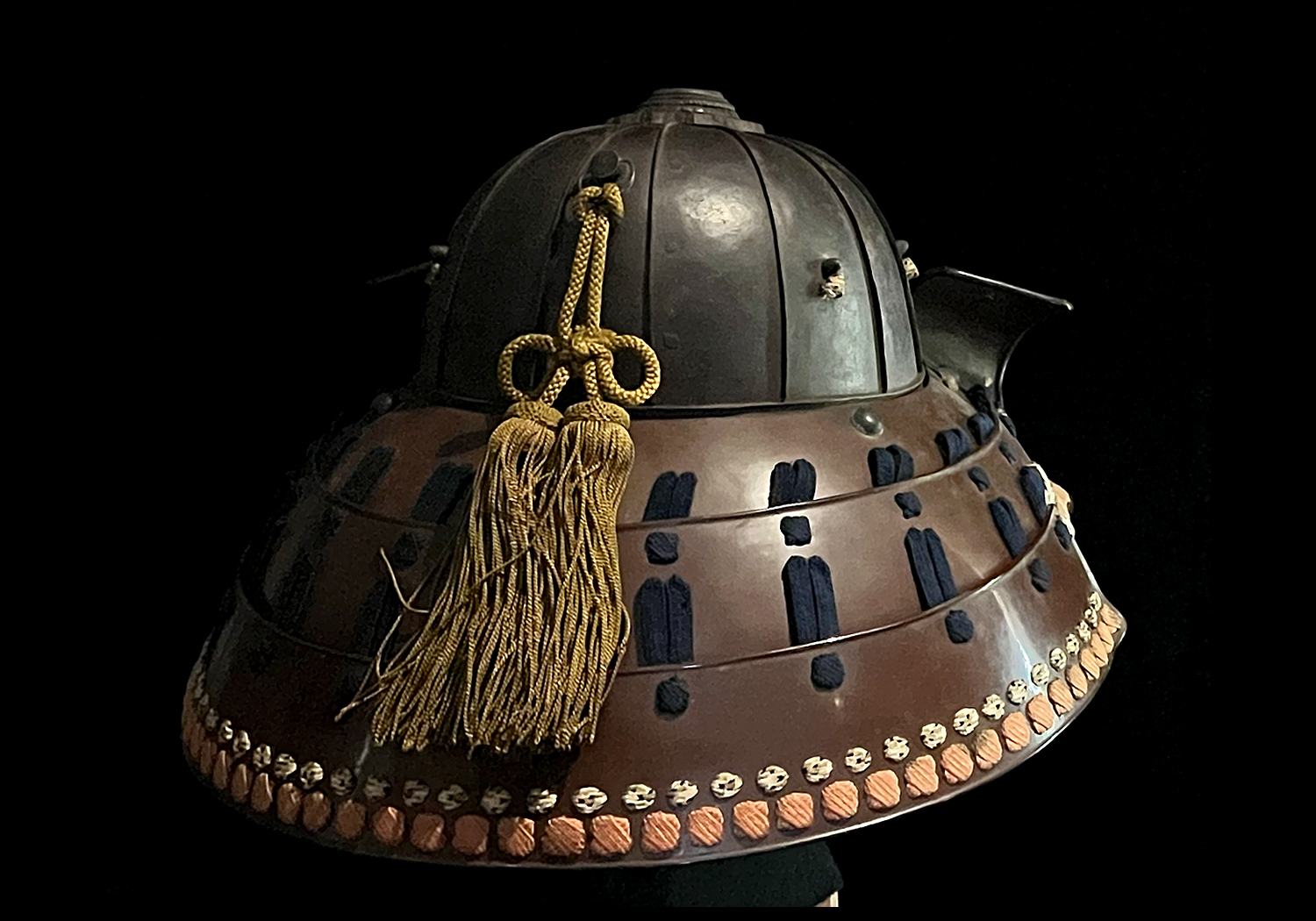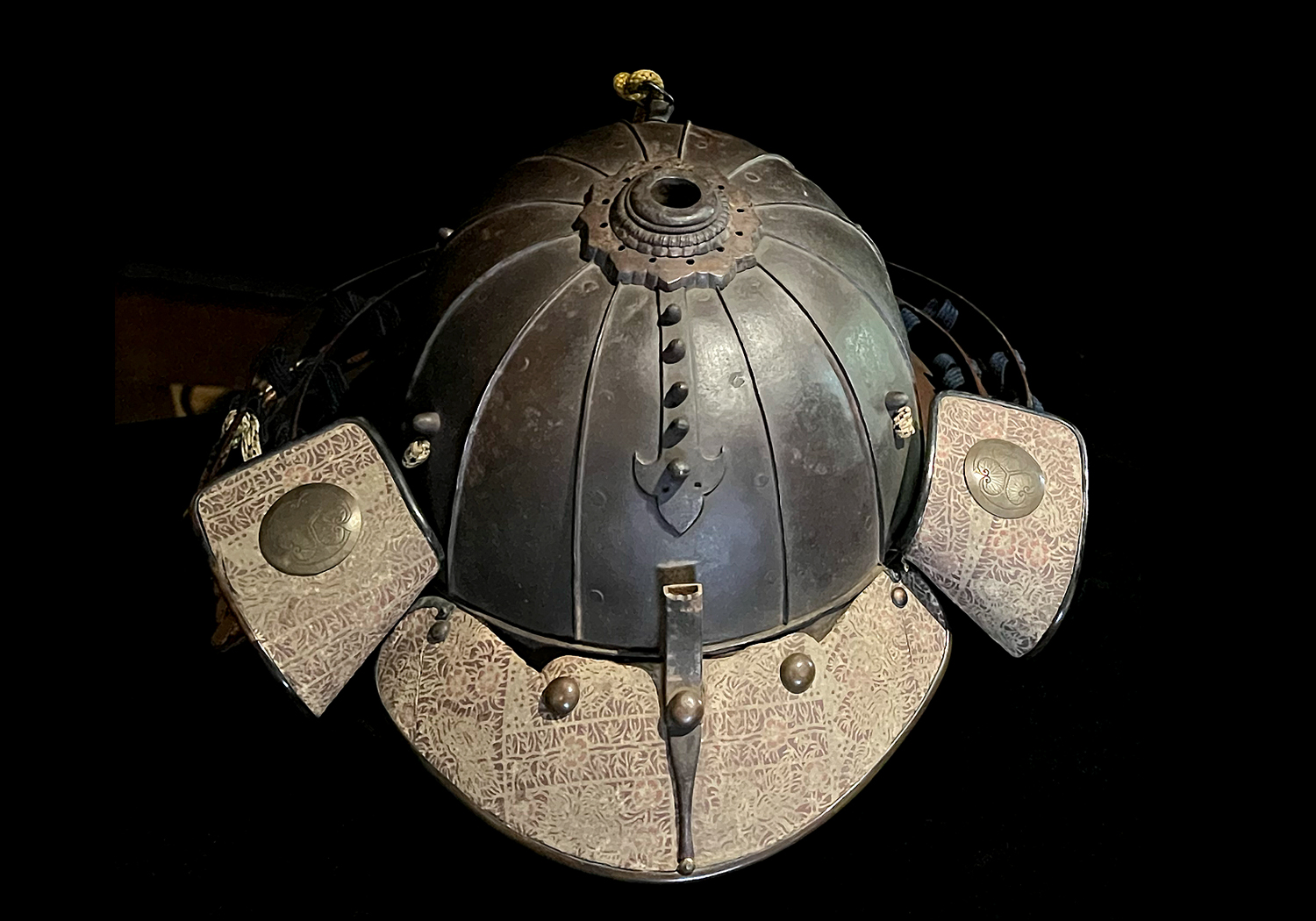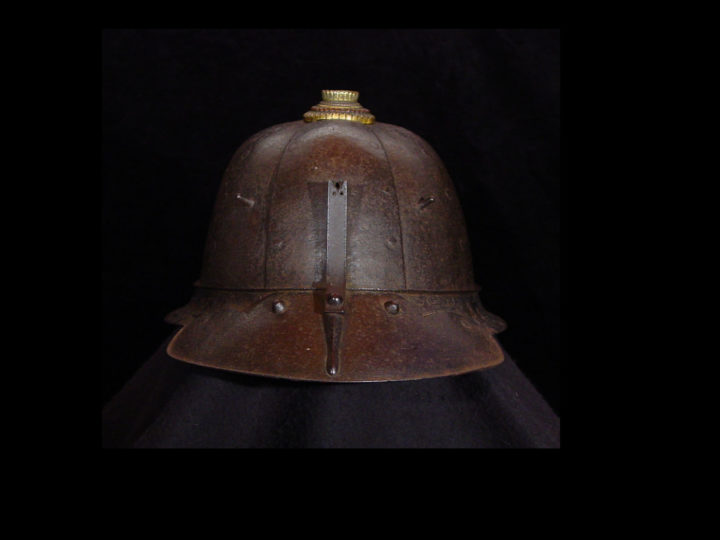


Nihonto.com is pleased to present this very attractive iron kabuto (helmet) from the Edo era (1700’s-1800’s). It is comprised of 12 riveted iron plates with low suji (ridges). The large frontal plate has a separate iron plate attached near the top with five large standing rivets. Going counter-clockwise from this large frontal plate, the second, fourth, eighth, and tenth, plates have one of the same size rivets. These rivets are called shiten-no-byo and are located on opposing sides of the helmet. They are long and blunted. There are small holes in these plates located just below the shiten-no- byo that are known as hibiki-no-ana and they have loops of lacing known as hasa pulled through them. These shiten-no-byo and hibiki-no-ana are most often found on works by the armor makers of the famous Myochin and Saotome schools.
The top of the hachi (bowl) bears a large tehen-no-kanamono of five layers all of which appear to be made of iron. This tehen-no-kanamono circles the hole at the apex of the bowl. This hole is basically vestigial in that we find it on helmets from the Heian and Kamakura eras when it was used by the samurai to pull his topknot through thus helping to anchor the helmet to his head. Later in the Edo period it served more of a purpose of providing some ventilation for the wearer.
The mabisashi (visor) of this helmet is attached to the rim of the hachi (bowl) using five rivets, three large and two small. The center rivet is also securing the harai-date (fore crest holder) to the mabisashi and hachi. The mabisashi is covered in treated leather and the edge is a fukurin (rim) of a dark metal alloy called shakudo.
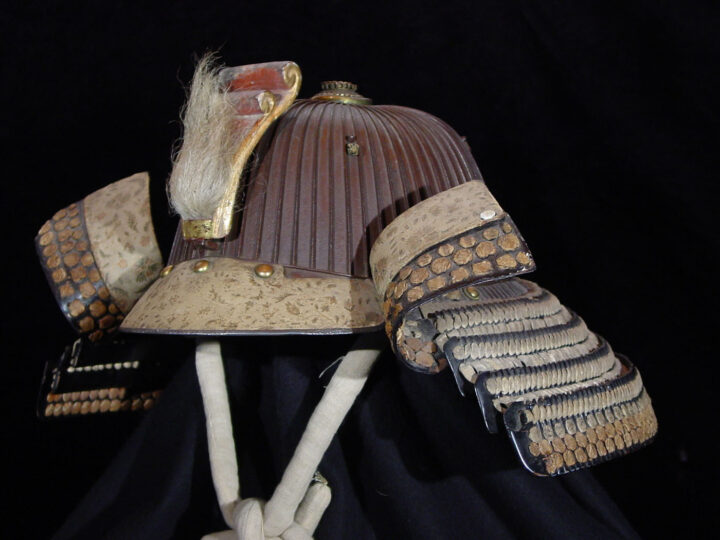
The shikoro (neck protector) of this helmet is comprised of three rounded lames (metal plates ) that have been lacquered in a rich brown color. The top lame turns back into what are known as fukigayeshi which are covered in treated leather to match the mabizashi. In addition, each turn-back of the fukigayeshi bears and aoi mon (family crest) done in copper. The lames are decorated with gold ito lacing on the bottom edge and are attached to one another with blue lacing. There is also some multi-colored lacing used on the lames which matches the lacing we find in the hibiki-no-ana (small holes) on the helmet itself.
The front of the helmet bears a rather large maedate (fore-crest) that seems to be depicting two bursts of flames connected to a central decorative piece bearing a mon (family crest) of three chrysanthemums incased in a circle. Very imposing.
The interior of the helmet contains a fully intact helmet liner so we have no way of knowing if the helmet is signed by its make or not. What we do know is that this is a very well made helmet of thick iron plates showing that it was constructed for use in battle and not just for decoration.
PRICE $ 6,750.00