
The story of the Echizen Shimosaka starts with the first generation Yasutsugu (康継). He is believed to have been born around the middle of the sixteenth century. His place of birth was in Shimosaka (下坂) of Shiga-gun in the province of Omi. Omi is next to Mino and contains Lake Biwa. Yasutsugu (康継) was born into a sword making family headed by his father, Hironaga (廣長), reputed to be the last descendent of Yamato no Kuni Senjuin (大和国千手院). Though his father was from Omi, Yasutsugu was trained in the Mino (美濃) tradition. He signed his early swords using the place name Shimosaka.
He later moved to Echizen from Mino as did many of his followers early in the Shintô period. Whether by chance or intent, he became noticed and supported by Matsudaira Hideyasu (松平秀廉), who was the third son of Tokugawa Ieyasu (徳川家康). Hideyasu (秀廉) was the Daimyo of Echizen province and as such was in a position to be of great help to Yasutsugu (康継). Yasutsugu worked directly for the Shogunate and made many swords for Tokugawa Ieyasu as well as re-tempering swords that lost their original temper due to fires. Soon after moving to Echizen and working for the Tokugawa family, he was given the character “Yasu” (康) from Ieyasu and henceforth changed his signature from Shimosaka t(下坂) to Yasutsugu (康継). Many of the smiths that followed him to Echizen continued to sign using only the place name of Shimosaka.
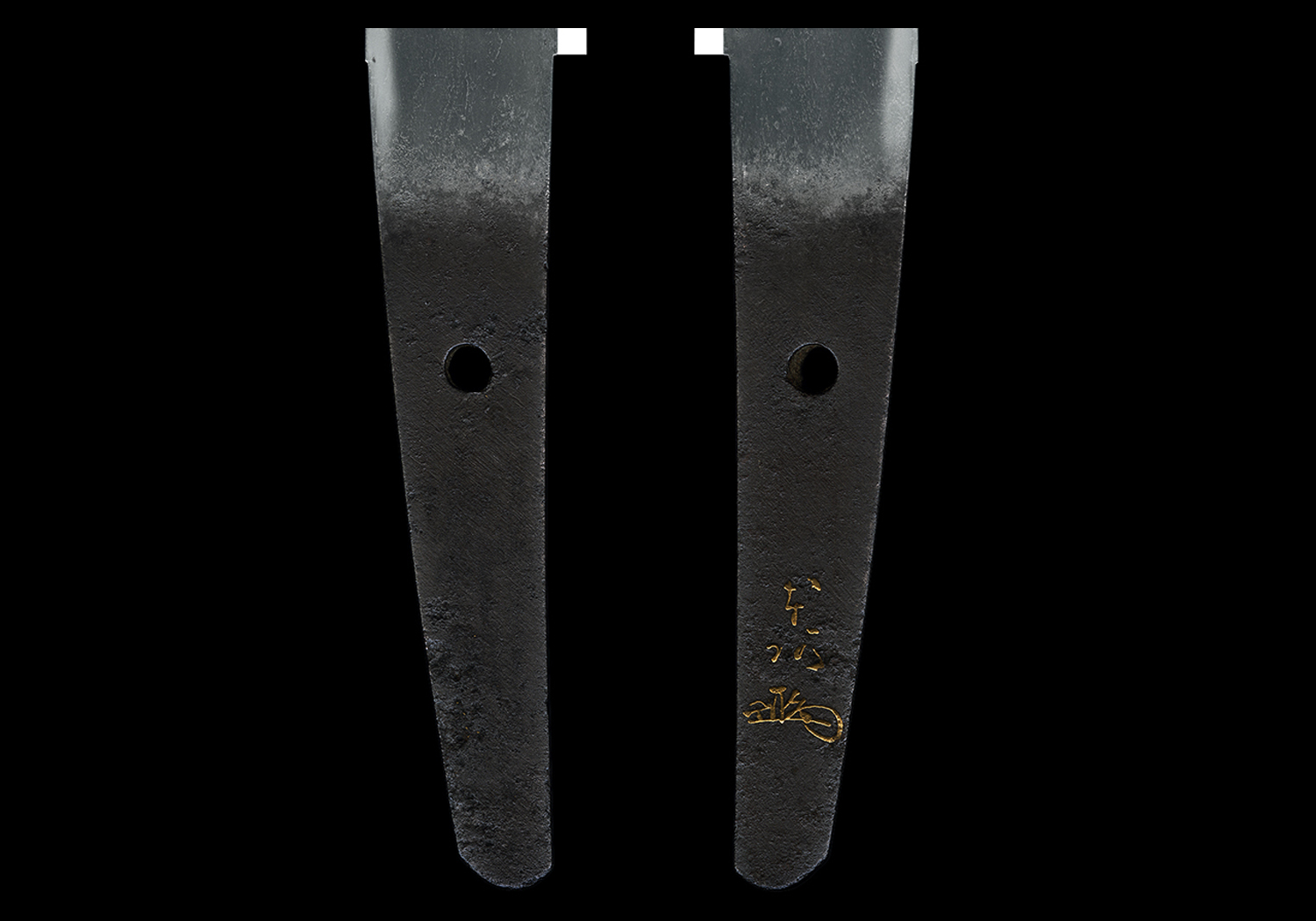
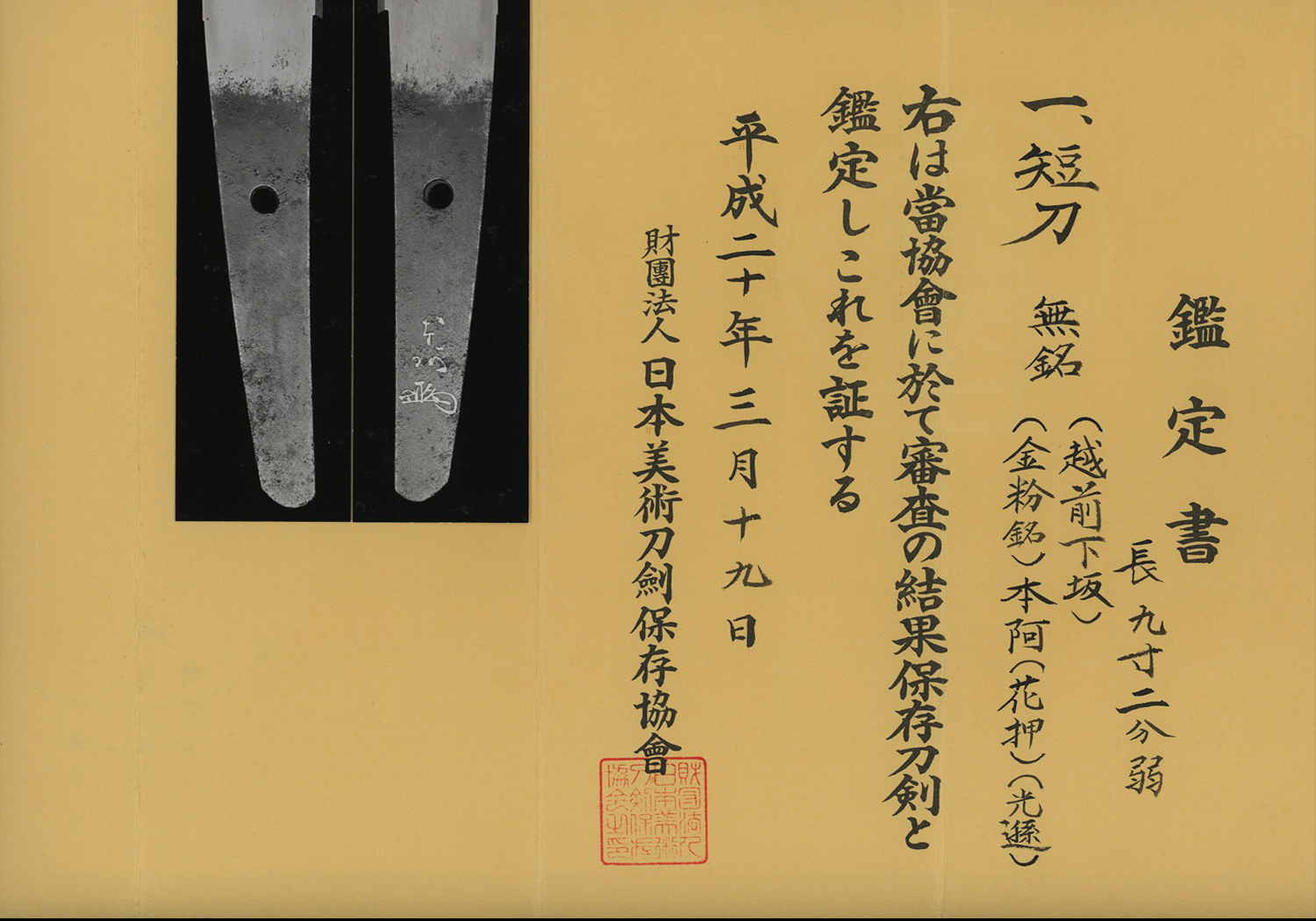
Nihonto.com is pleased to present here one such sword made by one the Shimosaka smiths. The blade is an unsigned tantô with the remnants of a gold Honami Kin Zogan mei which has for the most part, regrettably been almost entirely lost with only “Honami Kao” remaining. However, there is a piece of paper glued to the shirasaya written by the same Honami hand stating that this blade was appraised as having been made by the smith, Echizen Shimosaka Sadakuni. He is a very well-known and highly rated smith of the early Edo period. I see no reason to doubt this attribution.
Higo Daijô Sadakuni (肥後大掾貞国) was from Echizen (越前) Province. He worked around the beginning of the Shinto Era, around Keicho (1596) and Kanei (1624). There are various stories about the lineage of this smith. Some attribute him to being the younger brother of Higo (no) Kuni Dôtanuki Masakuni (肥後国同田貫正国). And others say he was the younger brother of the first generation Yasutsugu (初代康継). Some even say he was actually one in the same as the first generation Yasutsugu (初代康継). He was most likely related in some way to the first generation Yasutsugu (初代康継). All seem to agree that his swords greatly resemble those of Yasutsugu (初代康継) and that he was of the Echizen Yasutsugu School(越前康継系).
Sadakuni (貞国) received the title of “Higo (no) Kami” (肥後守) the same as the first generation Yasutsugu (初代康継). Many of his remaining works are tantô and hira zukuri wakizashi. He is rated as being equal to Yasutsugu (康継) and is most famous for his fine carving of horimono.
The following are the general traits of Higo Daijo Sadakuni (肥後大掾貞国):
SUGATA: Katana were rare. Most of his blades were hira–zukuri wakizashi; many were sun–nobi in length. Tantoare also plentiful. Generally, hira–niku will be lacking. Unusual shapes like katakiriba and naginata will also be found.
JITETSU: The jigane will be dark and hard. The tendency will be for ko–mokume hada to be mixed with some masame hada. Dark spots that are typical of Echizen–gane will also be found.
HAMON: The width of the hamon tends to be narrow suguba, which is worked in nie. It will have ko–gunomeand komidare mixed in and there will be small ashi in good numbers to create much hataraki.
BÔSHI: The bôshi will turn back in a komaru shape. Most kaeri will be short, but occasionally a longer kaerican be found.
HORIMONO: Sadakuni (貞国) was famous for his extremely fine horimono. He is said to have been the teacher of Nagasone Okisato Nyûdô Kotetsu (長曾禰興里入道虎徹) in this area. He made horimono of kenmakiryu (dragon around a sword) and ume (plum branches and flowers). His work rivals the finest Kinai carvers who worked on the blades of Yasutsugu (康継).
NAKAGO: The tip of his nakago will be a shallow kengyo shape. The file marks will be katte–sagari.
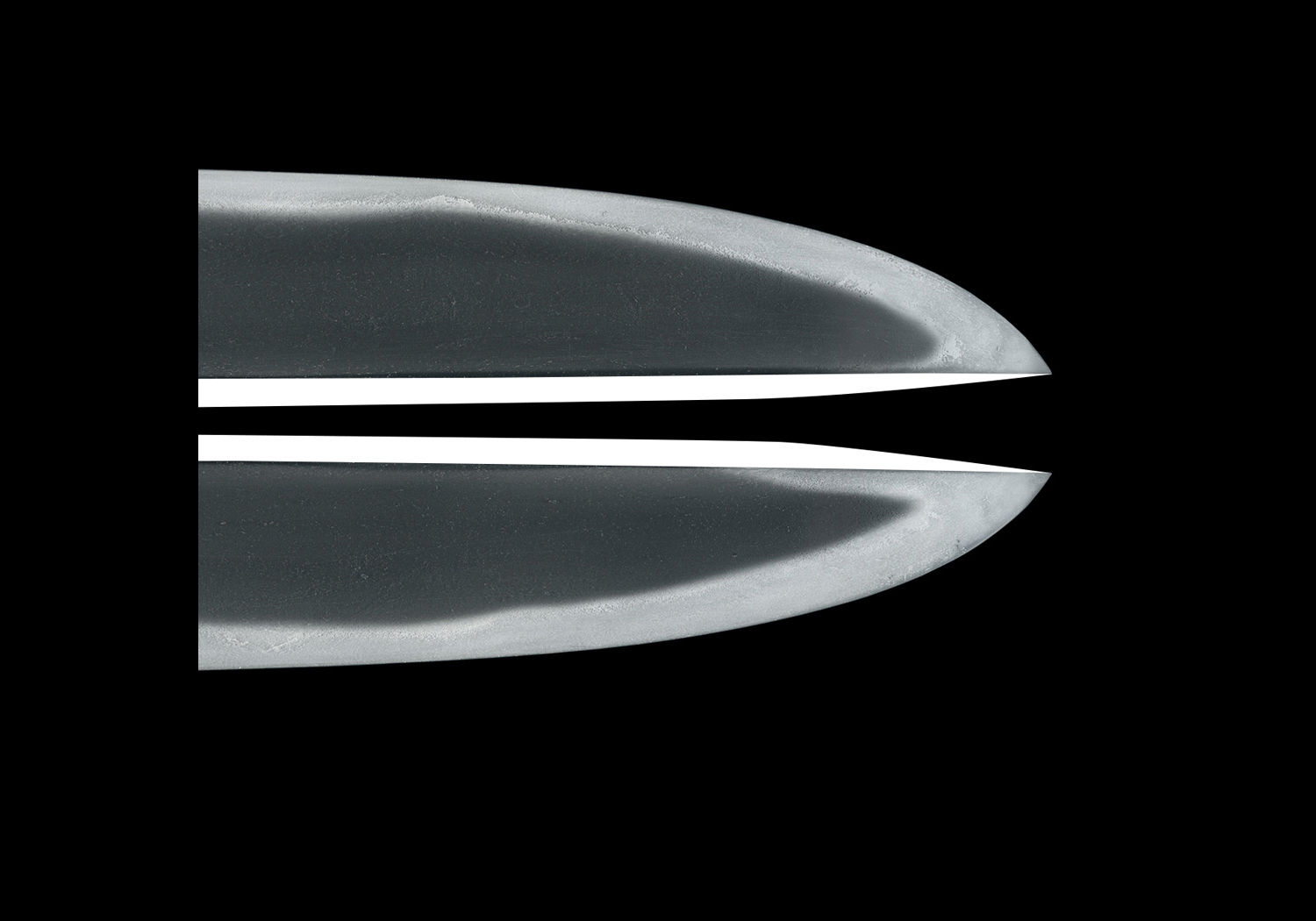
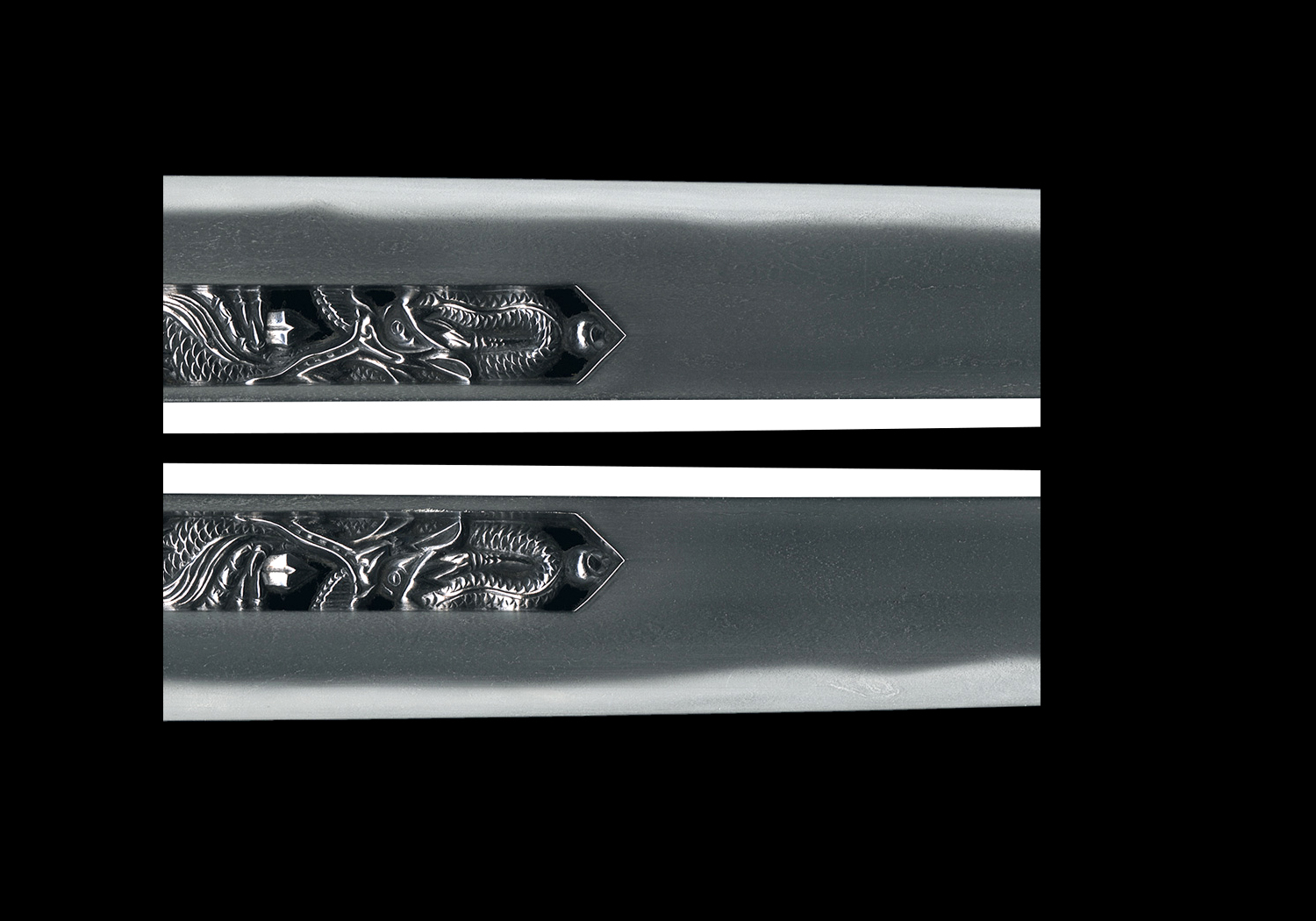
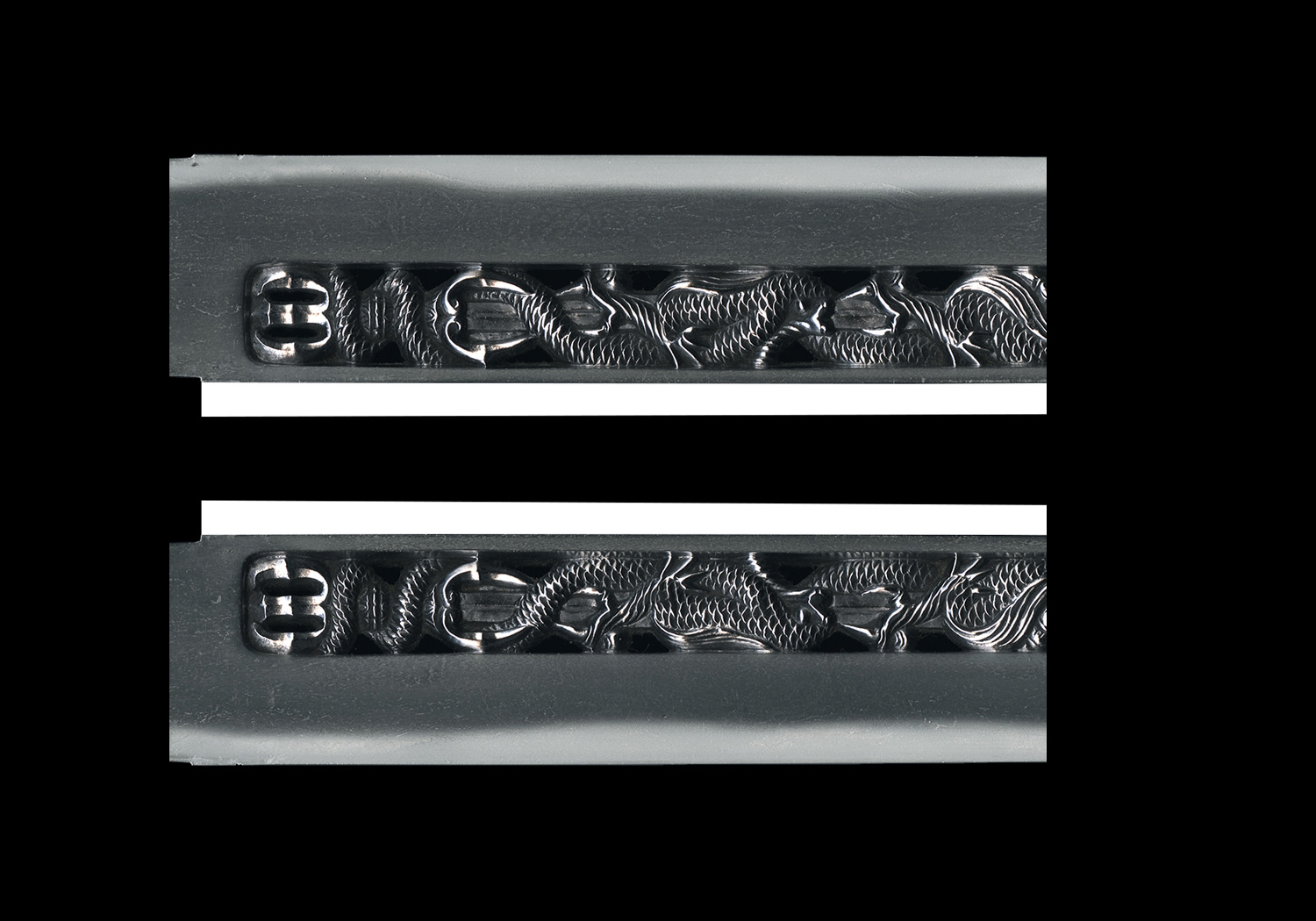
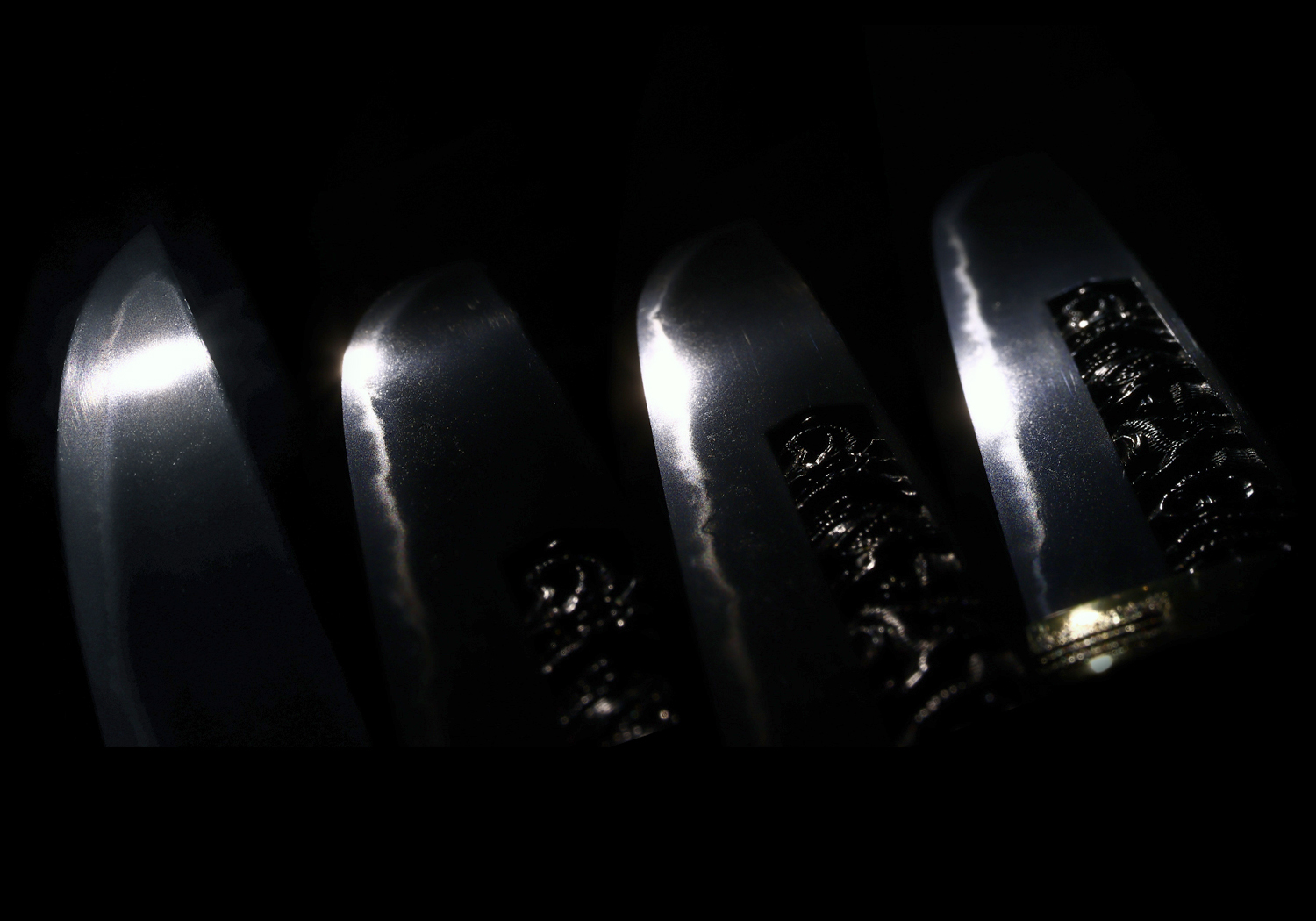
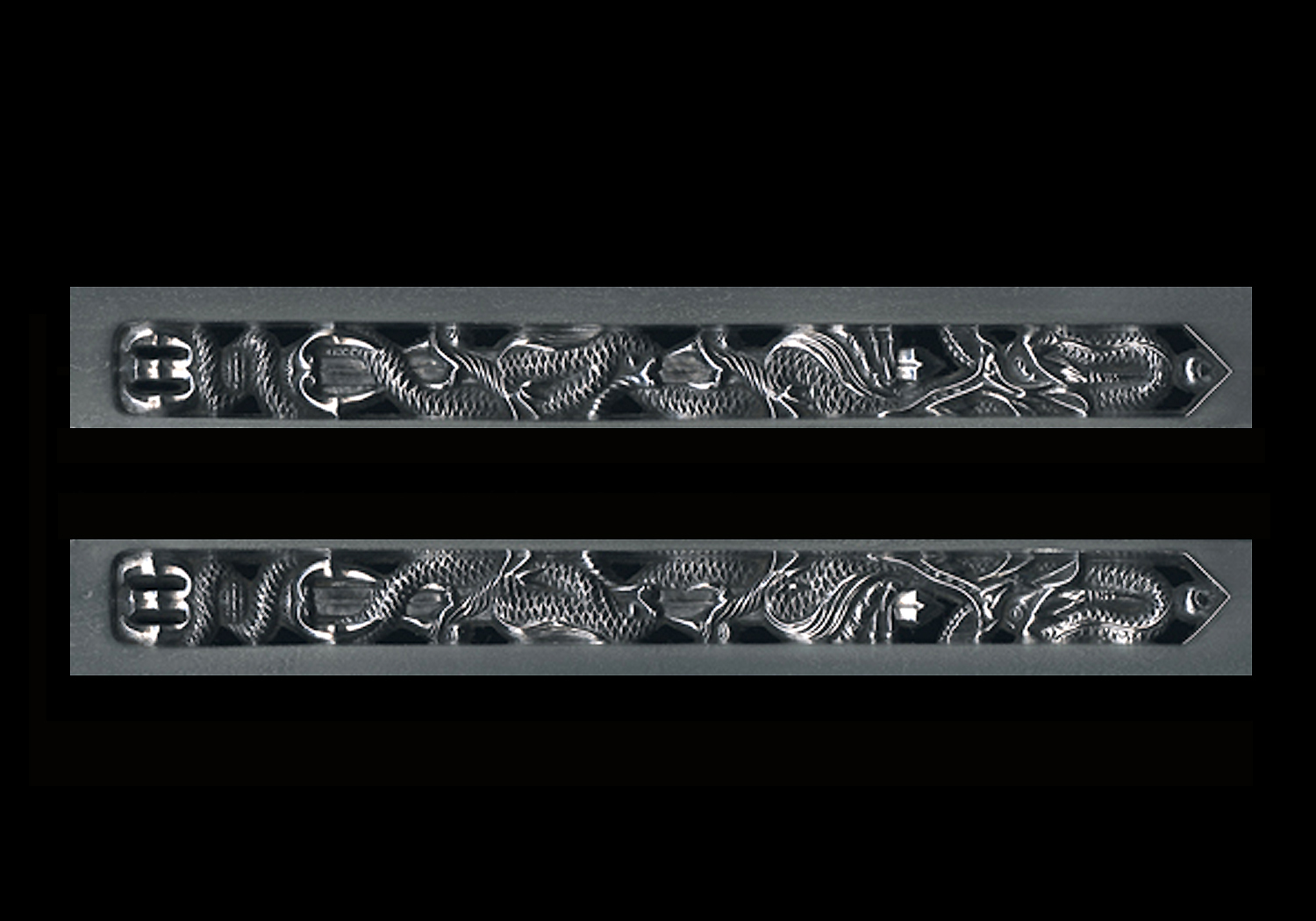
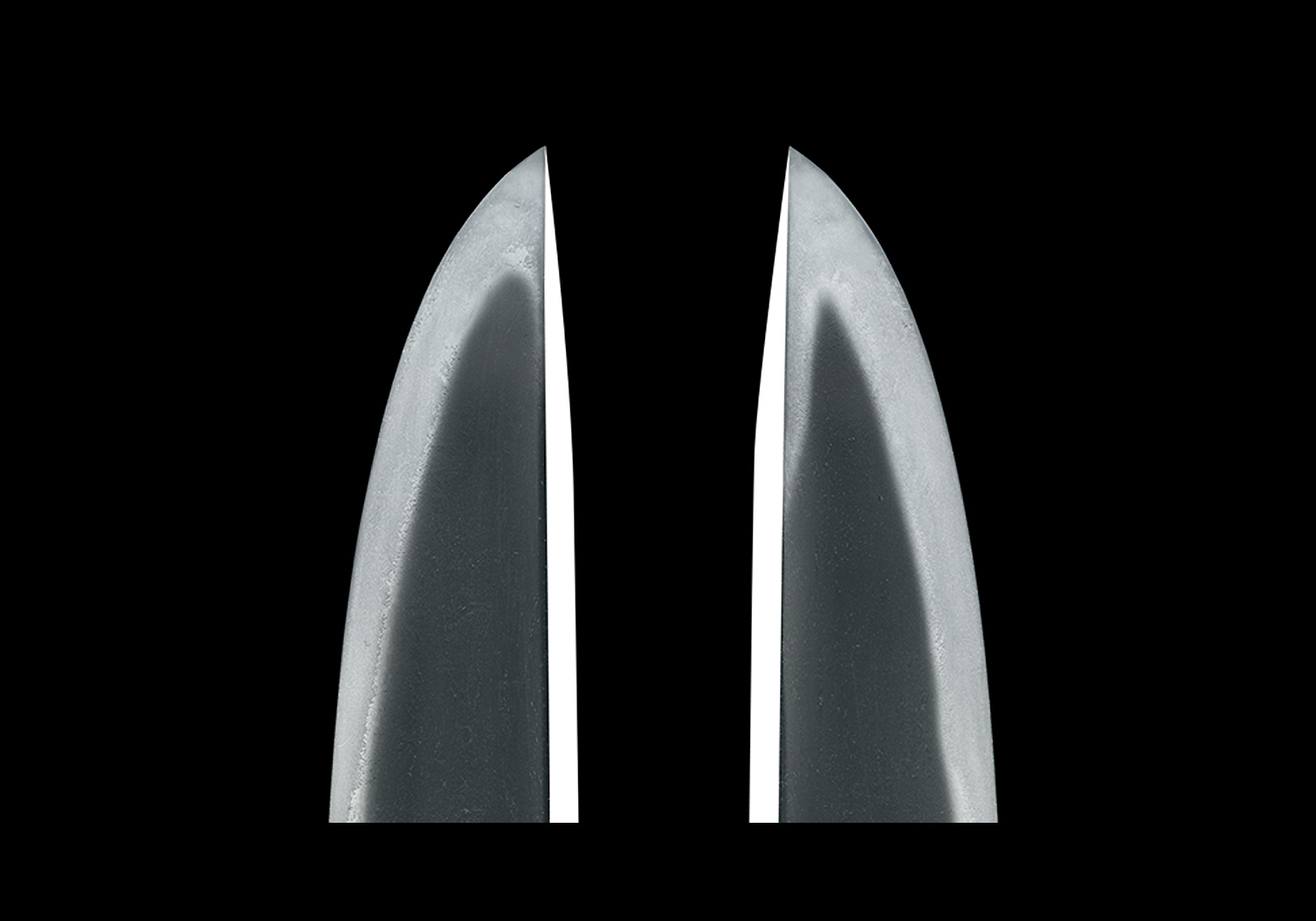
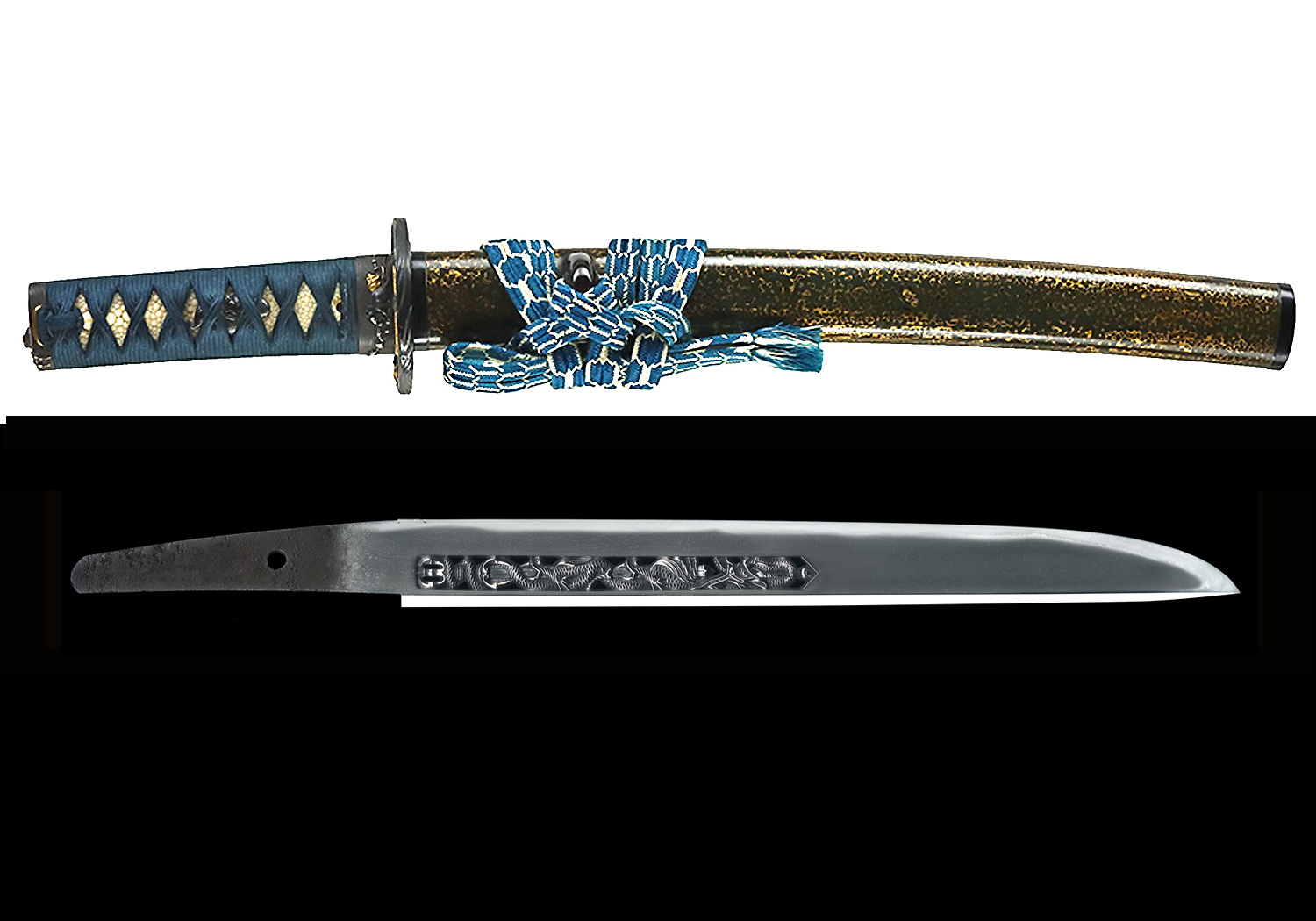
The sugata of the blade is hira-zukuri with a mitsu-mune. The nagasa of this tanto is just under 11 inches or 27.8 cm. The moto-haba (width at the hamachi) is 1.07 inches or 2.72 cm and the saki-haba (width at the kissaki) is 0.88 inches or 2.25 cm. It is mu-sori (without curvature). The jigane is a tight ko-mokume with areas of masame hada creating a very dark and dense jigane which is beautiful. The hamon is a shallow notare (gently undulating) done in nioi deki with a line of ko-nie mirroring the yakiba creating an almost nijuba effect in areas. There is ji nie in and around the hamon. What really sets this blade apart is the outstanding horimono (carving) most probably of the Kinai school. It is a ken-maki ryu(dragon around a sword) but not just an ordinary carving. This one pierces the blade completely and because the blade has not had many polishes over its 375-400 year history, the condition of the horimono is outstanding.
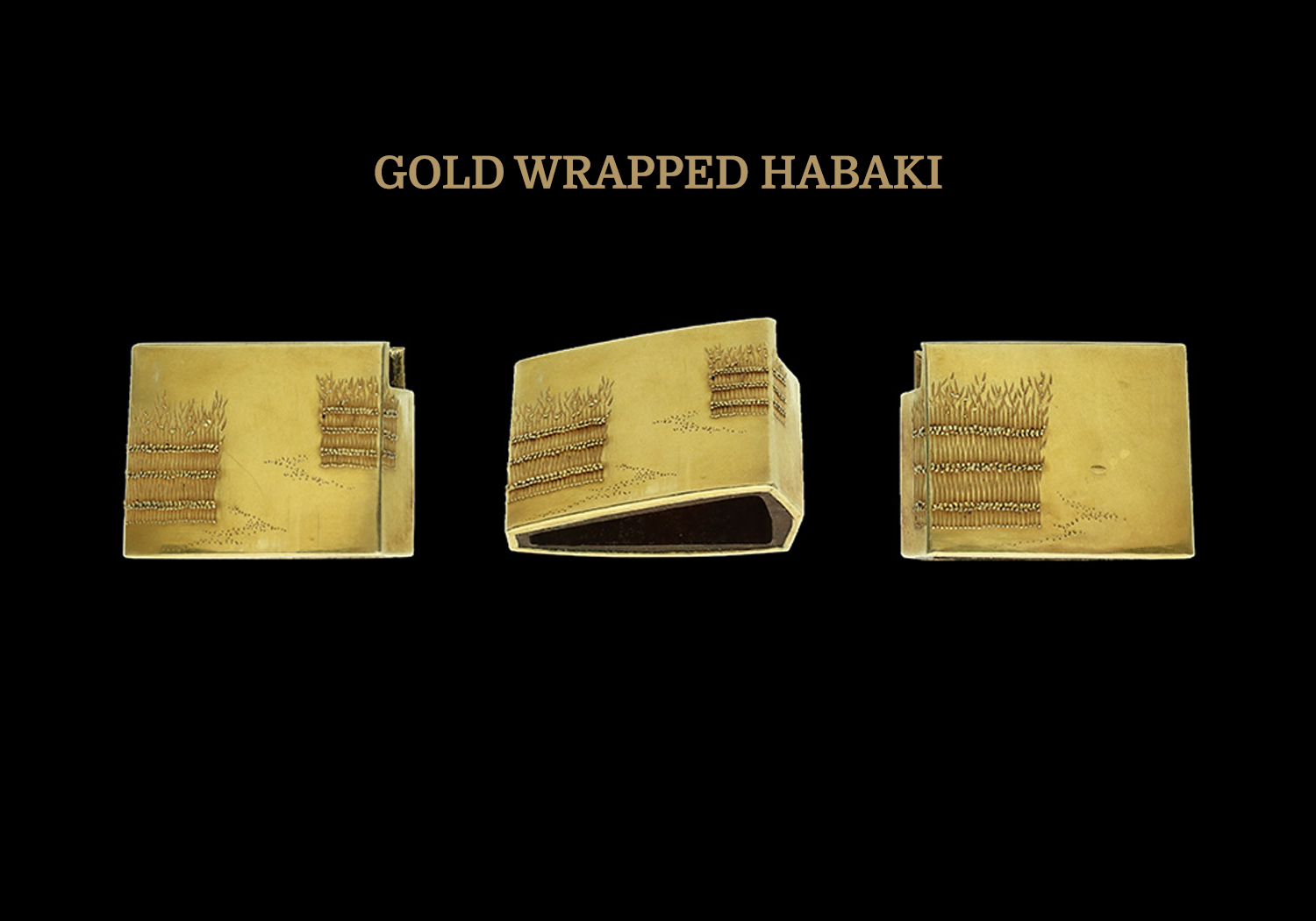
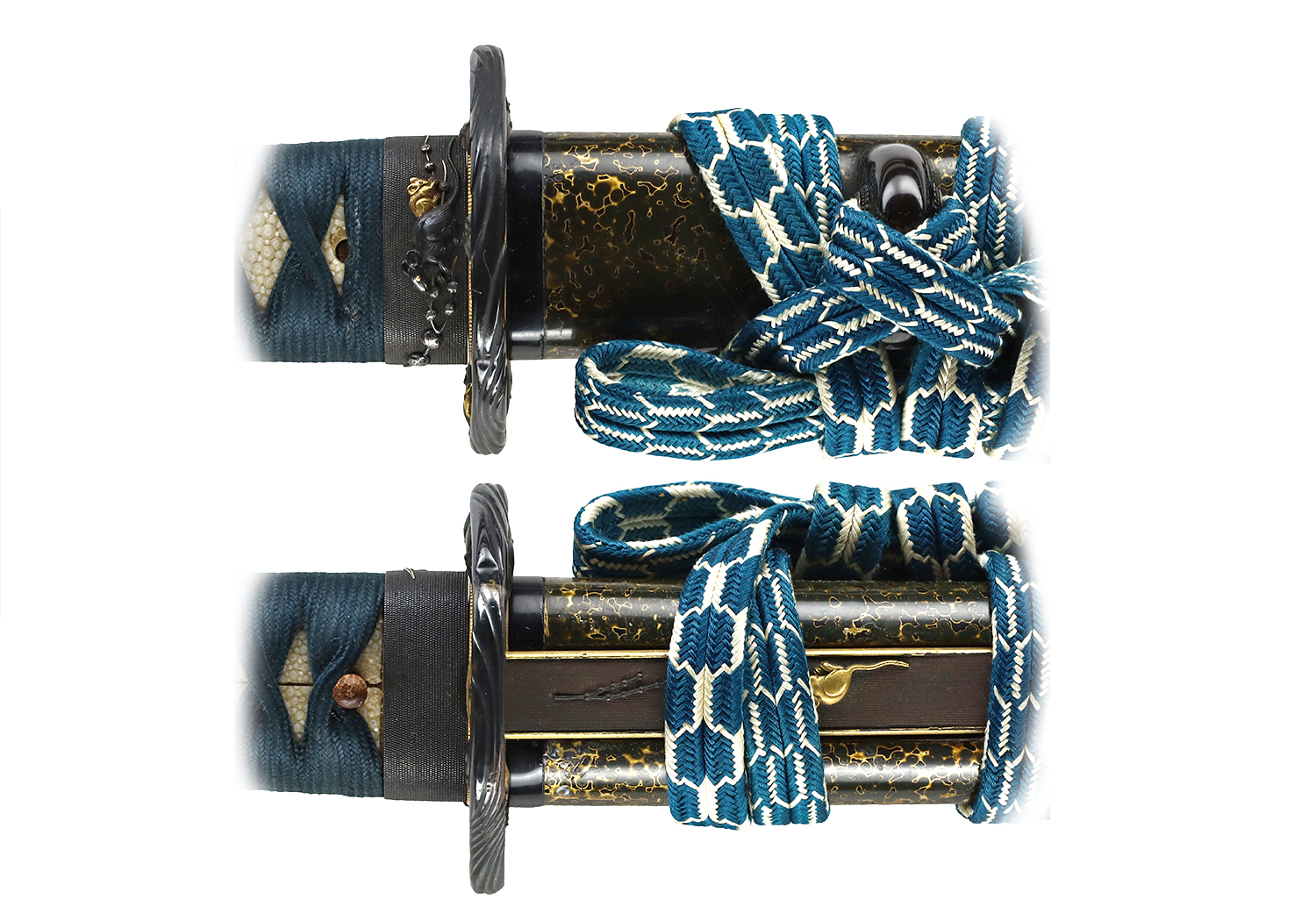
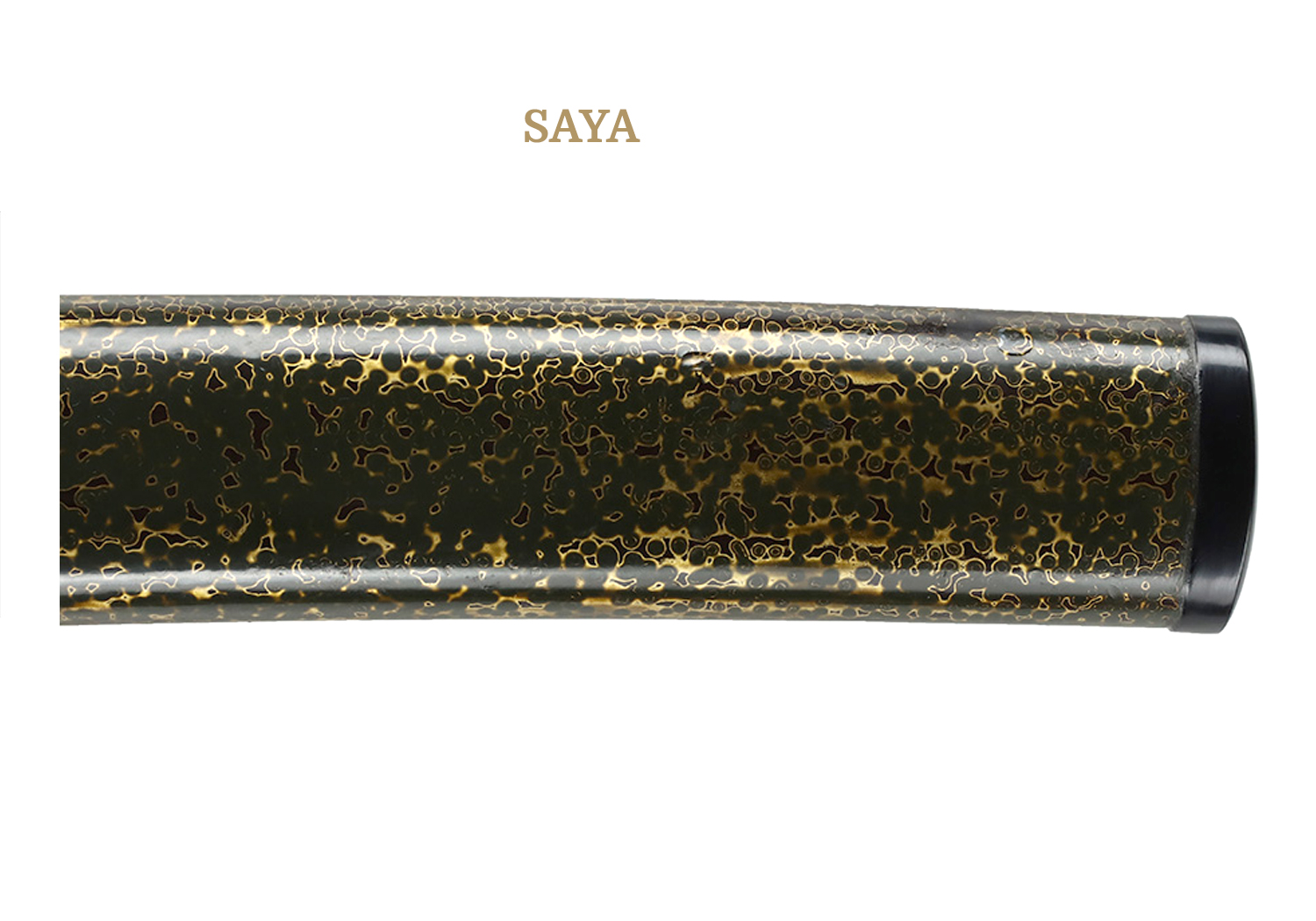
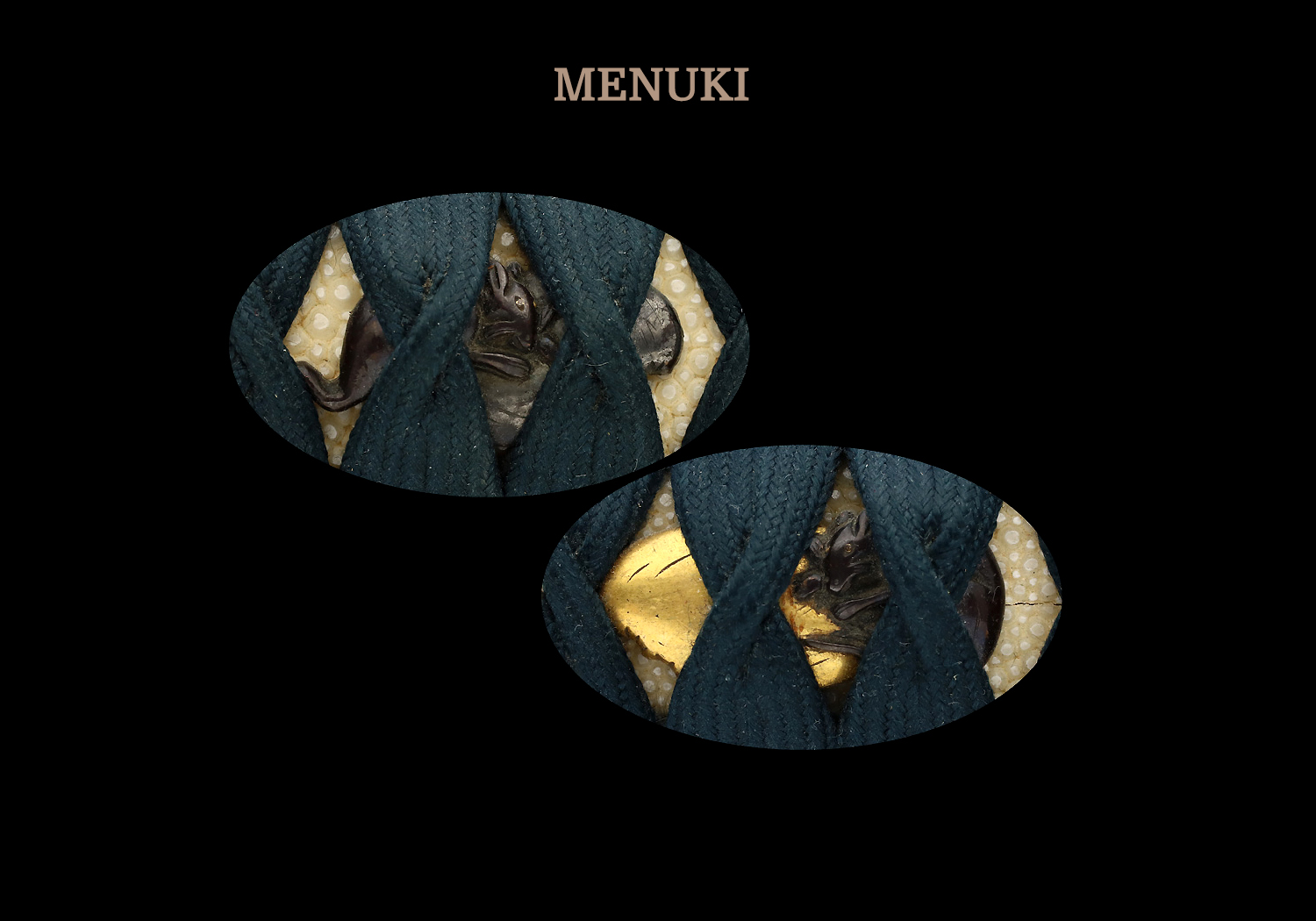
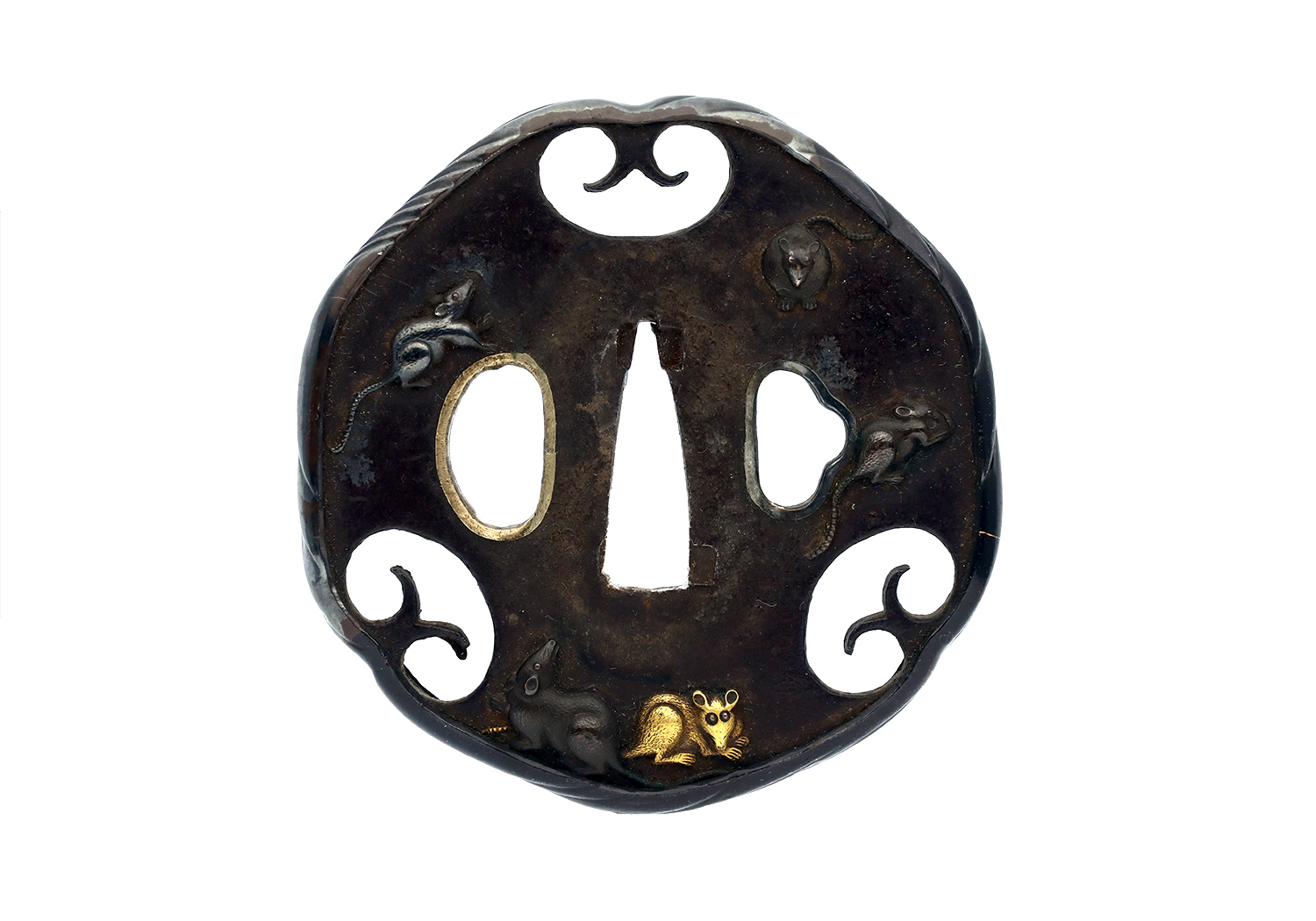
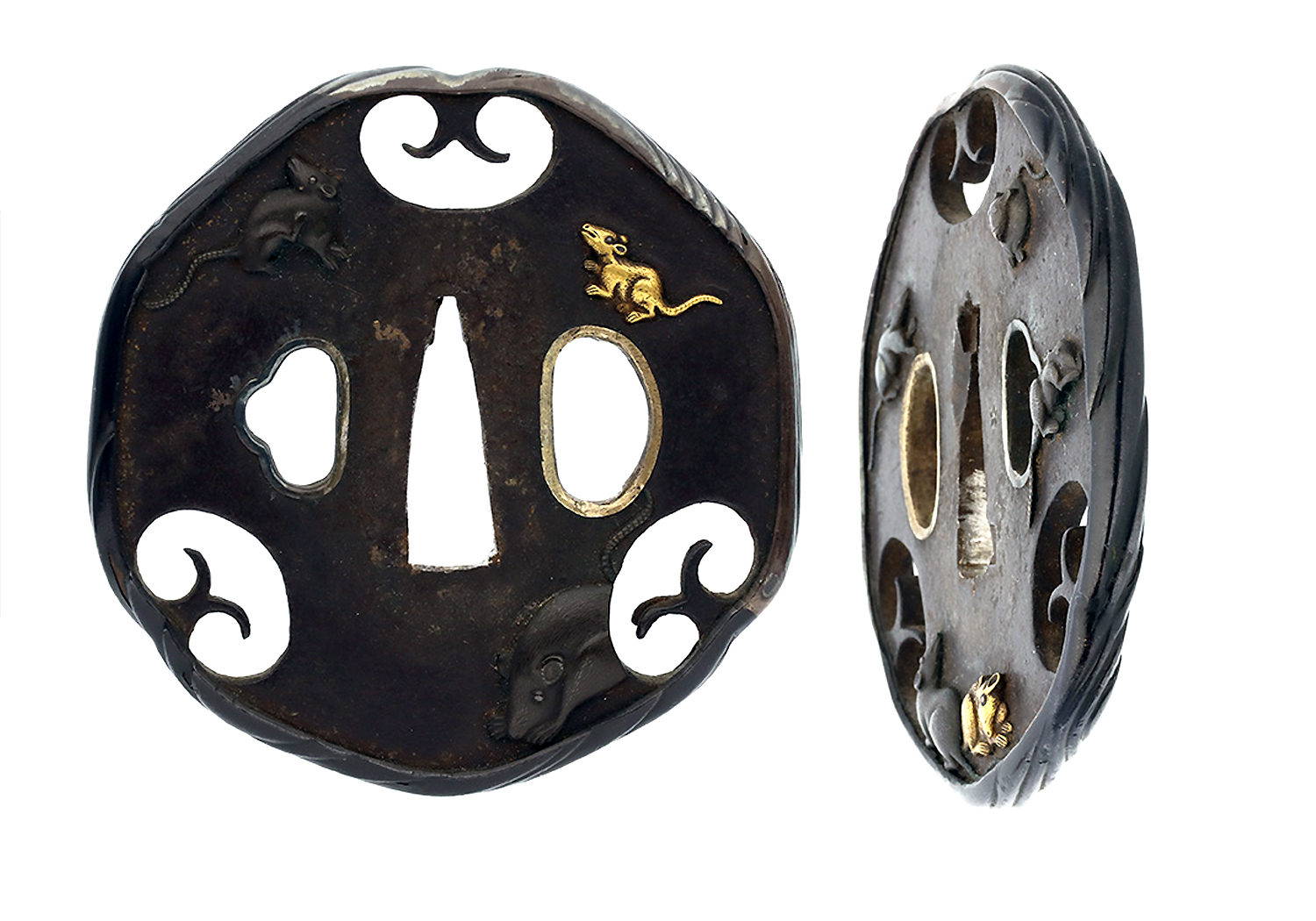
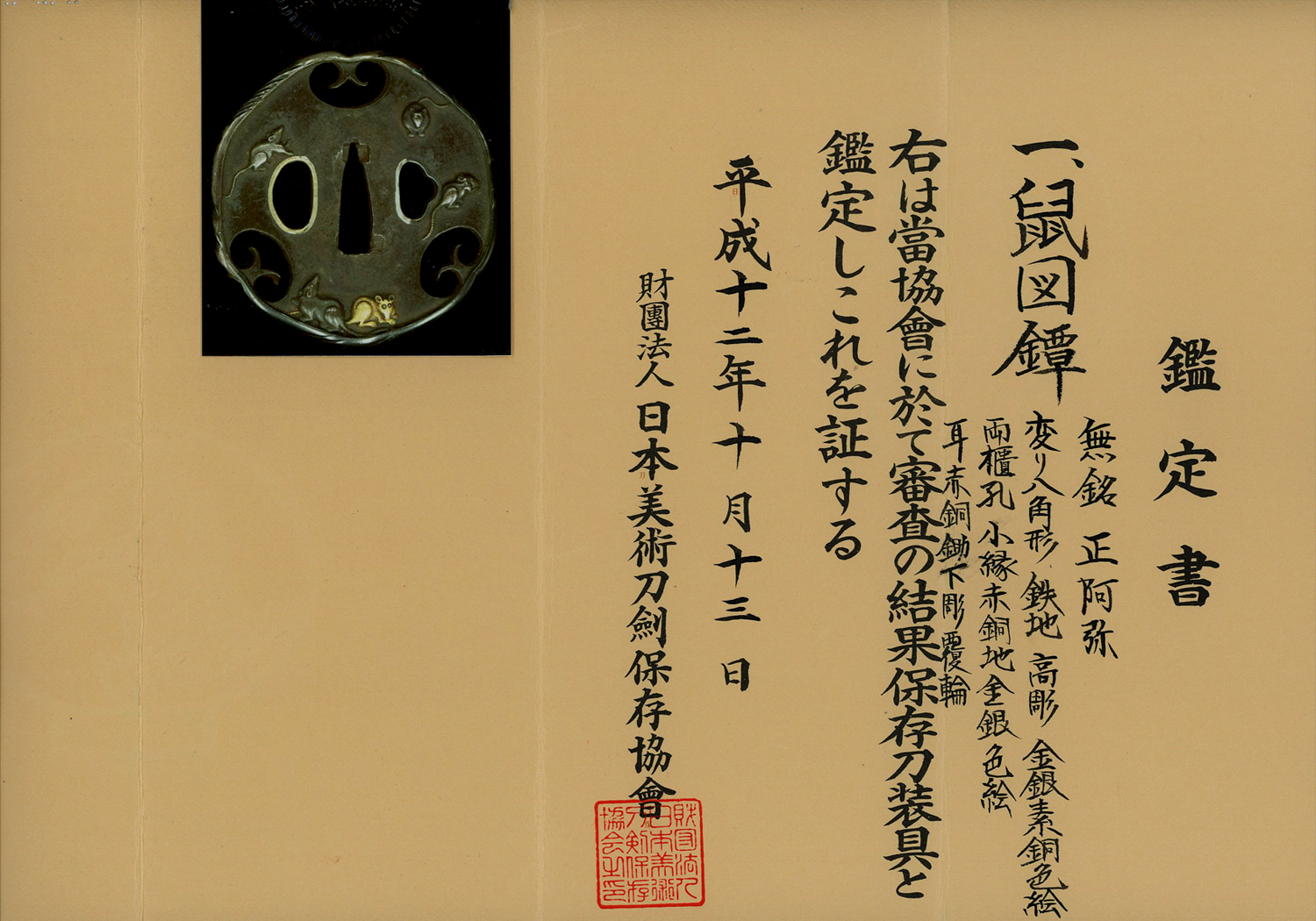
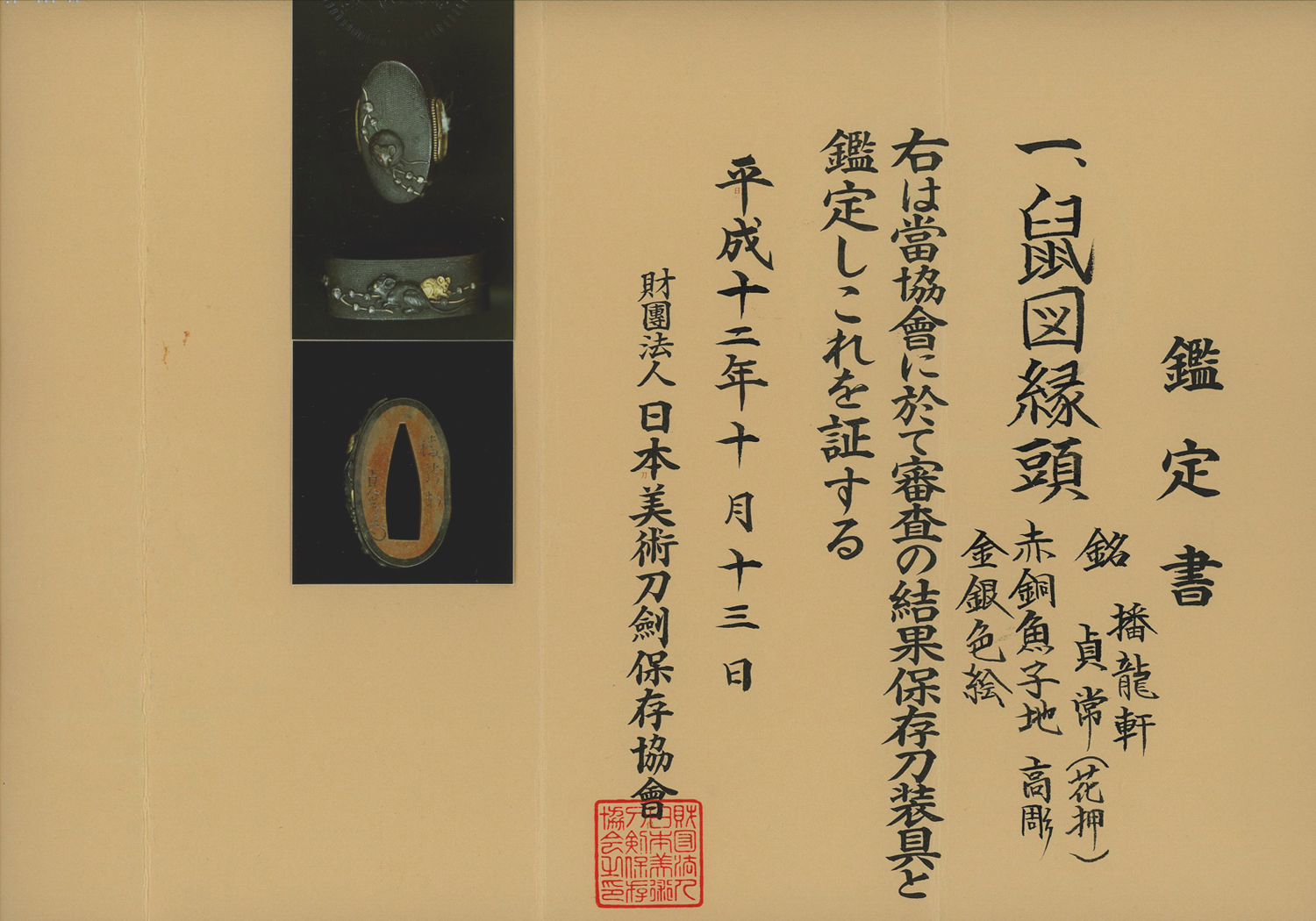
The blade comes in a shirasaya with a beautiful and unusual gold wrapped habaki. On the front and back of the habakiare golden bamboo fences delicately carved into its surface. This blade is in excellent polish with no problems or flaws of any kind. It also comes with a very attractive koshirae with a matching theme of mice that can be viewed in the photos below. It also comes with NBTHK Hozon papers (worthy of preservation). Also, both the tsuba and the set of the fuchi and kashira come with NBTHK Hozon papers.
SOLD