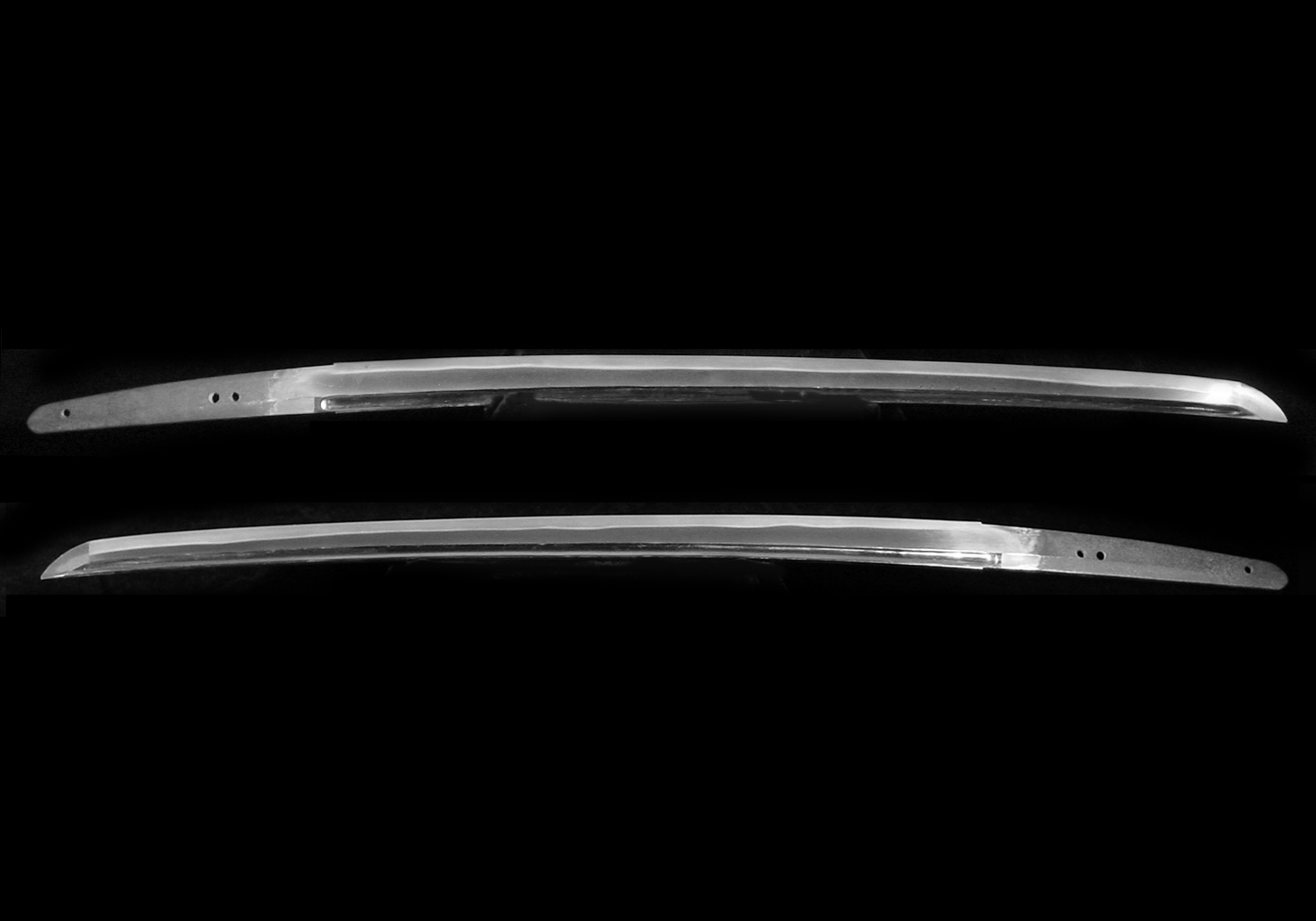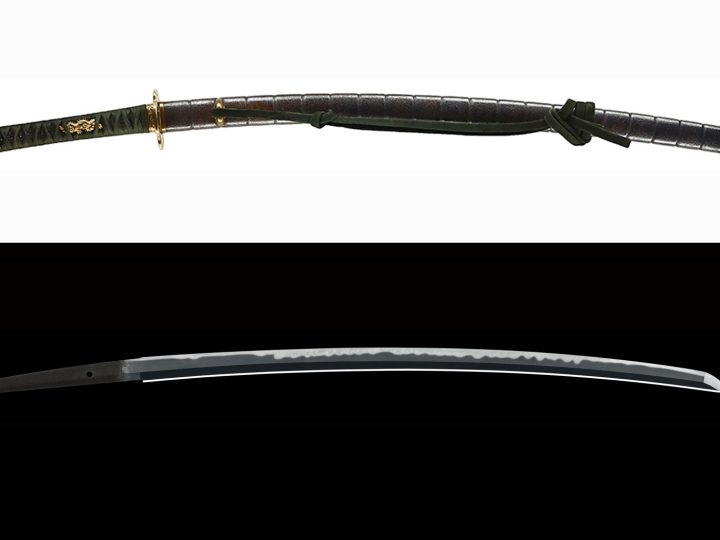

Katana: This is a strong mumei katana by a later generation of the line of Owari Nobutaka (尾張信高) smiths. It is probably by the eighth or ninth generation of smiths by this name. The specifics of this sword are as follows:
Nagasa (length): 23 7/8 inches or 58.1 cm
Moto haba (width at the machi): 1.29 inches or 3.3 cm
Saki haba (width at the kissaki): 0.9 inches or 2.3 cm
Kasane (thickness): 0.28 inches or 0.7 cm
Sori (curvature): 0.36 inches or 0.9 cm
From the measurements above, you can tell that this is a blade that was made for strength and cutting ability.
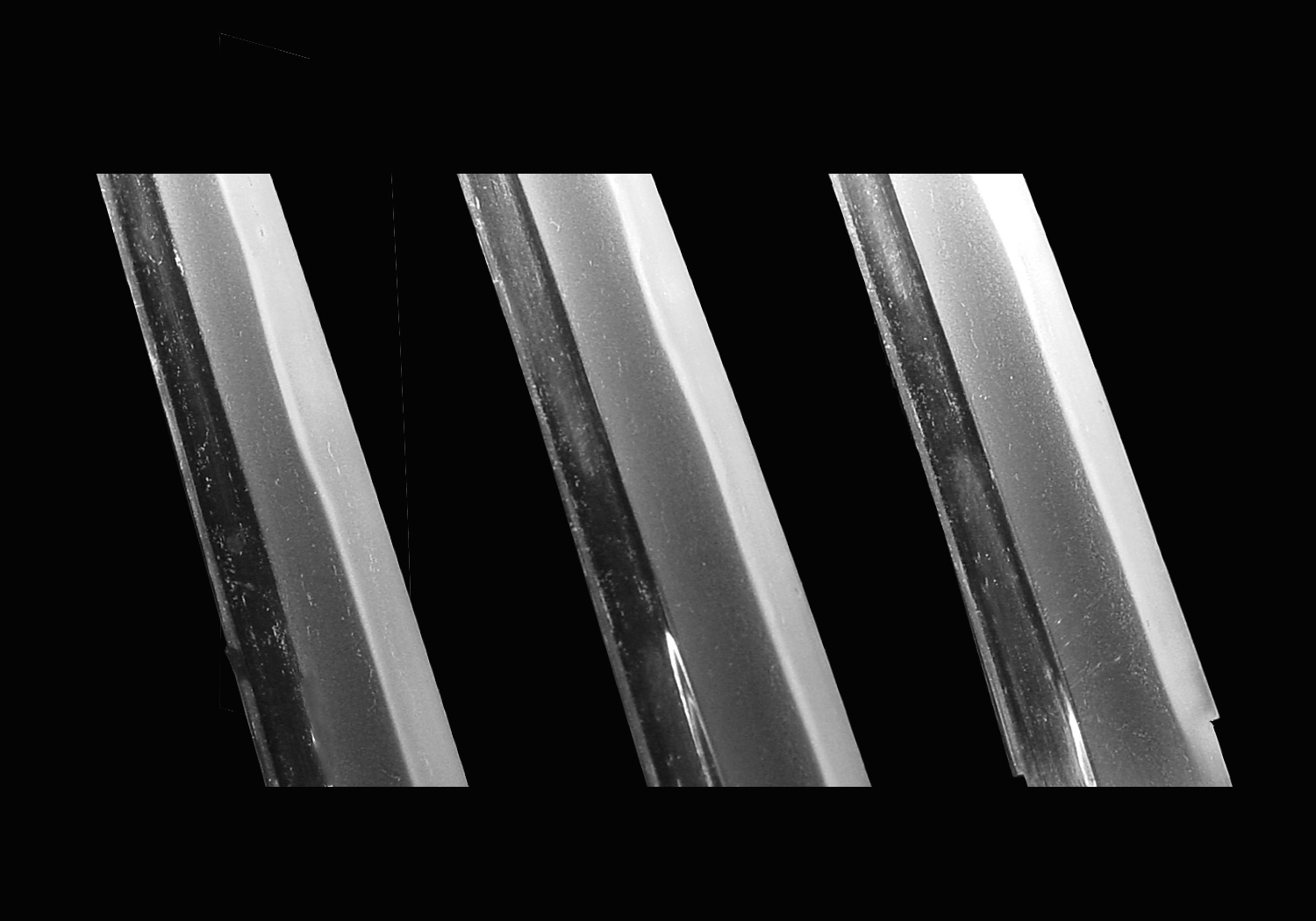
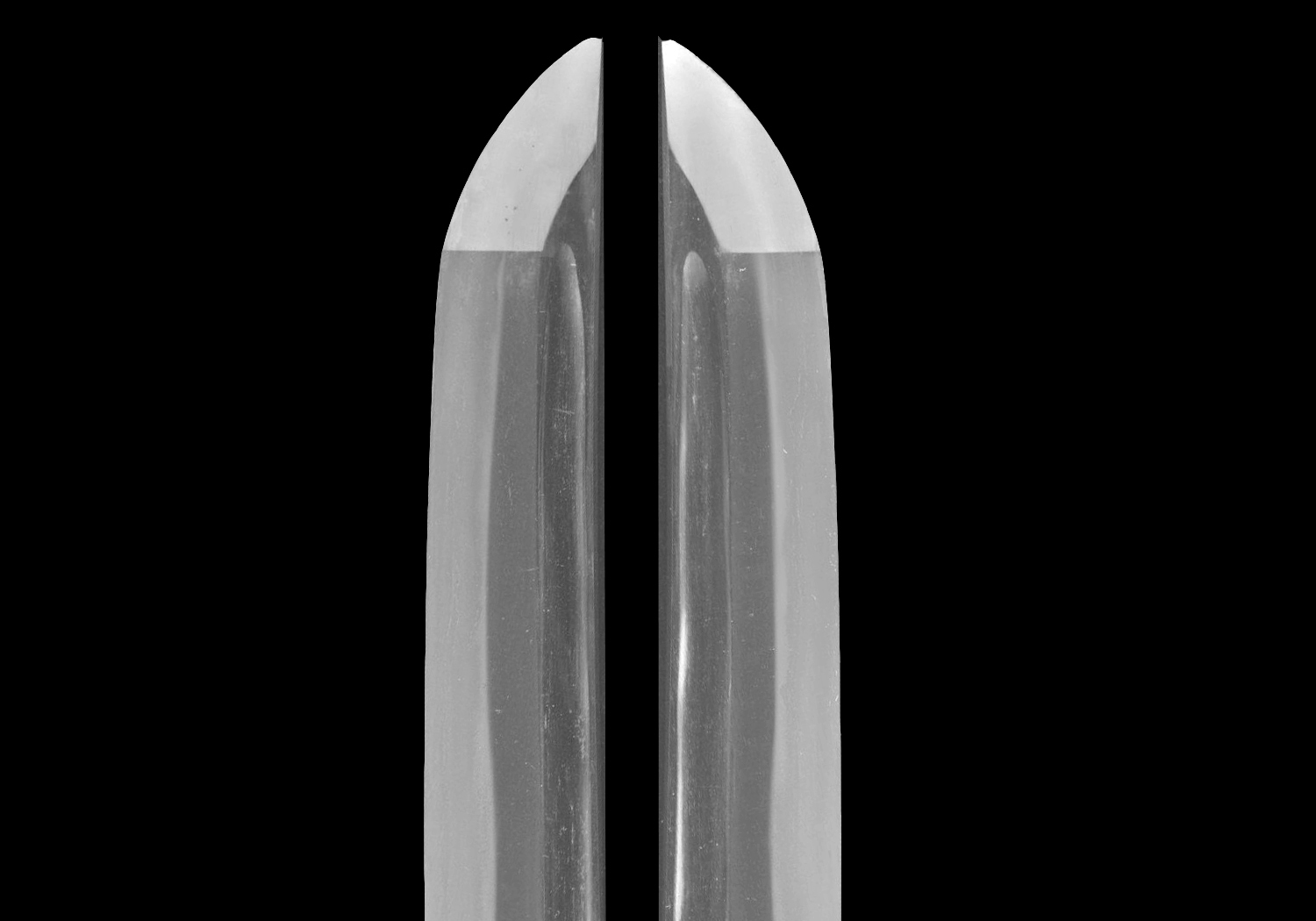
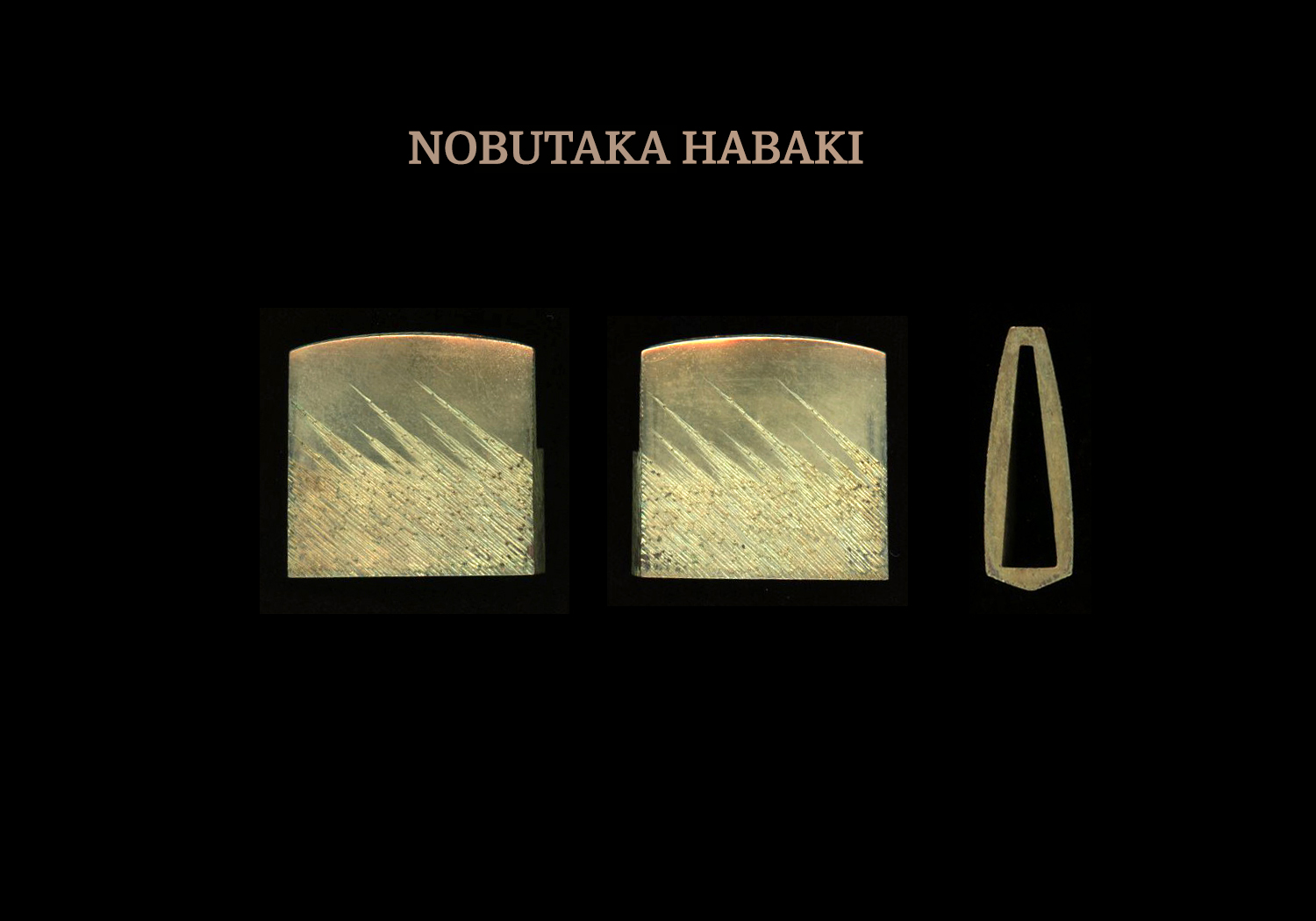
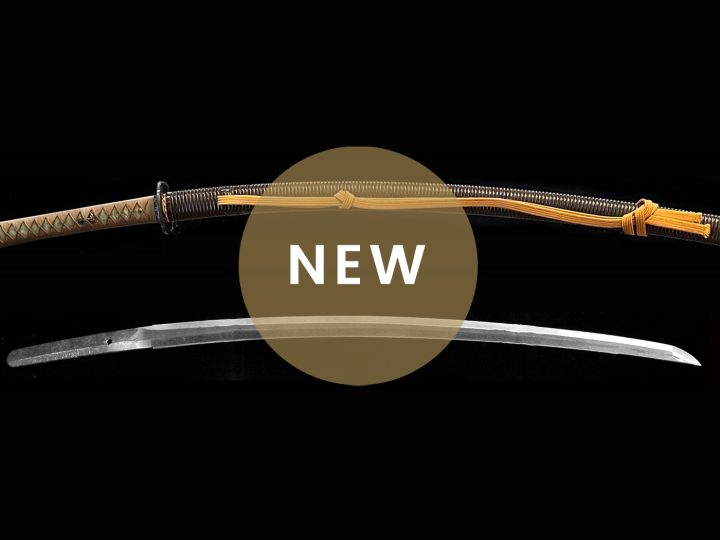
The jihada (grain of the steel) is a beautiful ko-mokume mixed with masame. There are a few areas of tobiyaki in the ji near the shinogi in the monouchi area. The hamon is a wide and shallow notare based on a hoso-suguha (wide straight temper line). There are a couple of small openings in the hamon, one about mid-way on the ura side and the other on the omote just above the habaki. Also there is a very minute chip in the bôshi which can be easily repaired. These are very minor and do not detract from the strength and beauty of this blade. There are bo-hi (grooves) on both sides ending at the habaki. The nakago appears to be slightly re-shaped and there are three mekugi-ana (holes). The blade is unsigned (mumei). The habaki is one piece and gold wash over a copper base. The blade is in very good polish. This blade comes with NBTHK Kitcho Tôken papers from 1980.
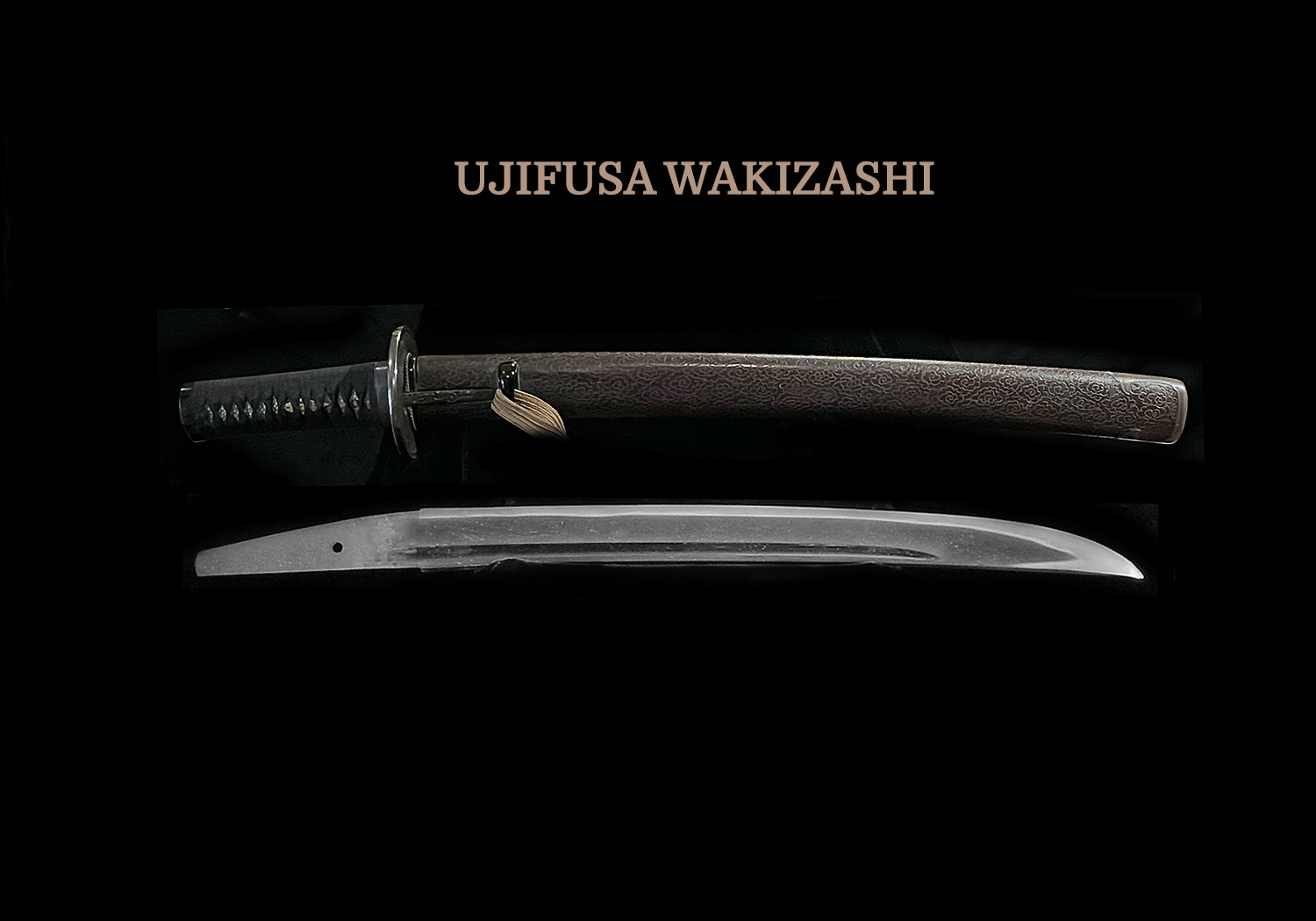
Wakizashi: The wakizashi was also made by a smith from Owari Province. It is signed Hida (no) Kami Fujiwara Ujifusa. This smith was the first generation using this name. He was the son of the famous Wakasa (no) Kami Kanefusa who was originally from Mino Province. He moved to Owari Province in the late 1500’s.
The specifics of this sword are as follows:
Nagasa (length): 16 1/8 inches or 41 cm
Moto haba (width at the machi): 1.46 inches or 3.7 cm
Saki haba (width at the kissaki): 1.2 inches or 2.9 cm
Kasane (thickness): 0.28 inches or 0.7 cm
Sori (curvature): 0.25 inches or 0.63 cm
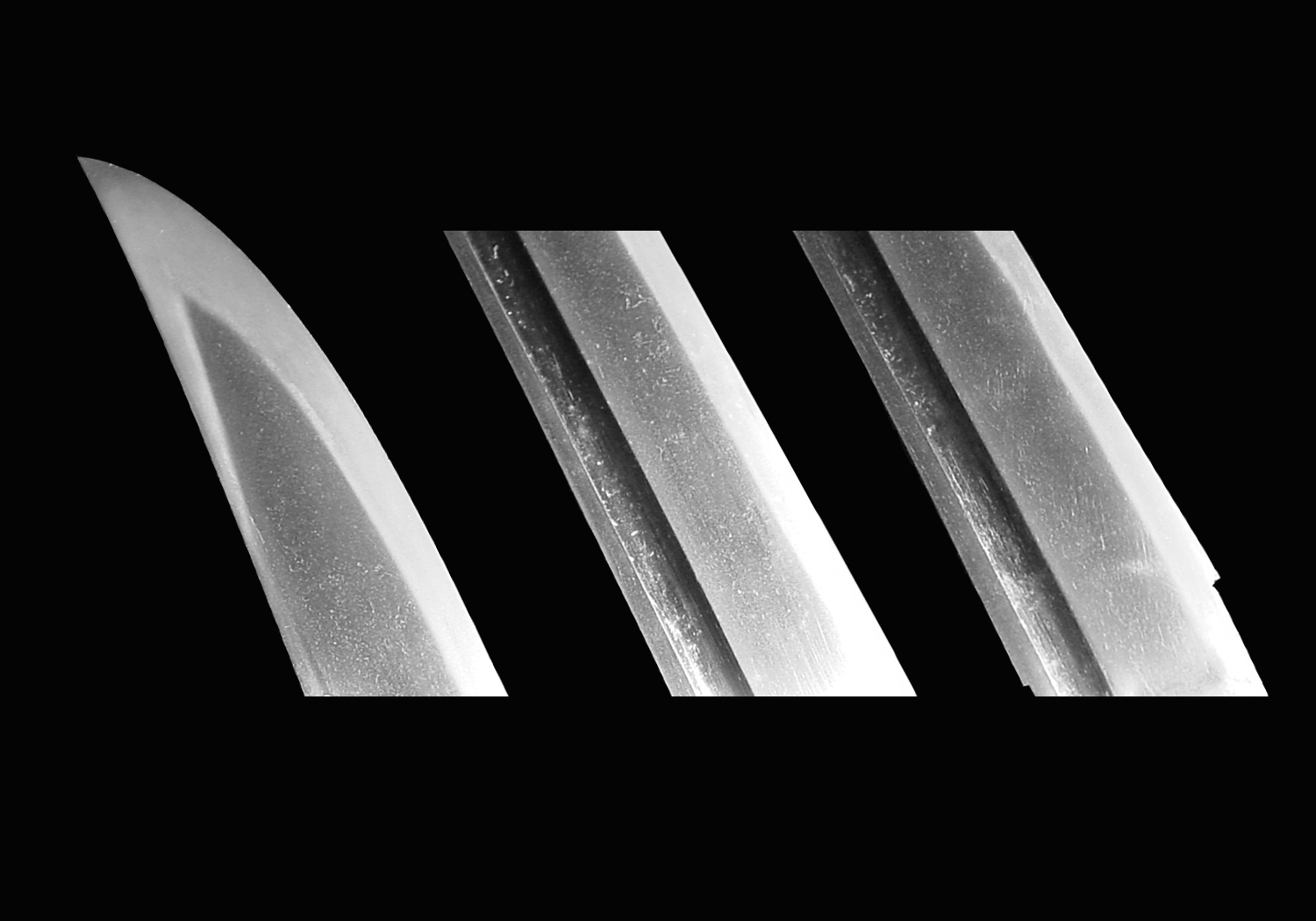
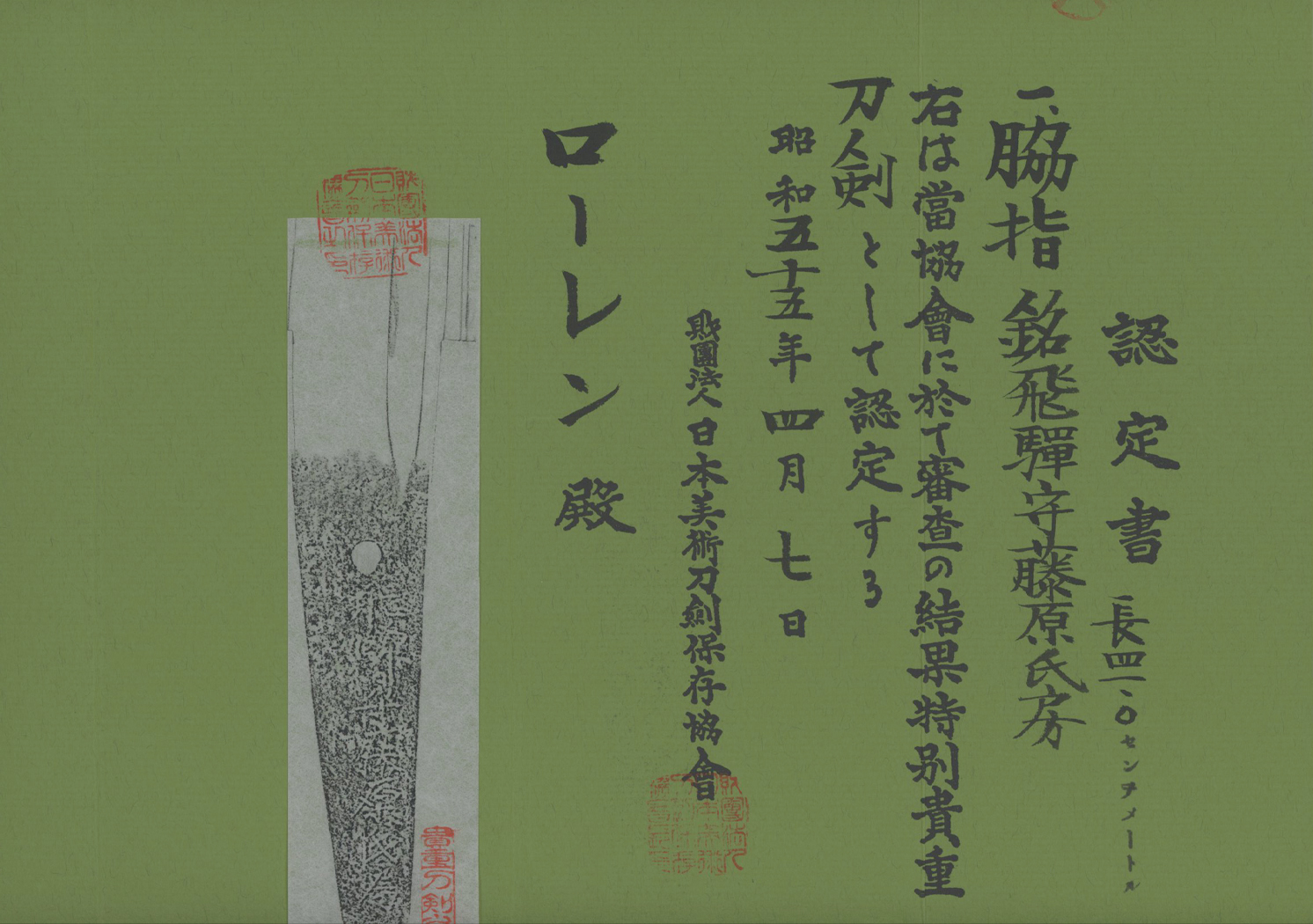
This is a wide and strong hira-zukuri (no ridgeline) with definite Mino school characteristics. It has a tight ko-mokume hada mixed with masame hada. The hamon is a fairly wide suguha (straight) with a ko-maru bôshi and a long kaeri. There are bo-hi (large grooves on both sides tapering into the beginning of the tang. The nakago is ubu (unshortened) with the long signature, Hida (no) Kami Fujiwara Ujifusa (飛驒守藤原氏房). The habaki is one piece and gold wash over a copper base. This blade is in very good polish with no flaws or problems. This blade comes with NBTHK Tokubetsu Kitcho Tôken papers from 1980.
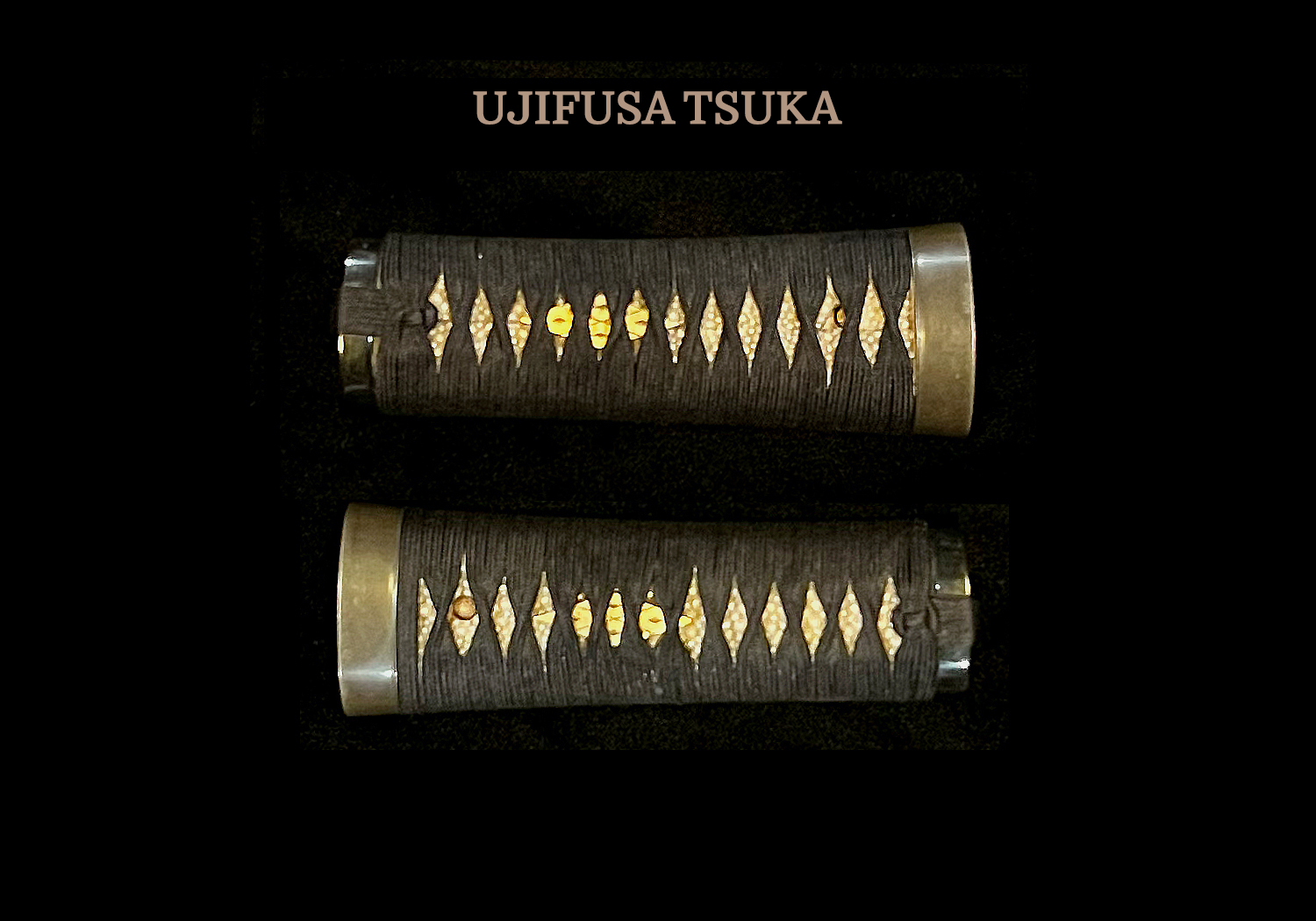
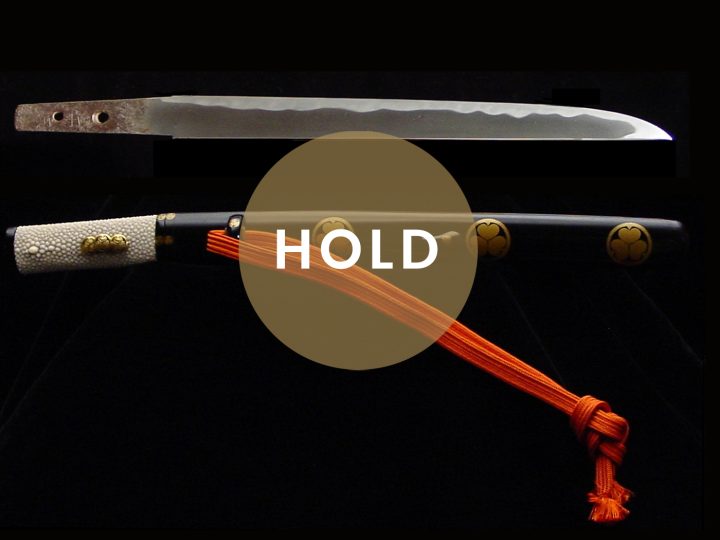
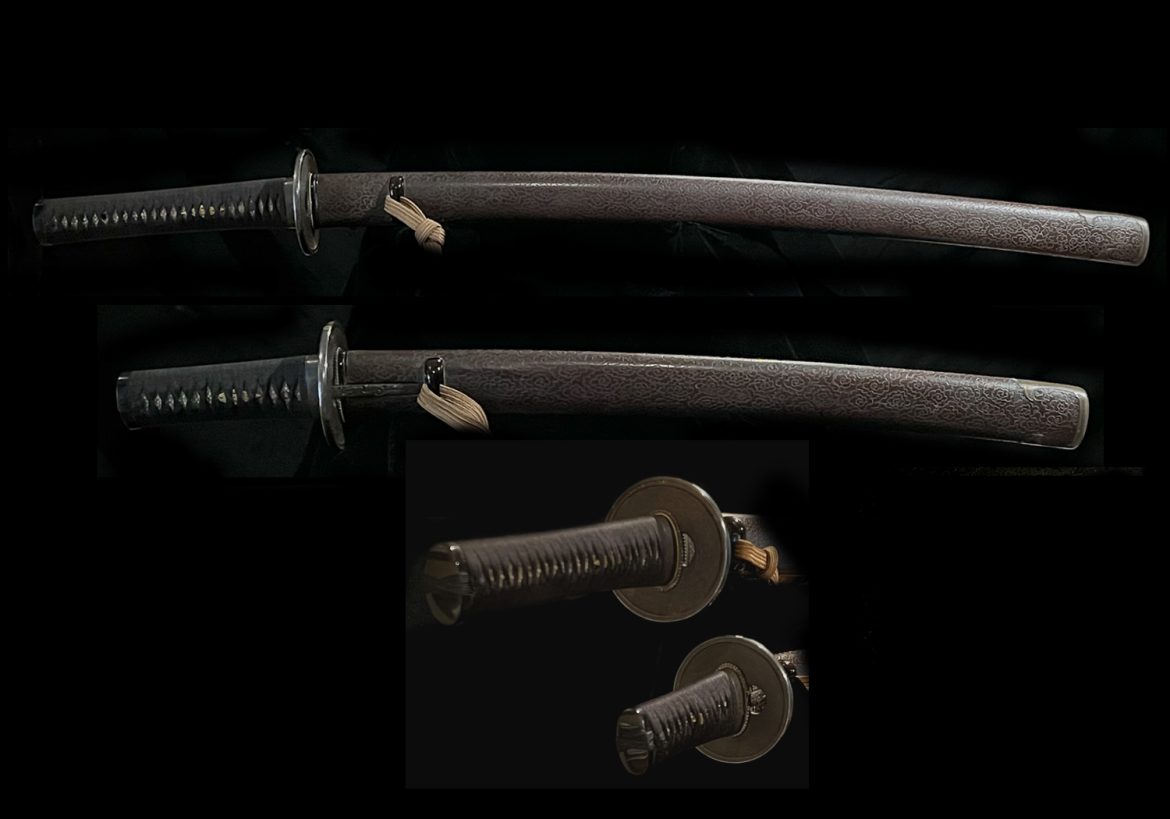
Koshirae: Both blades come in matching koshirae from the Edo Era. This is a real Samurai daisho of fittings probable owned by a Samurai from the Owari Province judging from the fact that both of the blades are from Owari. Both saya are lacquered in a dark reddish-brown lacquer that is covered in a cloud-like pattern. These saya would be very expensive to have made today, if it were even possible to find an artist who could do this delicate work. The daisho tsuba are made of iron plates that have been extremely finely carved with about 50 circular ridges (really amazing) that end at the mimi with a 1/8 inch wide edge. The mimi (edge) of both tsuba are covered with shibuichi which is an excellent finishing touch.
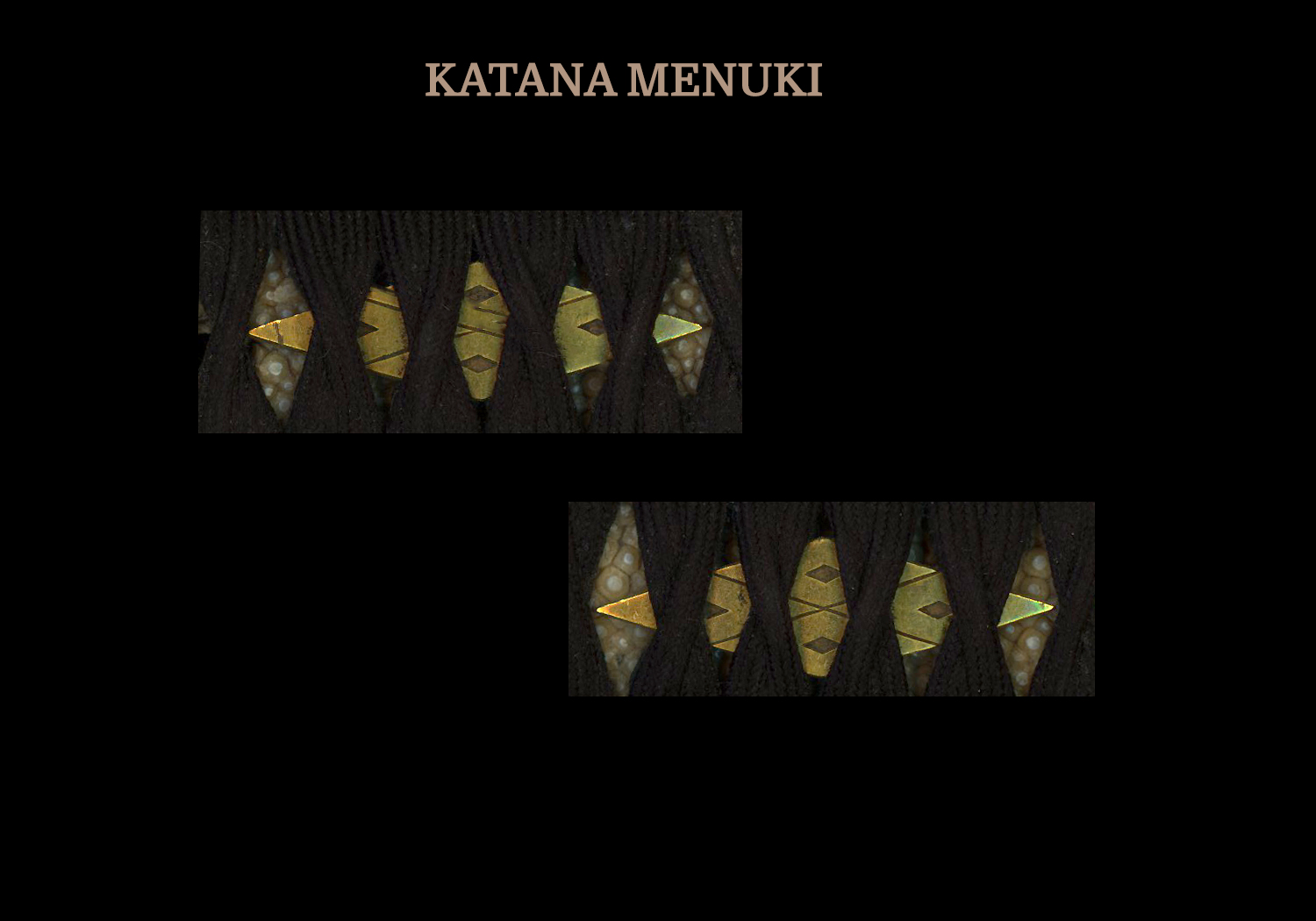
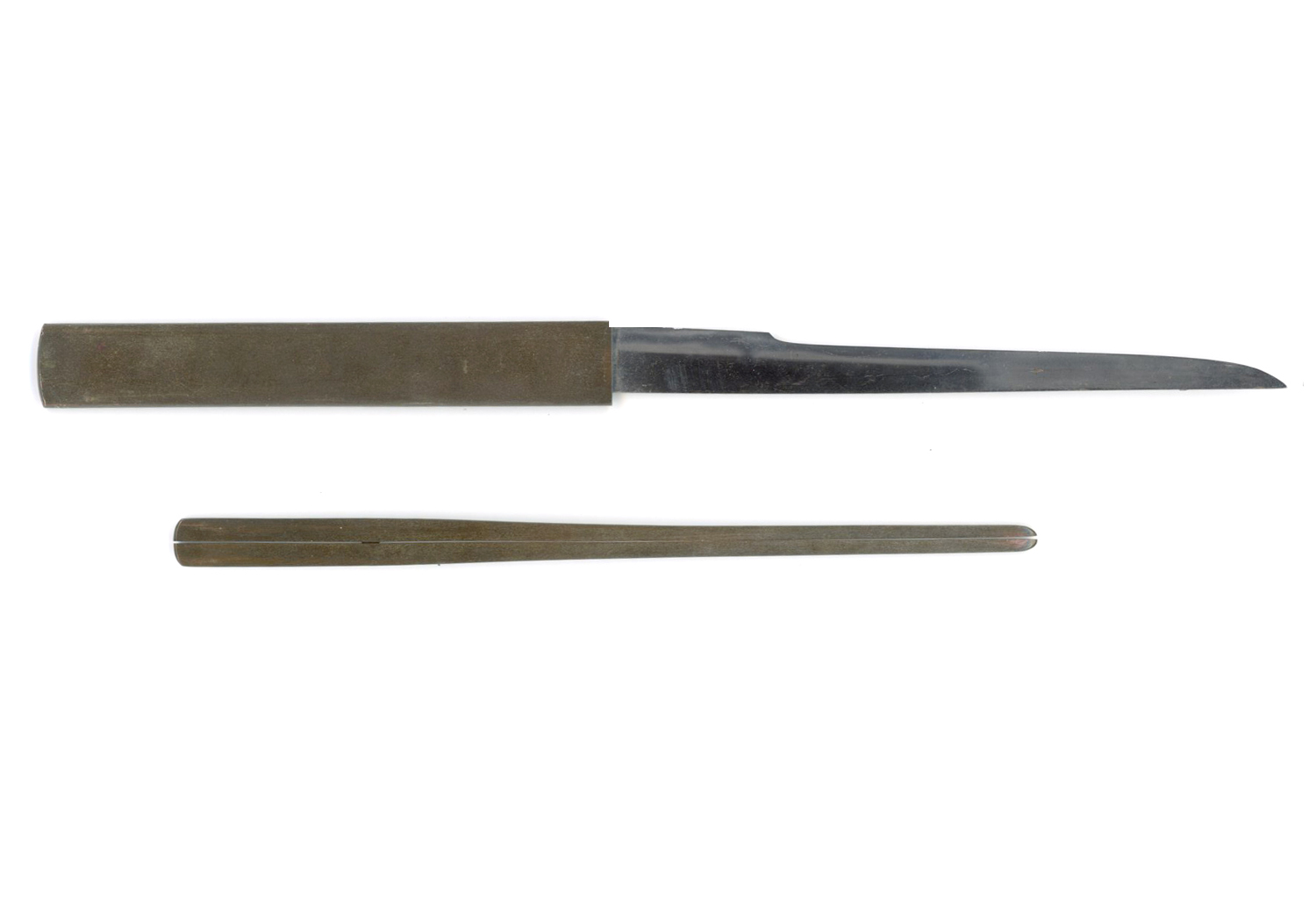
The daisho fuchi and kojiri of both swords are made of shibuichi that is delicately and tastefully carved with a very thin raised edge. The menuki are mitsubishi (four diamond) Samurai family crests made of copper covered with gold. The kashira, koiguchi, and kurikata are all made of horn. The wakizashi has a matching set of kozuka and a wari-bashi kogai (split kogai used as chopsticks). They are both made of shibuichi and depict ocean waves with gold dots representing sea foam. This whole set of koshirae exudes grace and understated beauty as would befit a traditional Samurai of the Edo Period.
Both of these swords come with NBTHK certifications. These certifications were issued by the NBTHK when they held one of the only two shinsa ever held in the United States. This shinsa took place in Dallas in 1980. They were very strict on their judgements because these shinsa were on foreign soil away from the home office in Tokyo where their vast library of data is stored. I have no doubt that these swords would be awarded at least Hozon Token certifications if they were resubmitted today.
SOLD