
Most sword collectors have heard of the great smith Bizen Nagamitsu (備前永光who worked in the Kamakura era around 1275 and was the son of Bizen Mitsutada備前光忠). What most do not realize is that there was also several Muromachi period Bizen smiths who worked from the Oei era (began 1394) up through the Eiroku era (ended around 1570) who also went by the same name using different kanji for the character “Naga”. They wrote their name as follows: (備前長船永光).
Of the ten smiths listed in the Meikan as signing Bizen or Bishû Jû Osafune Nagamitsu, we will concentrate only on the few who worked around the time of our subject sword which is signed and dated as being made in the fourth year of Eiroku (1561). As it turns out this was time of the Sengoku Jidai (Era of the Country at War) when many mass produced swords were made in factories in Bizen and Mino. This was for the most part, not the case with swords made by the Bizen Nagamitsu (備前永光) smiths. In fact, Nagamitsu swords were often signed with the given name of the smith such as Jirôbeimon (no) Jô or Jirôsaemon (no) Jô who signed their signatures starting with “Bizen no Kuni”. The the kazu uchi mono (mass produced) swords were always signed “Bishû Jû”. Also the Nagamitsu smiths who made the better swords also dated their swords and the mass produced swords were never dated.
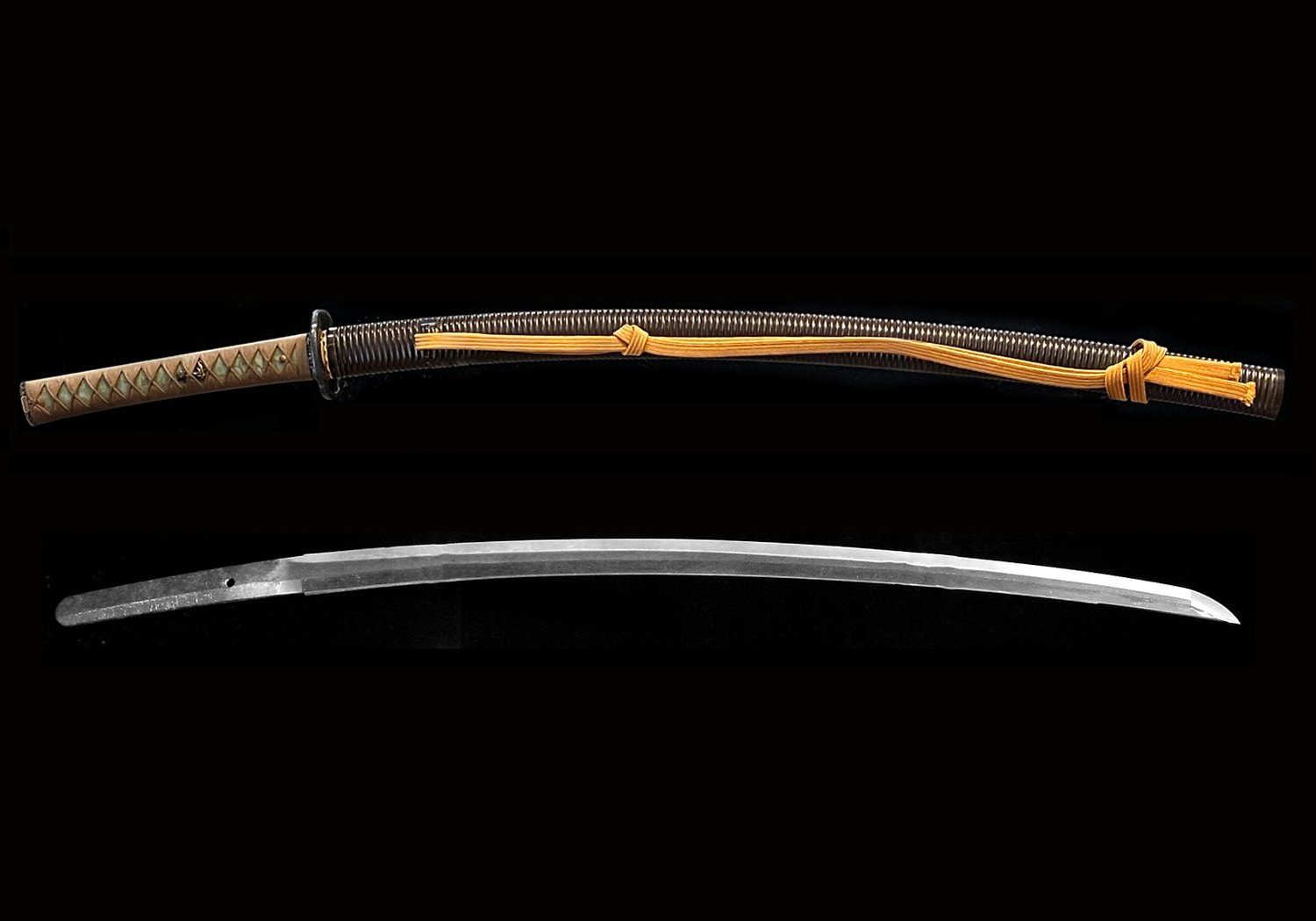
We are pleased to present here a signed and dated Jô-saku (upper quality) katana by one of the last of the Bizen Nagamitsu (備前永光) smiths of the Muromachi era. Swords of this era were often short and meant to be used with one hand during the “close-in” style of fighting on foot that prevailed during this turbulent time. This sword is one such sword. The fact that it survived these times in excellent condition shows its quality and resilience.
This sword has a nagasa (length) of just under 26 inches or 65.7 cm. The moto-haba (width at the base) is 1.1 inch or 2.9 cm and the saki-haba (width at the point) is 0.78 inches or 2.0 cm. The kasane (thickness) of the blade is 0.34 inches or 0.8 cm. It has a beautiful sweeping sori (curvature) 0.84 inches or 2.13 cm. It appears to be a torii sori tending towards saki sori as was prevalent during those times in history.
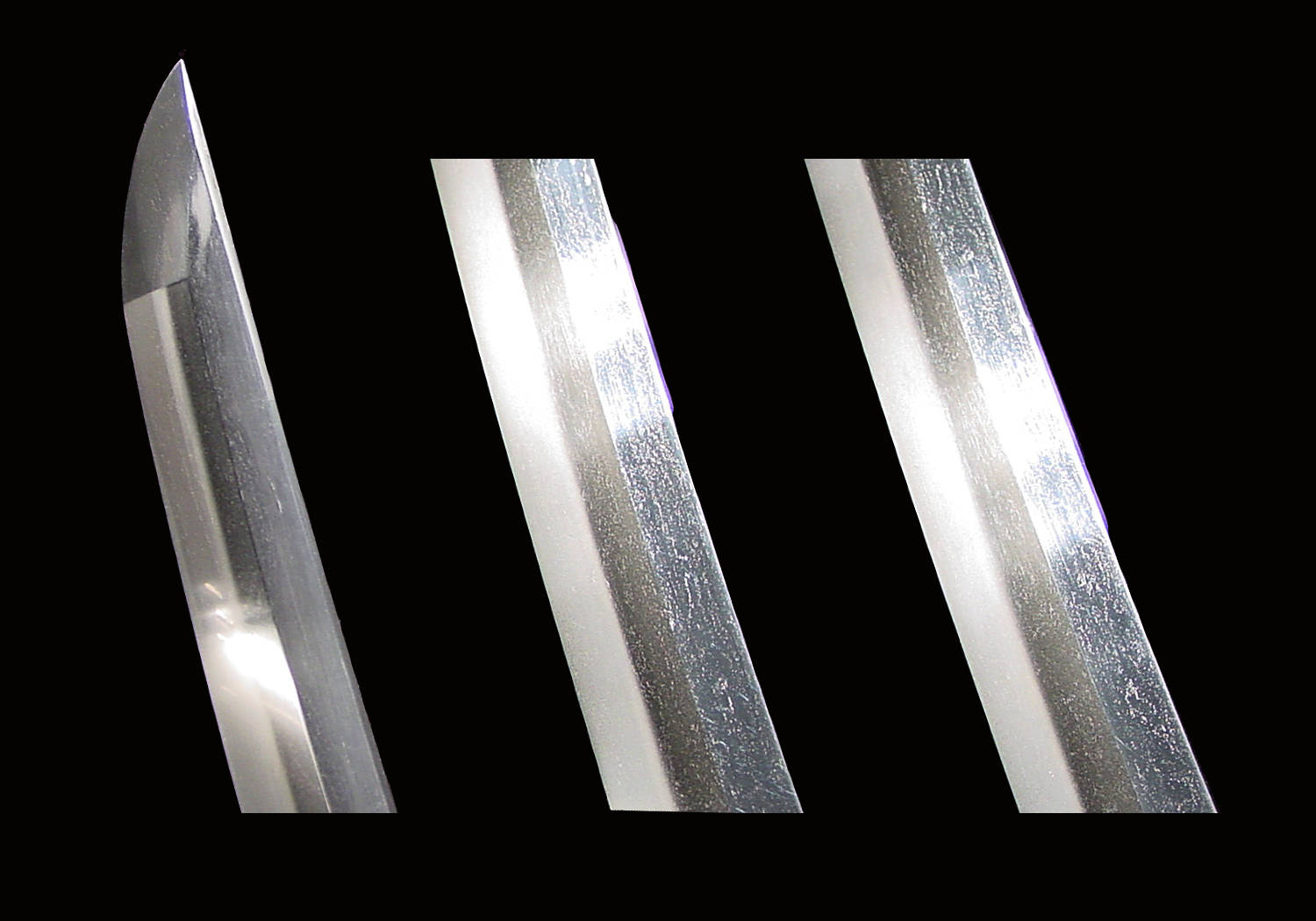
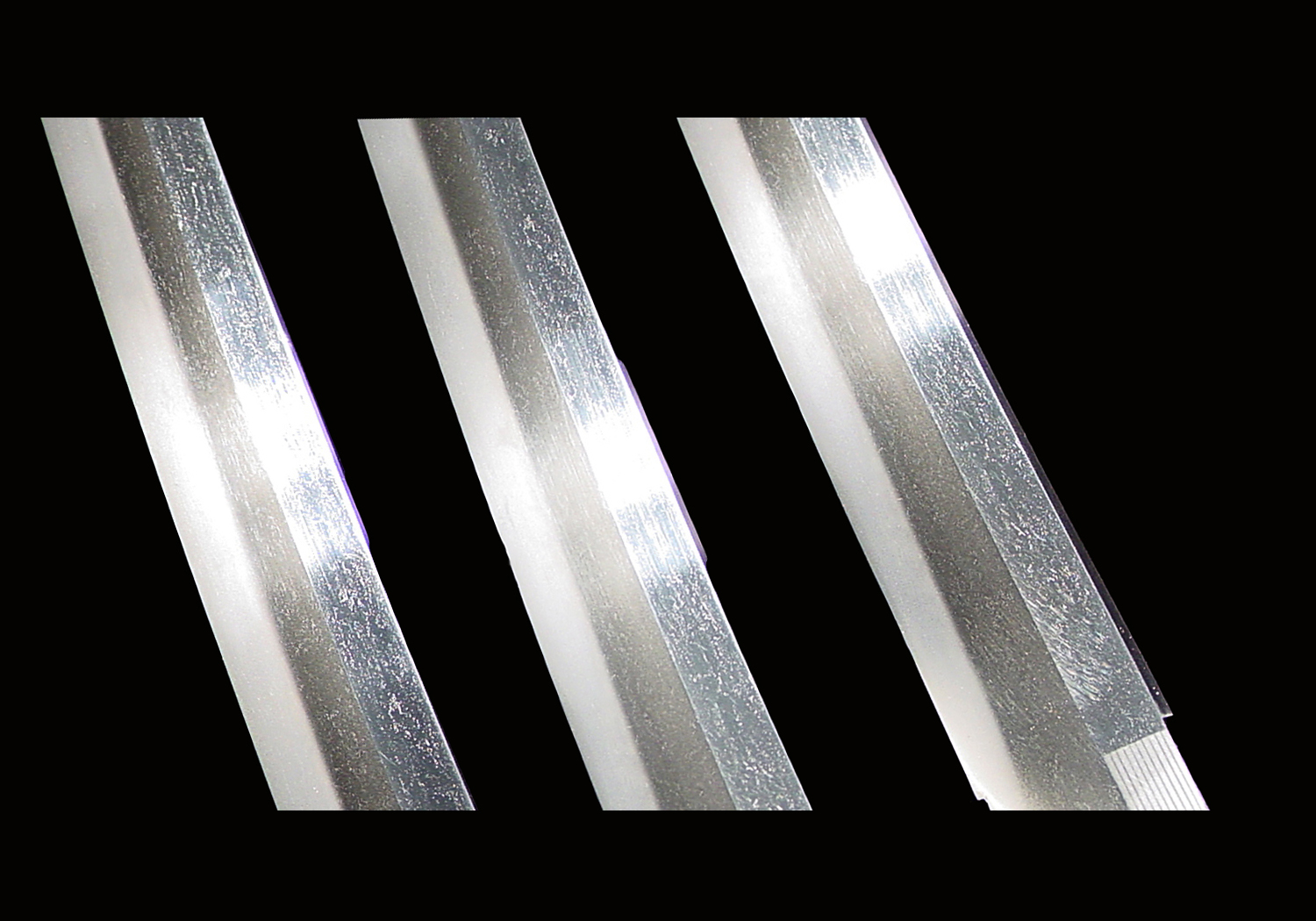
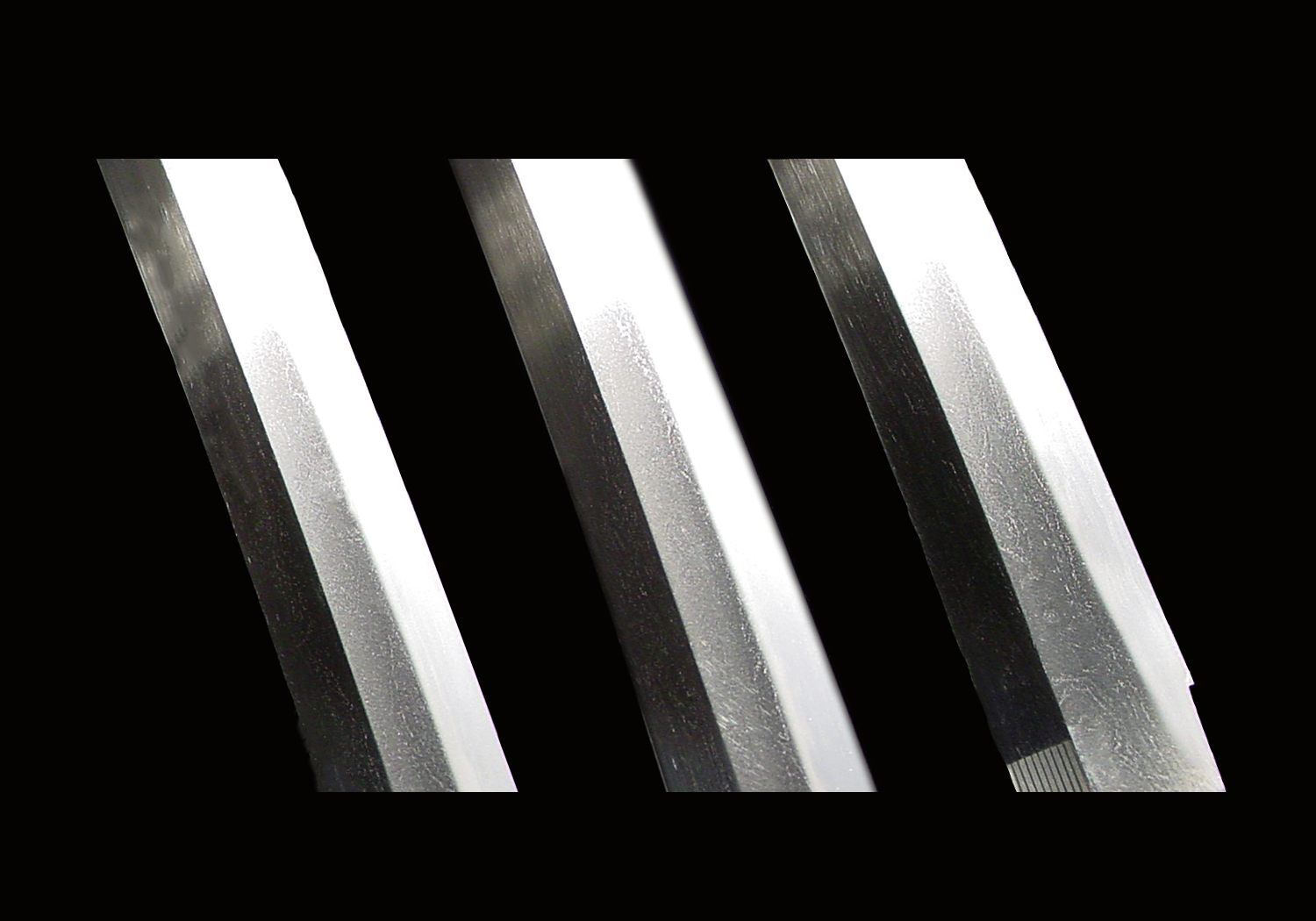
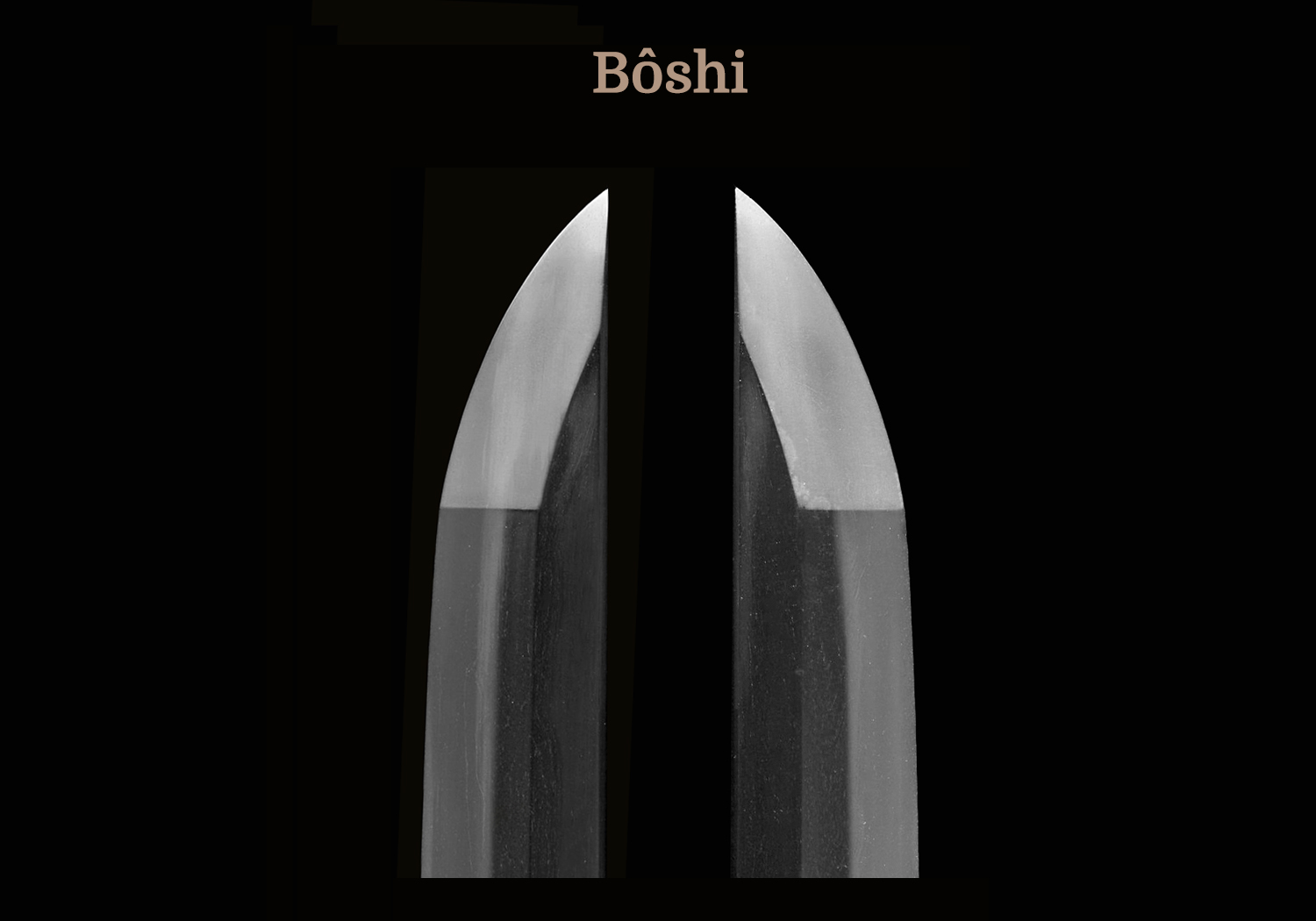
The jihada (grain of the steel) is mostly itame mixed with some mokume. There are profuse ji-nie crystals throughout the hada especial near the habaki and in the boshi. If you look deeply into the blade you will be pleasantly surprised. There is even some feint utsuri here and there on both sides. The hamon appears at first glance to be simply a wide and consistent suguha (straight) that is very slightly undulating. Again upon closer examination and in the right light, the hamon comes alive in areas with sunagashi, kinsuji and other nie structures especially on the obverse of the blade. The nakago mune (back) is flat and the nakago itself is ubu (unshortened) just as when it was made. The nakago jiri (butt end) is ha-agari kunijiri as one would expect from a Bizen blade. There is only the one original mekugi-ana (hole).
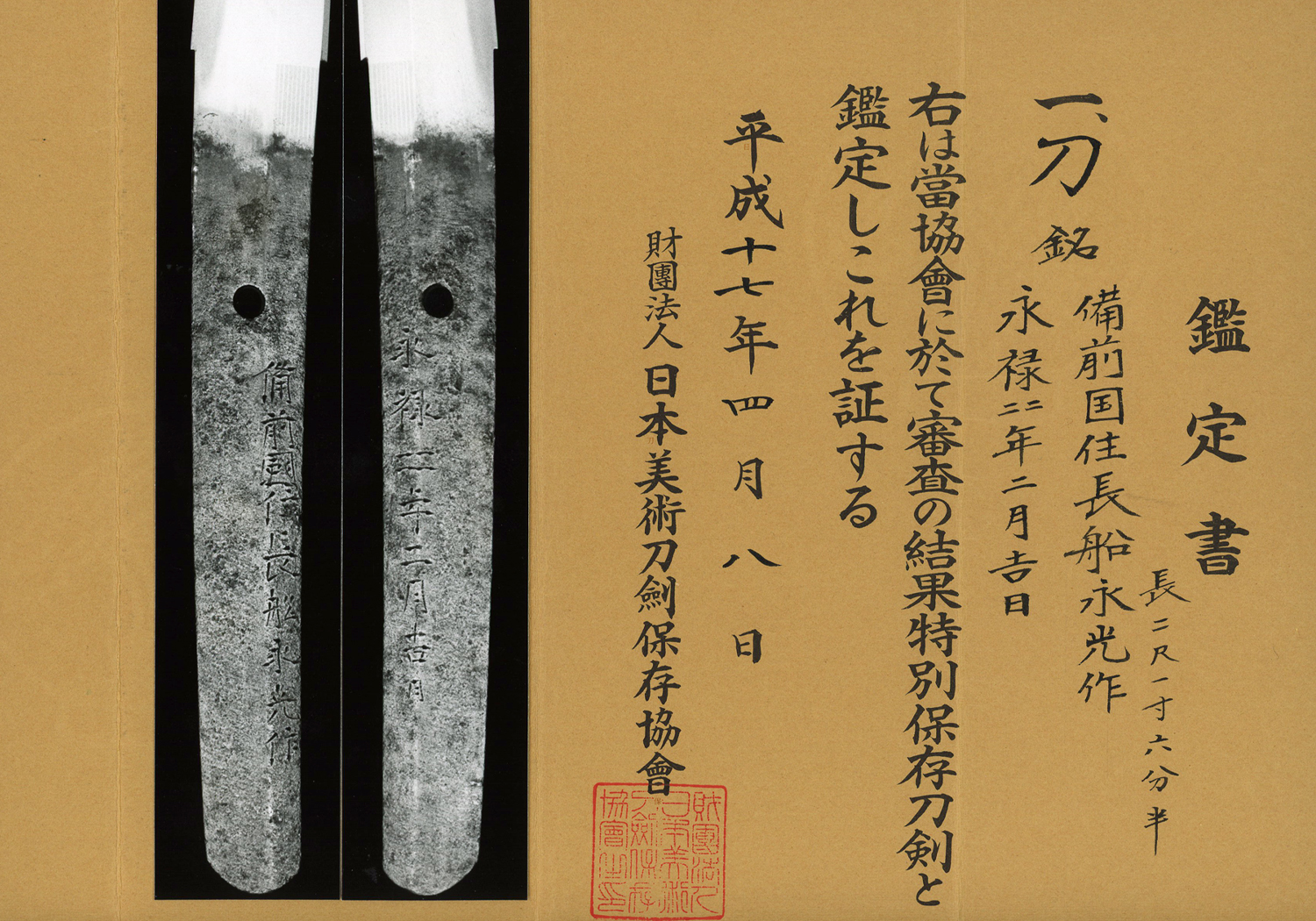
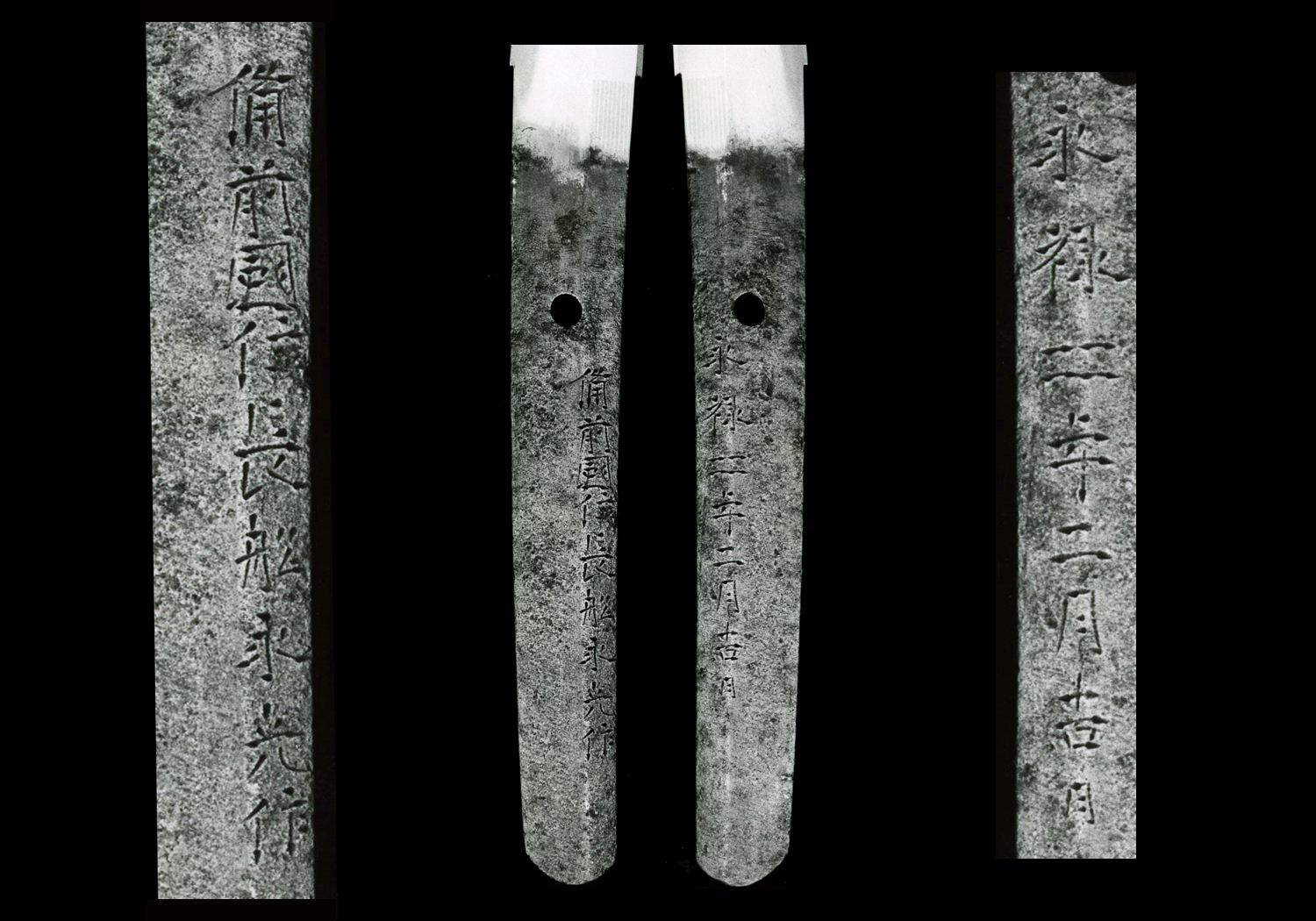
The blade is signed on the omote Bizen (no)n Kuni Jû Nagamitsu (備前長船永光). There is an ura mei (date) on the reverse of Eiroku Yon-nen Nigatsu Kichi Nichi (永禄四年二月吉日). This translates as made on a lucky day on February of the fourth year of Eiroku (1561)”.
While the maker of this sword did not include his personal name in the signature, there can be no doubt that the quality of this sword is such that it could NEVER be confused with a mass produced sword. It is also interesting that the smith did not use the normal kanji character of four (四) which can also be read as “shi” instead of “yon”. Rather since the word “shi” also implies “death”, many smiths considered it an unlucky omen to use it on a sword. Instead, he wrote the kanji for the number of four by using four small straight strokes of the chisel which can be seen easily in the photograph of the tang below. Also this is yet another indication that the smith and his swords were of high quality.
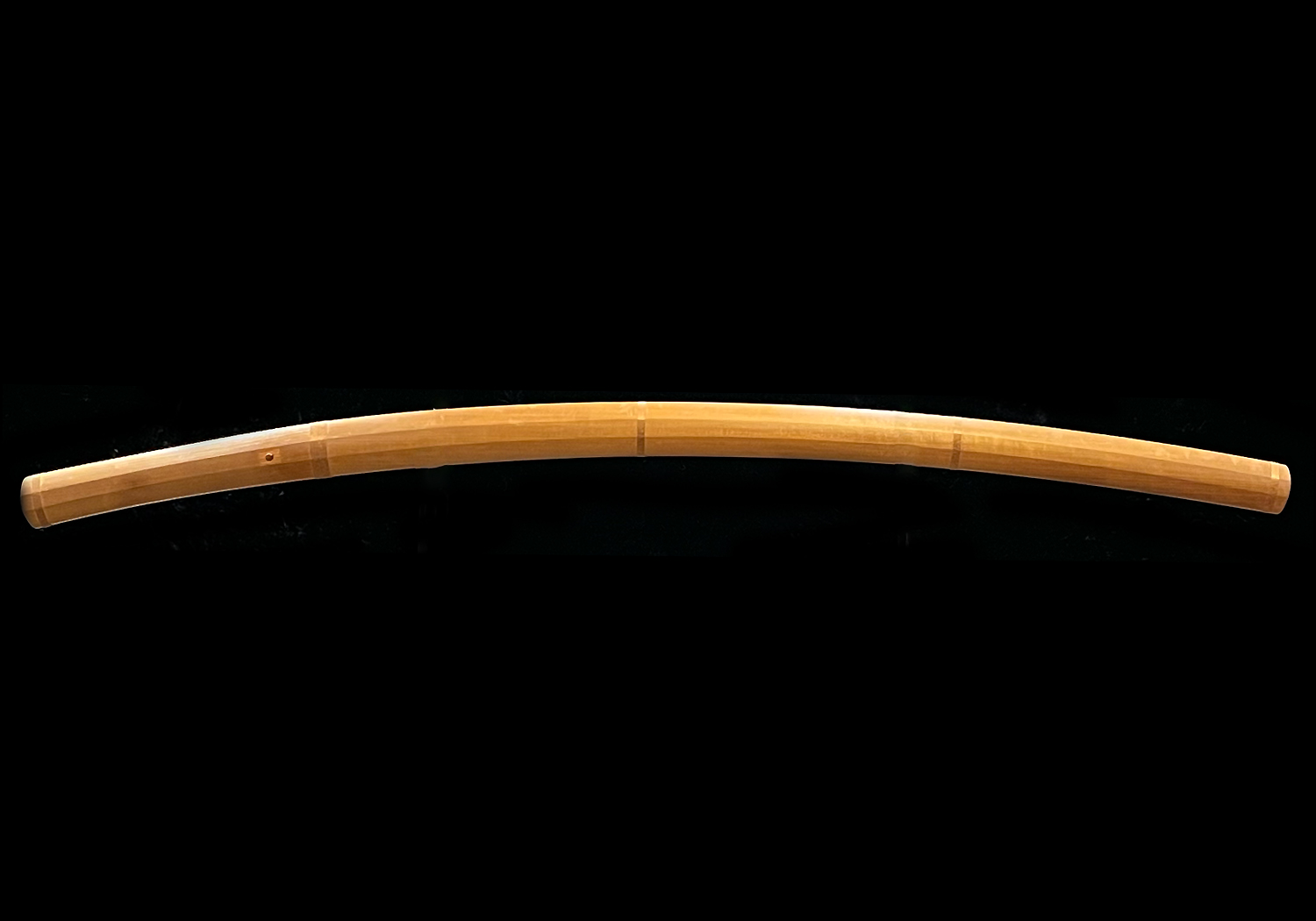
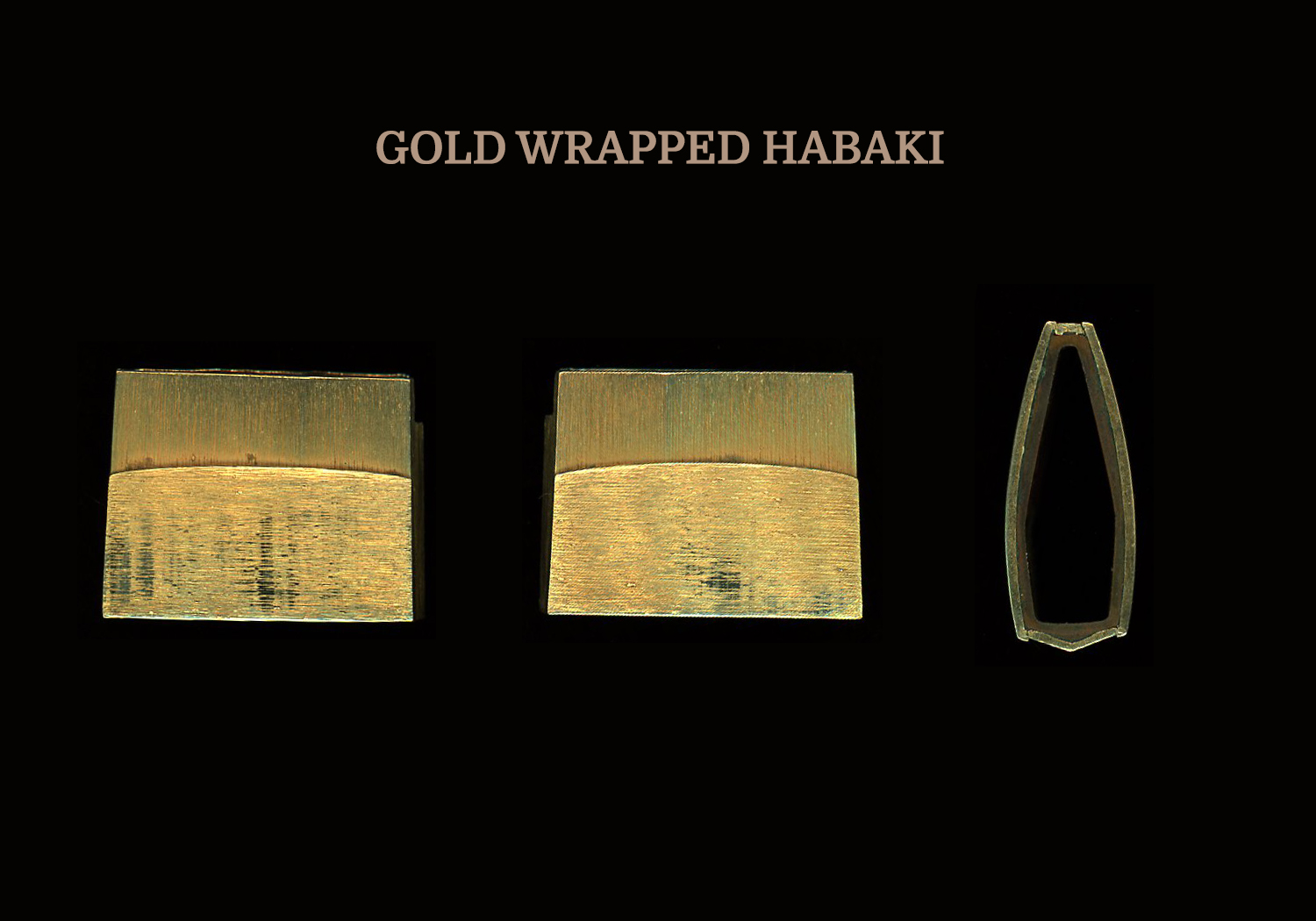
This blade comes in a great polish done in Japan can be enjoyed for hours and hours. There are no imperfections in the blade from forging flaws and this blade is, in fact, exceedingly healthy for a sword that is over 465 years old, especially for one that has seen many battles. It comes with NBTHK Tokubetsu Hozon certification attesting to its authenticity, age, condition, and quality. It also comes in a shirasaya with a gold two piece habaki.
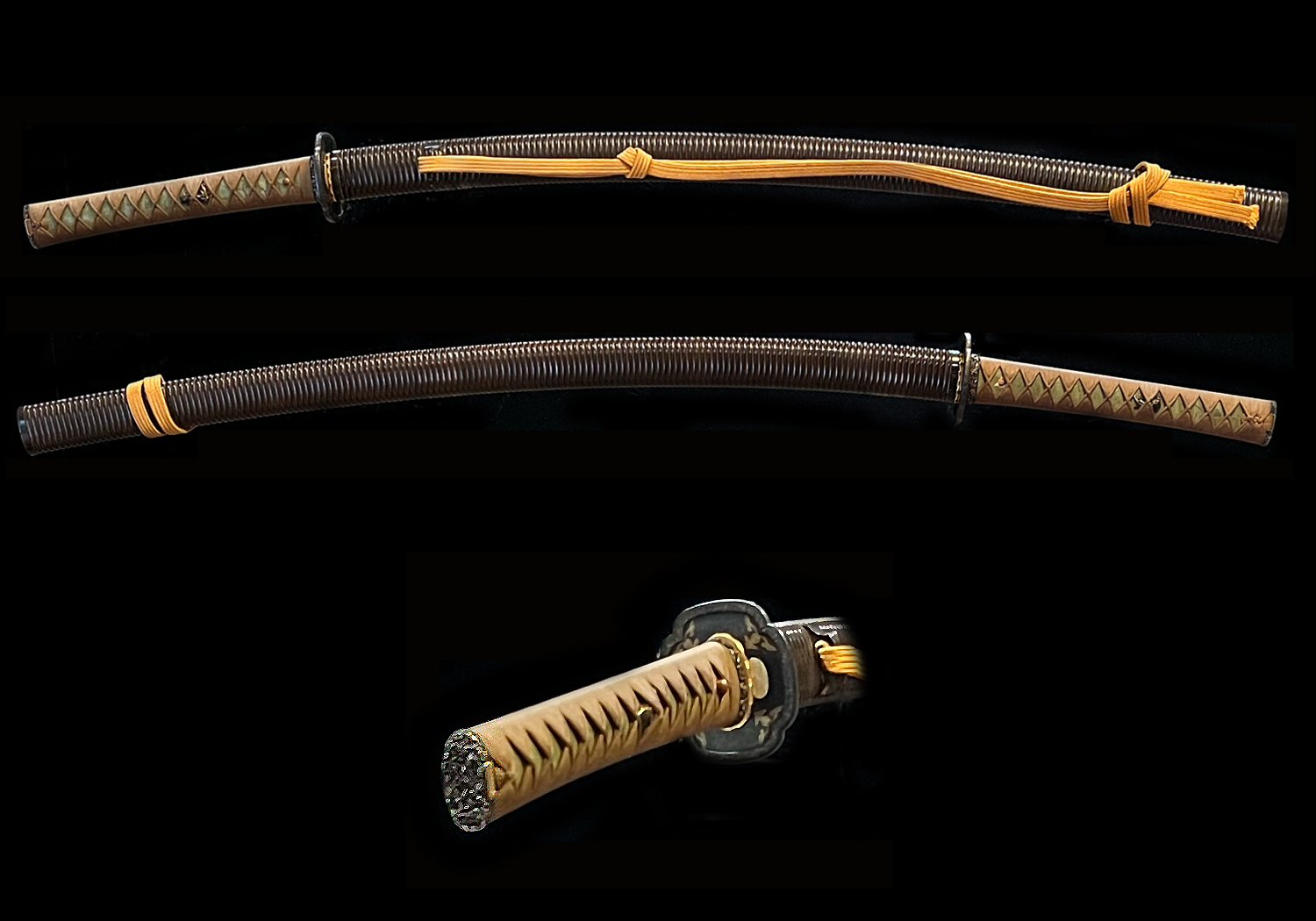
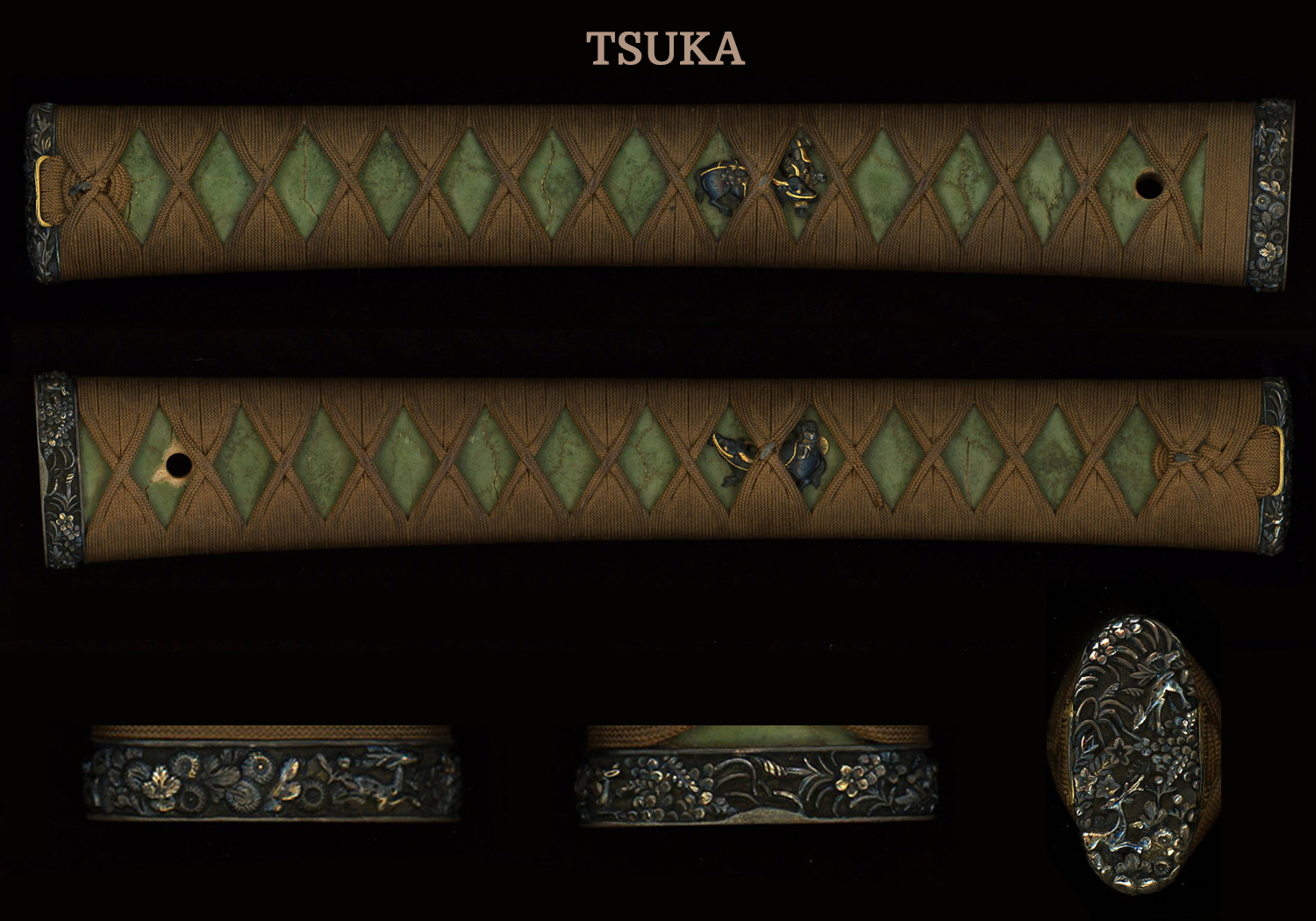
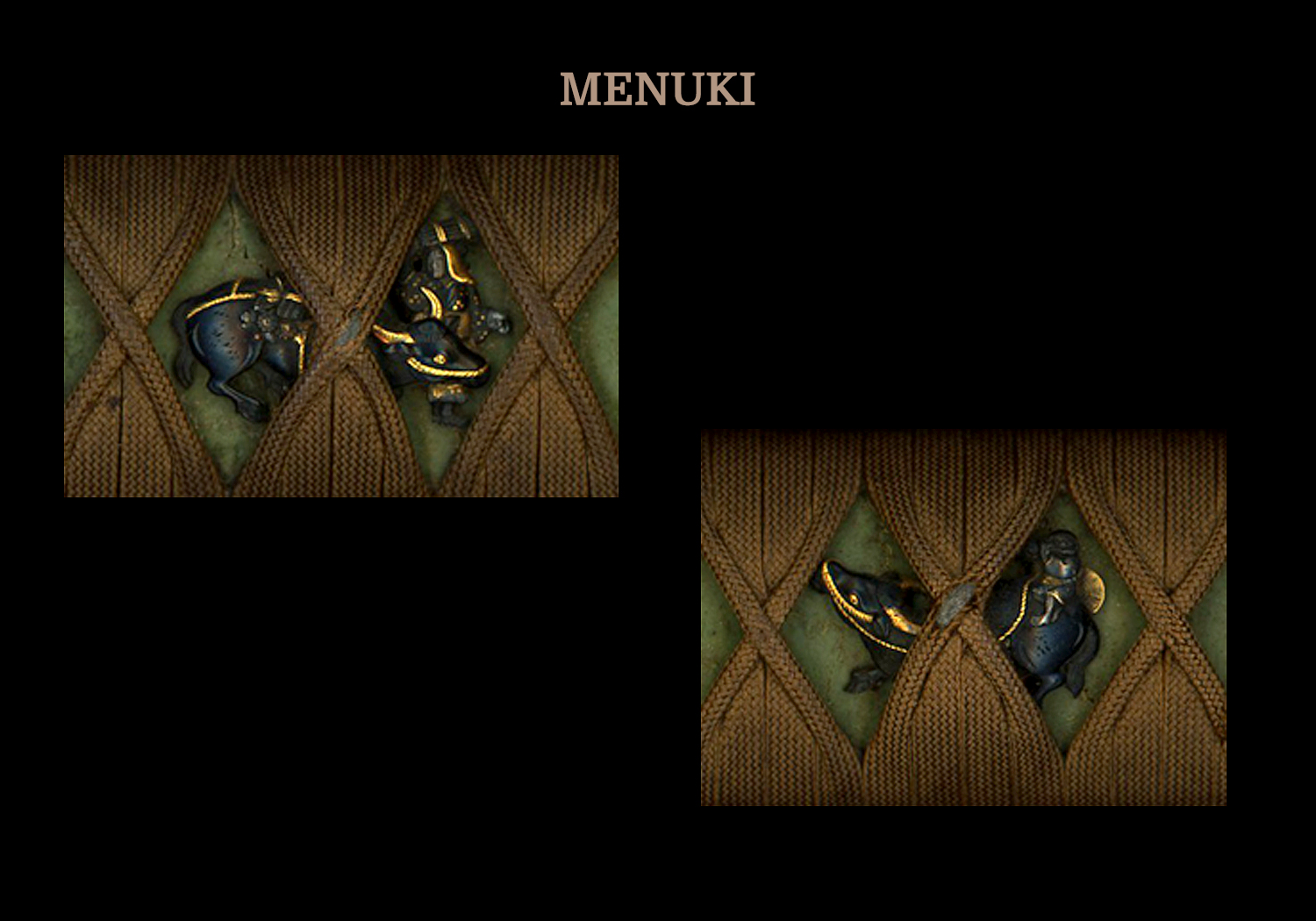
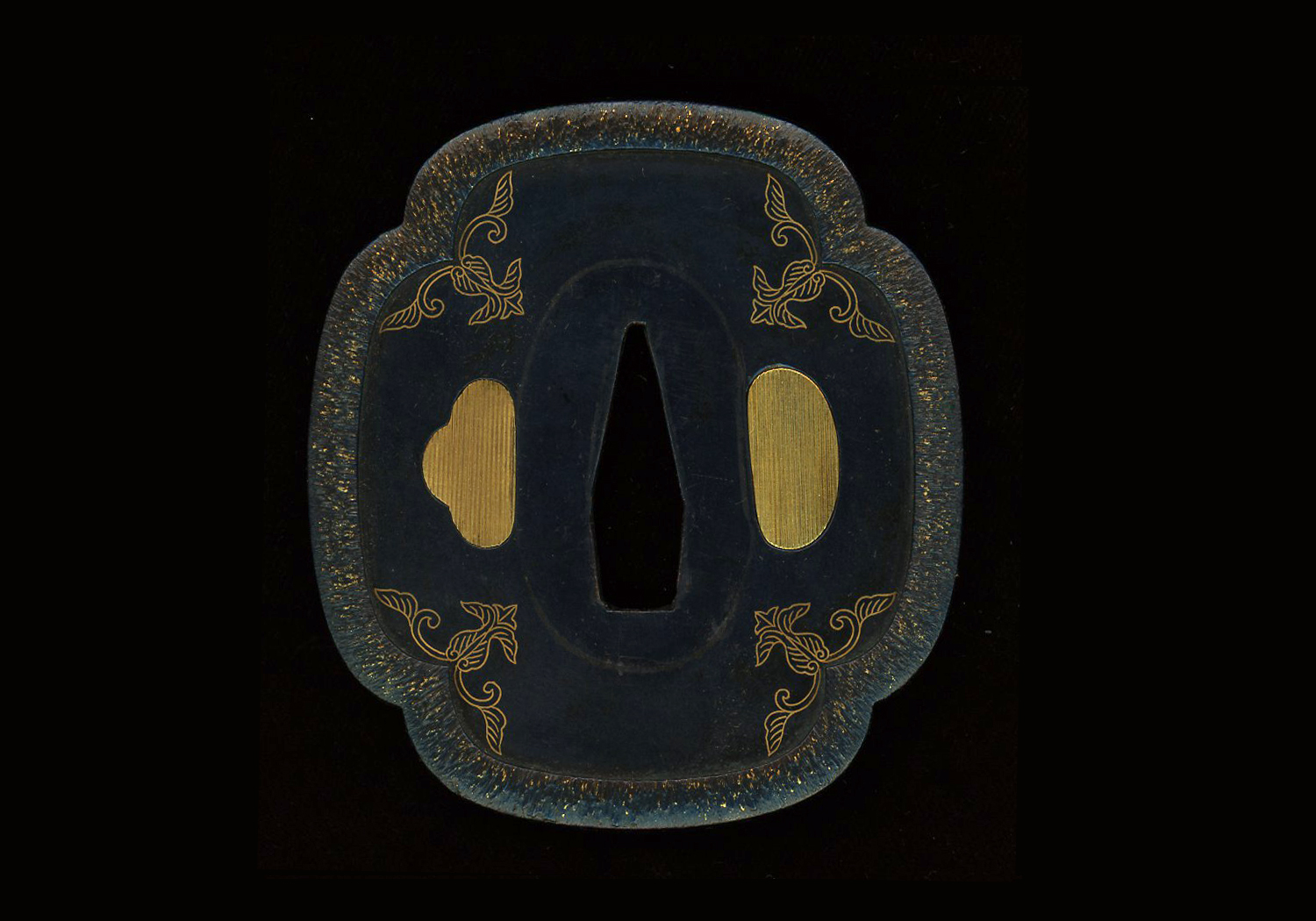
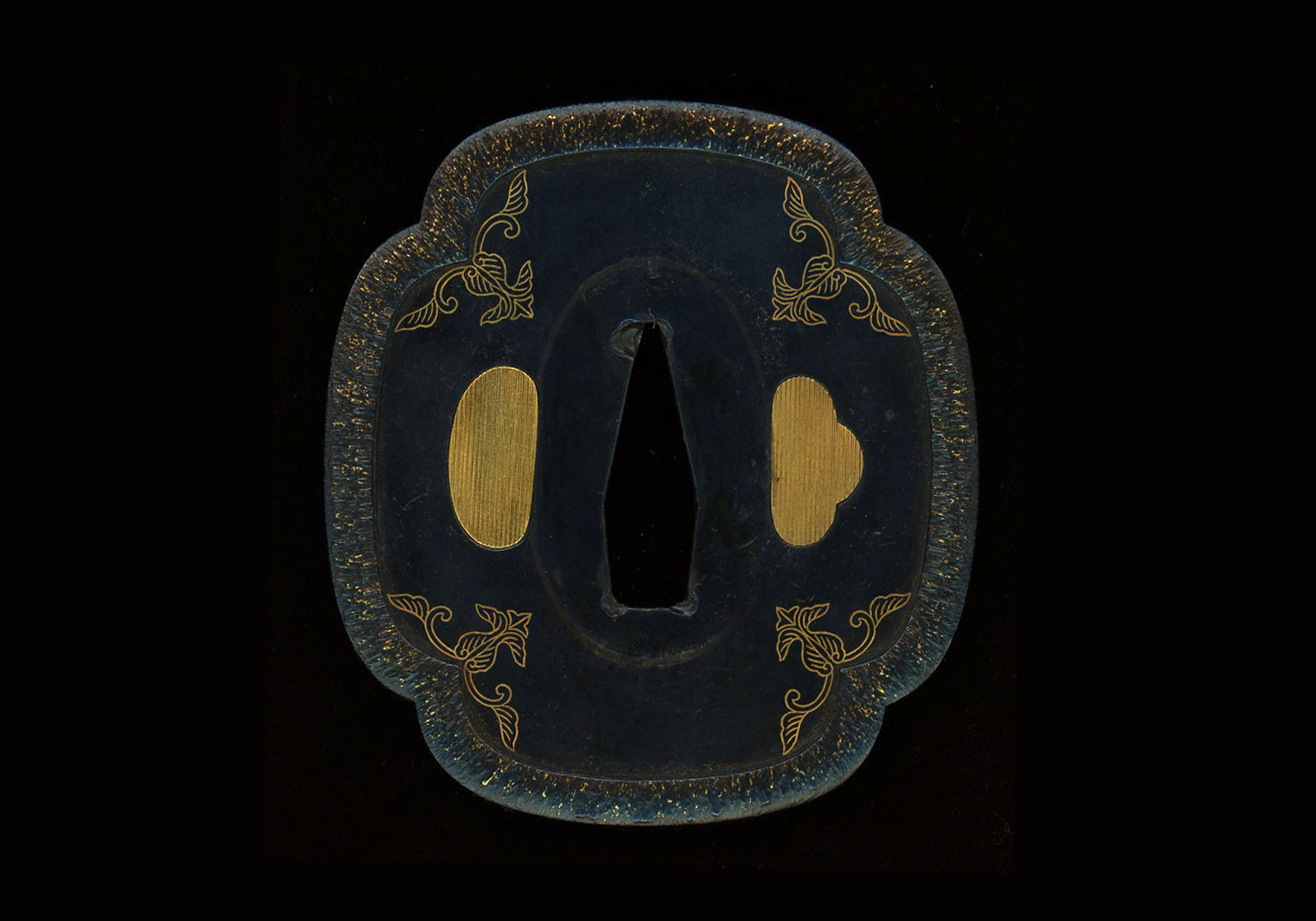
Accompanying this fine swords is a complete koshirae (set of mountings) that re of excellent quality and condition. You can easily view the mountings in the photos below. Of special and unusual note is the fact the tsuka (handle) is covered in crane skin under the silk ito (wrapping chord). This is only very rarely found and speaks of the last owner’s status when he had the koshirae made for this katana.
PRICE: $16,950.00


KOSHIRAE
NBTHK TOKUBETSU HOZON CERTIFICATE