The Bunmei era (starting in 1469) marked what we commonly call the late Muromachi period or the Sue Muromachi period, hence Bizen swords made after that starting point are generally referred to as being Sue-Bizen swords. Technically the Muromachi era ended in 1573 when Oda Nobunaga drove the last of the Ashikaga Shoguns, Ashikaga Yoshiaki, out of Kyoto. In the sword world, however, we consider the end of the Muromachi era to be 1596 when the Keicho era signaled the beginning of the Shintō sword period (new sword period).
It should be noted that in the ninth year of Tenshō (1591), there was a great flooding of the Yoshii River in Bizen (備前) Province. This flood ended the golden age of sword making in Bizen (備前). The sword trade had prospered here through centuries of warfare and civil disturbances and in this one brief period was swept away forever. While sword making did continue in Bizen (備前) throughout the Shintō and Shinshintō Eras, it never again reached its prior height in quality or quantity of swords produced.
The later Muromachi (室町) period was commonly known as the Sengoku Jidai (戰国時代) which translates as the age of the country at war. It was called this because it was a period in Japanese history that was unprecedented in the amount and intensity of warfare between the feudal lords, Daimyō, as they struggled for supremacy. A by-product of this constant warfare was a demand for swords and other weapons that was unrivaled either before or after this period of conflict. One of the most prolific schools in the Muromachi period was the Bizen (備前) school.
Unfortunately, there were relatively few good smiths working in Bizen (備前) province at this time. Because of the great demand for weapons, most of the Sue-Bizen (末備前) smiths produced numerous kazu–uchi mono pieces (mass produced blades). These were basically factory-produced blades that were made without giving any regard to the quality of the pieces. Generally, they were made by less skilled smiths who used less steel in an attempt to economize on tamahagane. This, of course, led to more flaws and the common appearance of shingane. These blades were made after the Eisho era (1504).
However, it must be noted that during the Sue-Bizen (末備前) era, quality swords were also produced, the workmanship of which is clearly distinct from that of the kazu-uchi mono. Leading smiths were Katsumitsu (勝光), Munemitsu (宗光), Kiyomitsu (清光), Tadamitsu (忠光), Yoshimitsu (賀光), Sukesada (祐定), Yukimitsu (幸光) and Harumitsu (春光). Some of these names were used by several generations of smiths with Sukesada (祐定), being the most common. Often, on better, custom ordered blades made by these smiths, a smith’s given name such as Uemon no Jō (右衛門尉) was used in his signature. Generally, the signature of quality made blades will start with the characters, “Bizen (no) Kuni Jū Osafune……(備前国住長船…).
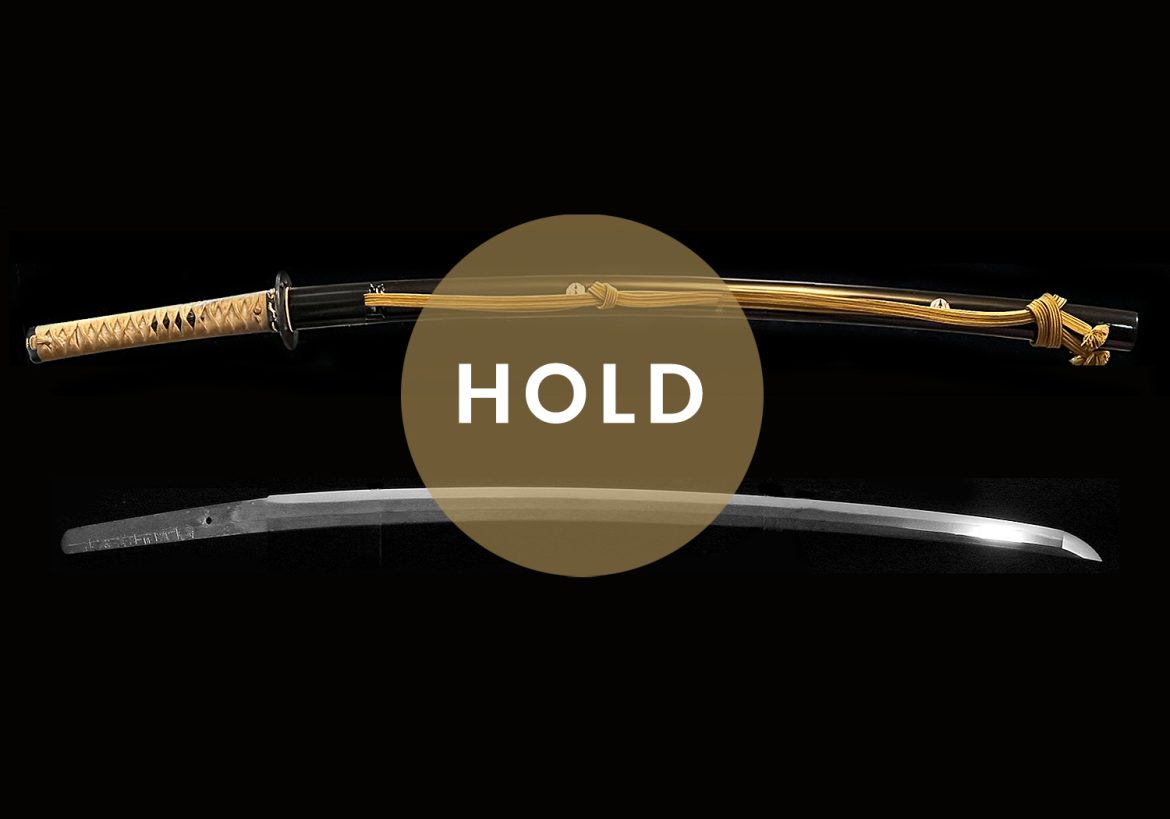
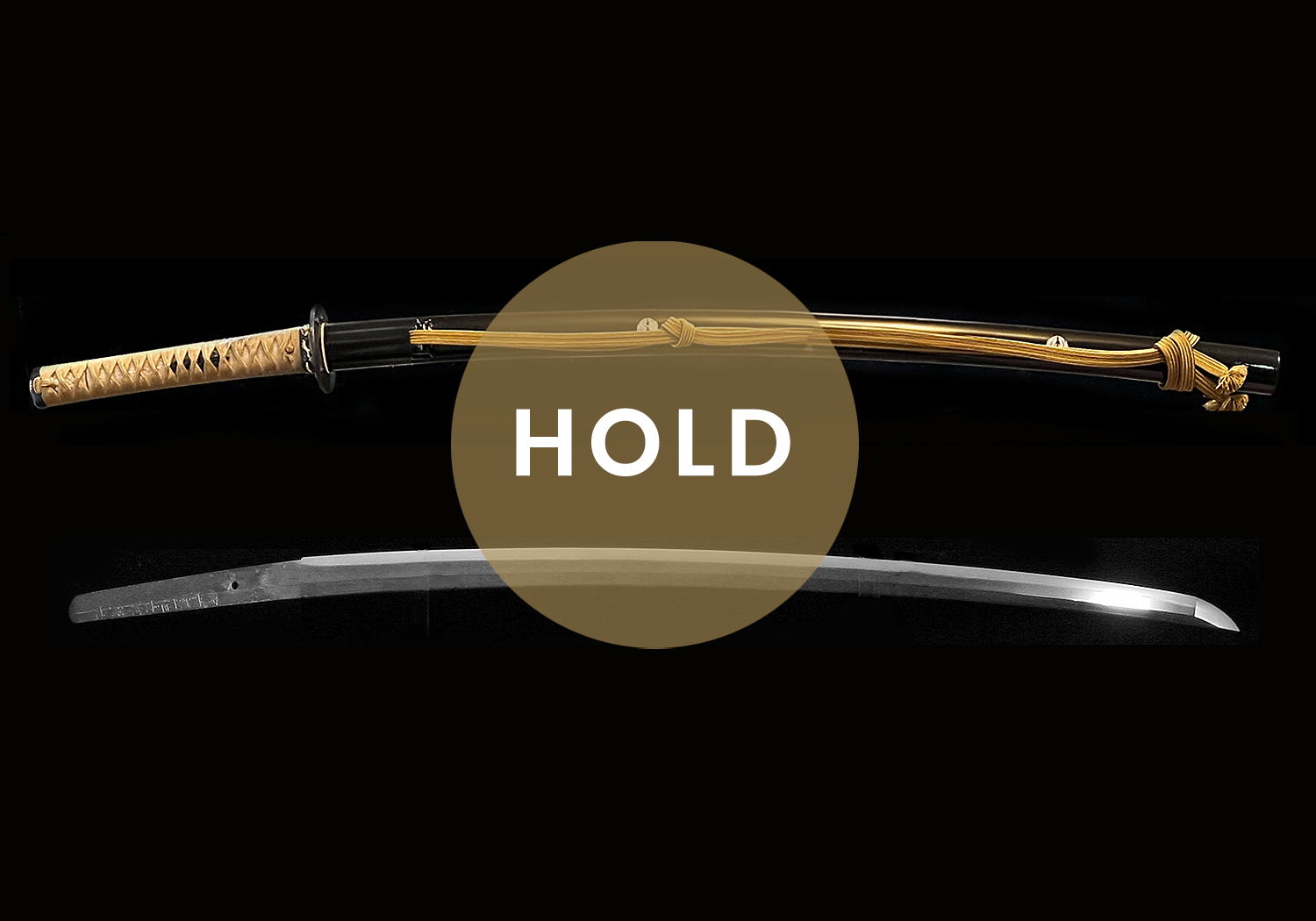
The blade presented here was made by one of these highly regarded Sue-Bizen smiths, Magouemon no Jō Kiyomitsu. He is regarded as a very skillful swordsmith belonging to the Osafune Kiyomitsu family which was one of the most prestigious swordsmith lineages in the Sue-Bizen school. This blade is signed without the use of his personal name (Magouemon no Jō 孫右衛門尉). However, his work is so distinctive that when the NBTHK awarded the rating of Tokubetsu Hozon for this sword, they included his given name in their smith designation. Also, when Tanobe Sensei, probably the foremost Japanese sword expert living today, did the sayagaki, he stated that it can certainly be identified as a “textbook example’ of the work of Magouemon no Jō Kiyomitsu.
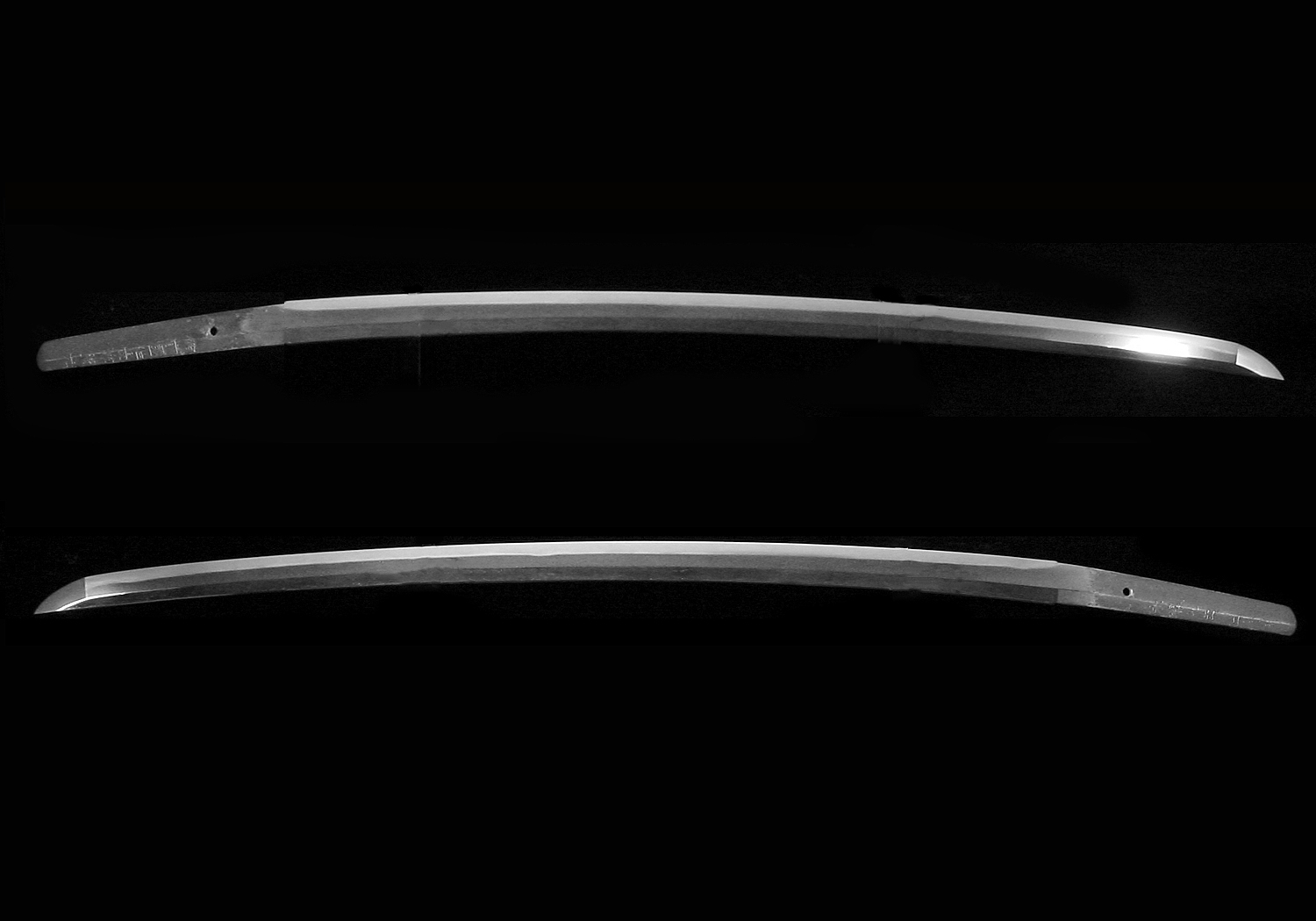
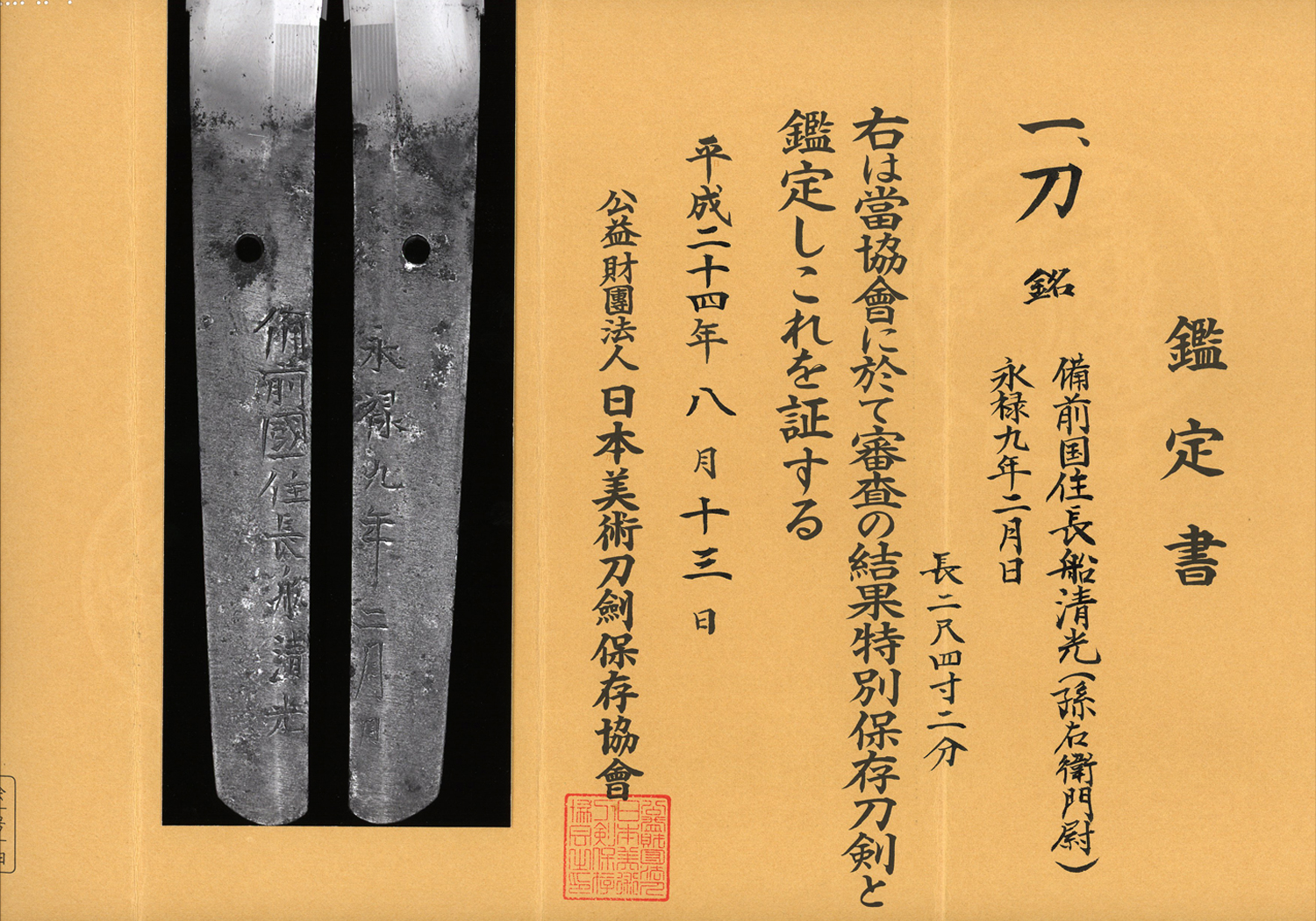
As noted, this sword is signed Bizen (no) Kuni Jū Osafune Kiyomitsu (備前国住長船清光). It is also dated Eiroku Kyūnen Nigatsu Hi (永禄九年二月日) meaning “A day in February of the ninth year of Eiroku (1565). This is a big blade that is still at its original length and exudes strength as well as beauty. It has a nagasa (length) of 28.875 inches or 73.4 cm. It has a graceful koshi sori (curvature) of 0.75 inches or 1.91 cm that is combined with a modest saki-zori. This combination is indicative of the late Muromachi era Bizen blades. The moto-haba (width at the habaki) is 1.22 inches or 3.1 cm and a saki-zori (width at the point) is .075 inches or 2.3 cm.
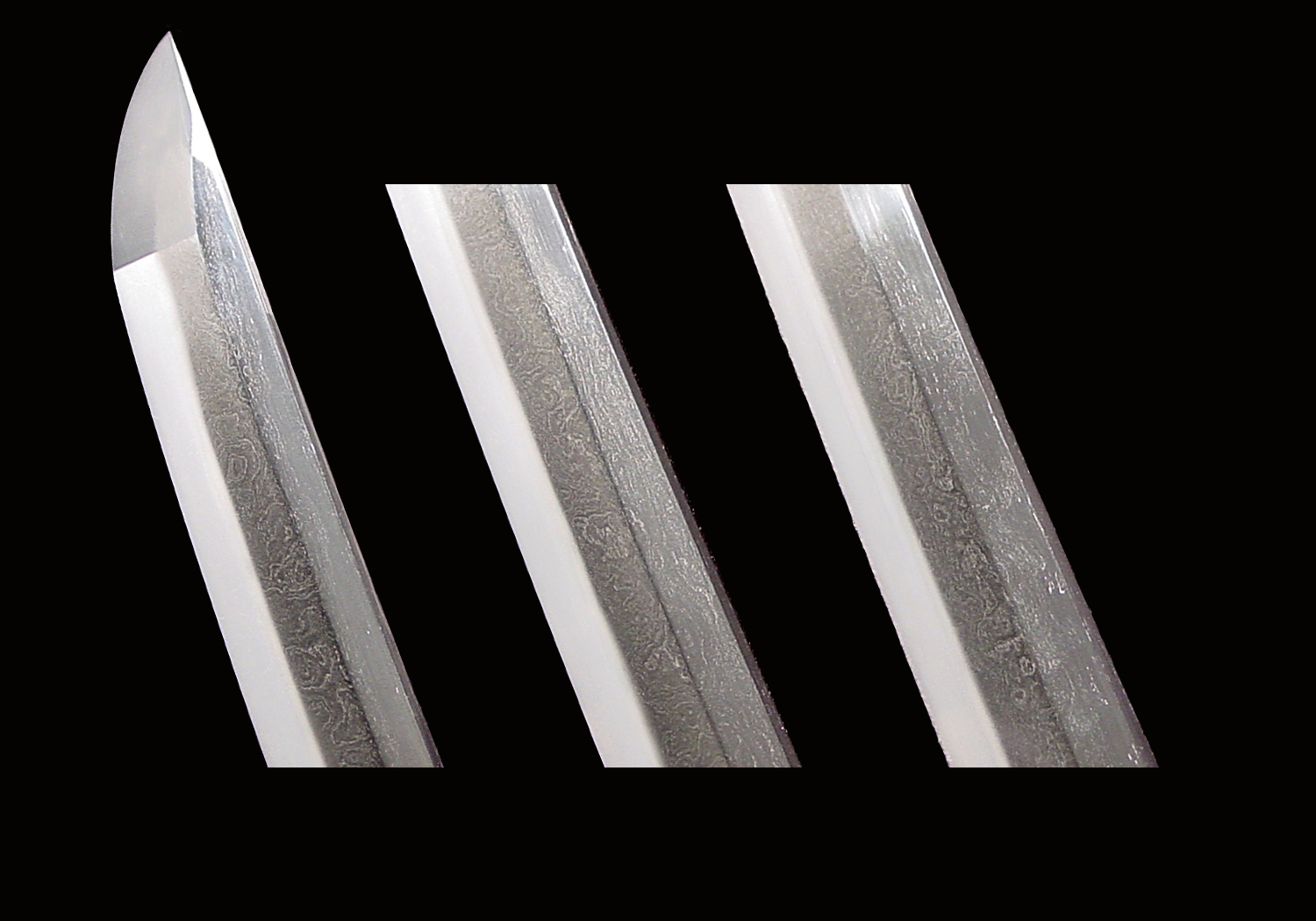
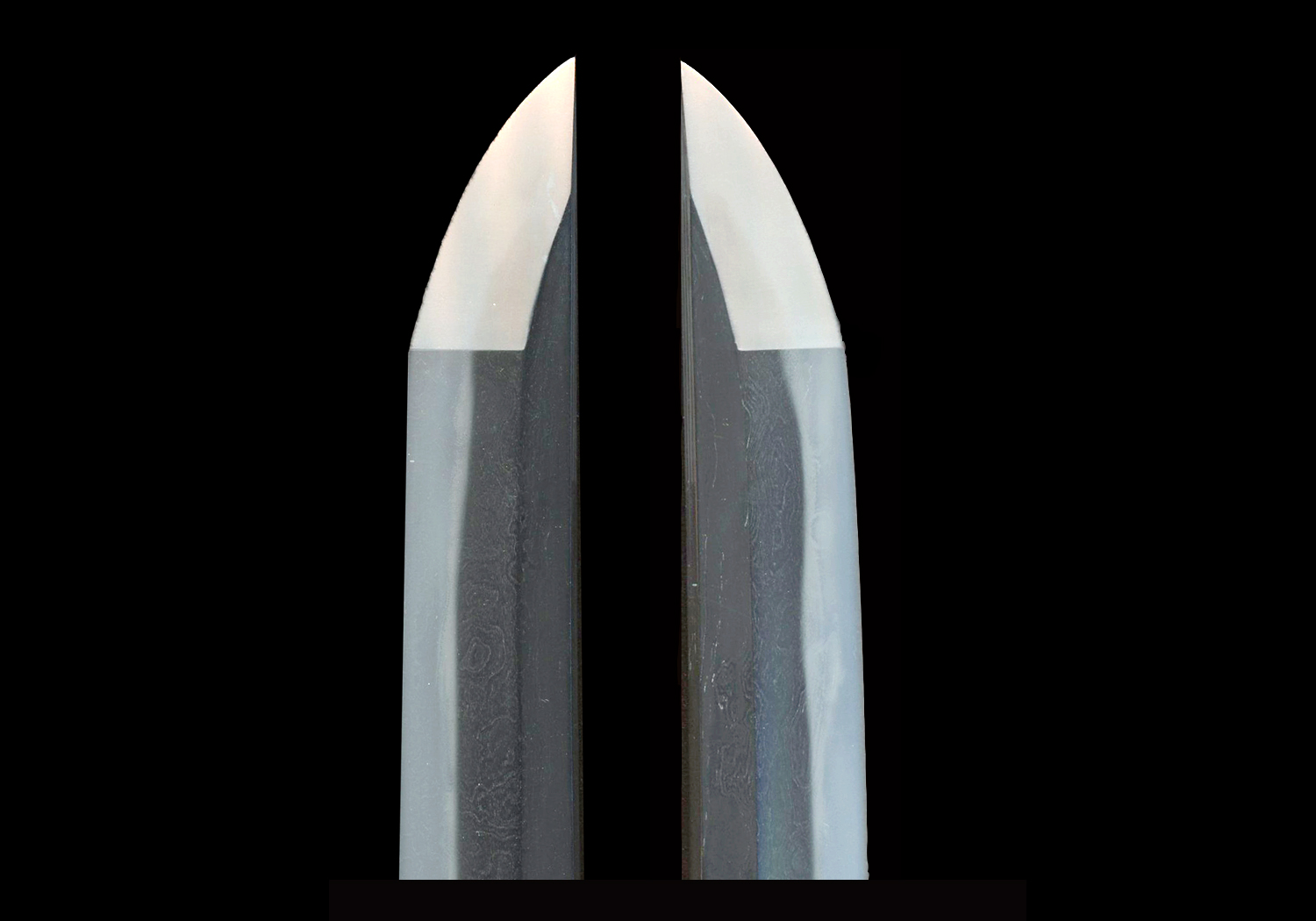
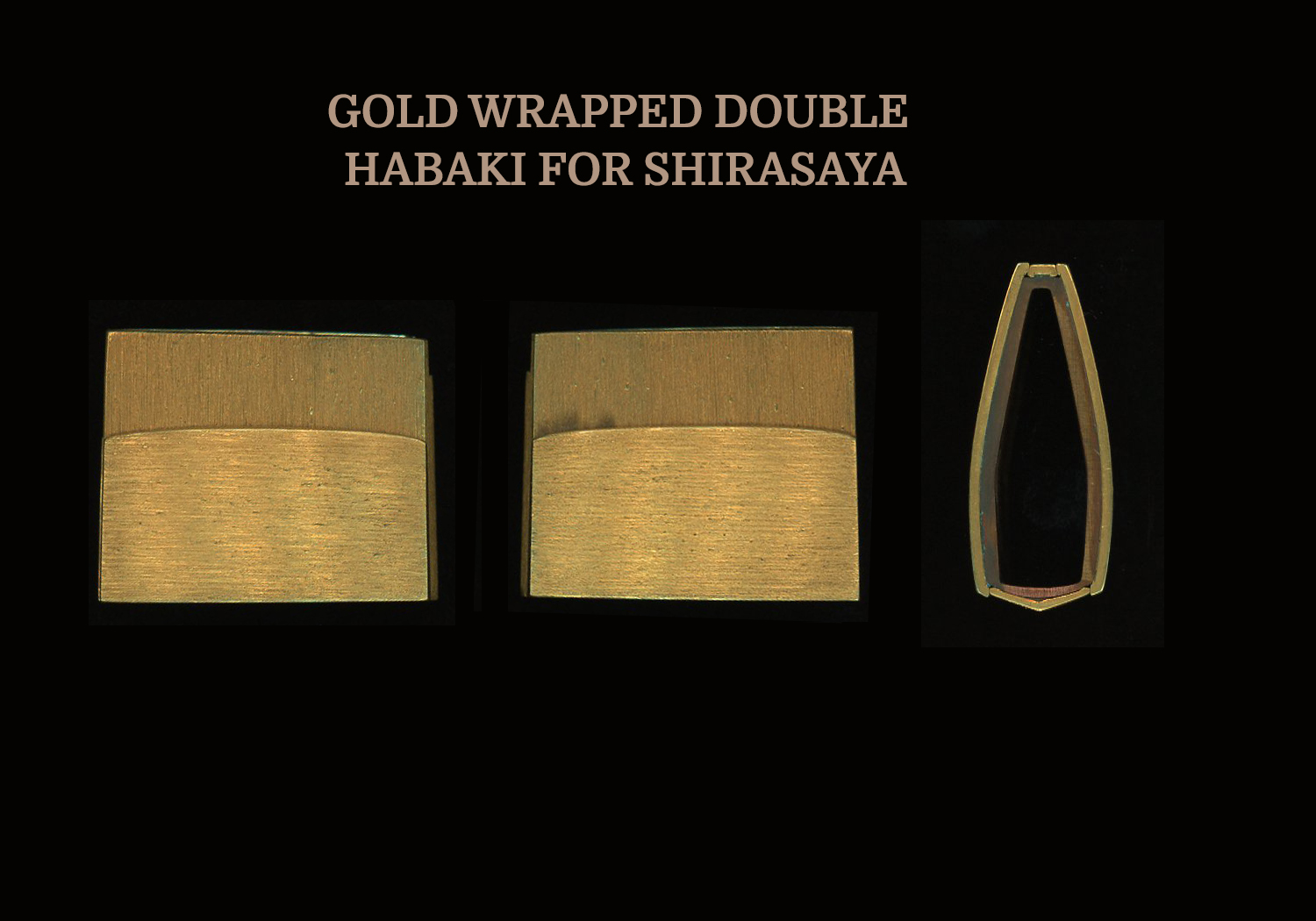
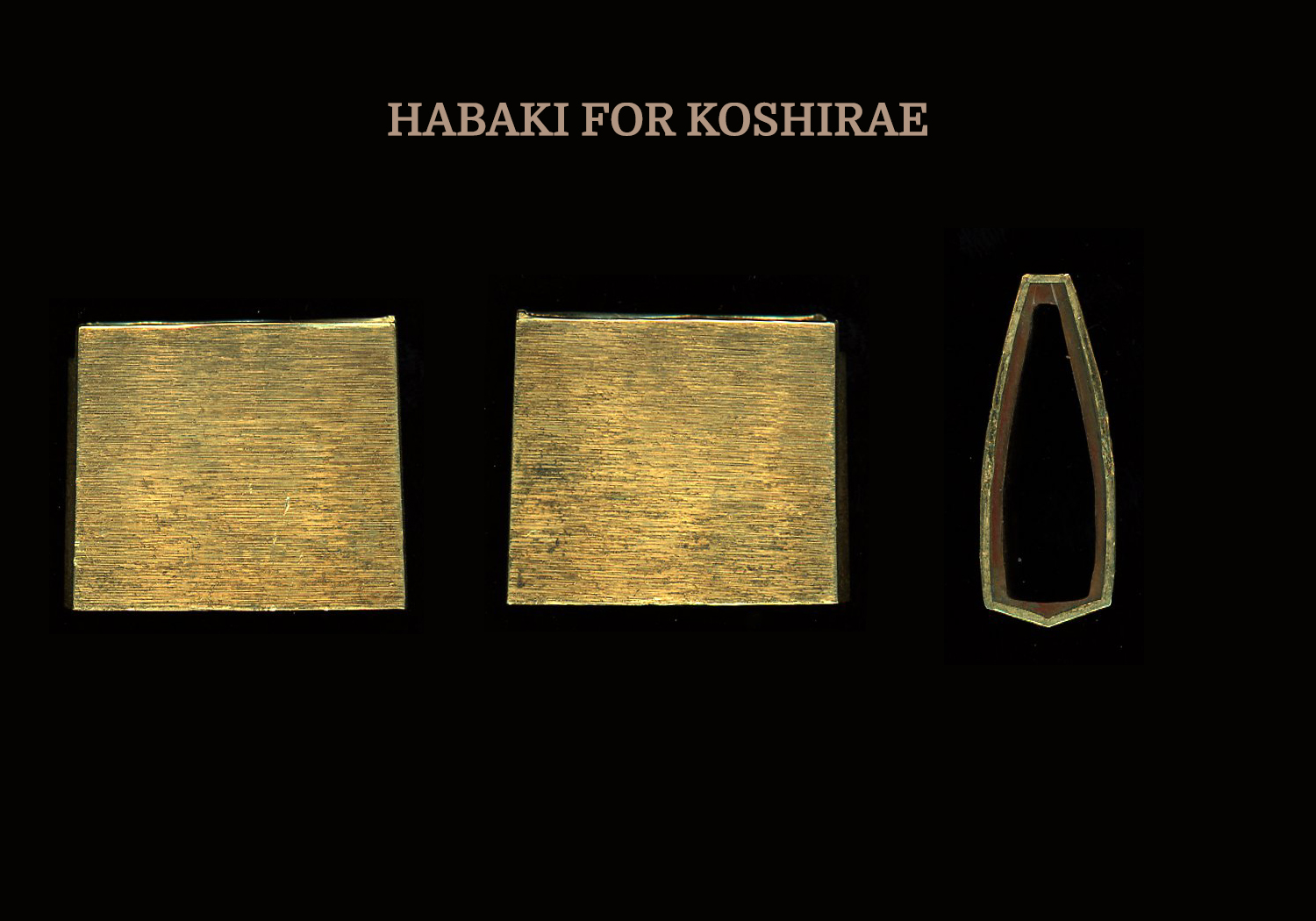
The jihada (grain of the steel) is a really beautiful combination of itame and mokume that has no openings or problems. There are also areas of feint utsuri along both sides of this lovely katana. The hamon (temper) of the blade is done in a hiro-suguha (wide straight style) with a very shallow notare in areas (slightly undulating) done in a nioi covering with a ko-nie structure and with areas of ashi and yō as would be expected of this smith. Also, there are areas of kinsuji and sunagashi in the monouchi on the sashi ura side of the blade. The kissaki (point) of the blade is slightly extended and the temper is done in a notare form with a small turnback or short kaeri. The are also nie in the point’s temper. The nakagois ubu (unshortened) with only the original mekugi ana (hole for the mekugi). The mune (back edge) of the nakago is flat. The yasurime are katte-sagari and the nakago-jiri is ha-agari kurijiri. The mei and the nengo are carved in bold chisel strokes along the back edge of the mune on both sides. This blade comes in a shirasaya with a double habaki with one part wrapped in thick gold foil and the other part in solid gold.
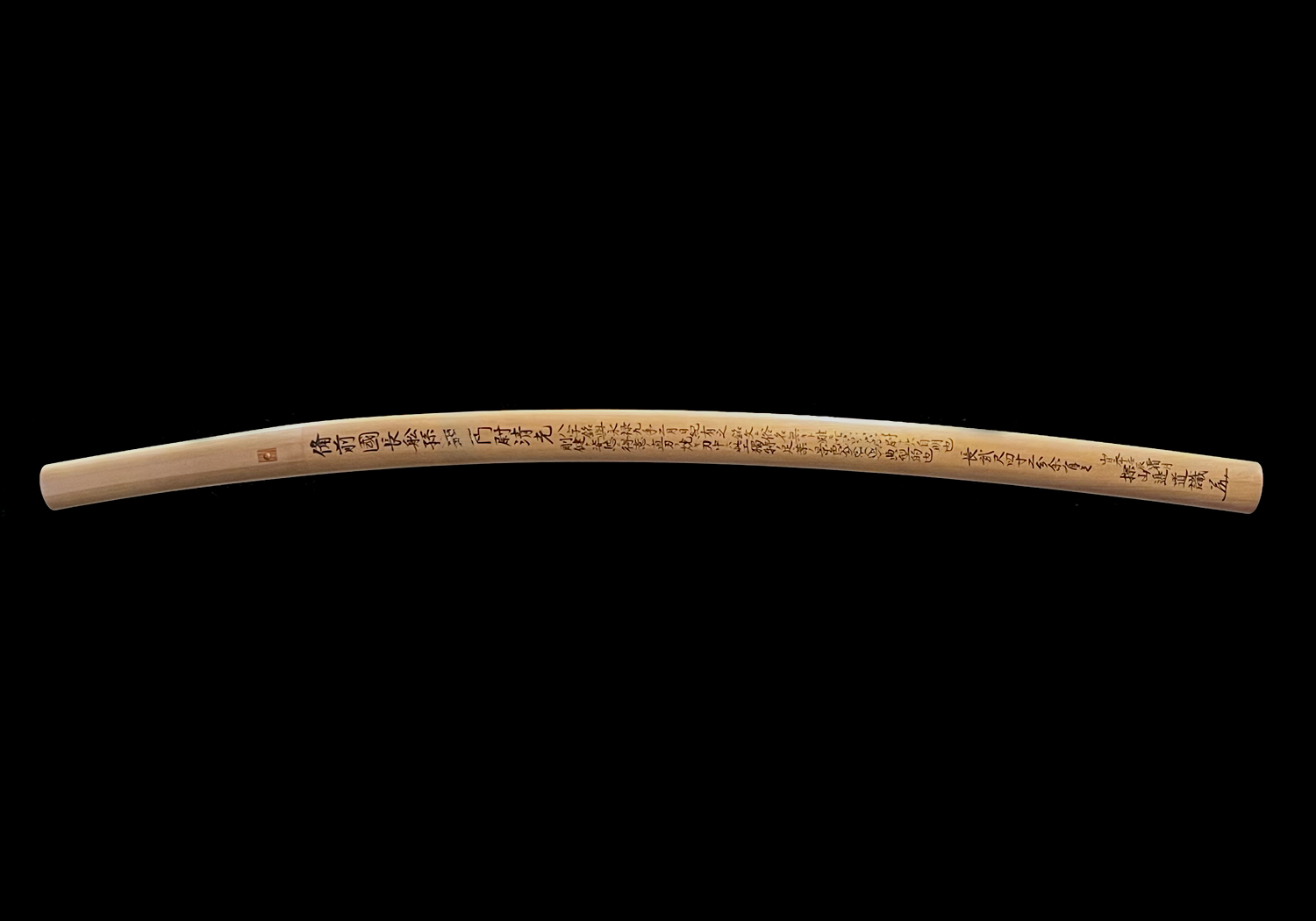
The shirasaya has a sayagaki by Tanobe Sensei describing the blade which is translated as follows:
Bizen no Kuni Osafune Magouemon no Jō Kiyomitsu
Hachiji-mei oyobi Eiroku kyūnen nigatsu hi no ki kore ari. Meibun ni zokumyō naki to iedomo Mago’emon no Jō naru wa jimei nari. Gōken na shitai ni tokui no suguha o yaki hachū ni wa kono kō dokutoku no ashi, yō no keshiki o miseru nado tenkei-teki nari.
Nagasa ni-shaku yon-sun ni-bu yo kore ari.
Toki ni mizunoe-tatsu shimotsuki
Tanzan Hendō shirusu + kaō
Translated into English, it reads as follows:
Osafune Magouemon no Jō Kiyomitsu from Bizen province
This blade is signed in eight characters and is dated a day of the second month, the ninth year of Eiroku (1566). Although it is not inscribed with any first name, it can certainly be identified as a work of Magouemon no Jō. The blade is of a powerful shape and is hardened in suguha mixed with the typical ashi and yō of this smith, hence it can be regarded as textbook.
Blade length ~ 73.3 cm (28 7/8 in.)
Written by Tanzan Hendō [Tanobe Michihiro] in November, the year of the dragon of this era (2012) + monogram.
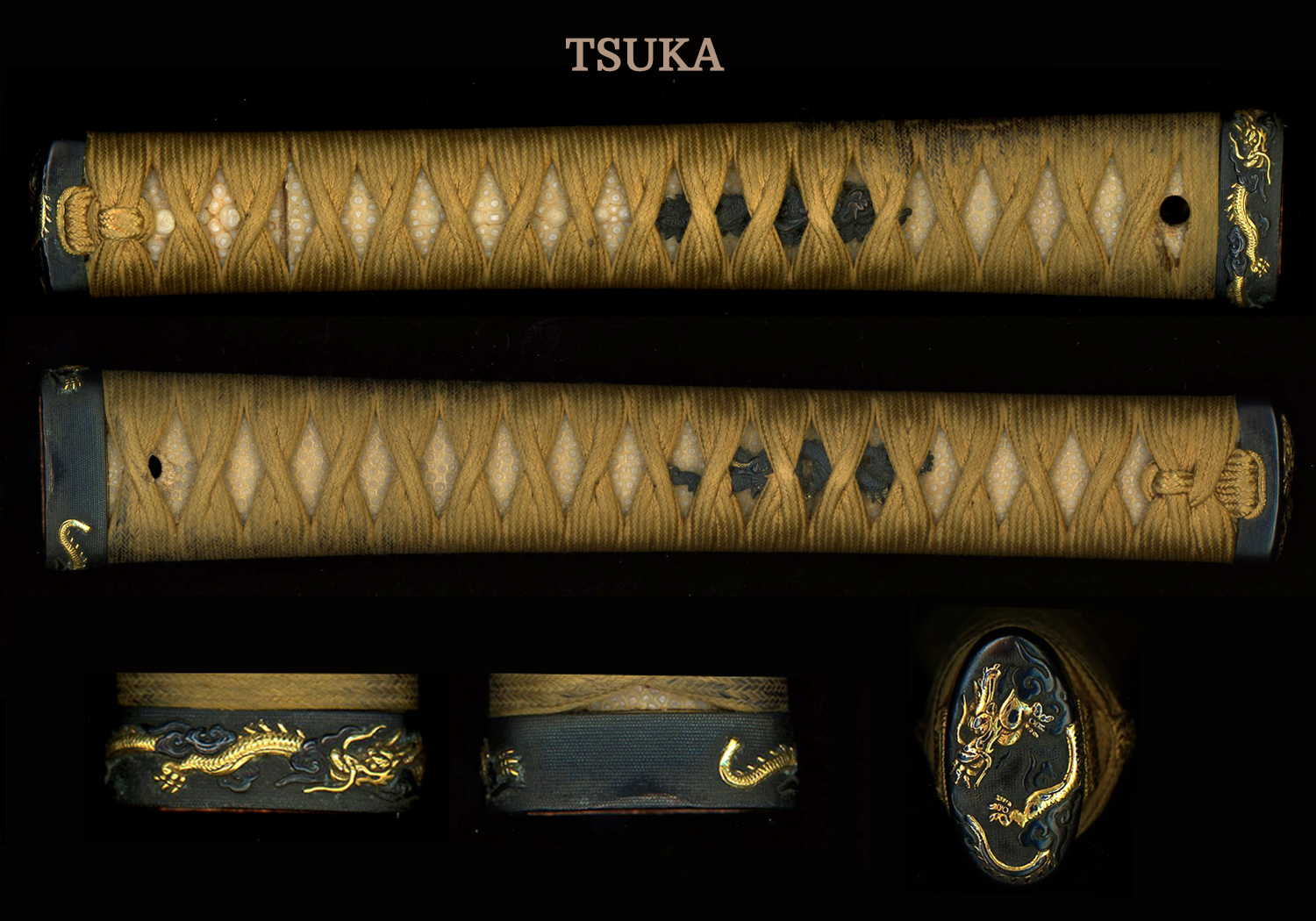
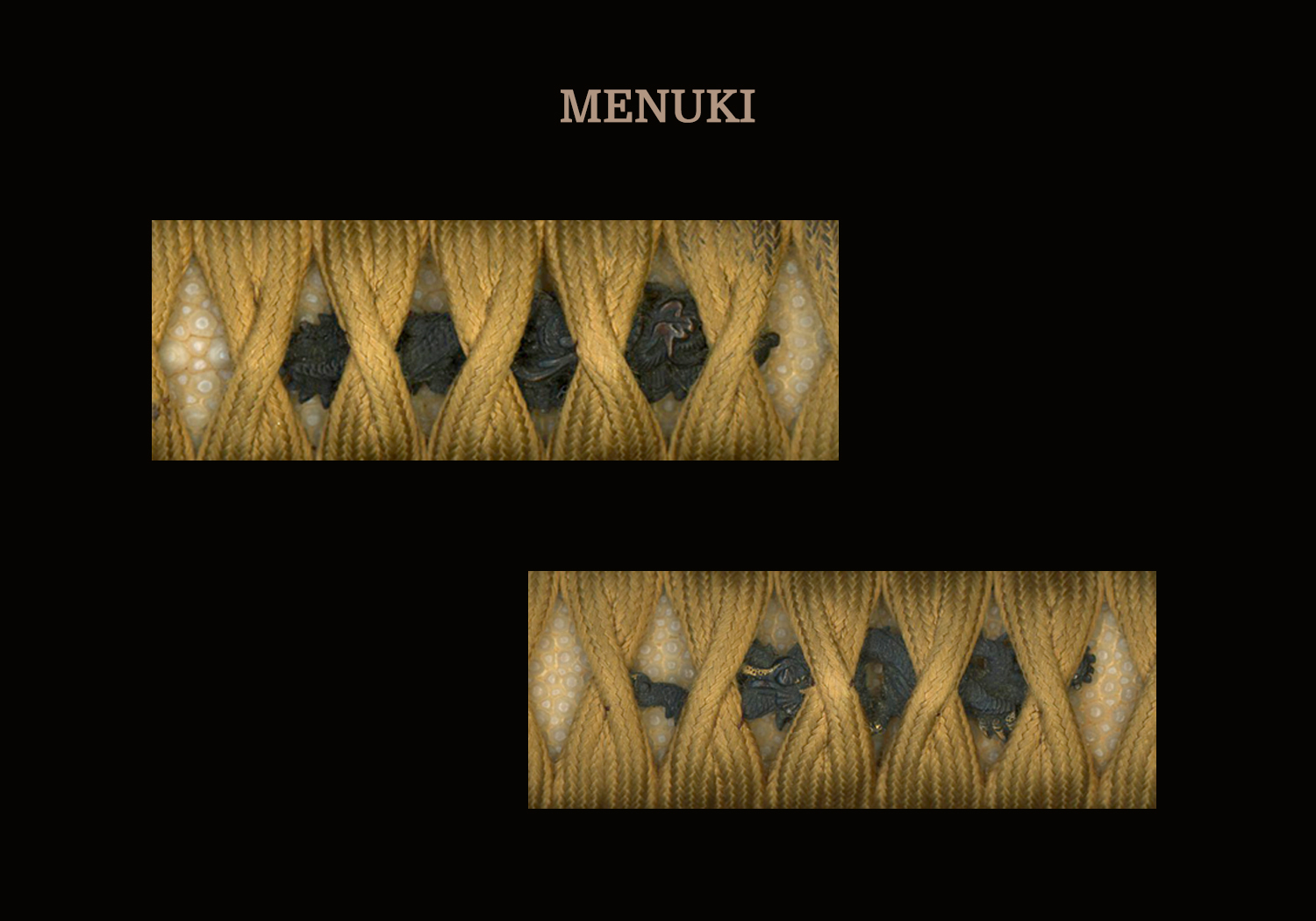
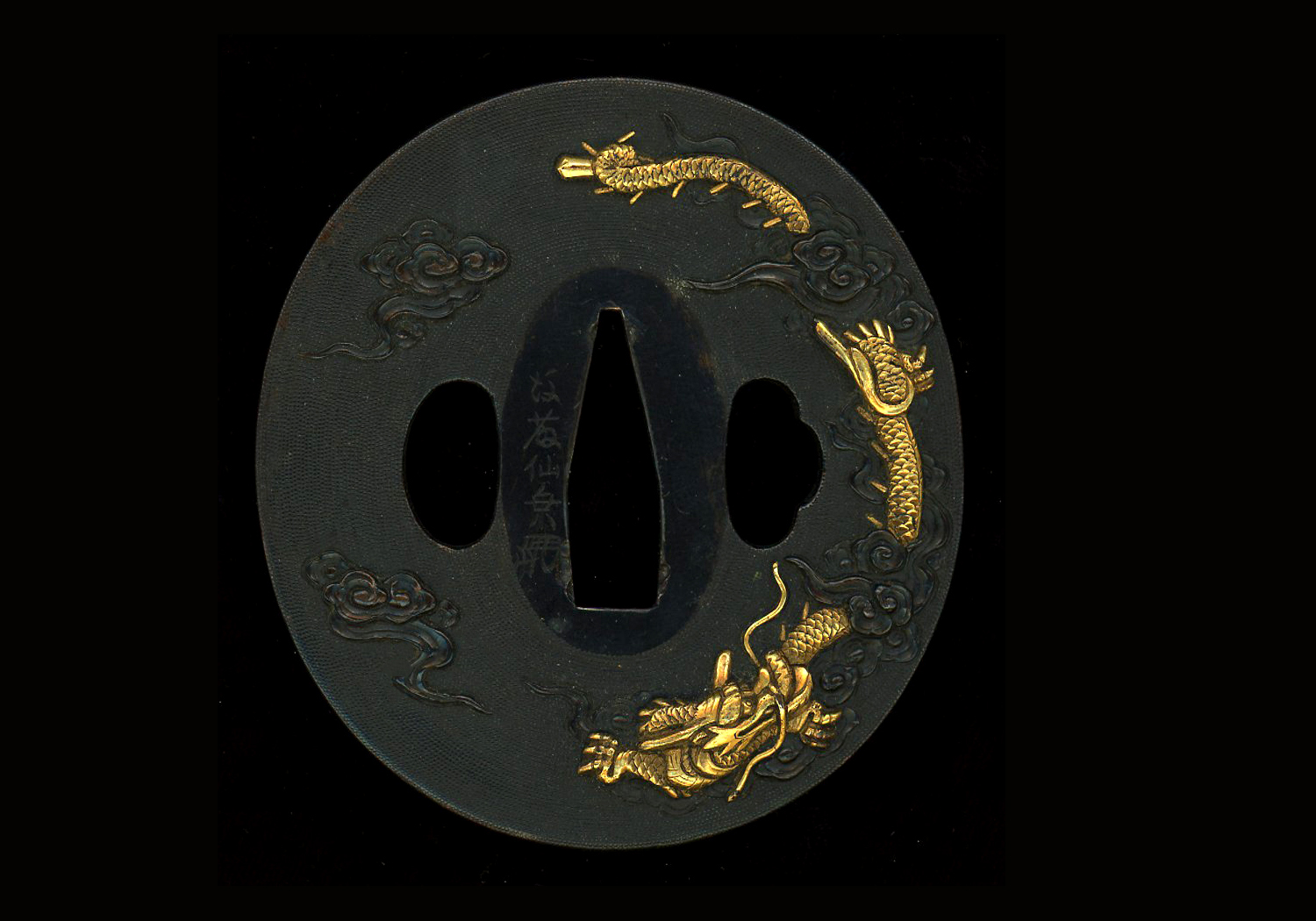
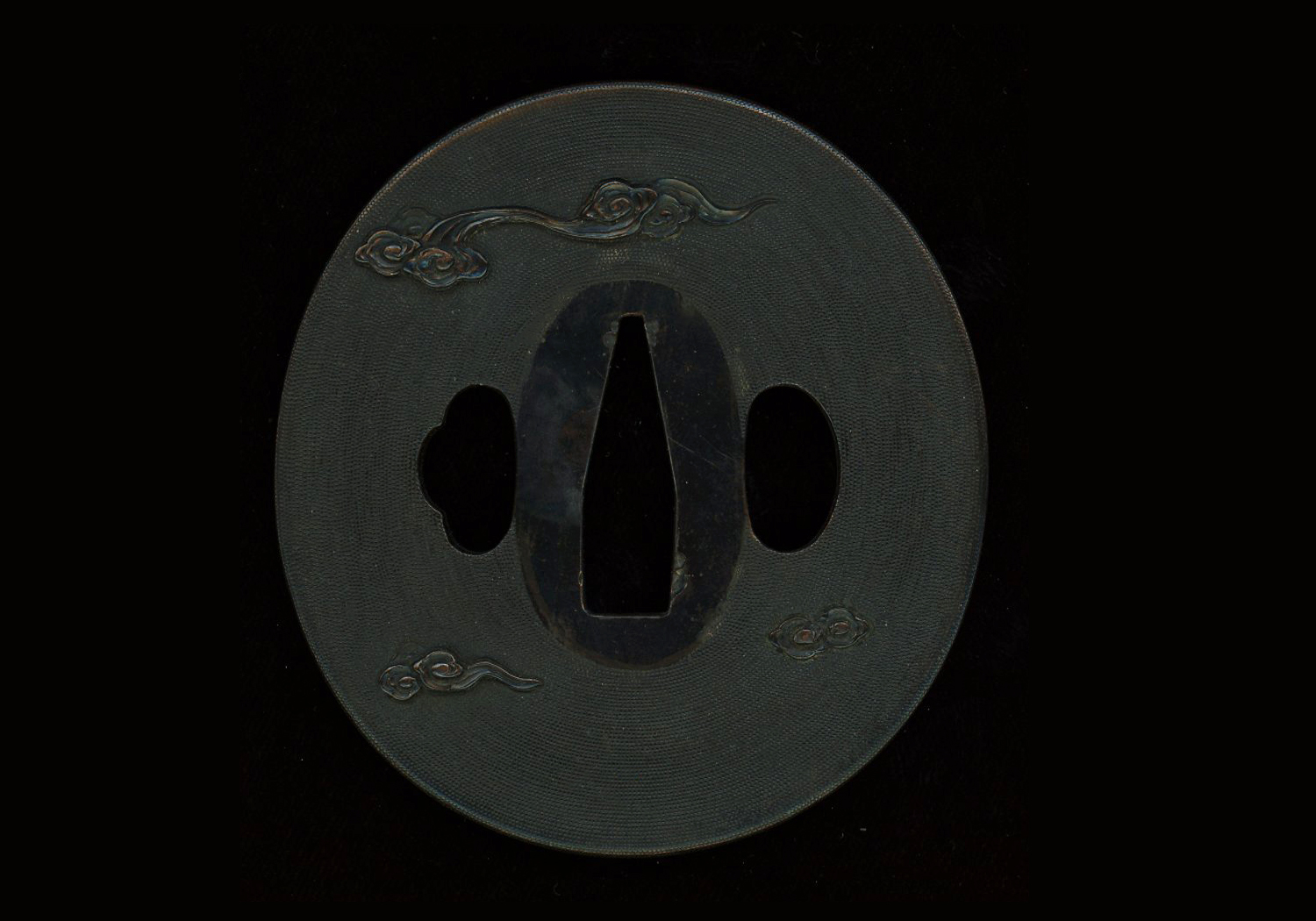
This katana also comes with a NBTHK Tokubetsu Hozon certification attesting to its authenticity and quality. Also accompanying this katana is a very nice set of koshirae from when it was worn by one of its prior Samurai owners. The saya (scabbard) is lacquered black with six inlaid “double leaf” family mon made of mother-of-pearl. The tsuba and fuchi/kashira are of shakudo nanako with gold and shakudo dragons. The menuki are also dragons done in solid shakudo. All in all, a very tasteful koshirae worn by an upper ranking Samurai.
HOLD