The first-generation Masahiro (Shodai) was born in Saga city of Hizen Province in 1607. His father was Yoshinobu who was married to the daughter of the first generation Hizen Tadayoshi. This would make Masahiro the grandson of the founder of the Hizen Tadayoshi lineage. Masahiro’s father, Yoshinobu, died young at the age of 29 so he was only able to teach Masahiro for a short period. Luckily for him, Masahiro was also under the tutelage of his grandfather, Shodai Tadayoshi.
Masahiro did not continue his craft in the mainline Hizen school. He was, however, favored by his grandfather, Shodai Tadayoshi, and also the Nabeshima Daimyo of Hizen. Thus, when he founded his own sideline Hizen lineage under his name, Masahiro, it carried more than the usual amount of importance and influence. In 1625 he officially received the name, Masahiro and a rice stipend of 20 koku of rice allowing him and his new school to flourish. In 1628, the Nabeshima Daimyo gave him the title of “Kawachi Daijô”. He did not start using this title until after 1641 for unknown reasons. The answer may be as simple as the fact that he did not date all of his blades so if there are no dated examples until after 1641, that must be considered as the probable beginning of the use of that signature. [1] Masahiro passed away on February 5, 1665 at the age of 59.
Interestingly enough, the katana that is the subject of this paper is signed with the “Kawachi Daijô” title in the signature and it is not dated.
The characteristics of blades by Shodai Masahiro are as follows:
SUGATA: All of the blades that are tachi, katana, and wakizashi are shinogi-zukuri in form. Tantô exist that are hira-zukuri in form. One such example can be found in the book TANTO by Suzuki. Most tachi, katana, and wakizashi have a torii-zori with the deepest curvature about mid-way in the blade.
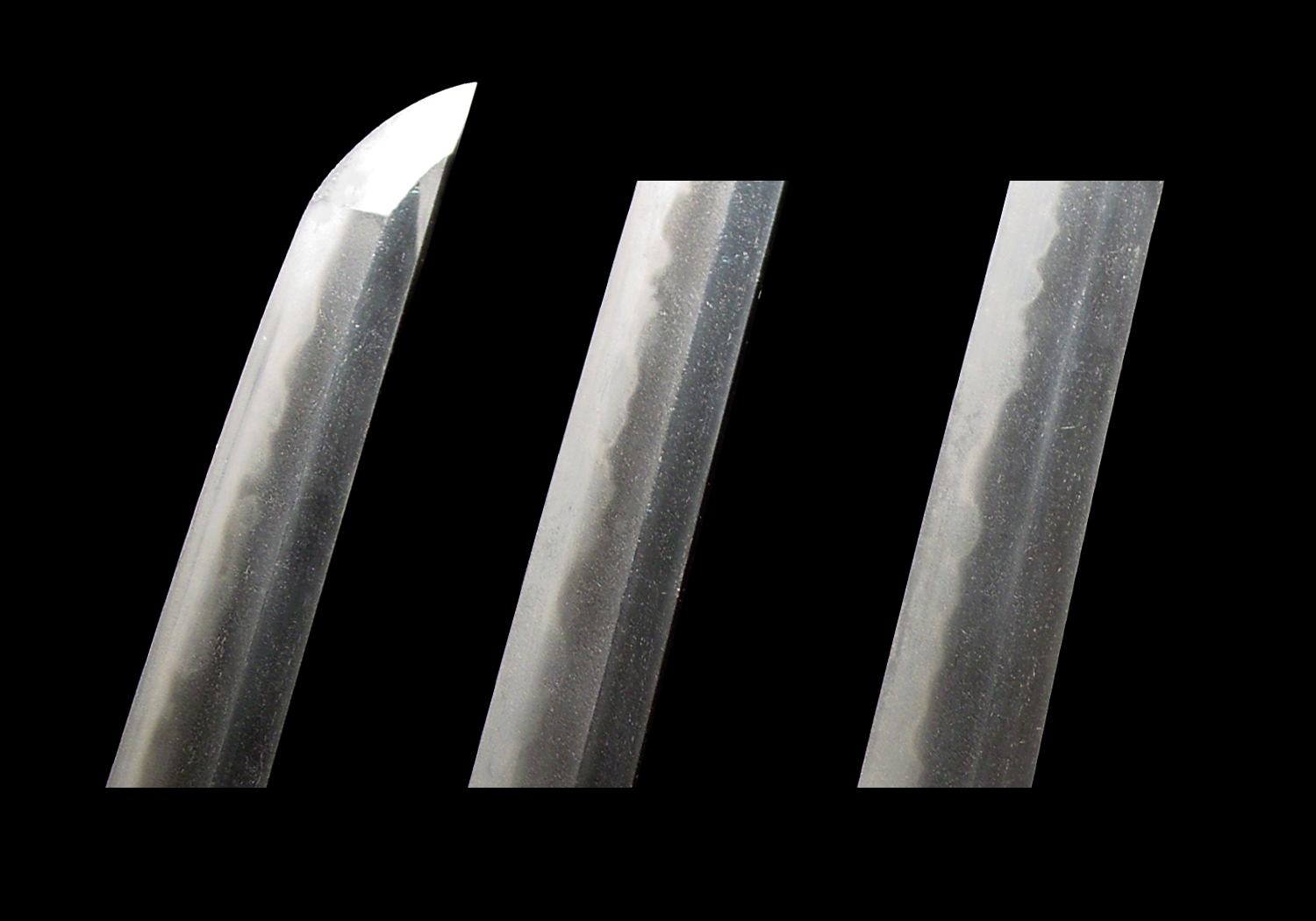
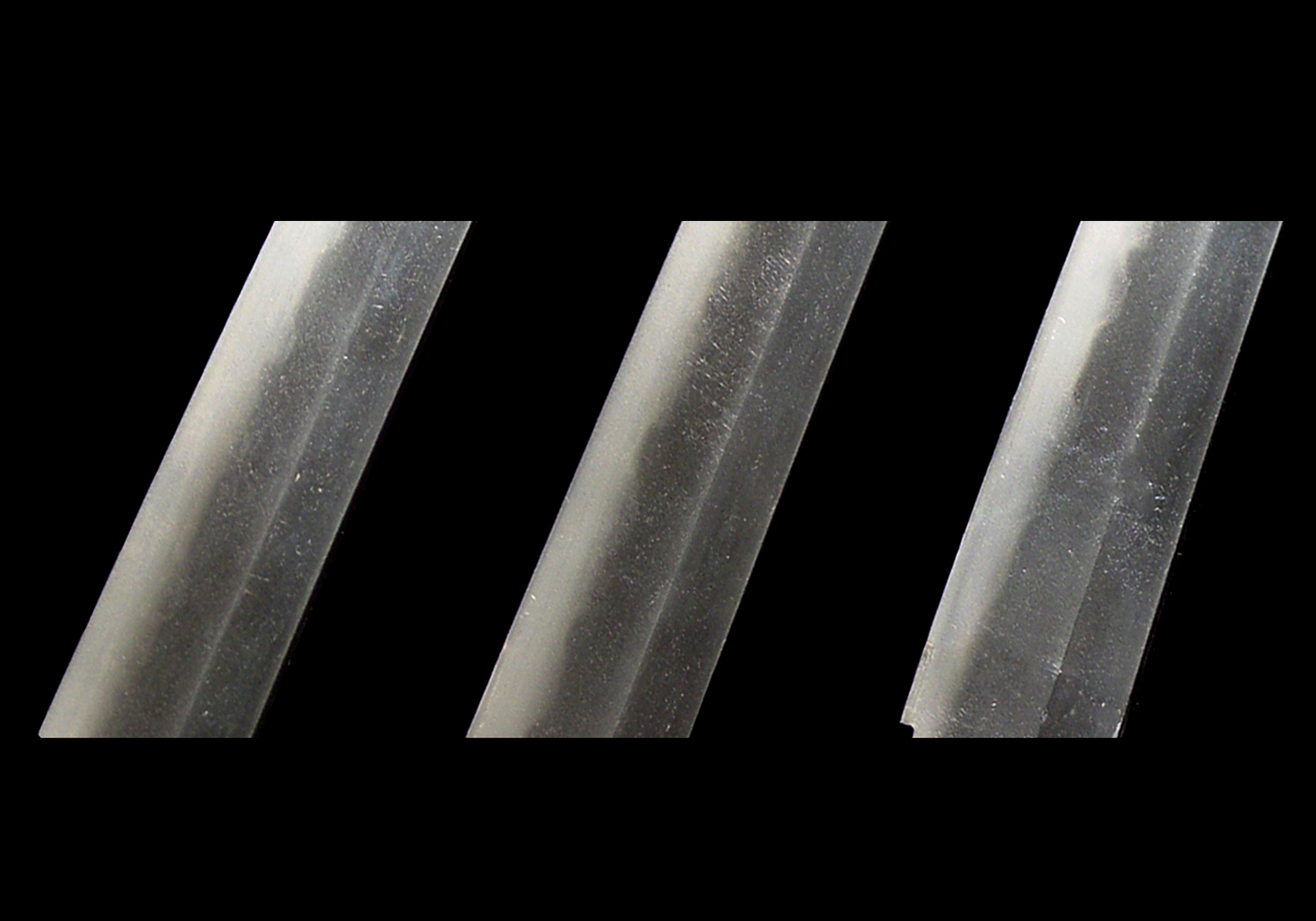
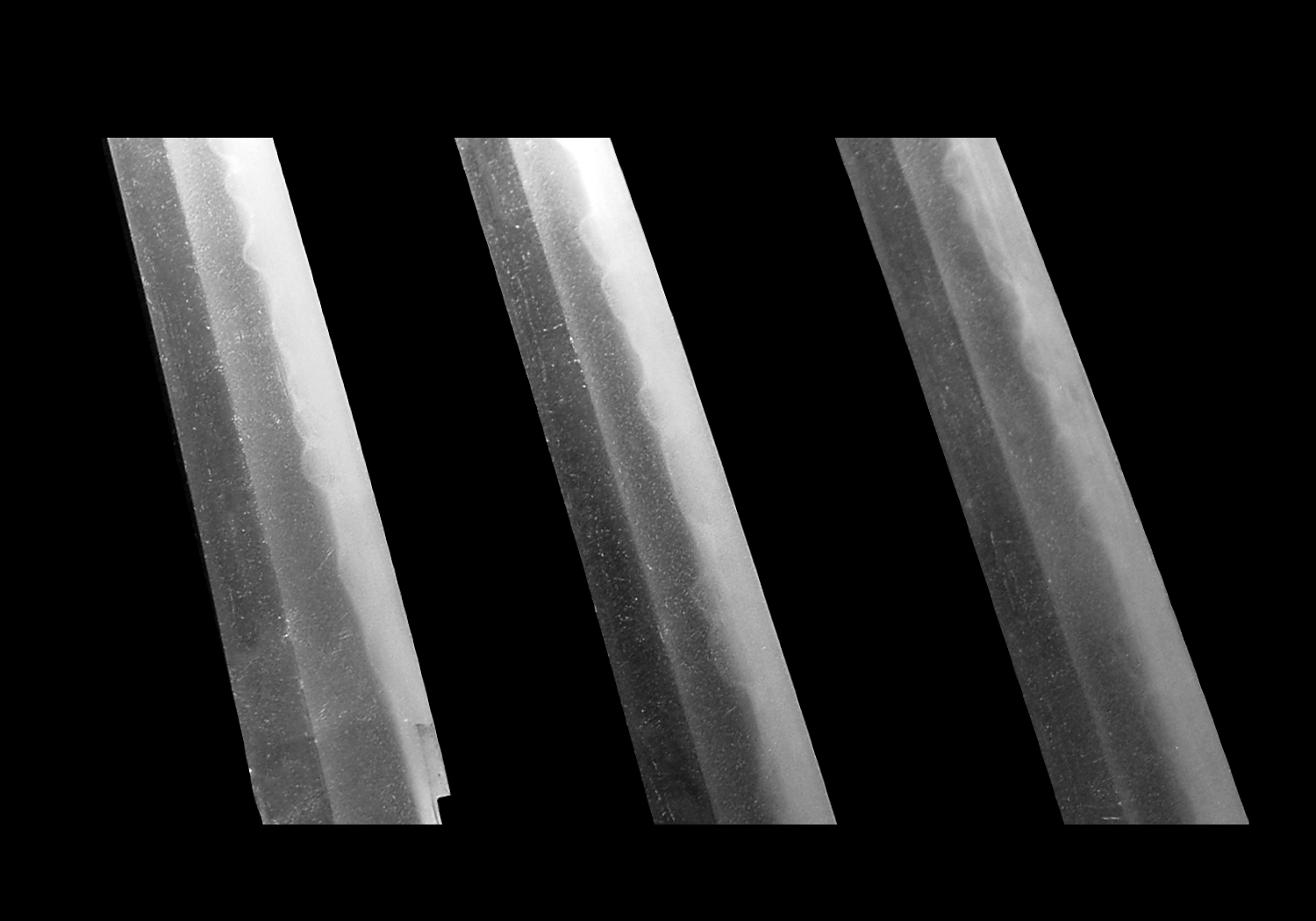
HAMON: His hamon will show the major Hizen characteristics of thickly nie-lined and deep nioi showing at the valleys of the midare-hamon. That said, however, the hamon of the waki-Hizen smiths such as Masahiro will be gunome-midare mixed with chôji-fû, separated by short areas of ko-notare. The nioi will be deep and thick. And the ko-notare variations will contain a great many ashi and yô. There are many sunagashi and kinsuji as well as a small amount of tobiyaki. The nioi-guchi will be bright.
JIHADA: Typically, Hizen with formed with a tight ko-itame containing extremely fine and dense ji-nie forming chikei. This is known as the famous ko-nuka hada that is exclusive to the Hizen school.
BÔSHI: His bôshi will be typical Hizen in style with a ko-maru shape that follows the fukura, with a kaeri that can be short or occasionally longer. There is occasionally hakikake on one or both sides.
NAKAGO: The nakago of Masahiro are most often a deeply cut iriyamagata which, if you examine closely, you will notice that the mune side is slightly longer than the ha side. This is an important kantei point for Masahiro. Of course, he also made some of his nakago kengyô as well. His yasurimei are o-sujikai which is a decisive factor in pointing to the Waki-Hizen school. As for the mainline Hizen, the yasurimei have always, from the Shodai Tadayoshi on to the Kyûdai (9th generation), been kiri-yasuri.[2]
MEI: Masahiro followed the Hizen tradition of signing his tachi and katana on the sashi-ura (tachi-mei) side of the nakago and wakizashi and tantô on the sashi-omote (katana mei) side.
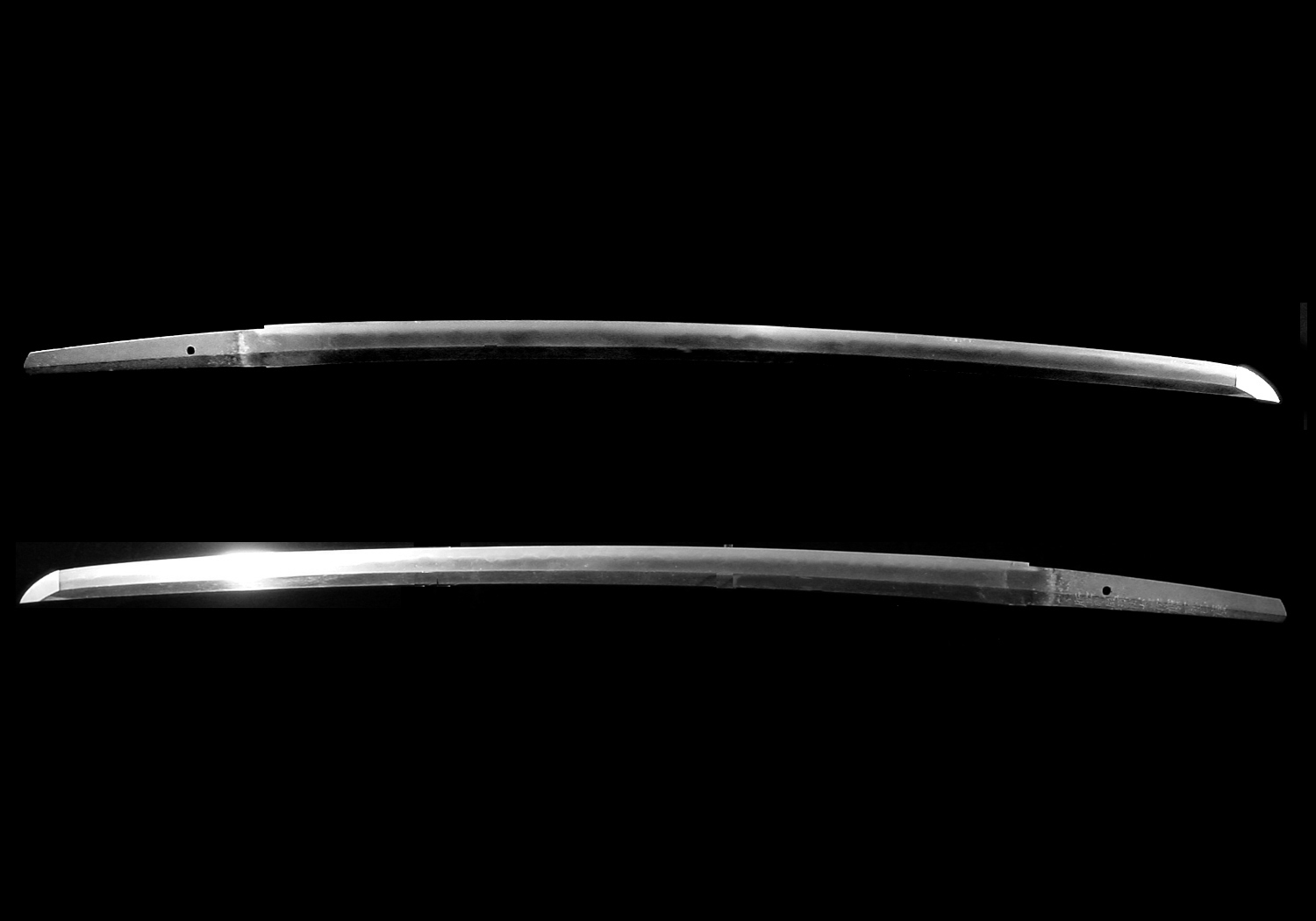
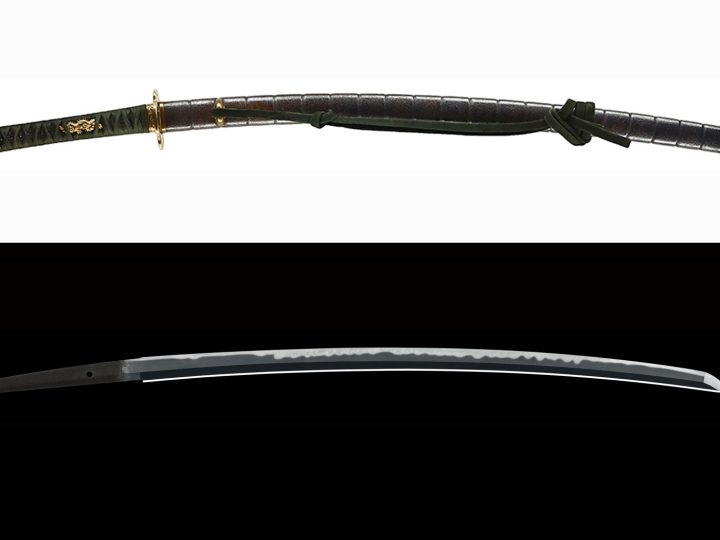
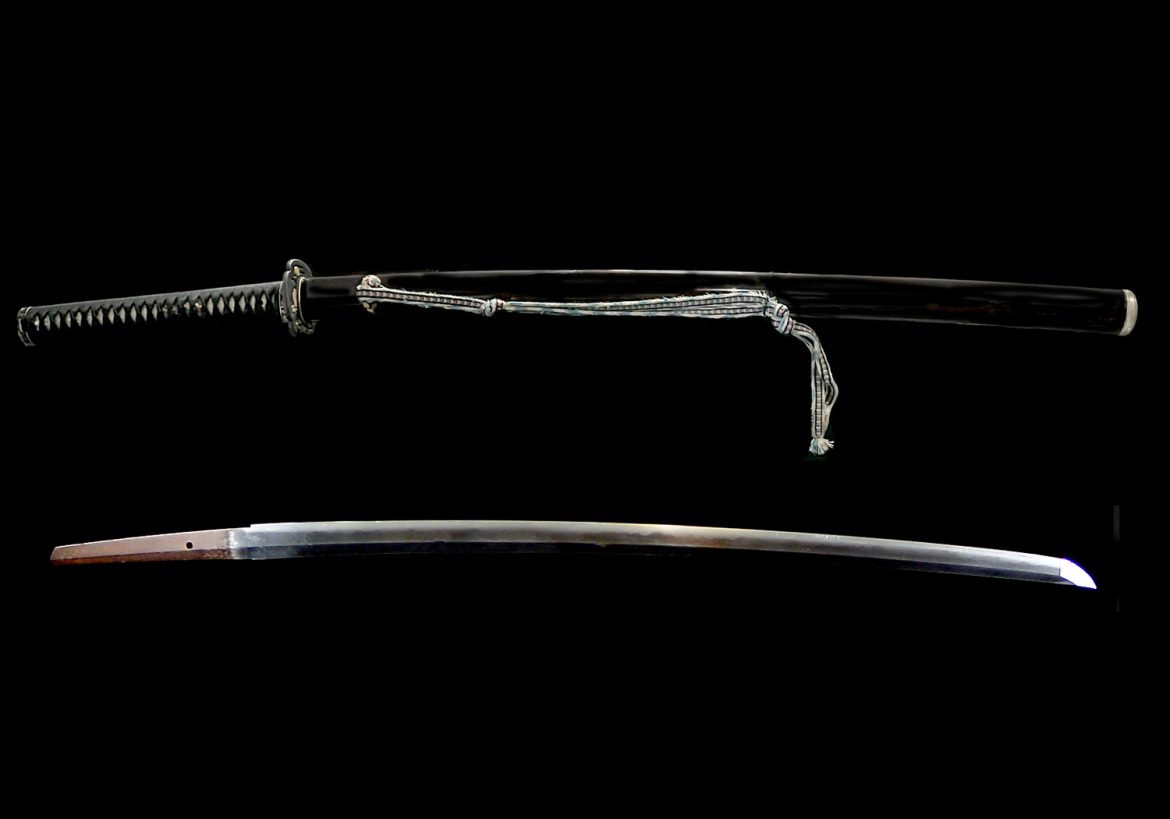
The subject blade presented here is a striking example of the work of the Shodai (first generation) Masahiro. As mentioned above, it is signed Hizen (no) Kuni Kawachi Daijô Masahiro. It is not dated. The first generation Masahiro is rated by Fujishiro as a Jô-saku (upper quality) smith. He is also rated as a wazamono smith meaning his blades are known for their extreme sharpness. The mei is on the sashi-ura (tachi-mei) side of the nakago. The nagasa (length) of this katana is 27 9/16 inches or 70 cm., the Moto-haba (width at the base) is 1.2 inches or 3.1 cm and the saki-haba (width at the point) is 0.9 inches or 2.2 cm. The blade has a graceful torii-sori (the peak of the curvature is near the center of the blade length) is 0.6 inches or 1.53 cm. This blade was made in the early Shohô Era around 1644.
The over-all shape is shinogi-zukuri /iori-mune. The kitae is ko-mokume. There is ji nie present. The hamon is gunome-midare with areas of gentle notare as one would expect. There is profuse nie in the habuchi area. The bôshi is ko-maru in shape with moderate turnbacks on both sides. The yasurimei are o-sujikai as is typical for this smith. The condition of the polish of the sword is very good, having only a very few tiny scratches, etc. that could easily be removed with a light touch-up by a qualified sword polisher.
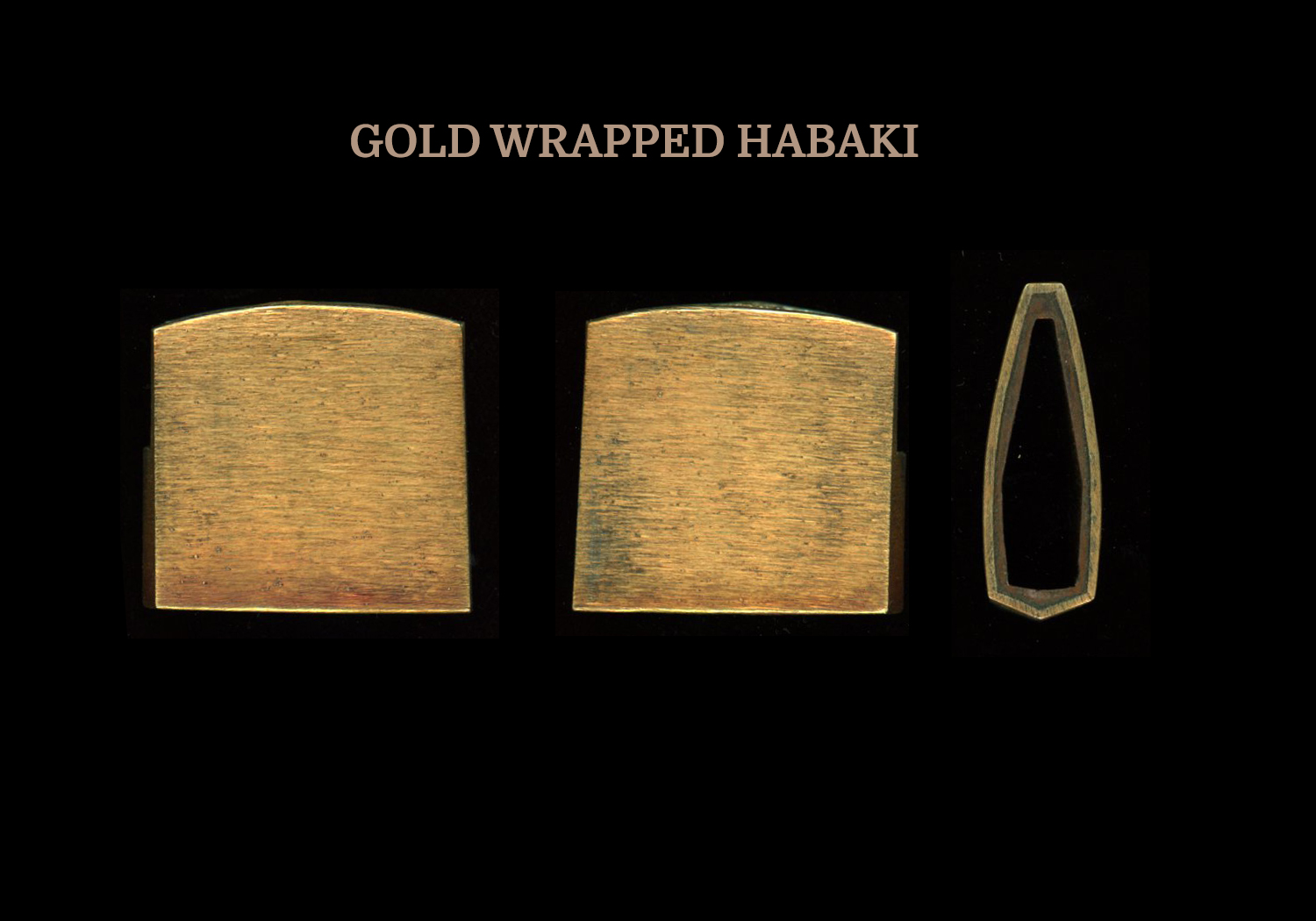
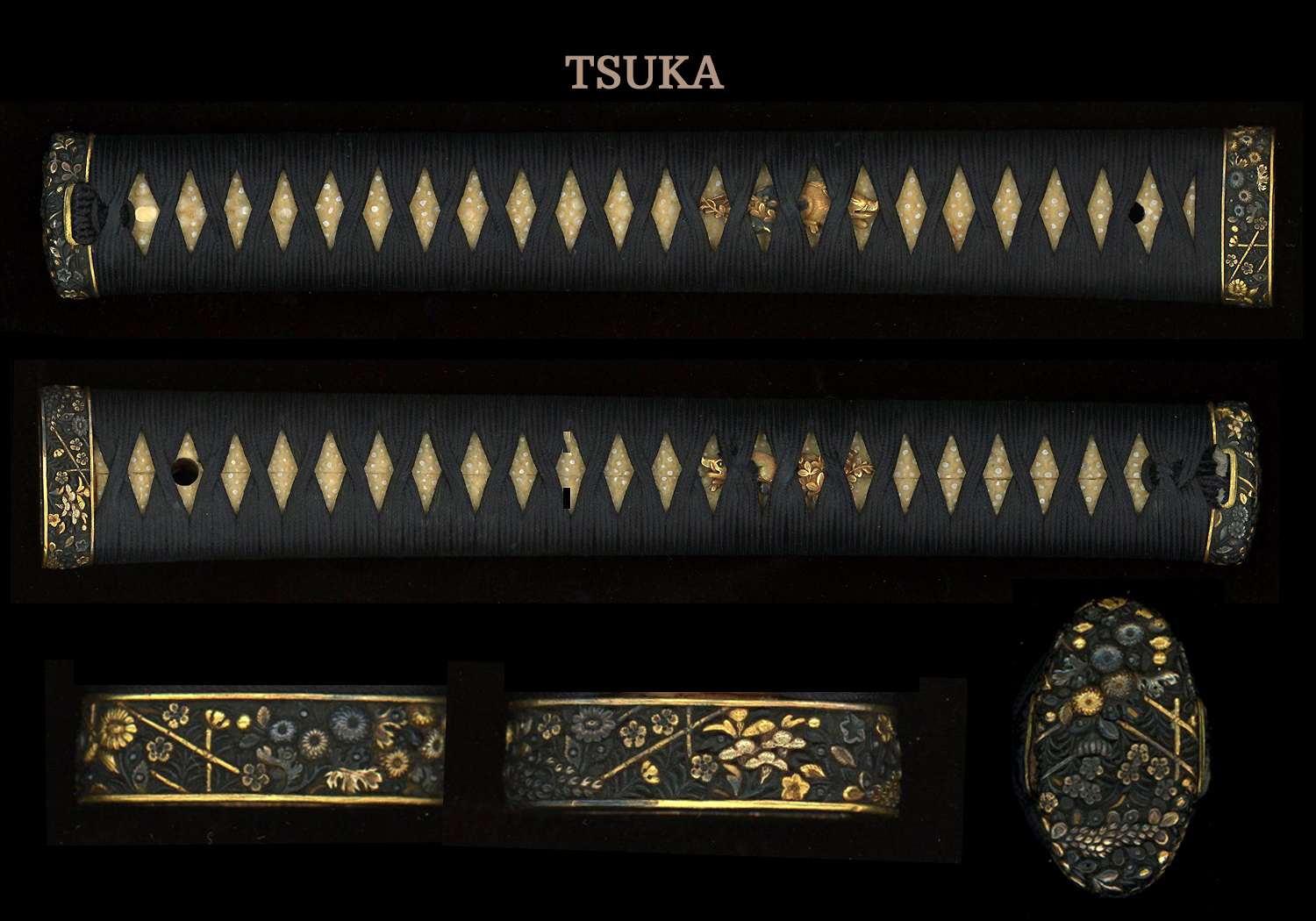
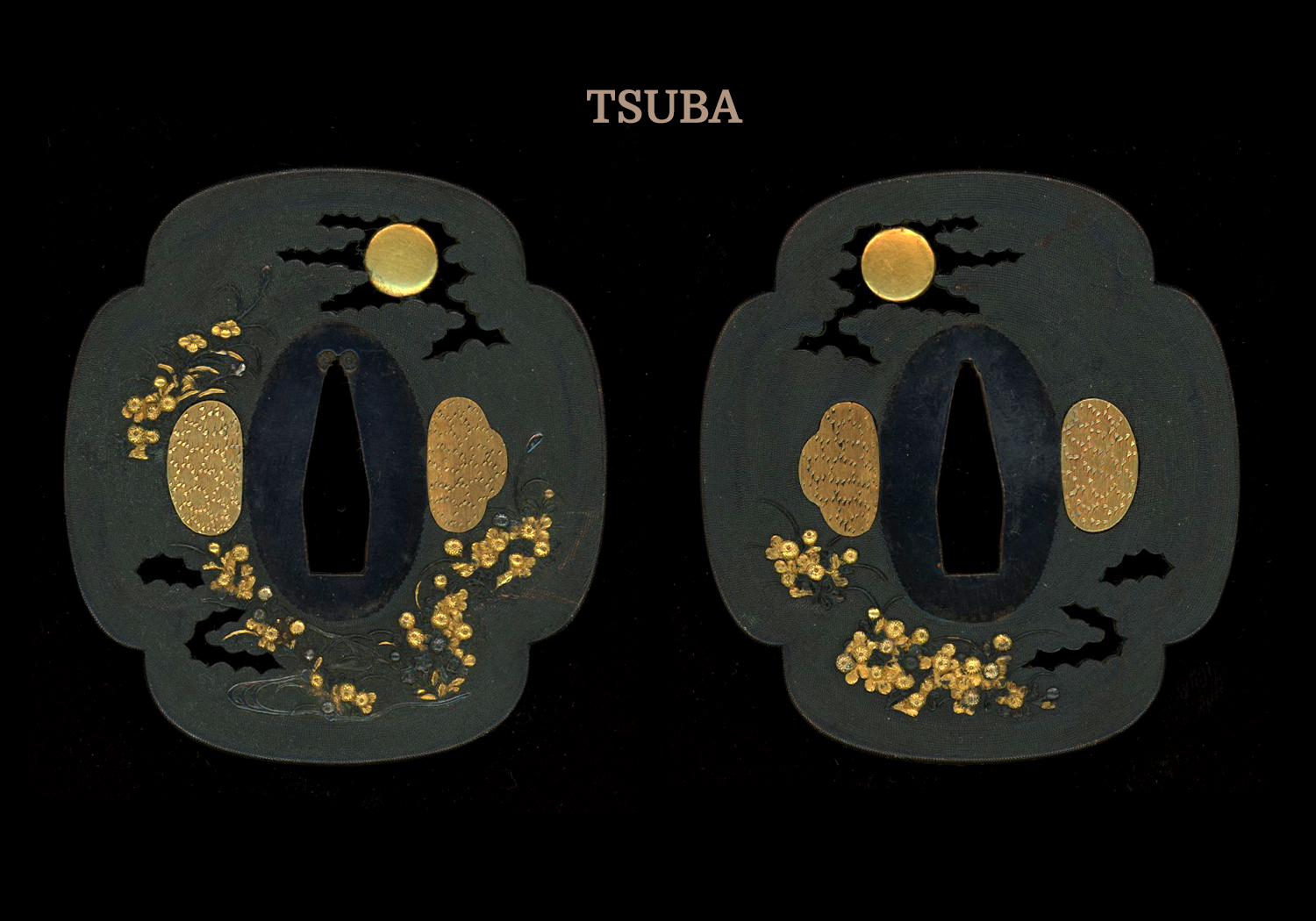
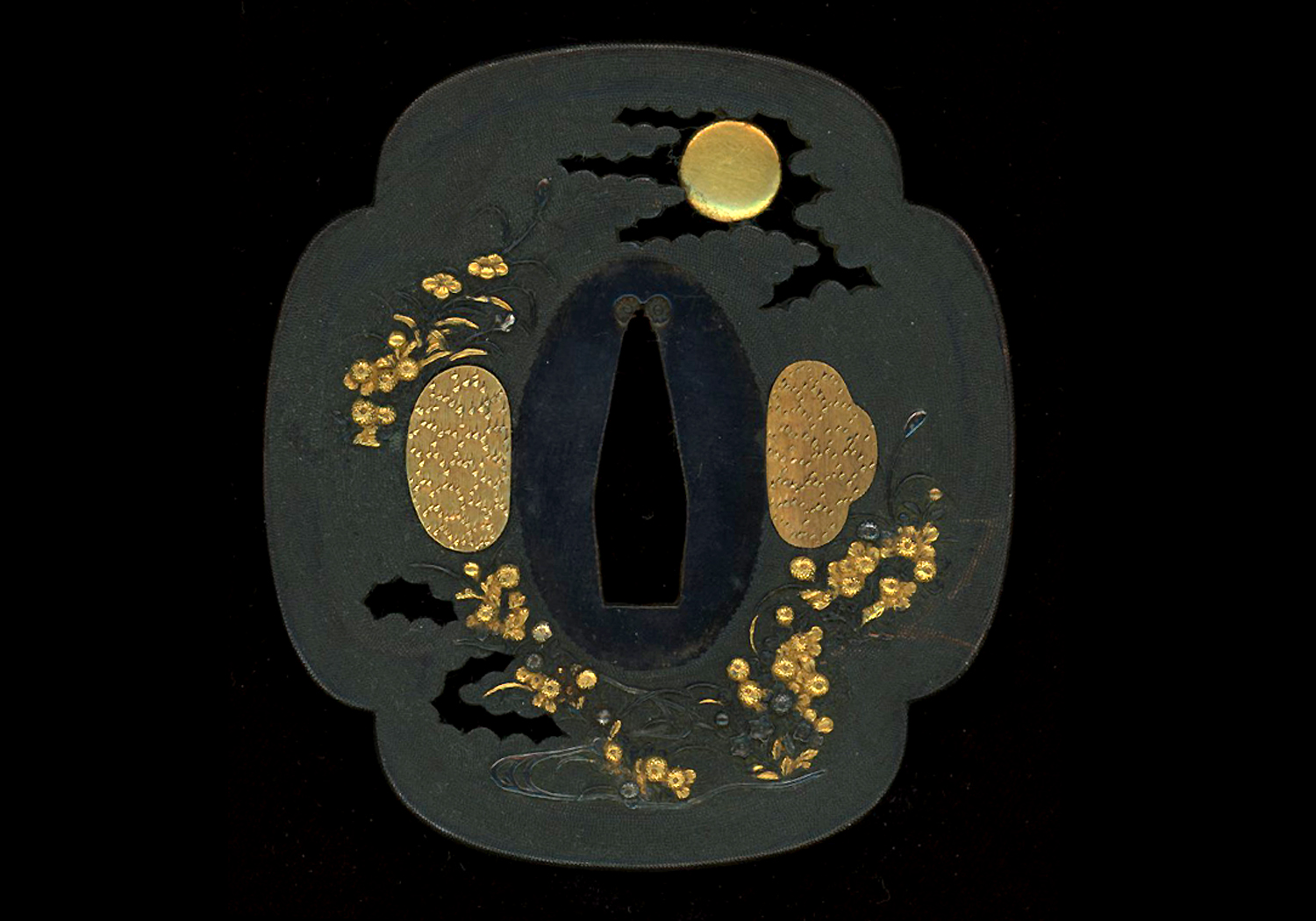
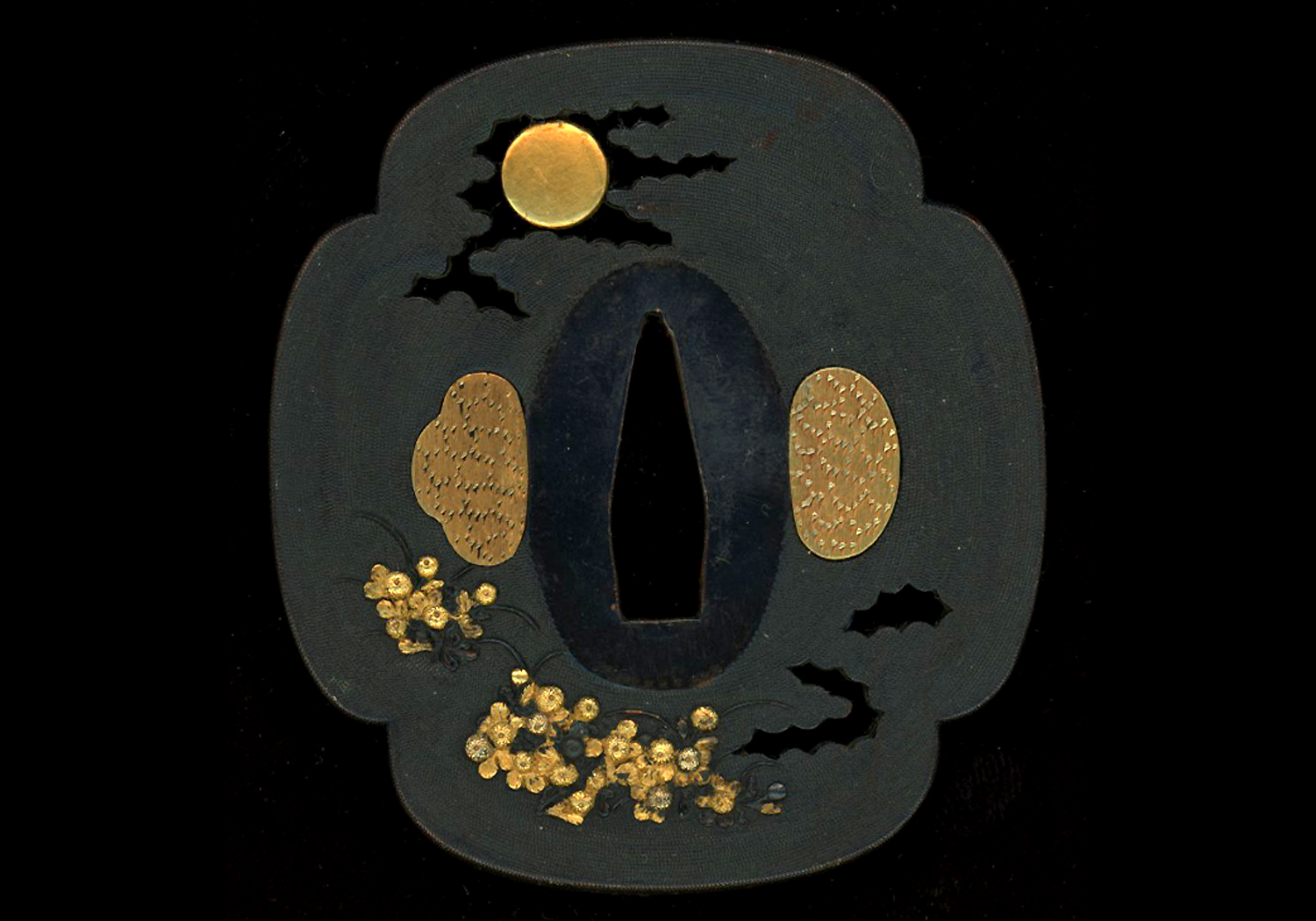
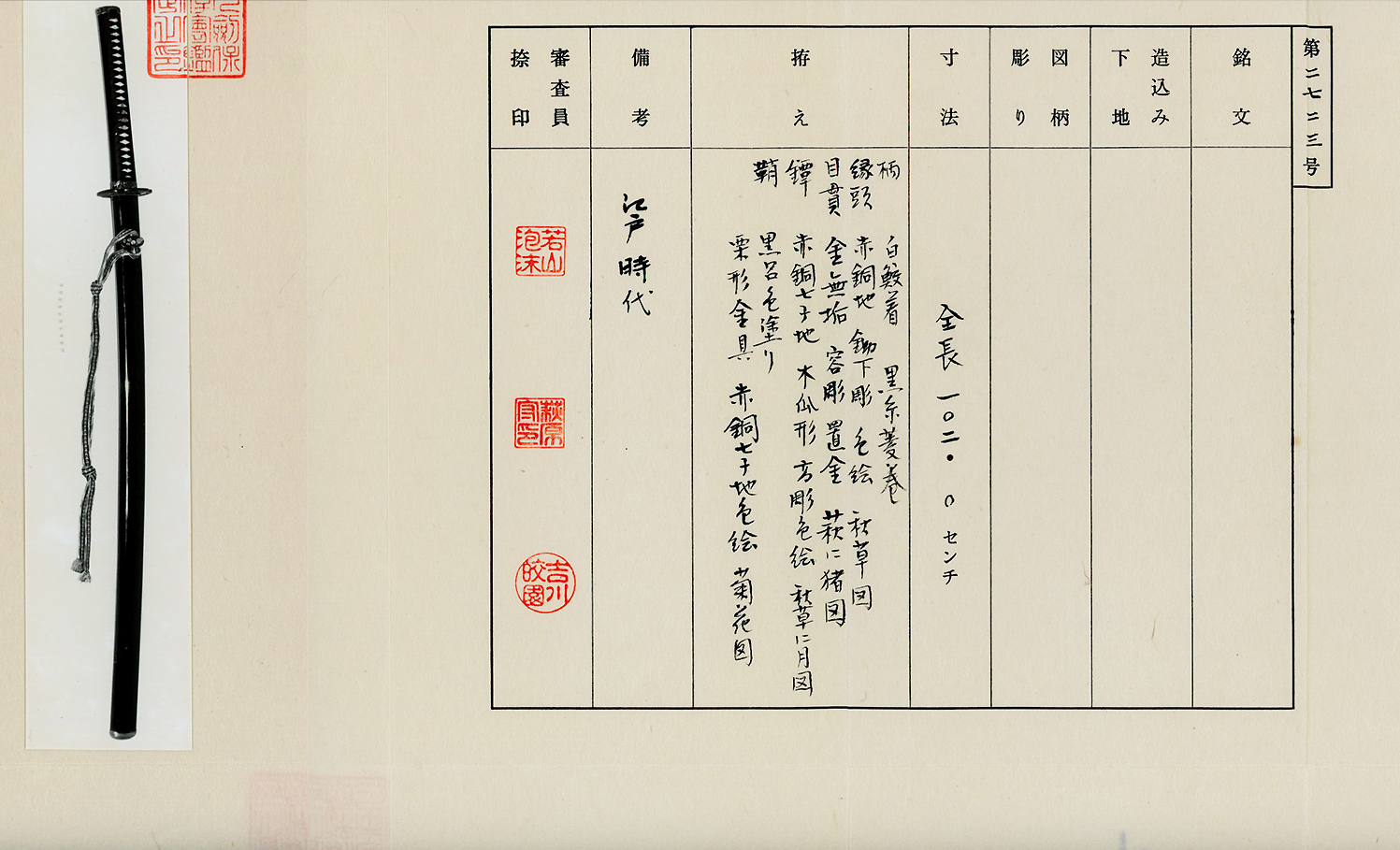
This sword comes with a very attractive set of Edo period kuroiro saya (black lacquered) uchigatana koshirae. The saya is an old one that was lacquered black but has now turned a rich dark brown as happens to lacquer as it ages. What is really neat about this saya is that it has two large old repairs to it that have been inlaid into the saya along the top and bottom edges where it had started to split a long time ago. These repairs were professionally done probably in the Edo period at the request of the then owner. To my thinking old repairs like this add to the value and authenticity of the koshirae because they show the care and pride in this koshirae by the last Samurai owner over 100 years ago. The tsuba is shakudo/nanako with the nanako being extremely fine and covering the entire tsuba even the mimi (edges). The tsuba has areas skillfully cut out to depict clouds with a golden moon carved among them. Other parts of both sides of the tsuba have tiny chrysanthemums and other Autumn flowers done in gold and shakudo. Also, there is even a small stream done in shakudo flowing amongst the blooming flowers.
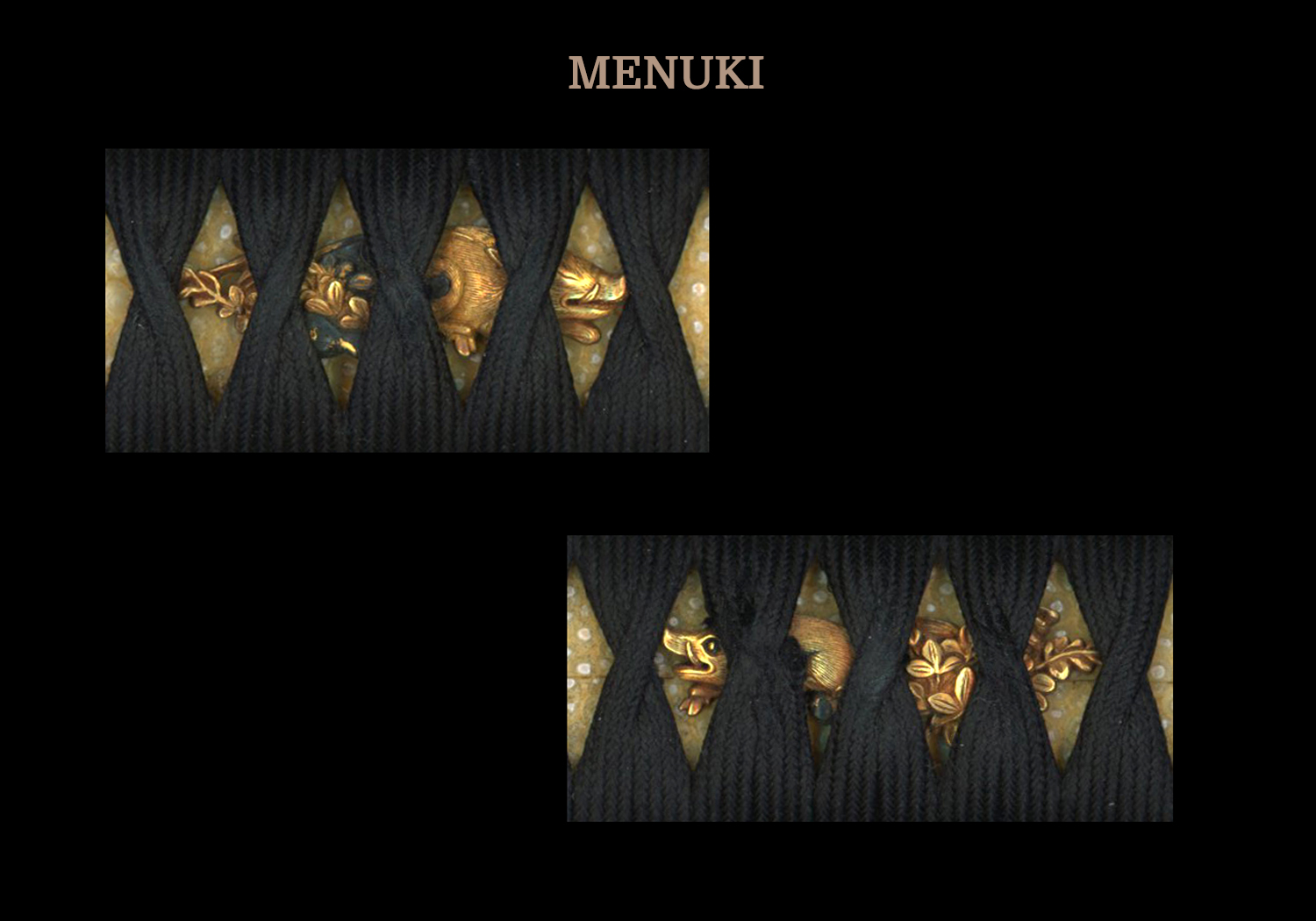
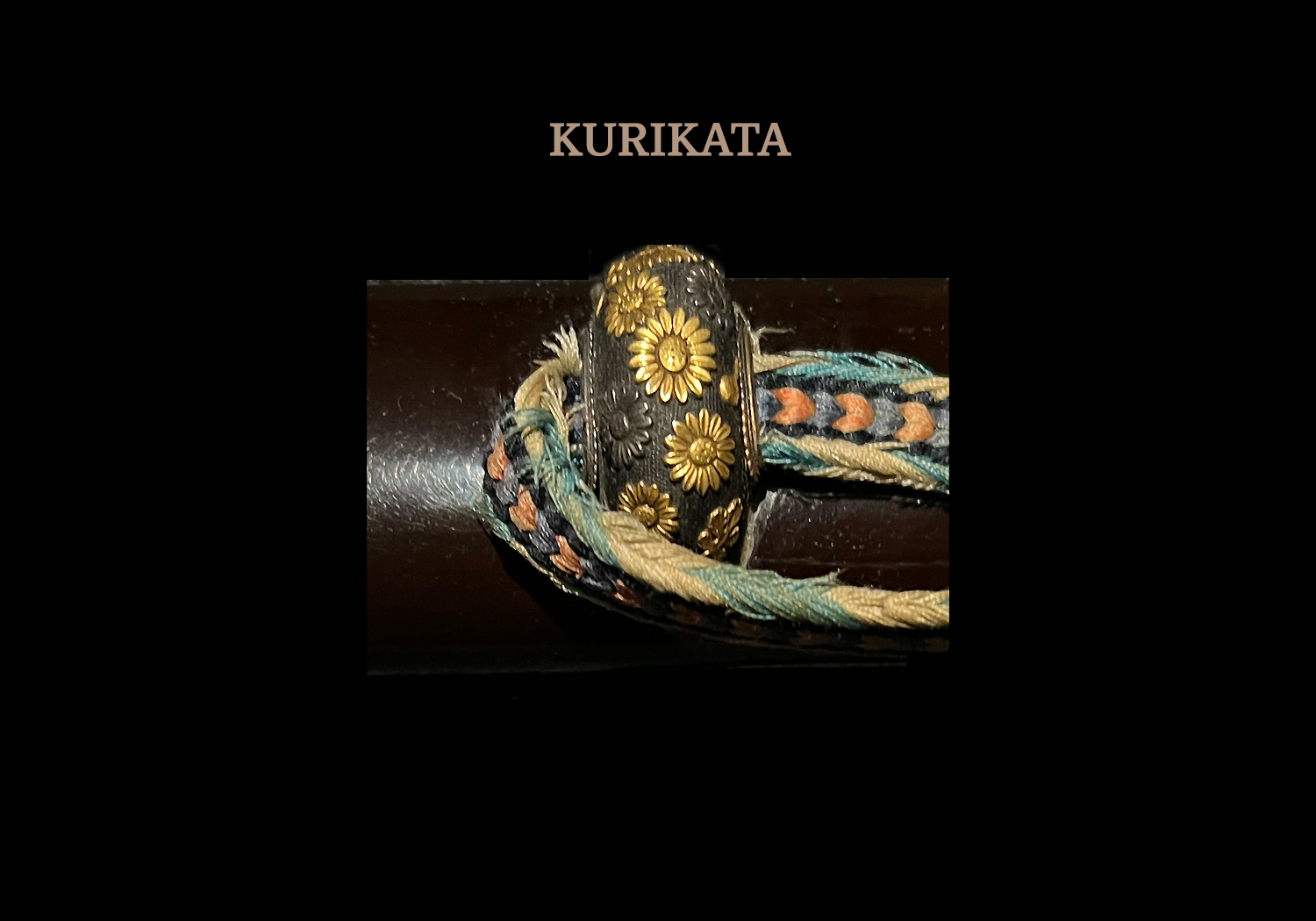
The fuchi, kashira, and kurikata are also of the Mino school and they are deeply carved to depict chrysanthemums and other blossoms done is gold , silver, and shakudo. The menuki appear to be solid gold. Each one depicts a golden wild boar running through a thicket of bush clover flowers highlighted in gold and shakudo.
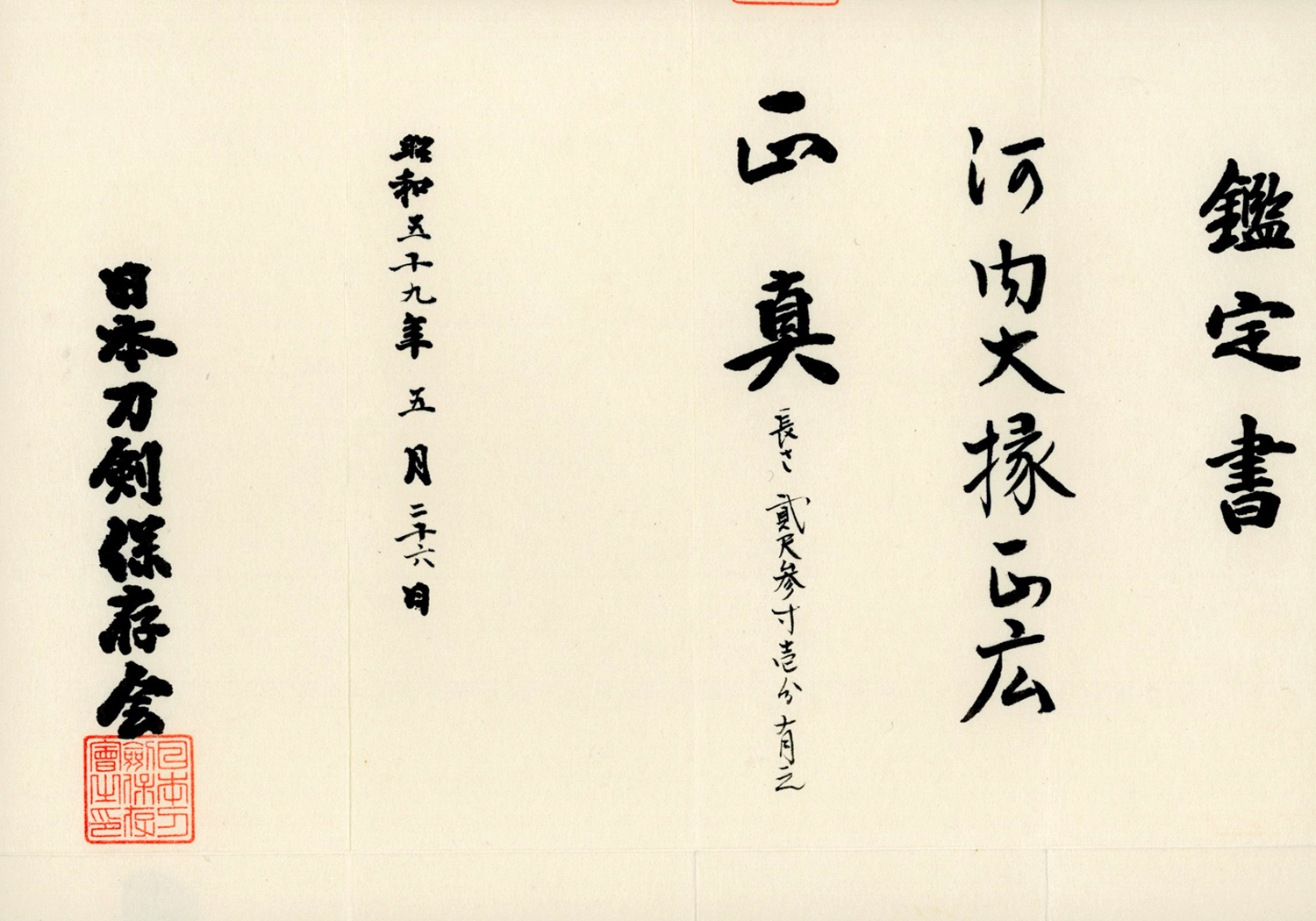
Both the Masahiro katana and the koshirae were submitted to the first NTHK shinsa that was held in New York in 1984. Both sword and koshirae passed with a high rating as to quality and condition. This shinsa was, of course, led by none other than the late Yoshikawa Koen, the founder of this Japanese sword appreciation organization. Yoshikawa Sensei was not only the founder of this organization, he was also favored by the Japanese government with the care, maintenance, and polishing of the swords in the Imperial Household collection. Included with the certificates are Yoshikawa’s personal notes written in his own hand.
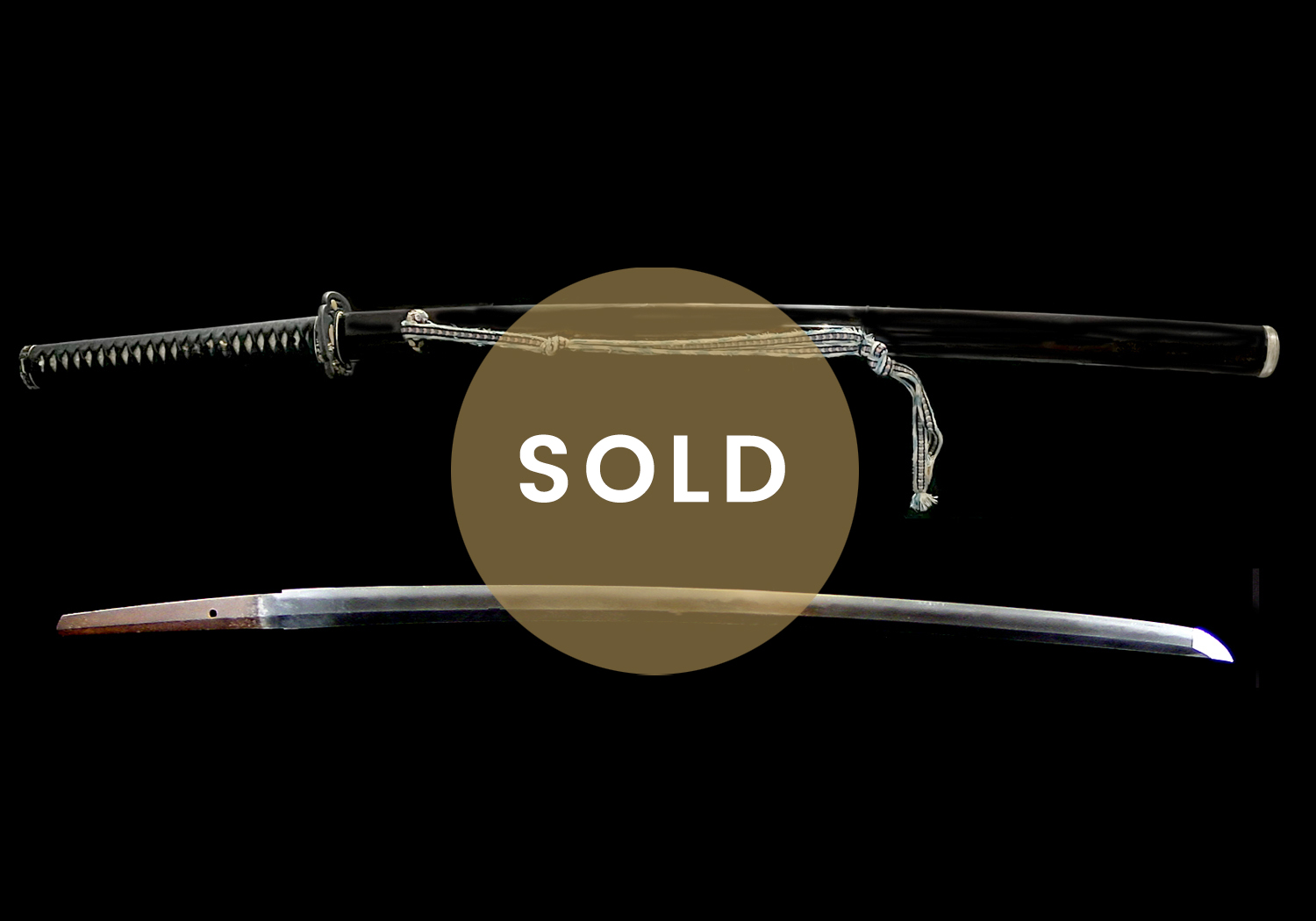
SOLD
[1] Much of the information above was taken from HIZEN (no) KUNI TADAYOSHI, the definitive study of the Hizen Tadayoshi school written by Roger Robertshaw published in 1999.
[2] This information has been taken from an article written by Tanobe Michihiro Sensei that was published in the NBTHK TOKEN BIUTSU magazine (English edition No. 47 published in 1999).