Awataguchi lies on the main road which goes from Kyôto to Ômi province. Many smiths settled there since the early Kamakura period of the late 12th century. The term “Awataguchi mono” established itself as a kind of generic term for masterworks of this school which are characterized by a highly refined, noble workmanship. Kuniie (国家) is considered to the founder of the Awataguchi school. Unfortunately existing works by him are not found today. He is known, however, to have had six sons, Kunitomo (国友), Hisakuni (久国), Kuniyasu (国安), Kunikiyo (国清) Arikuni (有国), and Kunitsuna (国綱), who worked around the early Kamakura period. We are fortunate that all of them have existing blades signed blades.
It was also a time when the retired Emperor Gotoba (後鳥羽,1180-1239) invited smiths from all over the country to forge blades at the imperial palace and even to assist him in the application of the of the tempering (yaki-ire, 焼入れ). These swordsmiths who were summoned to the palace by imperial order of retired emperor Gotoba were known as the “goban kaji”. They worked for the retired emperor in monthly shifts and are believed to have been the finest swordsmiths of their day. Only smiths from the Awataguchi school of Yamashiro province, the Ko-Ichimonji school of Bizen province, and the Ko-Aoe school of Bitchu province were selected for this honor.
From the six Awataguchi brothers, it seems that as many as three, Kunitomo, Hisakuni, and Kuniyasu were selected to join Gotoba’s “goban kaji”, a fact which further contributed to the fame of the Awataguchi school. One of the oldest lists of the “goban kaji” sword smiths, the Showa Mei Zukushi, a document produced during the Showa era (1312-1317) lists Awataguchi Kuniyasu (国安) as being selected in the fourth month (April) thus making him the fourth swordsmith selected for this honor and the first selected from the Awataguchi school.
All Awataguchi smiths have in common an excellently forged jigane which is seen in a beautiful structure of the hada called “nashiji hada” (梨子地肌). The old sword document, “Kaifun-ki”, (解紛記) writes the following: “The kitae is very fine. Some areas are itame but some are not identifiable. The color of the steel is somewhat more bluish than that of the Rai school and looks wet but is very clear”. That means that some itame areas are so densely forged that they can’t be made out as itame. The hamon of the Awataguchi school is an elegant, classical suguha or suguha with ko-midare and ko-chôji in ko-nie-deki which shows as nijûba and which is altogether rather modest and noble.[1]
As noted the major attributes of the Awataguchi school consisted of the excellent quality of the kitae as well as the deeply dense nioiguchi. The exquisitely fine jigane of nashiji hada got its name from the structure of the Japanese pear skin which shows exhibits extremely fine granules.
Their yakiba also consists of bright and thick nie producing a large variety of grain formations in the ha (tempered edge).
The youngest of the six Awataguchi brothers was Kunitsuna (国綱). He moved from Yamashiro province to Sôshû in Sagami Province. His son is said to have been Shintôgo Kunimitsu (新藤五国光), who is credited with being the founder of the Sôshû tradition. His son Shintôgo Kunihiro (新藤五国広), Yukimitsu (行光), and Masamune, (正宗) belong to Kunimitsu’s Sôshû school. The work of Yukimitsu and Masamune shows characteristics of the Sôshû tradition, but it is also clear that the Awataguchi schoo0l’s Yamashiro tradition was one of the basic influences in founding the Sôshû tradition. No significant Awataguchi smiths are recognized after Yoshimitsu, and the Rai school eventually replaced the Awataguchi as the foremost swordsmithing school in Yamashiro province. Generally speaking, the quality of Awataguchi workmanship is given a higher rating than the Rai school, which also prospered in the Yamashiro region.
The basic characteristics of the Awataguchi school are as follows:
Sugata: During the early Kamakura period, the Awataguchi sugata did not differ greatly from the Sanjo school, but in the mid-Kamakura period, it became and ikubi kissaki tachi with midareba that was wide even in the yokote area. The school’s tantô was of normal length and width, and showed a slight uchi-zori.
Jihada: The Awataguchi jihada is called nashiji-hada, and is generally recognized as being the finest quality, surpassed only by the jihada of the Sanjo school. It is a dense ko-mokume hada, mixed with chikei. Yubashiri appear and thick ji-nie are seen all over the ji.
Hamon: Originally, the narrow hamon tends to become even narrower toward the kissaki. The hamonconsists of suguha hotsure, a suguha mixed with ko-chôji midare, or occasionally, rather wide suguha chôji midare, with nie. Thick, bright ko-nie, which reflect the light brilliantly, are called Awataguchi nie. The hamon has a good deal of nie, nioi kogori, fine kinsuji, and inazuma activity.
Bôshi: The nie in the bôshi are rougher than those in the hamon. The bôshi are ko-maru and o-maru, with short kaeri. Yakitsume, nie kuzure, and kaen are also seen.
Horimono: Bo-bi, soe-bi, koshibi, and ken are the usual horimono seen with this school. Bo-bi are quite common, the top of the hi is close to the ko-shinogi line and resemble as straight line, rather than a rounded shape. The bottom of the groove is usually stopped with a kaku-dome just below the machi, but maru-dome, kaki-nagashi, and kaki-toshi are also seen. In tantô, simple horimono like suken, bonji, and goma-hashi can be seen. Characteristic of the Awataguchi school is that goma–hashi are engraved near the mune. Generally speaking, the pattern of horimono is different on either side, but in this school the same pattern is often engraved on both sides.
Nakago: Awataguchi tachi nakago are long and slender. They feature sori and hira-niku, as well as a slightly curved, but flat, surface. The kijimomo nakago is seen. The tantô can take either of two shapes, one without sori, and the other a furisode nakago. The nakago saki is a shallow kurijiri. The yasurimei is kiri, or a gentle katte sagari. Signatures usually have two characters.
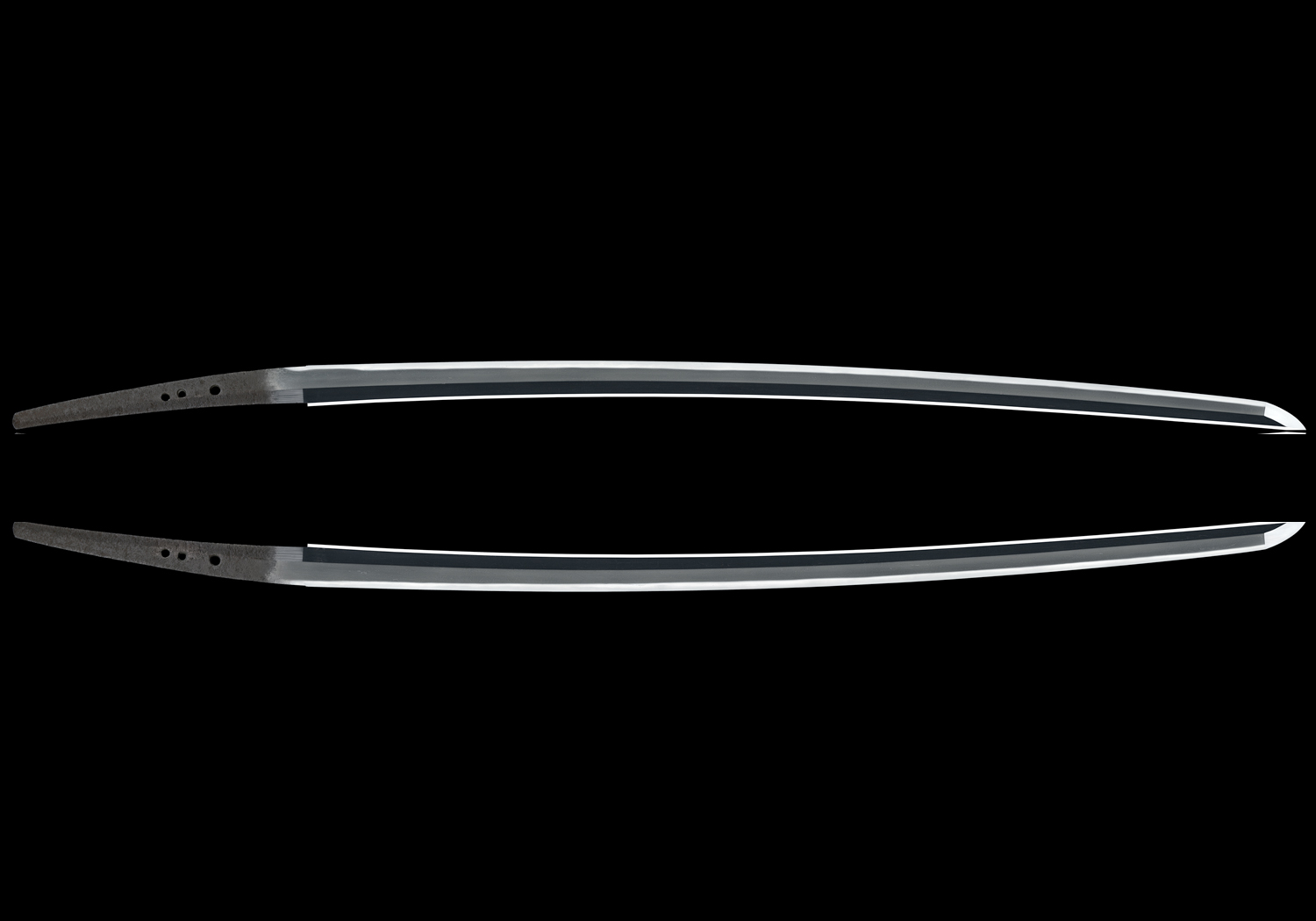
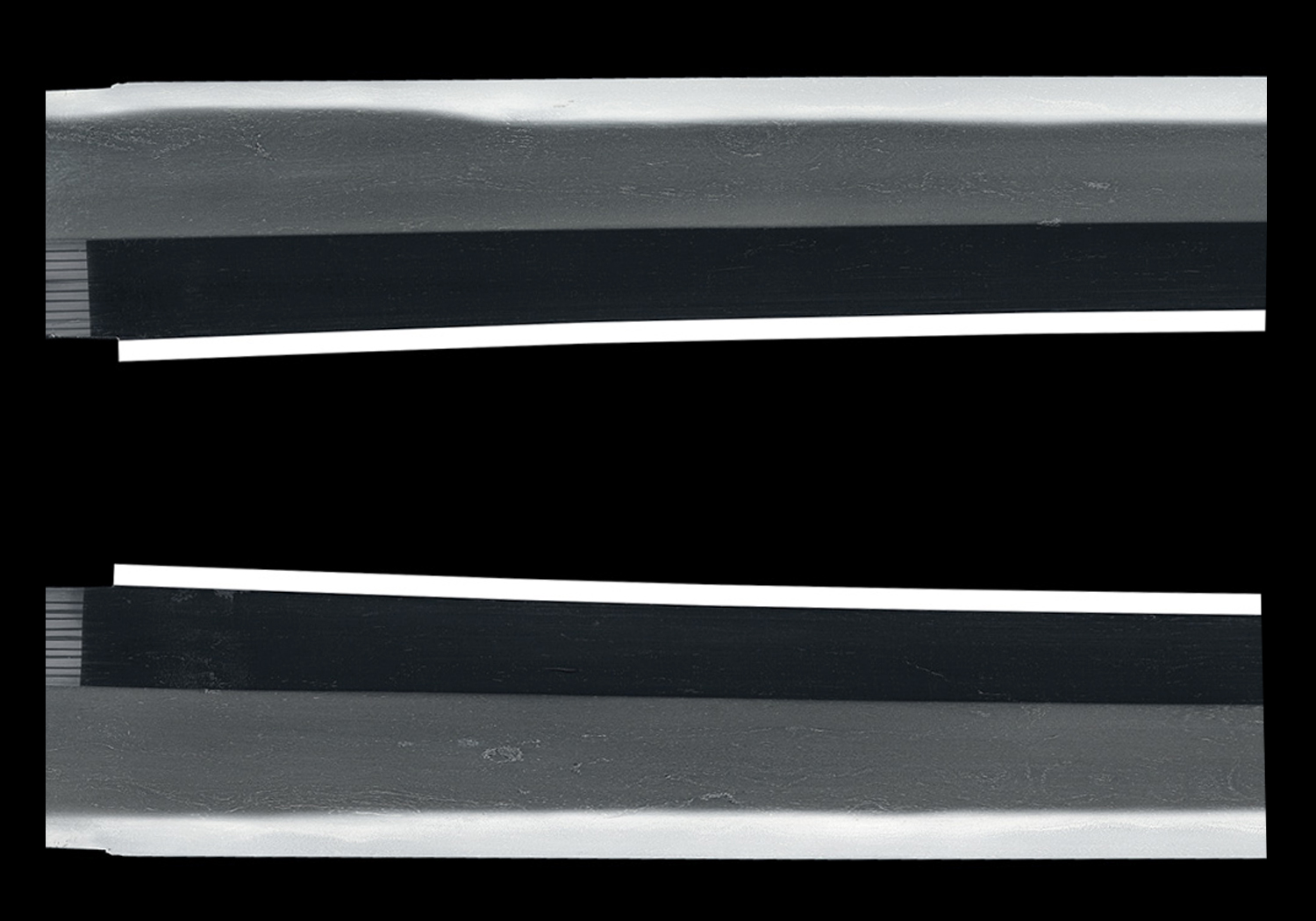
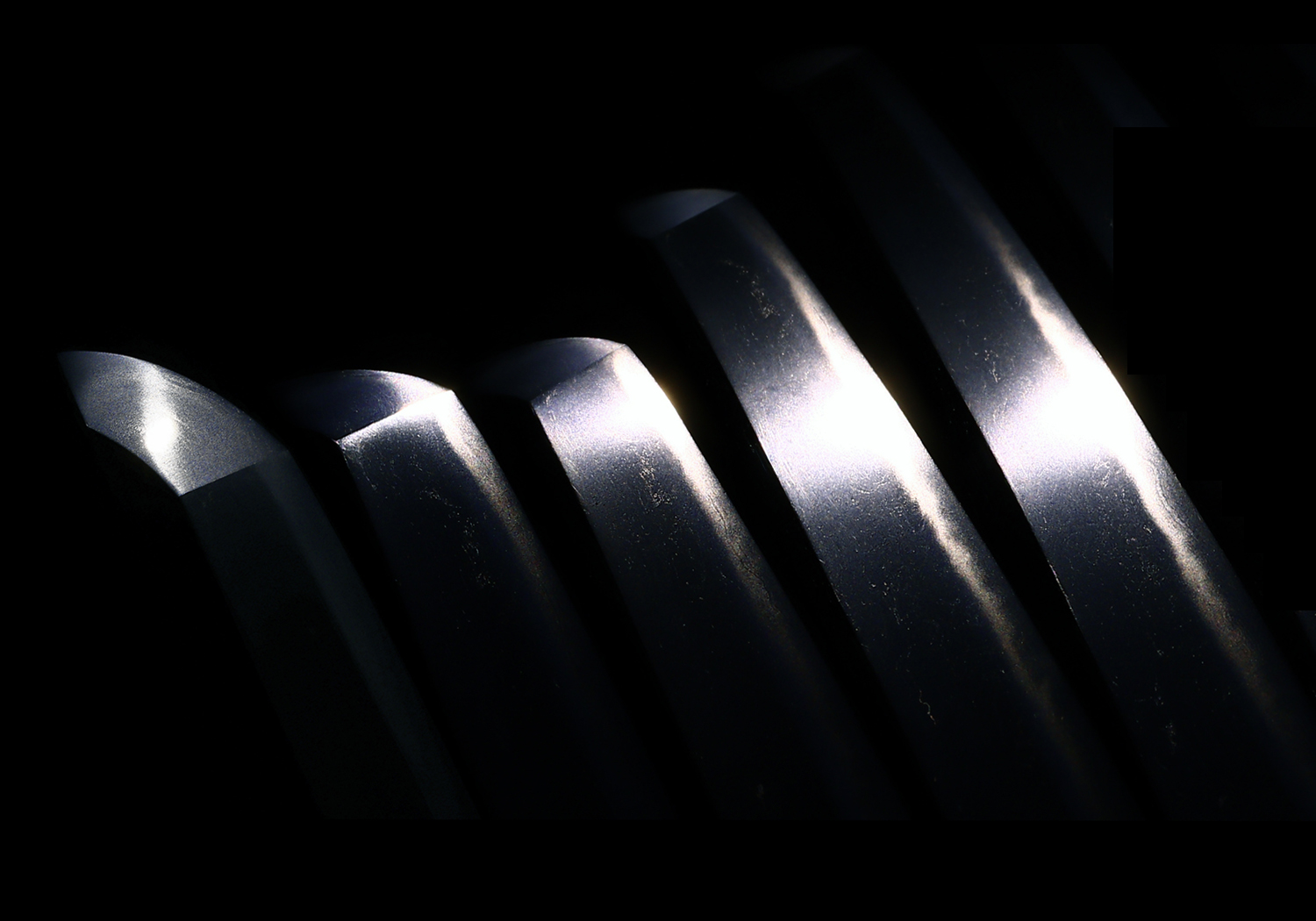
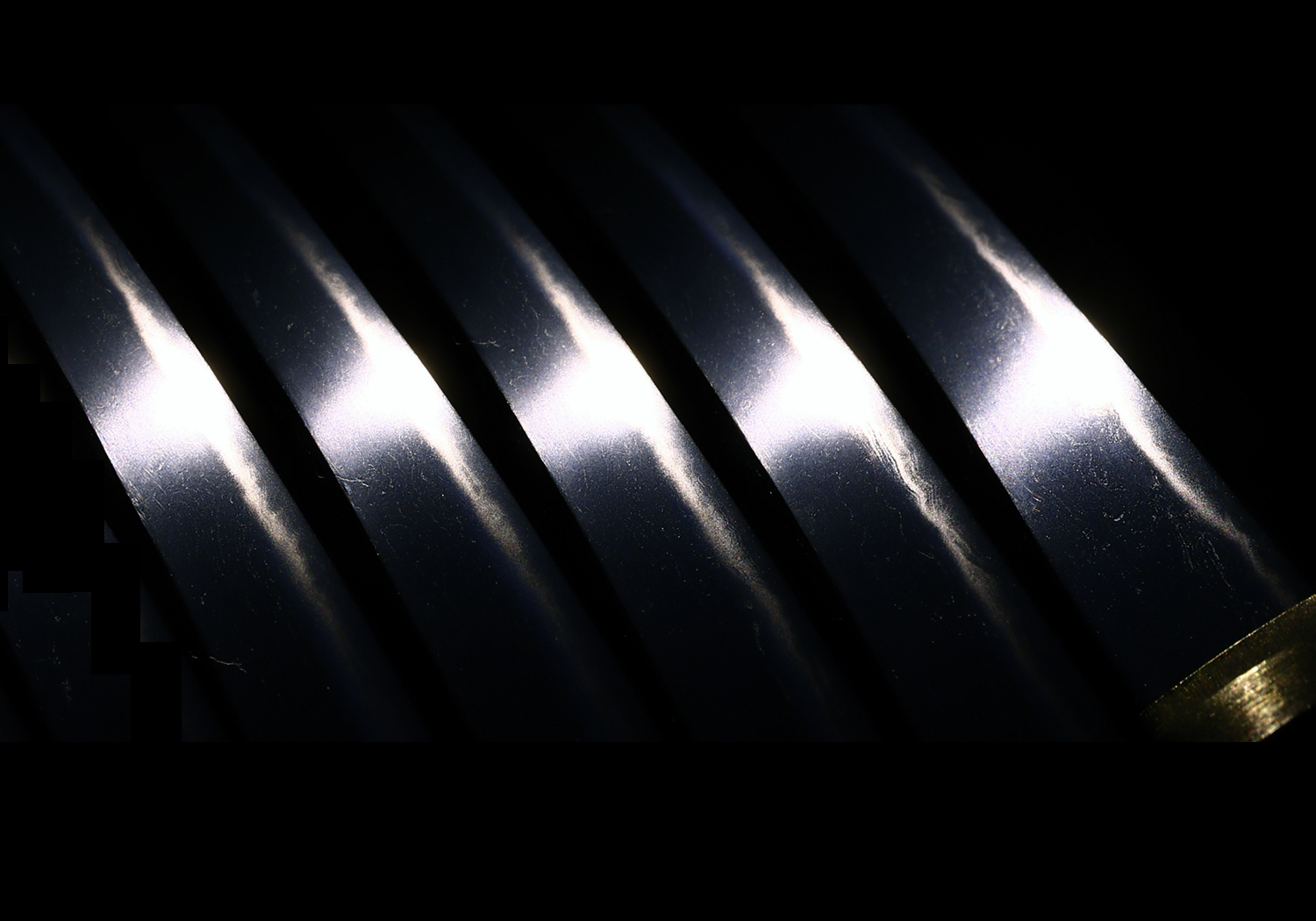
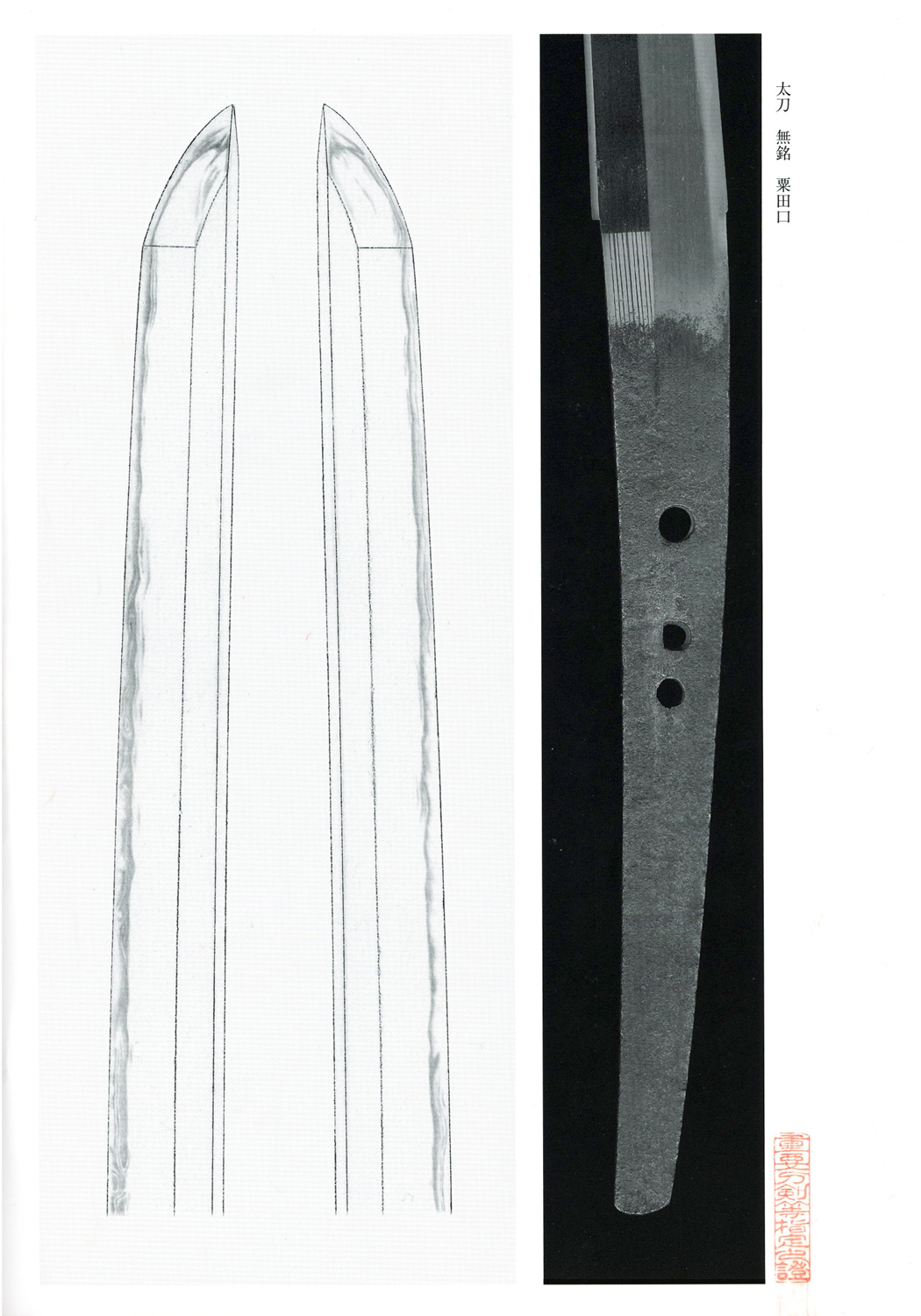
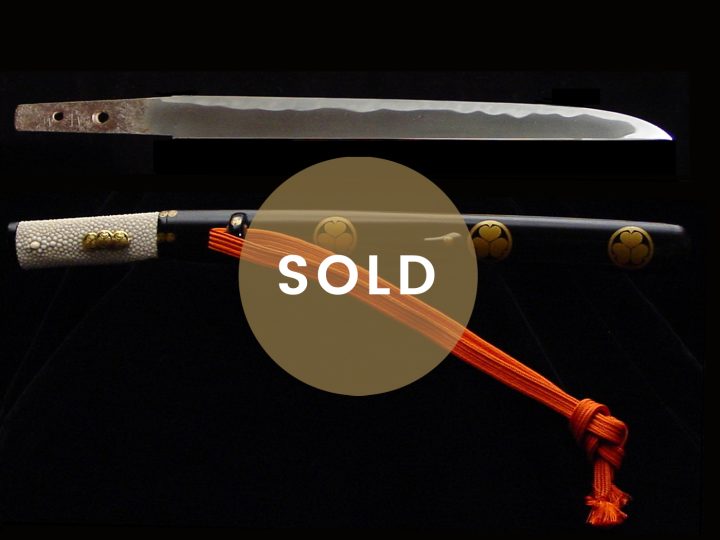
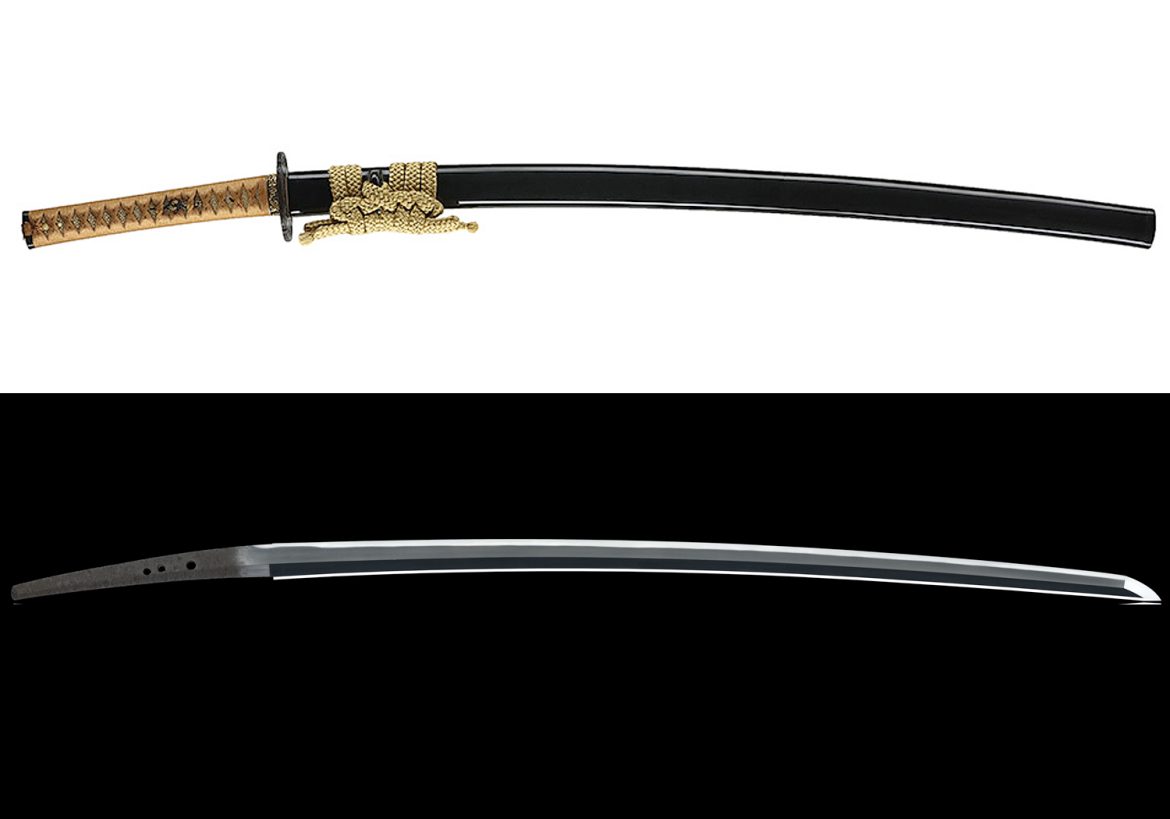
The blade offered here is a wonderful example of the Awataguchi school of the late Heian to early Kamakura period (circa 1150). This blade is ubu (unshortened) mumei (unsigned) with a slender mihaba (width), deep koshi-sori (curvature) that tends to toriizori and straightens out slightly in the monouchi area, and has a ko-kissaki. All of these factors combine to create an overall elegant blade shape. The kitae is a very fine itame that features plenty of ji-nie and a nie-utsuri, and the hamon is a chū-suguha-chō that is mixed with yubashiri and nijūba in places.
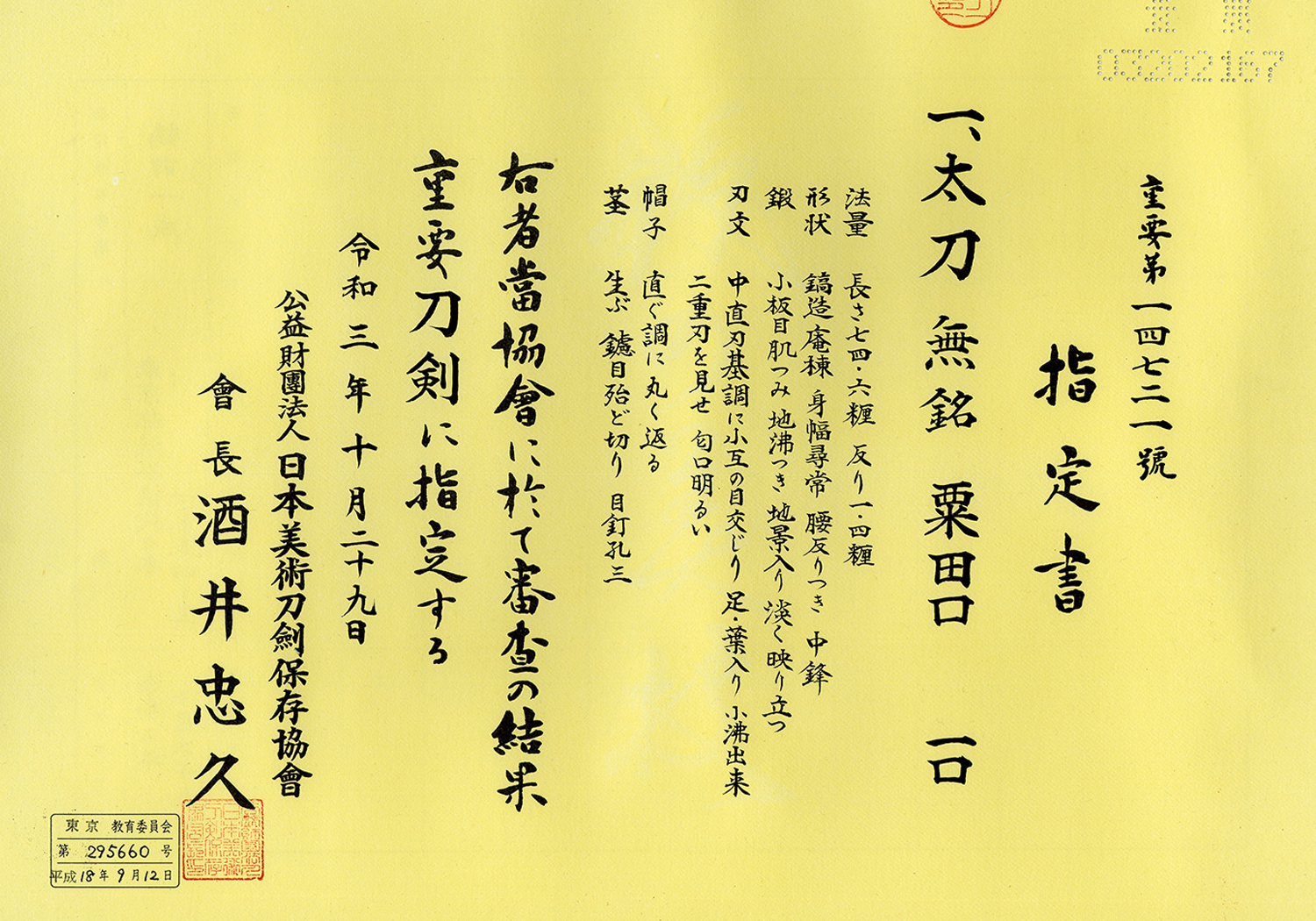
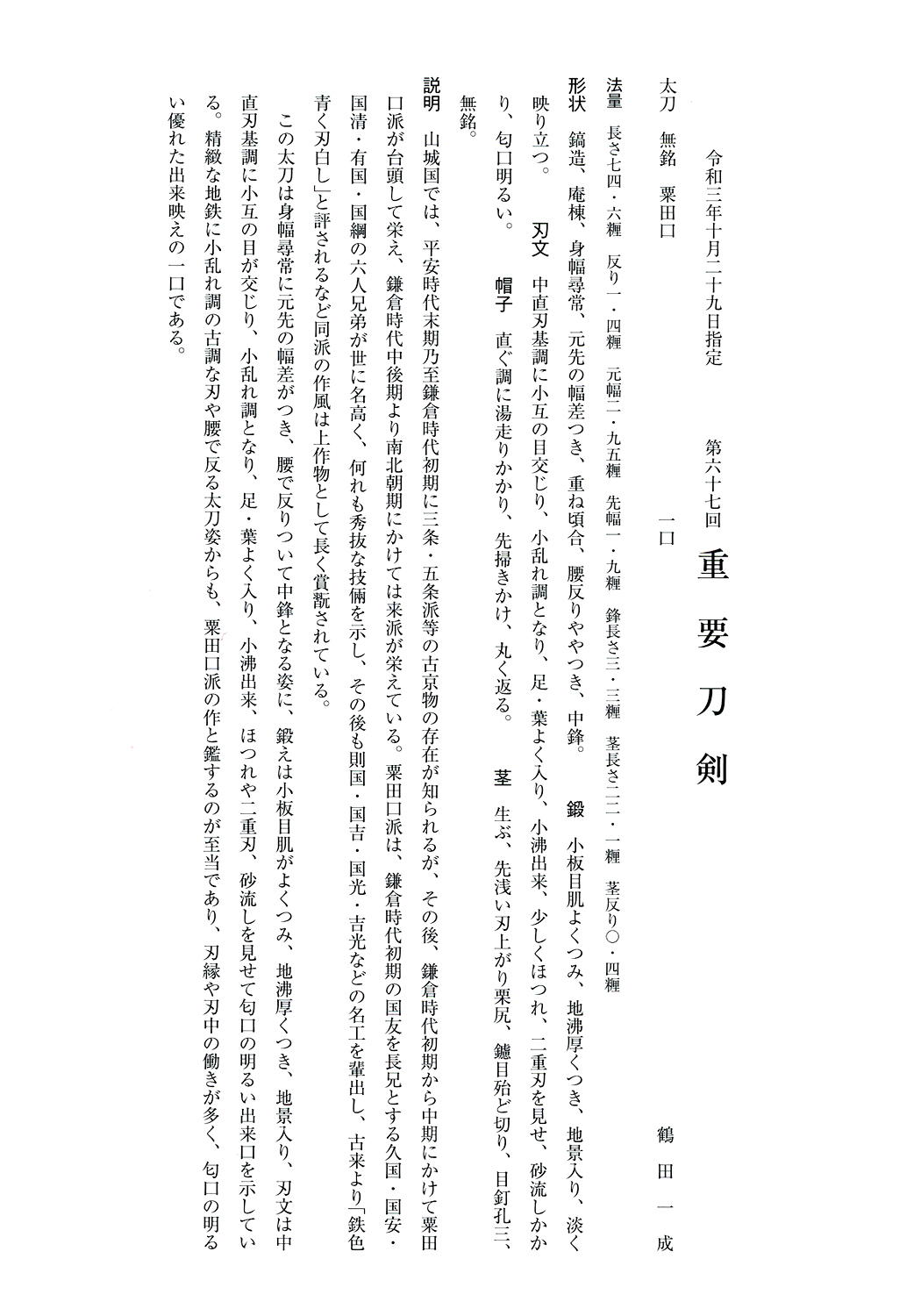
This blade has been attributed to the Awataguchi school and awarded the rank of Jûyô Tôken by the NBTHK in Japan. The following is the translation Jûyô Tôken certification awarded at the 67th Jûyô shinsa in 2021:
Jūyō-Tōken at the 67th Jūyō Shinsa from October 29, 2021
Tachi, mumei: Awataguchi (粟田口)
Measurements:
Nagasa 74.6 cm, sori 1.4 cm, motohaba 2.95 cm, sakihaba 1.9 cm, kissaki-nagasa 3.3 cm, nakago-nagasa 22.1 cm, nakago-sori 0.4 cm
Description:
Keijō: shinogi-zukuri, iori-mune, normal mihaba, noticeable taper, moderate kasane, relatively deep koshizori, chū-kissaki
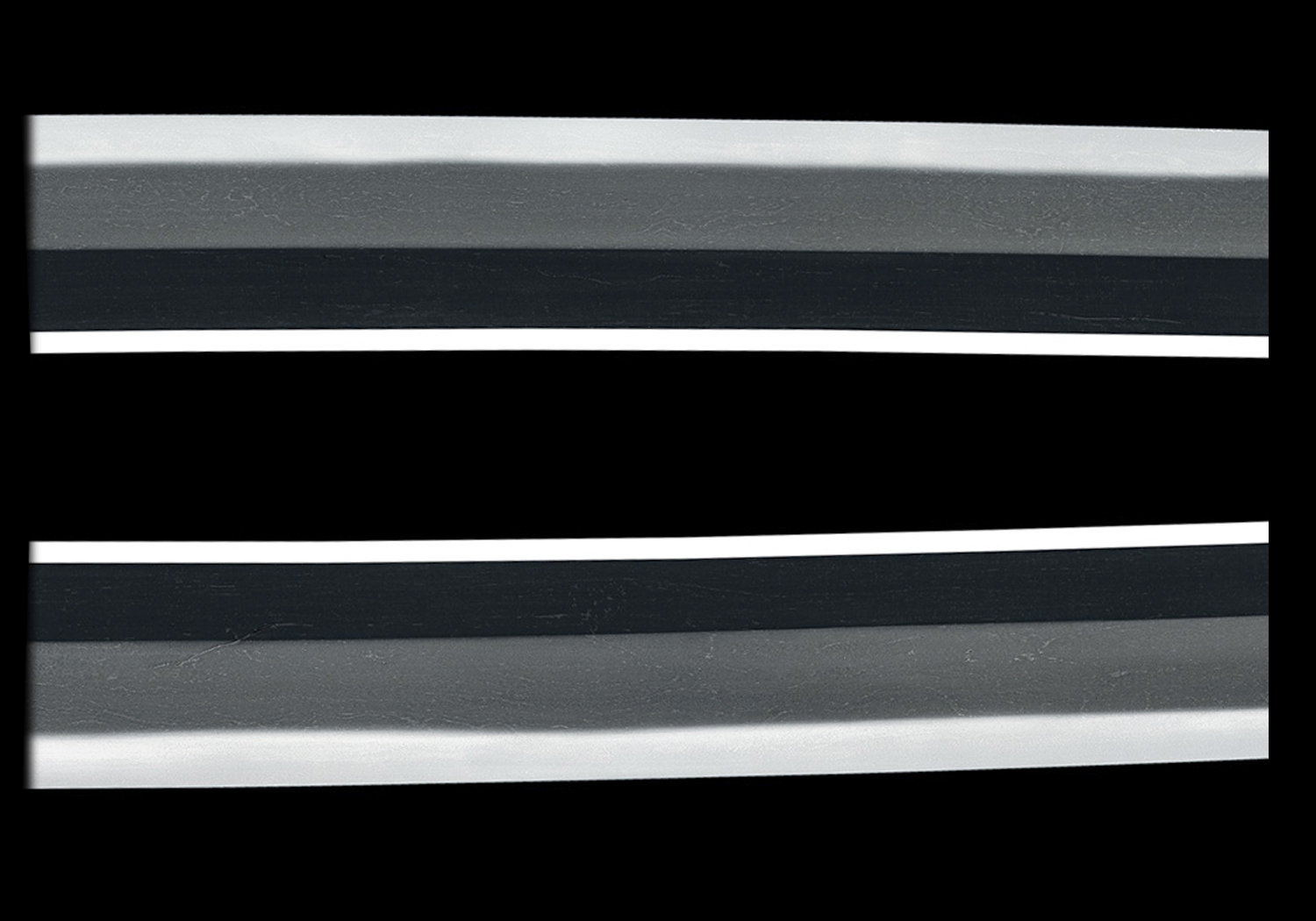
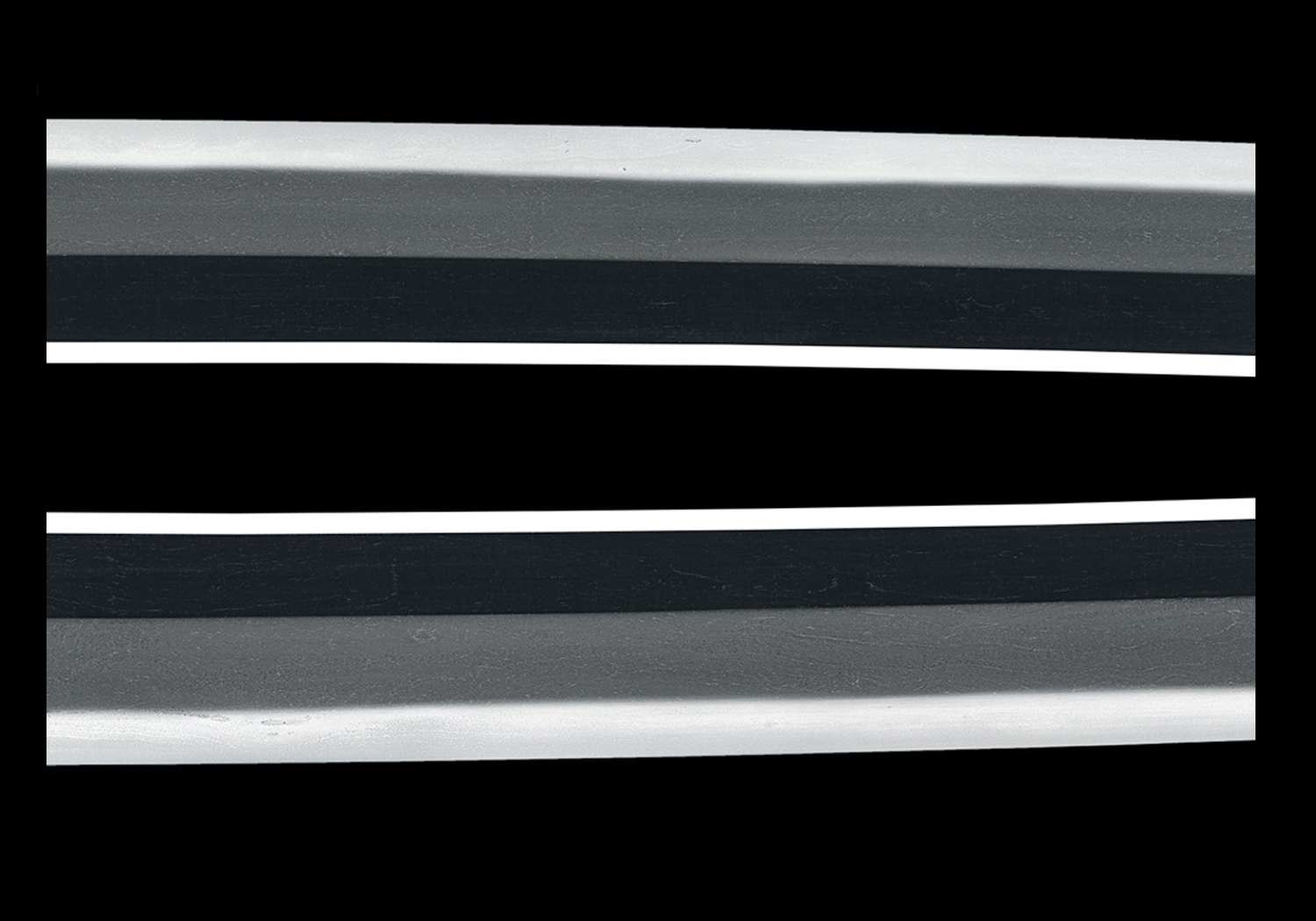
Kitae: densely forged ko-itame that features plenty of ji-nie, chikei, and a faint utsuri
Hamon: chū-suguha-chō in ko-nie-deki with a bright nioiguchi that is mixed with ko-gunome, some ko-midare-chōsections, many ashi and yō, a little bit of hotsure, and with nijūba and sunagashi
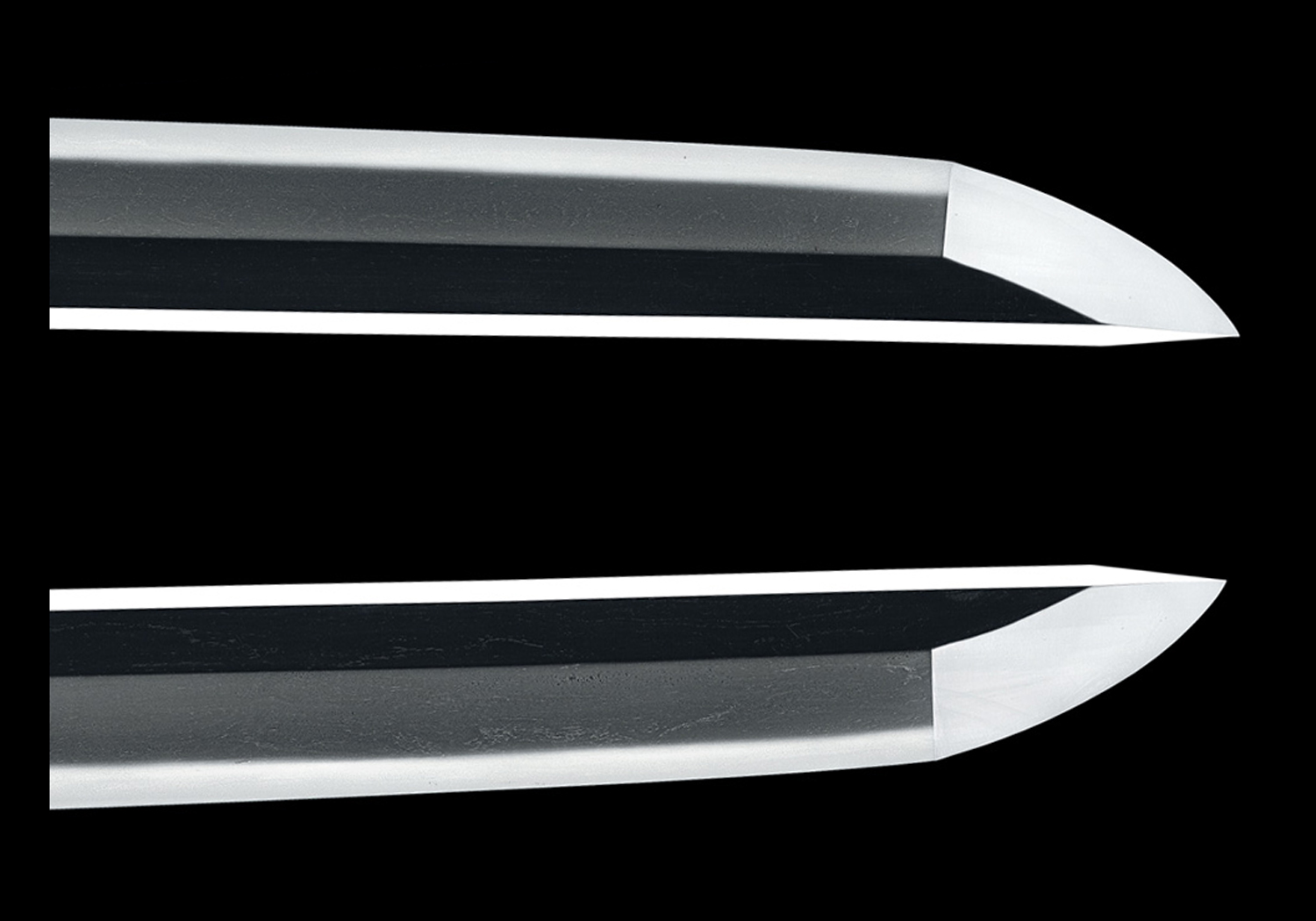
Bōshi: sugu-chō with yubashiri, a maru-kaeri, and hakikake at the tip
Nakago: ubu, shallow ha-agari-kurijiri, almost entirely horizontal kiri-yasurime, three mekugi-ana, mumei
Explanation:
Sword making in Yamashiro province from the end of the Heian to the early Kamakura period was represented by the Sanjō (三条) and Gojō (五条) schools, which are also summarized as Ko-Kyō-mono (古京物). After them, that is, from the early to the mid-Kamakura period, the Awataguchi
(粟田口) School was the leading local force, which was then succeeded by the Rai (来) School, which flourished from the mid to late Kamakura to the Nanbokuchō period. Regarding individual Awataguchi smiths, famous are the “six Awataguchi brothers” from the early Kamakura period, with Kunitomo (国友) the eldest, and with Hisakuni (久国), Kuniyasu (国安), Kunikiyo (国清), Arikuni (有国), and Kunitsuna (国綱) as his younger brothers, who all displayed outstanding skill. Famous Awataguchi masters active after these brothers were, e.g., Norikuni (則国), Kuniyoshi (国吉), Kunimitsu (国光), and Yoshimitsu (吉光). The school produced highest quality blades, which were appreciated ever since, and period sword text celebrate them as featuring “a blueish steel combined with a whitish ha.”
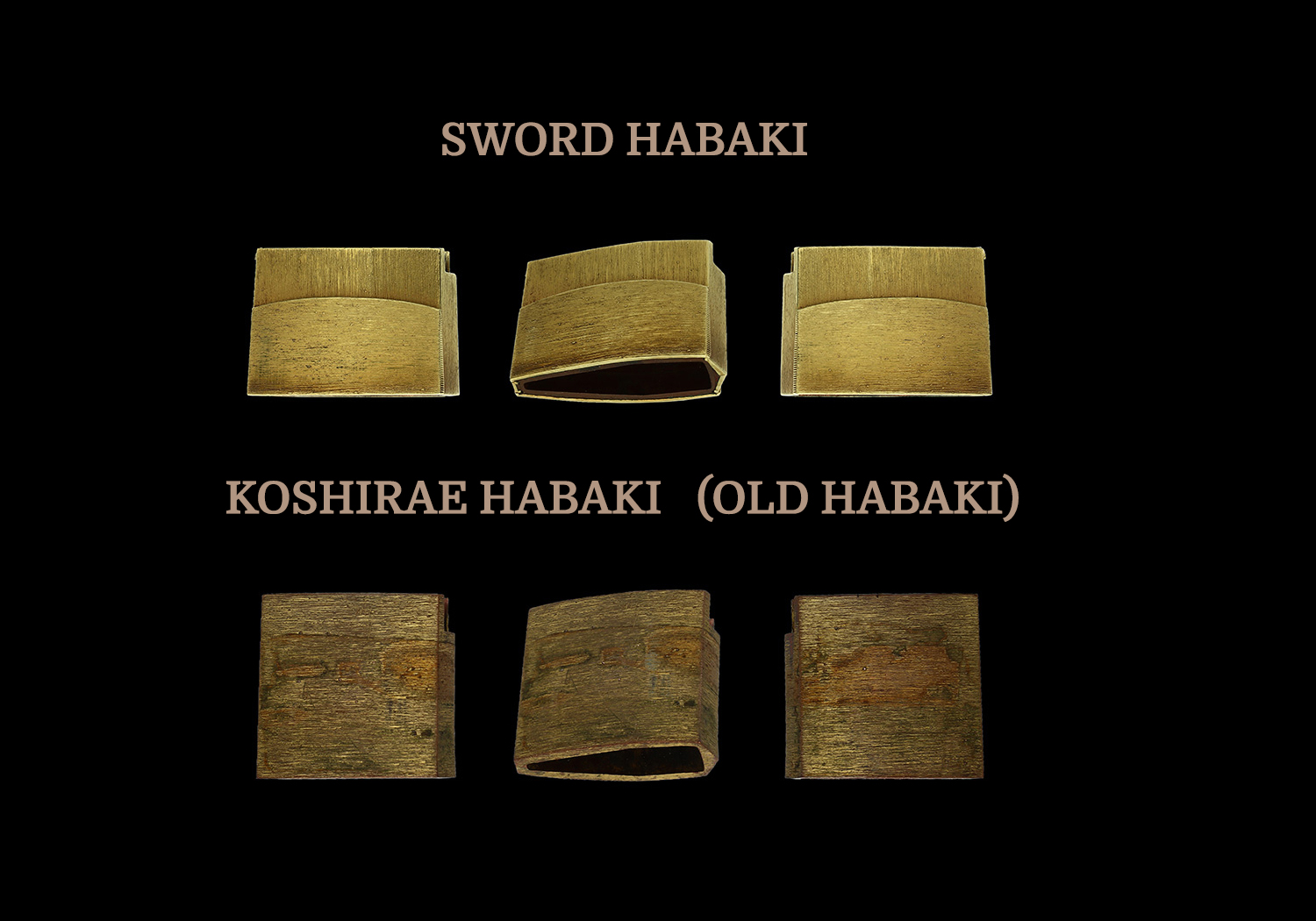
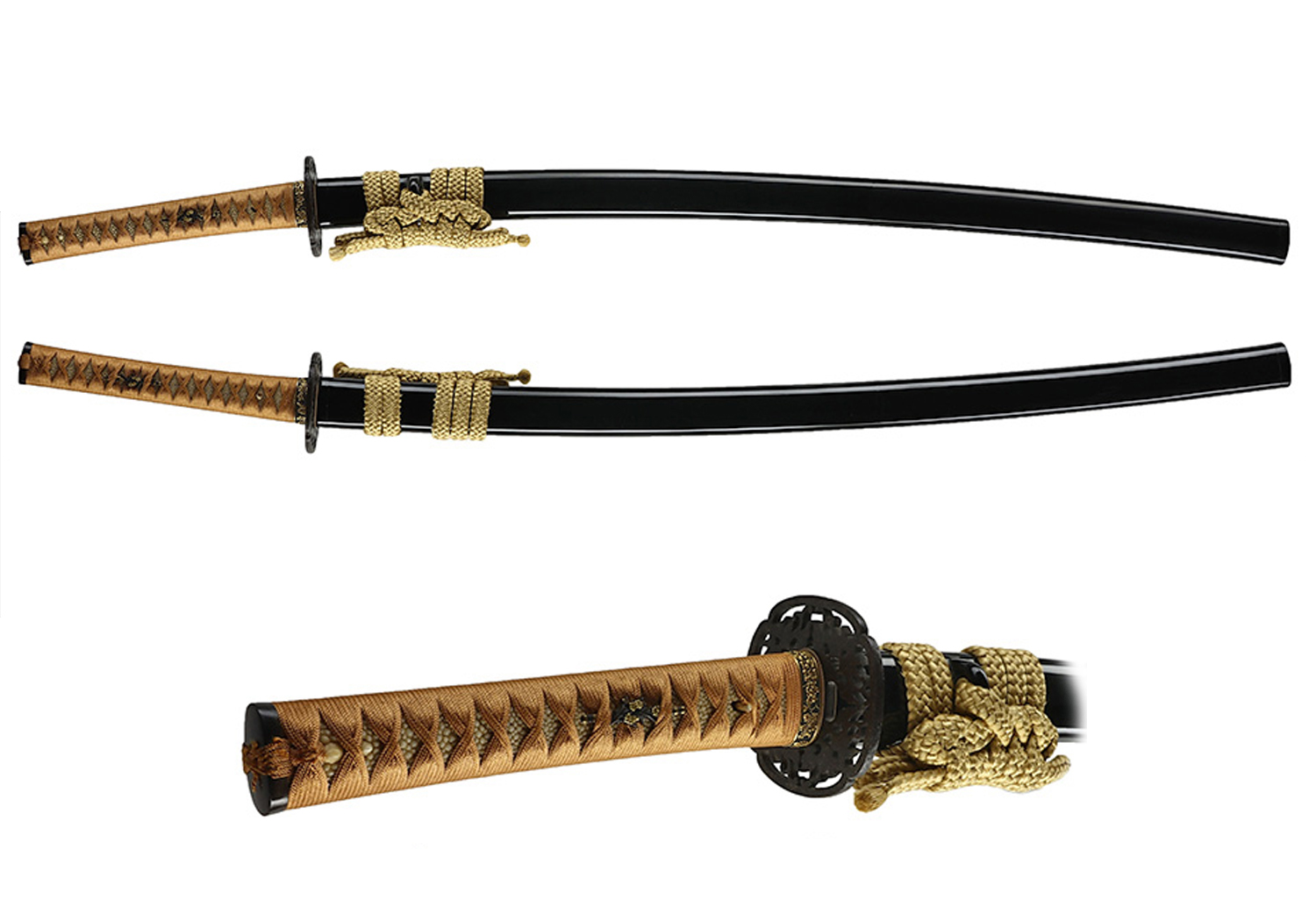
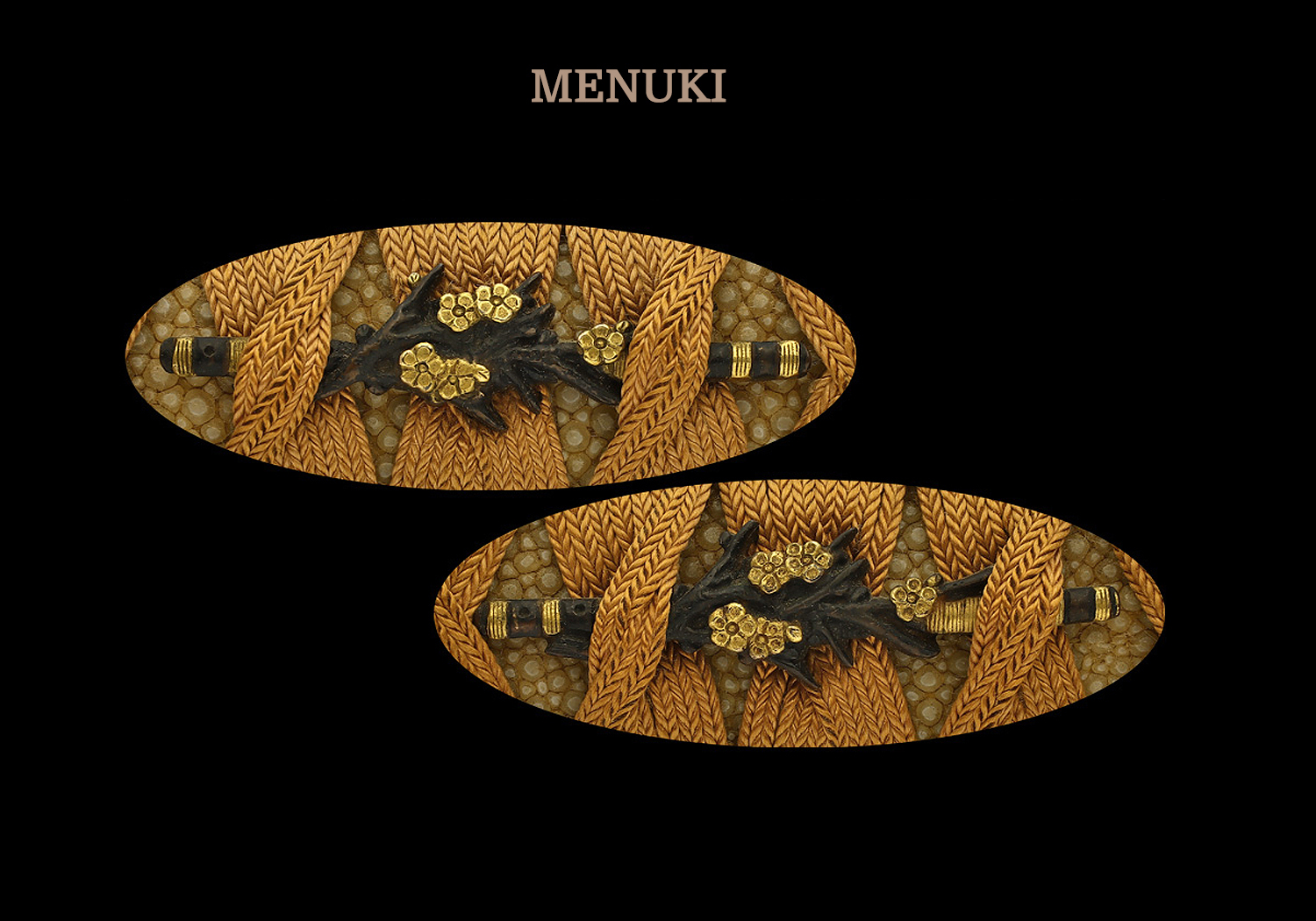
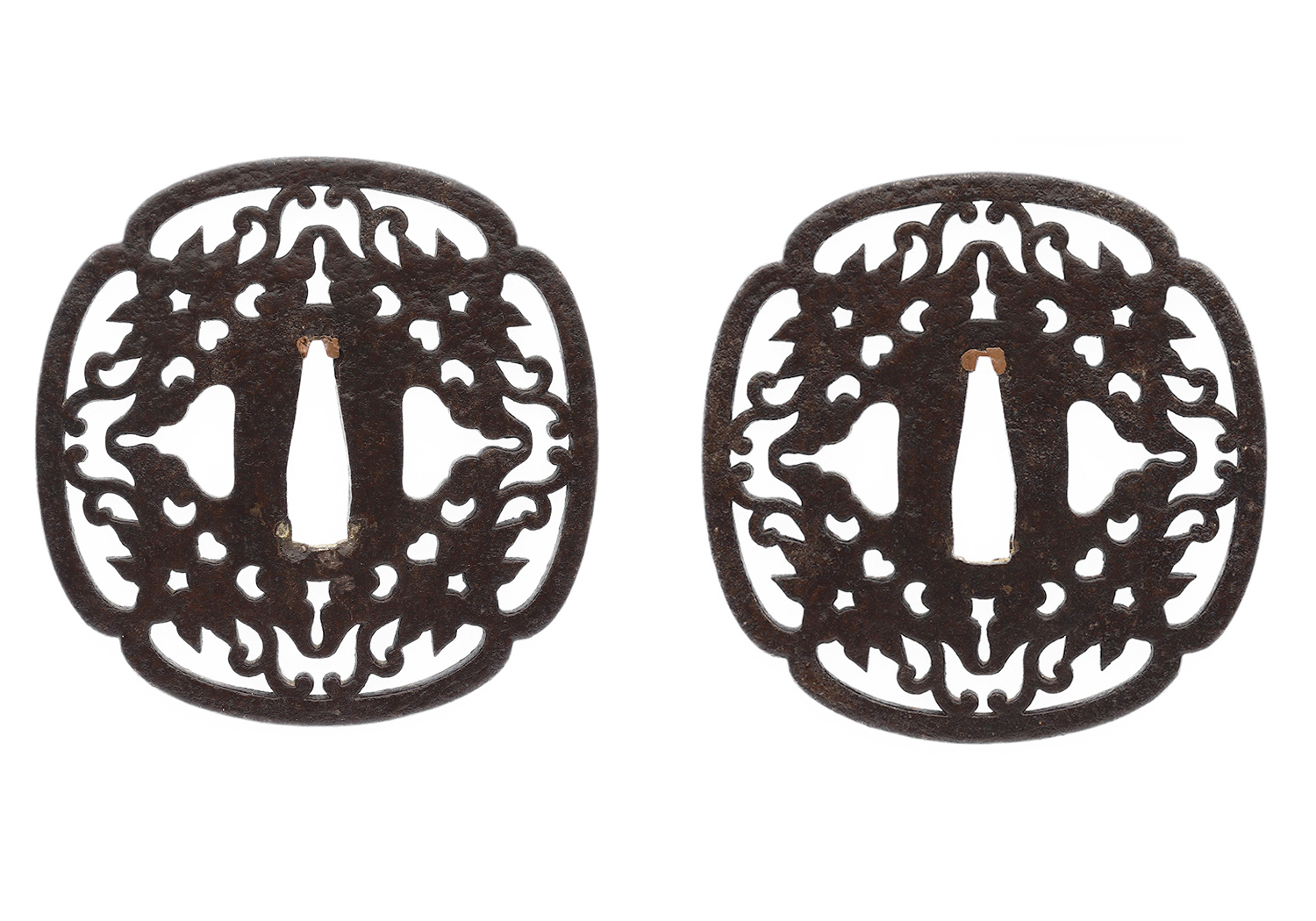
This katana comes with a very attractive koshirae that was used by its last Samurai owner. The saya is lacquered black and in very good condition. The tsuka is wrapped in soft orangish color. There is some fraying at the kojiri, probably from use. The fuchi is of the Mino school and sports deeply cut flowers and blossoms done in gold color. The kashira is of horn, making this more of a formal koshirae. The menuki are also of the Mino school and match well with the fuchi. The iron tsuba is large and done in the style of the Kyo-sukashi style.
[1] This paragraph was taken from “A Journey to the Gokaden, The Workmanship and Development of the Yamashiro Tradition, Part 1 Sanjô and Gojô by Michihiro Tanobe
SOLD