The Ichimonji School (一文字) in Bizen Province was a large school that was founded in the beginning of the Kamakura period and lasted through the Nanbokucho period. From the beginning to the middle of the Kamakura period, works by this school are commonly referred to as Ko-Ichimonji (古一文字) works. From the middle of the Kamakura period, the center of the production done by this school was located in the area of Bizen called Fukuoka (福岡). From the end of the Kamakura period and through the early part of the Nanbokucho period, the center of production moved to Yoshioka (吉岡). Around the Shochu era (1324-1326) another branch of the Ichimonji school sprang up in Iwato (岩戸) in Bizen. This branch is called the Iwato Ichimonji (岩戸一文字). Since it was most active around the Shochu (正中) era, it is also called the Shochu Ichimonji school (正中一文字). Around 1225 Norifusa is said to have founded the Katayama Ichimonji school (片山一文字) when he moved to Katayama from Fukuoka.
The name of the school is derived from the fact that many of the swords extant today are signed only with the kanjicharacter “Ichi” (一). To this day there is uncertainty as to whether any of the smiths who signed with individual names are one and the same as any of these practically anonymous artisans who signed with only an “Ichi” (一).
In the early Kamakura period, workmanship of the Ichimonji smiths was classical and subdued. It was close to that of the Ko-Bizen (古備前) smiths but different in certain respects. Smiths from this period are known as the Ko-Ichimonji (古一文字) smiths. The main characteristics of the Ko-Ichimonji school (古一文字) are as follows:
SUGATA: They generally worked in the Yamashiro tradition. Although made in the style and shape of the late Heian period, they are slightly stronger in all respects while still retaining all of the grace and elegance of the Heian period works. They will be slender, have a deep koshi-zori, and ko-kissaki.
JITETSU: They will be well forged with fine ko-mokume hada mixed with o-hada. Jifu utsuri will generally be present.
HAMON: The width of the yakiba will be narrow and done in a ko-chôji midare based on suguha and worked in nioi. There are others that are worked in ko-chôji midare with nie clustering together within the hamon and with the nioi forming deep ashi. In certain works, the width of the yakiba is made wide in suguha chôji worked in nioi and it will have nie worked in. In these works, the grain of the steel will stand out considerably within the hamon. Koshiba is occasionally seen toward the bottom.
BÔSHI: They will be ko-maru, ko-maru sagari, or ko-midare and the kaeri will be short.
NAKAGO: They will be made a little long with the width made narrow towards the end forming a kurijiri tip. Kijimomo will be seen on occasion. File marks, if any, are in kiri or suji chigai.
MEI: When signed, a two-character is usual. Occasionally, we find them adding the kanji, saku (作), after their two-character mei.
According to tradition, Nobumasa (信正) was the son of Nobufusa (信房). The Meikan puts Nobufusa as working in the late 1100’s into the early half of the 1200’s. His real name was Nagahara Gonnokami (長原権守) . He was on the goban-kaji list of Emperor Gotoba that consisted of 24 smiths. According to this list, he worked with Kanesue (包末) in the ninth month. This was quite an honor. Fujishiro dates him to around Genryaku (元暦, 1184-1185) and rates him a jôjô-saku. The Meikan also lists that among his surviving swords are one Kokuho tachi, four Jûyô Bunkazai tachi, and one Jûyô Bijitsuhin tachi. I included all of this information to point out that today’s smith, Nobumasa, came from a very impressive father/sensei.
This article’s subject blade is by Nobufusa’s (信房) son, Nobumasa (信正). His first names were Gonzaburô (権三郎) and Tarô (太郎), he is also listed with the name Nagahara Gonnokami (長原権守). This was an early name that his father also used. Nobumasa is also noted as having served as a ban-kaji (Imperial guard smith) during the Jokyu era (1219-1222).Like his father, he was also reputed to have been invited by Emperor Gotoba to be one of his Oki-goban-kaji. This was a group of smiths invited by Gotoba during his exile on Oki after the failure of a coup in 1221. Nobumasa is listed to have worked in the ninth and tenth month, he signed with just the character “ichi” (一) at that time.
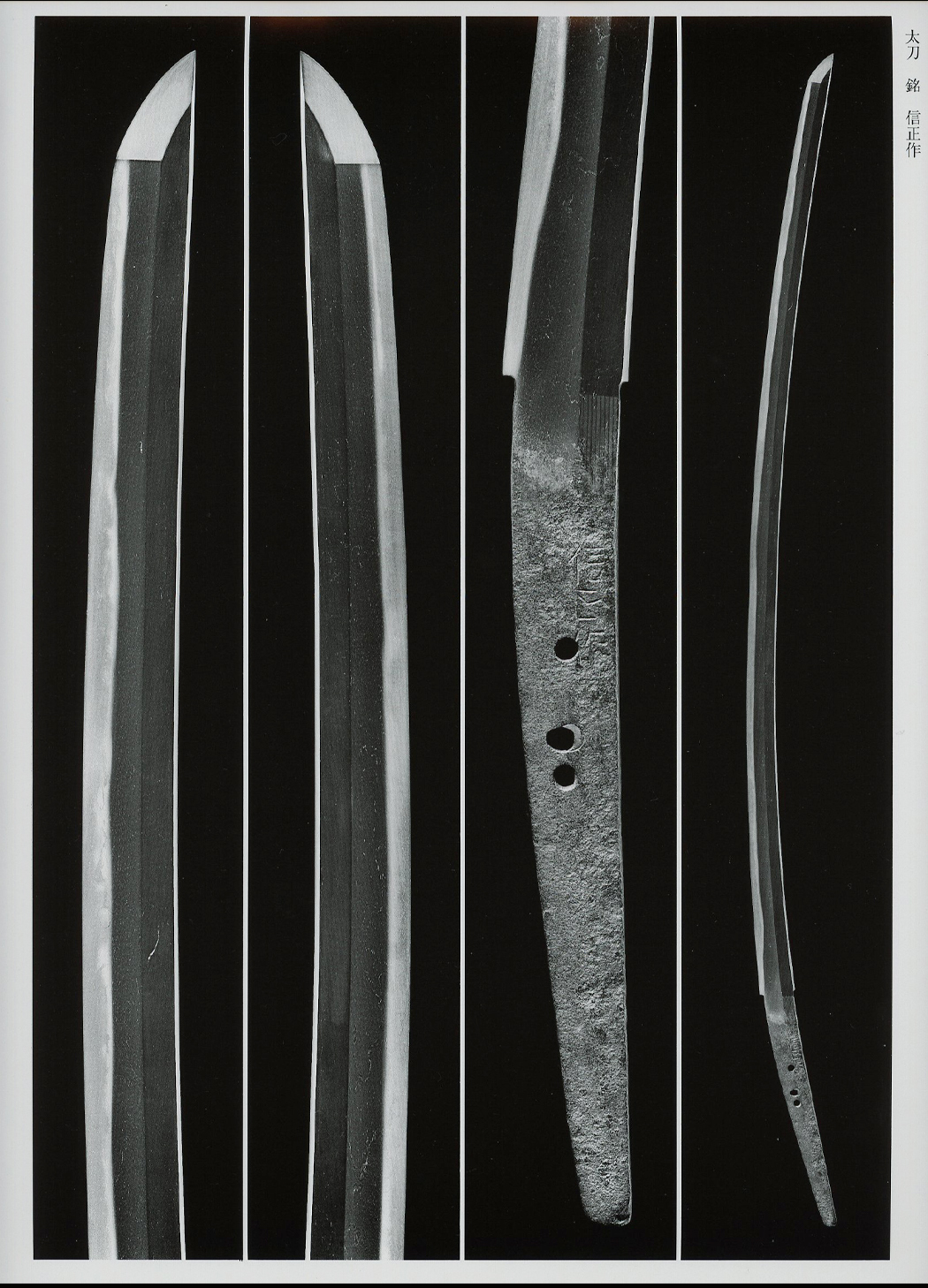
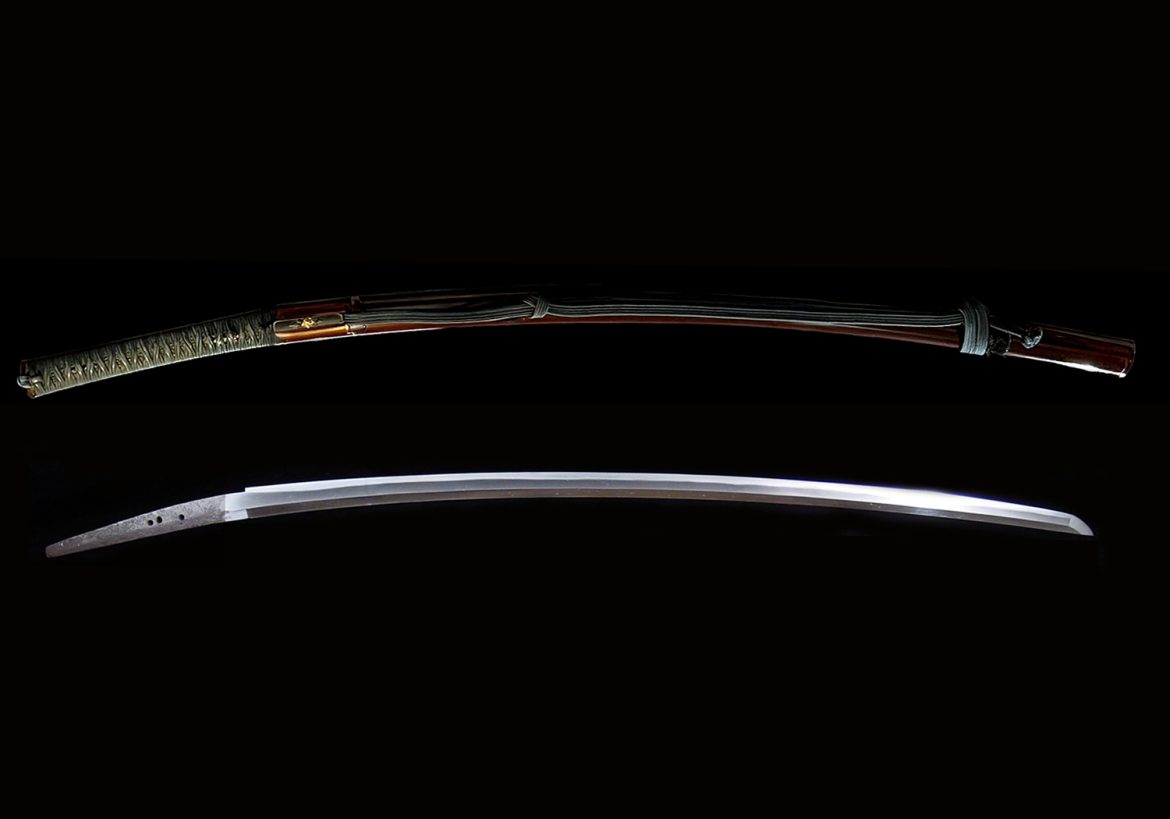
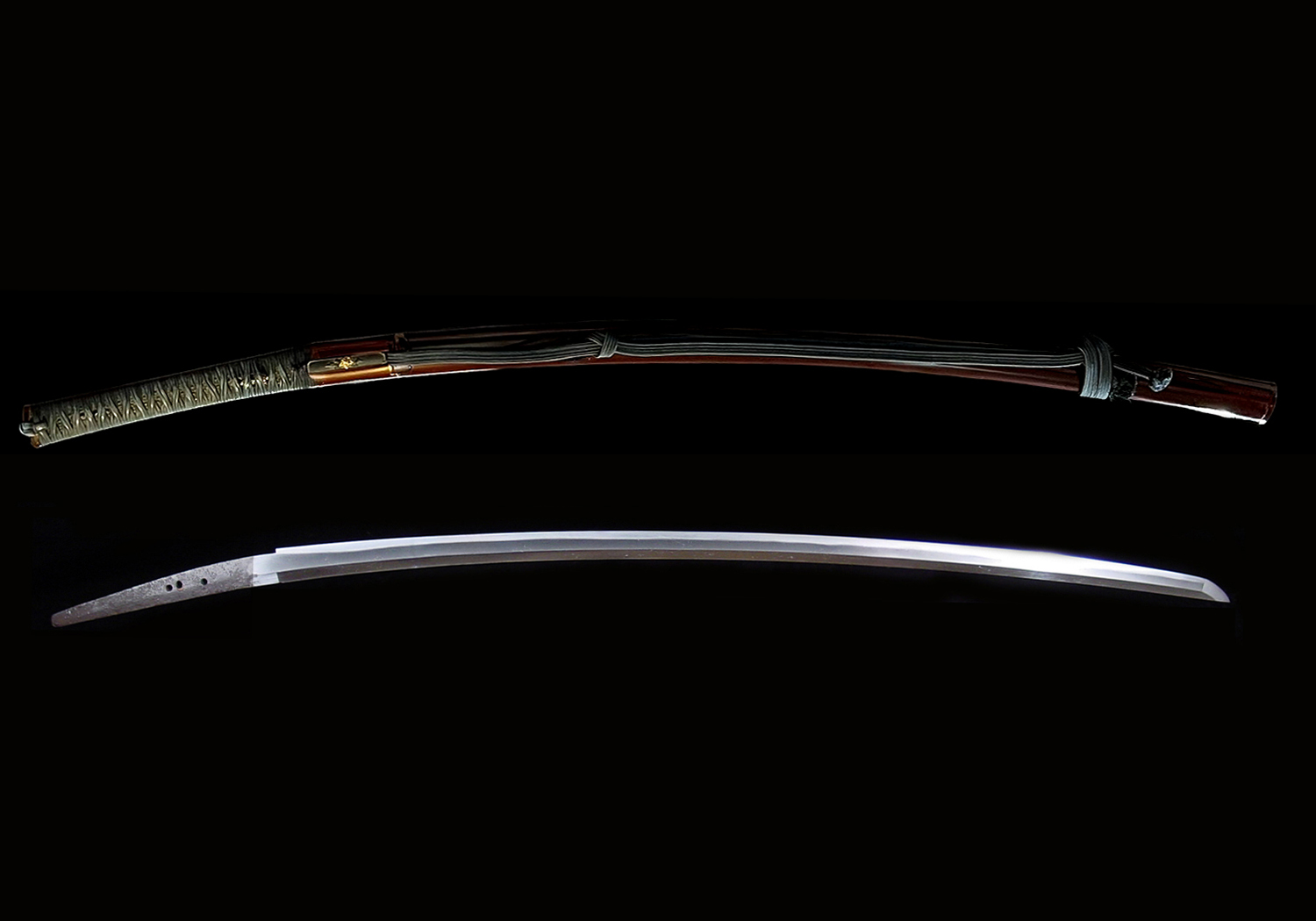
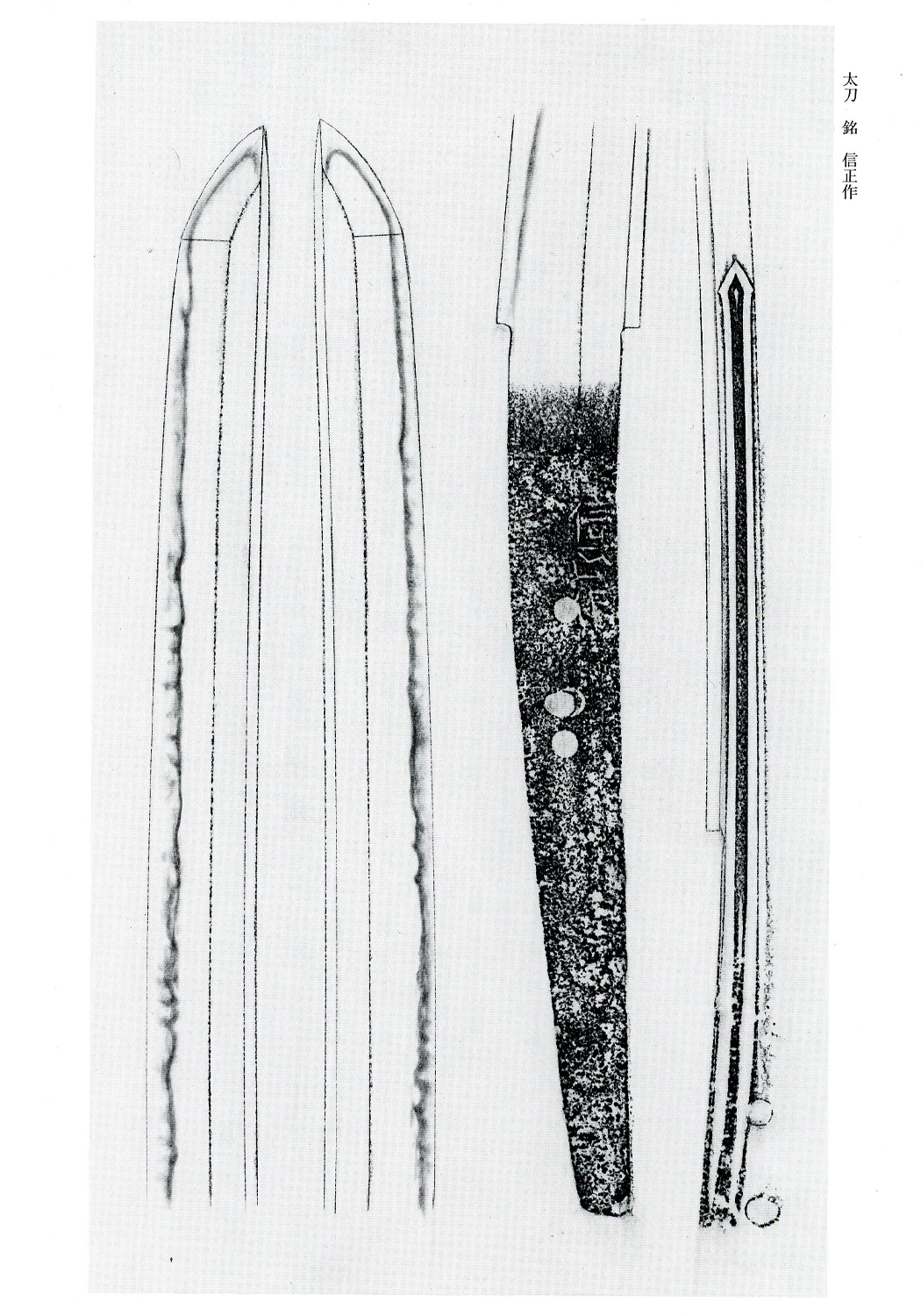
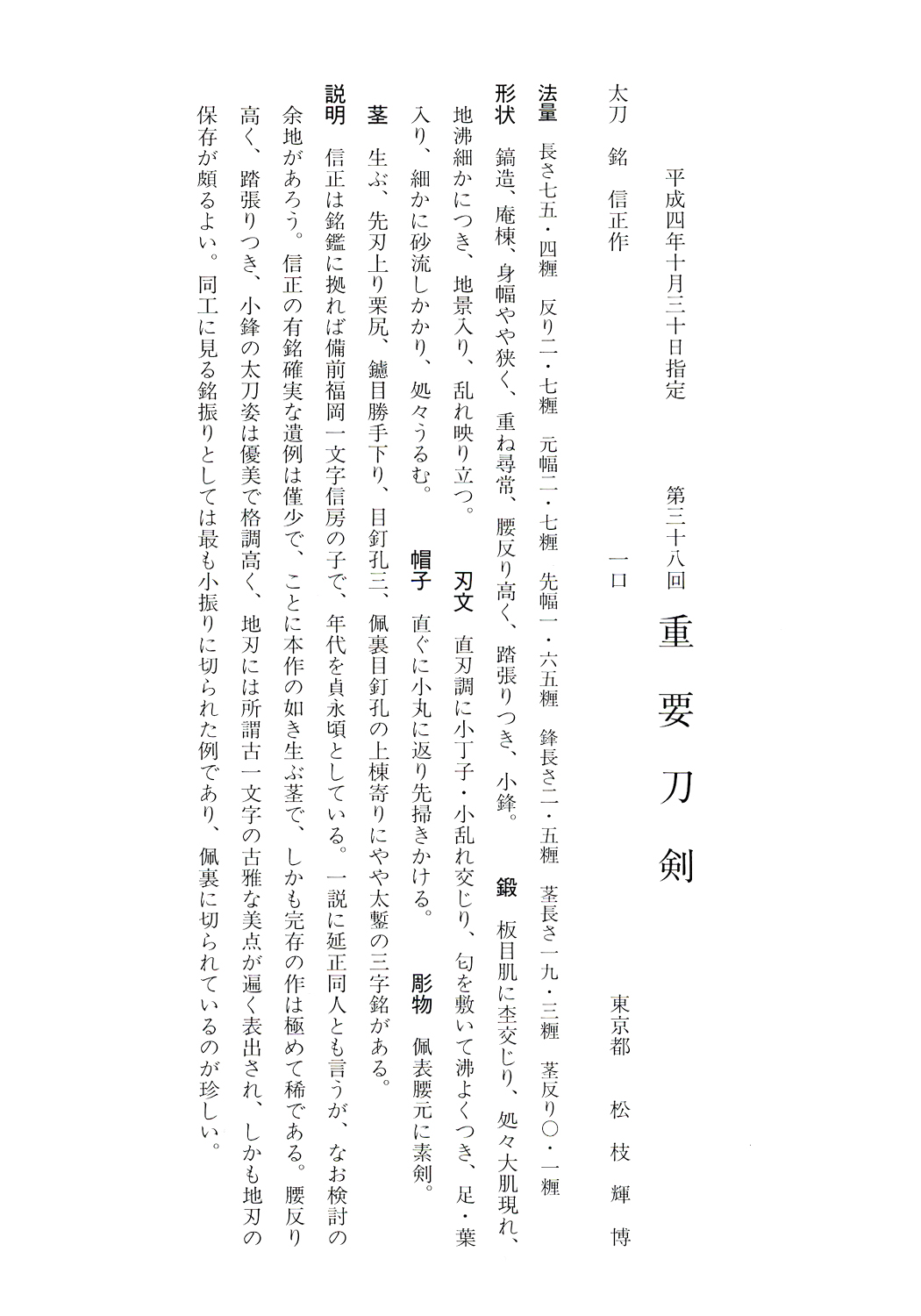
Reliably authenticated extant works bearing his signature are extremely few, and examples that retain an ubu nakago and are preserved in essentially complete condition are exceedingly rare. Because it has retained its original shape, it has become a textbook example of the sugata of the blades made in the late Heian and early Kamakura eras. There is a pronounced straightening of the sugata in the monouchi area. We are fortunate to have here today one such example of his work. This sword obtained the rank of Jûyô Tôken at the 38th Jûyô shinsa in October of 1992. The following is a translation of the Jûyô setsumei:
Jūyō-Tōken at the 38th Jūyō Shinsa from October 30, 1992
Tachi, mei: Nobumasa saku (信正作)
Measurements
Nagasa 75.4 cm, sori 2.7 cm, motohaba 2.7 cm, sakihaba 1.65 cm, kissaki-nagasa 2.5 cm, nakago-nagasa 19.3 cm, nakago-sori 0.1 cm
Description
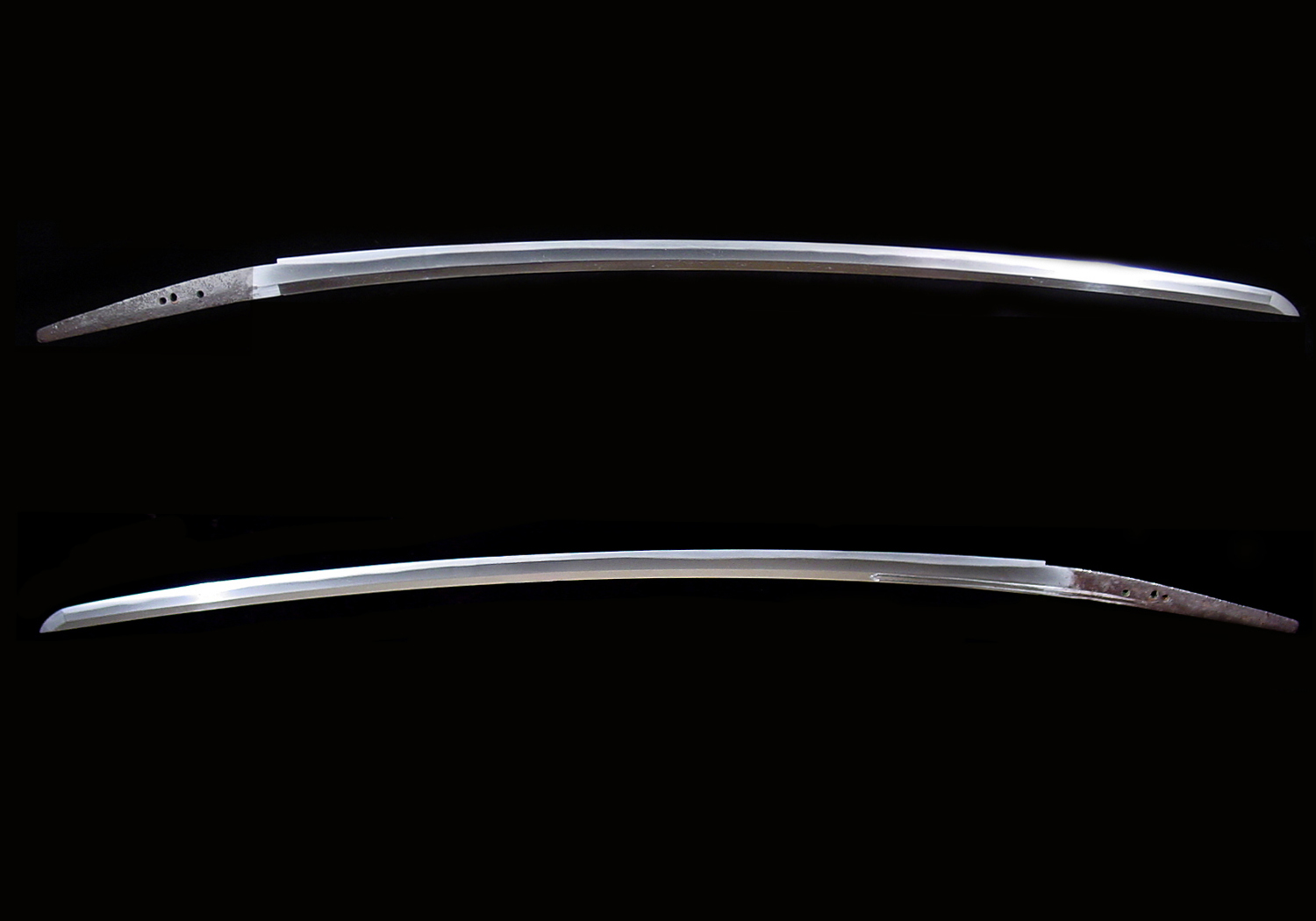
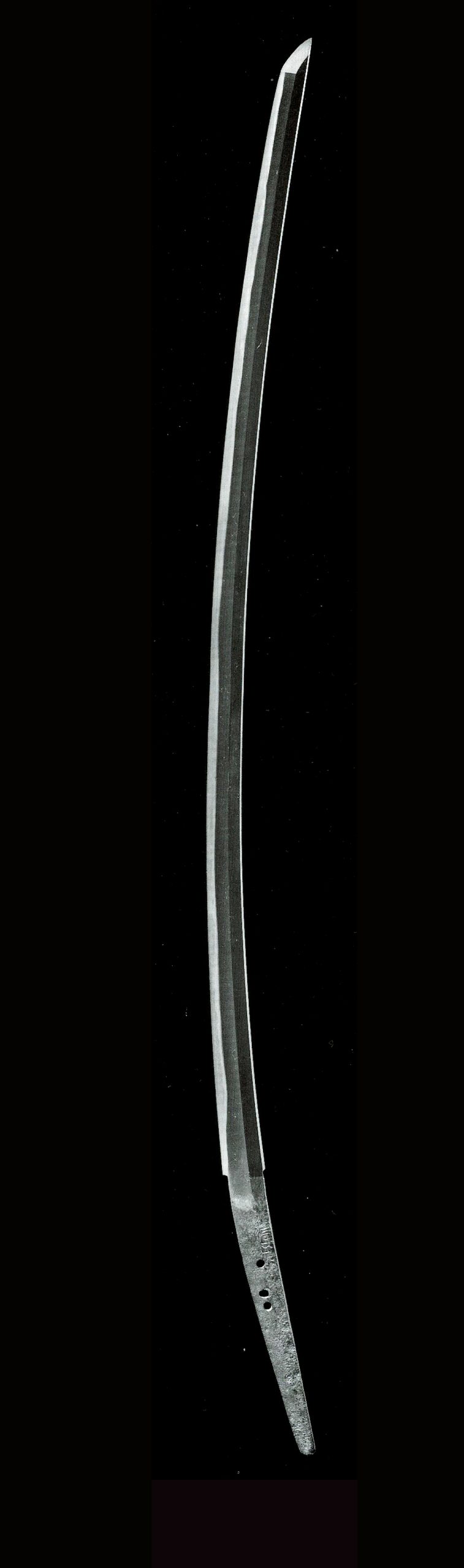
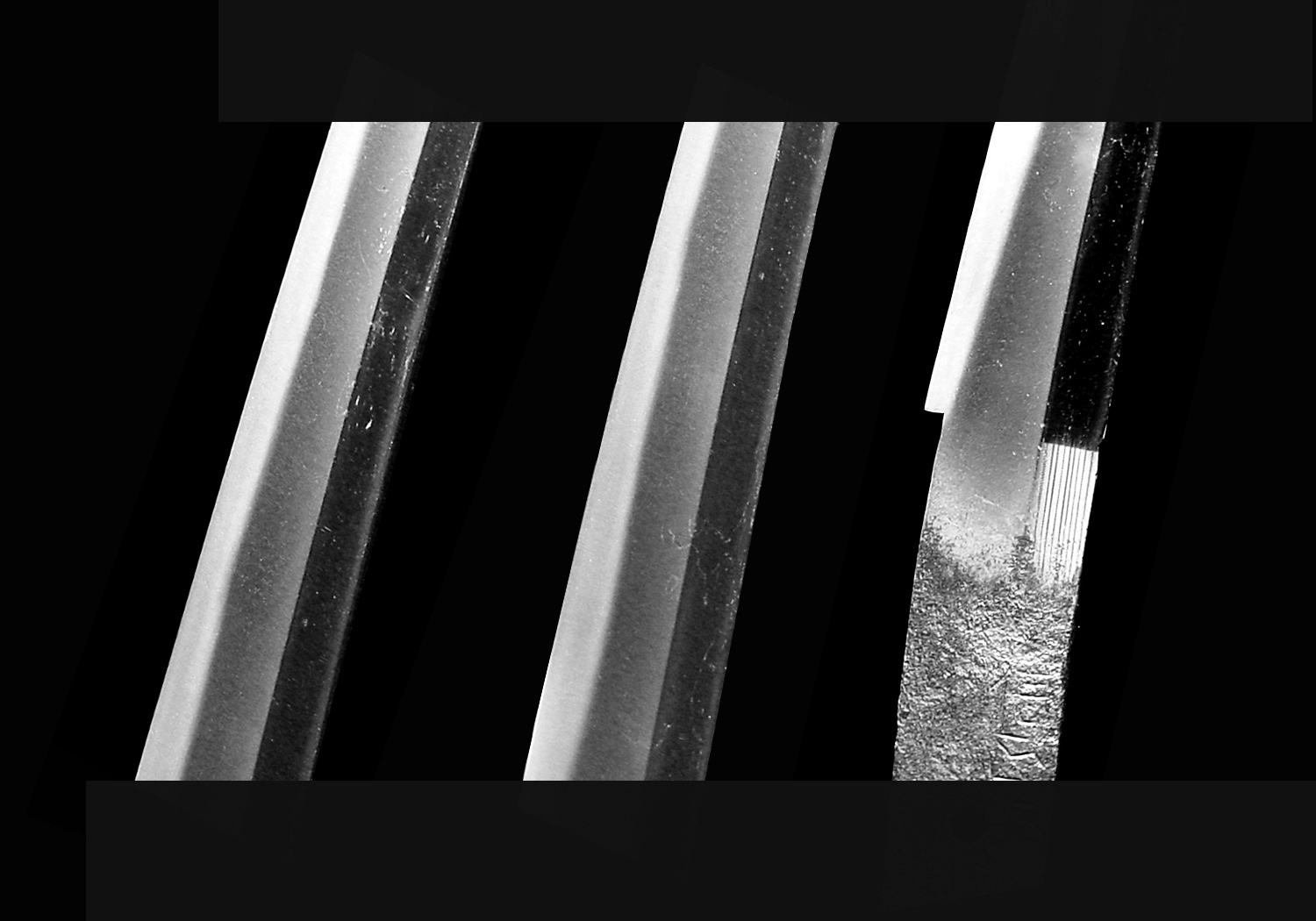
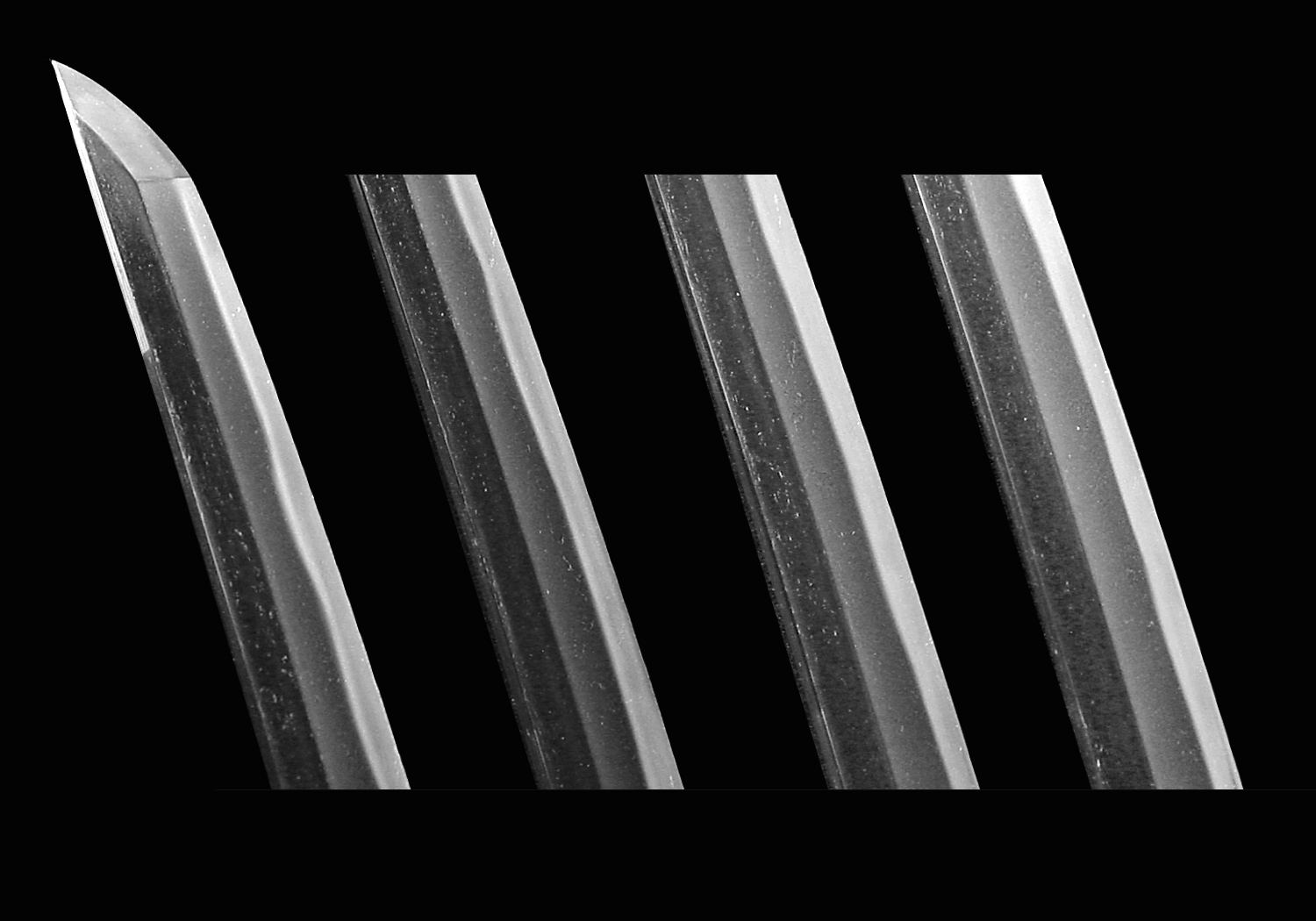
Keijō: shinogi-zukuri, iori-mune, relatively slender mihaba, normal kasane, deep koshizori, funbari, ko-kissaki
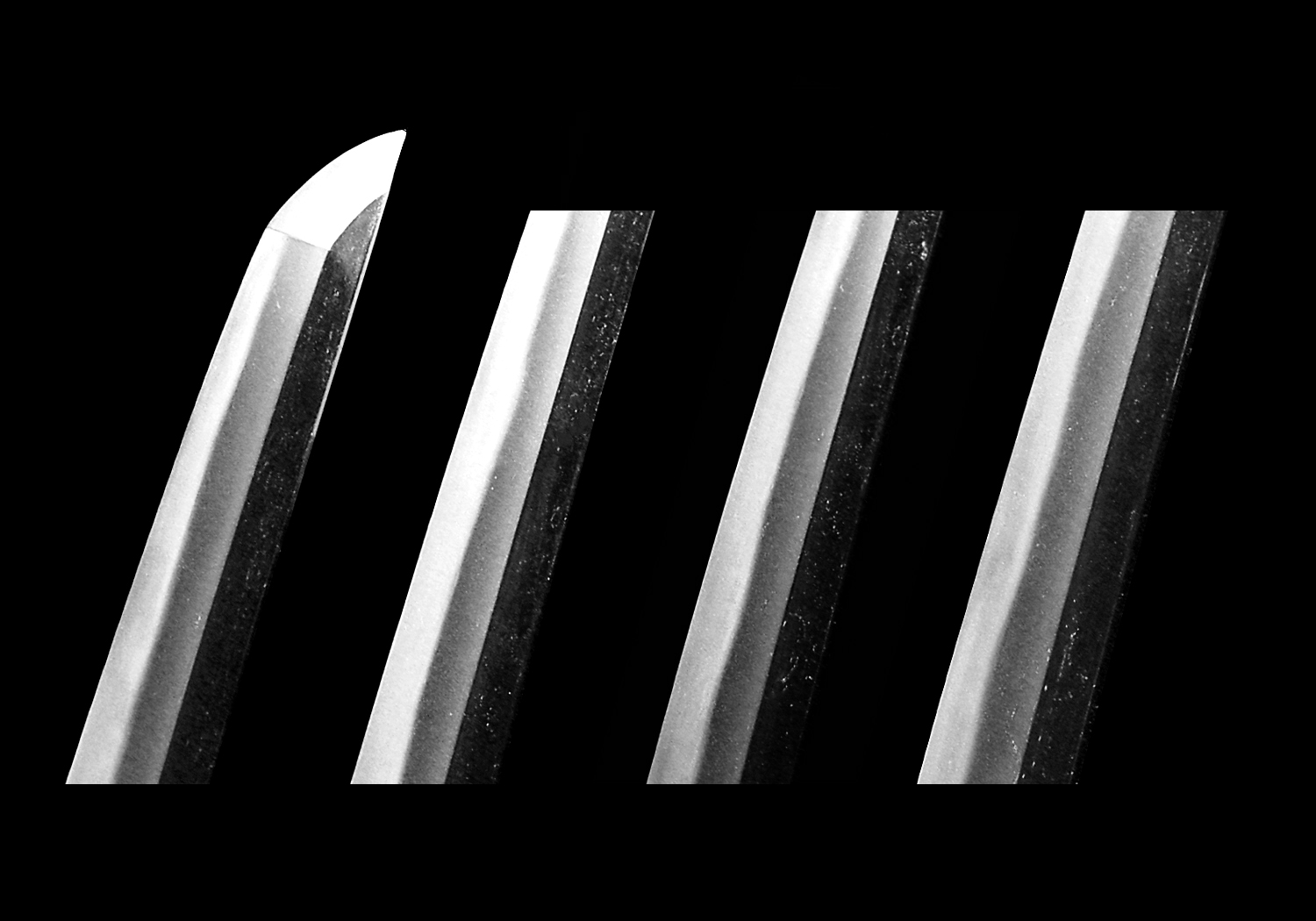
Kitae: itame that is mixed with mokume and partially with some ō-hada and that features fine ji-nie, chikei, and a midare-utsuri
Hamon: ko-nie-laden and partially somewhat subdued hoso-suguha that is mixed with ko-chōji, ko-midare, ashi, yō, and with fine sunagashi
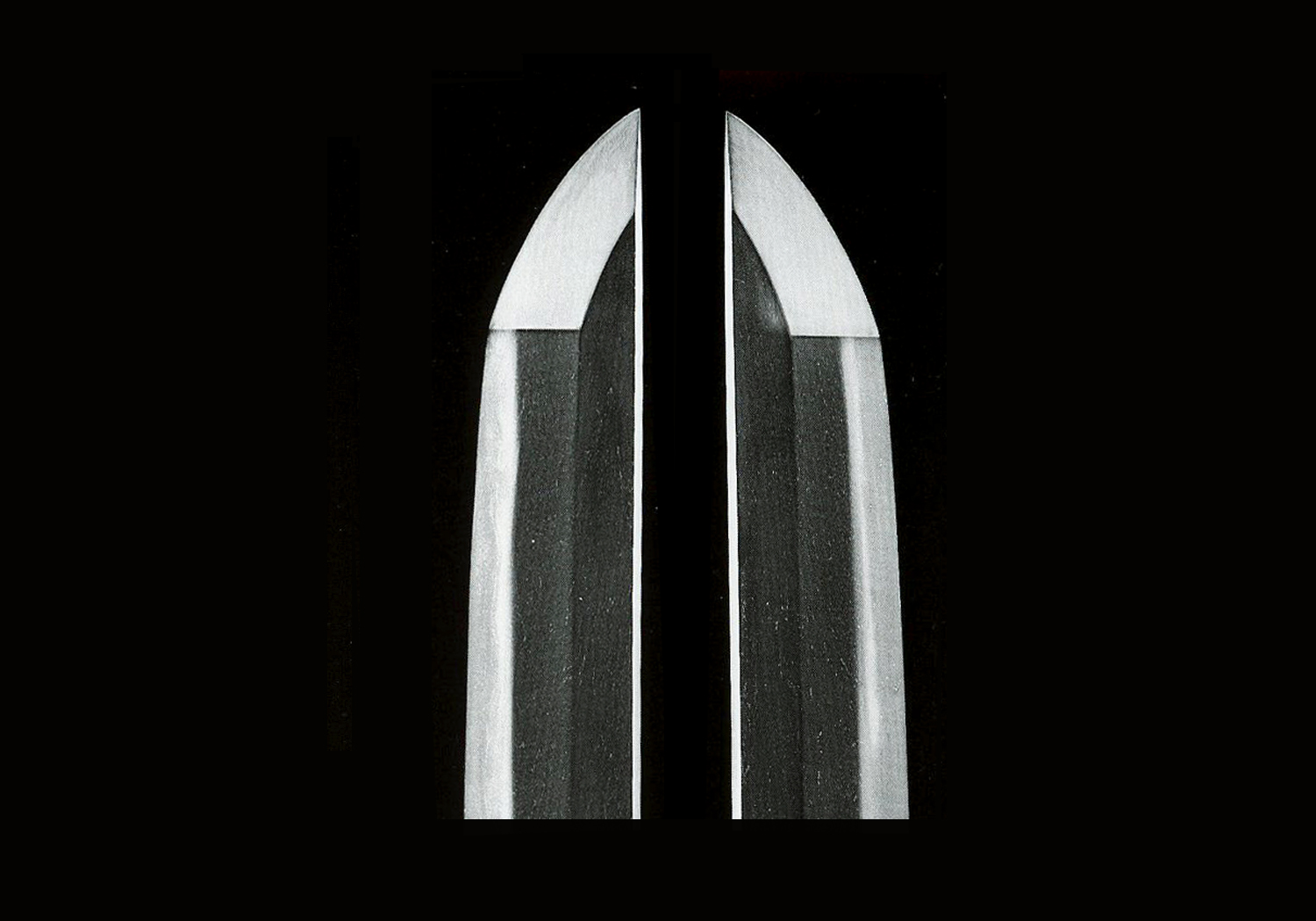
Bōshi: sugu with hakikake at the tip and with a ko-maru-kaeri
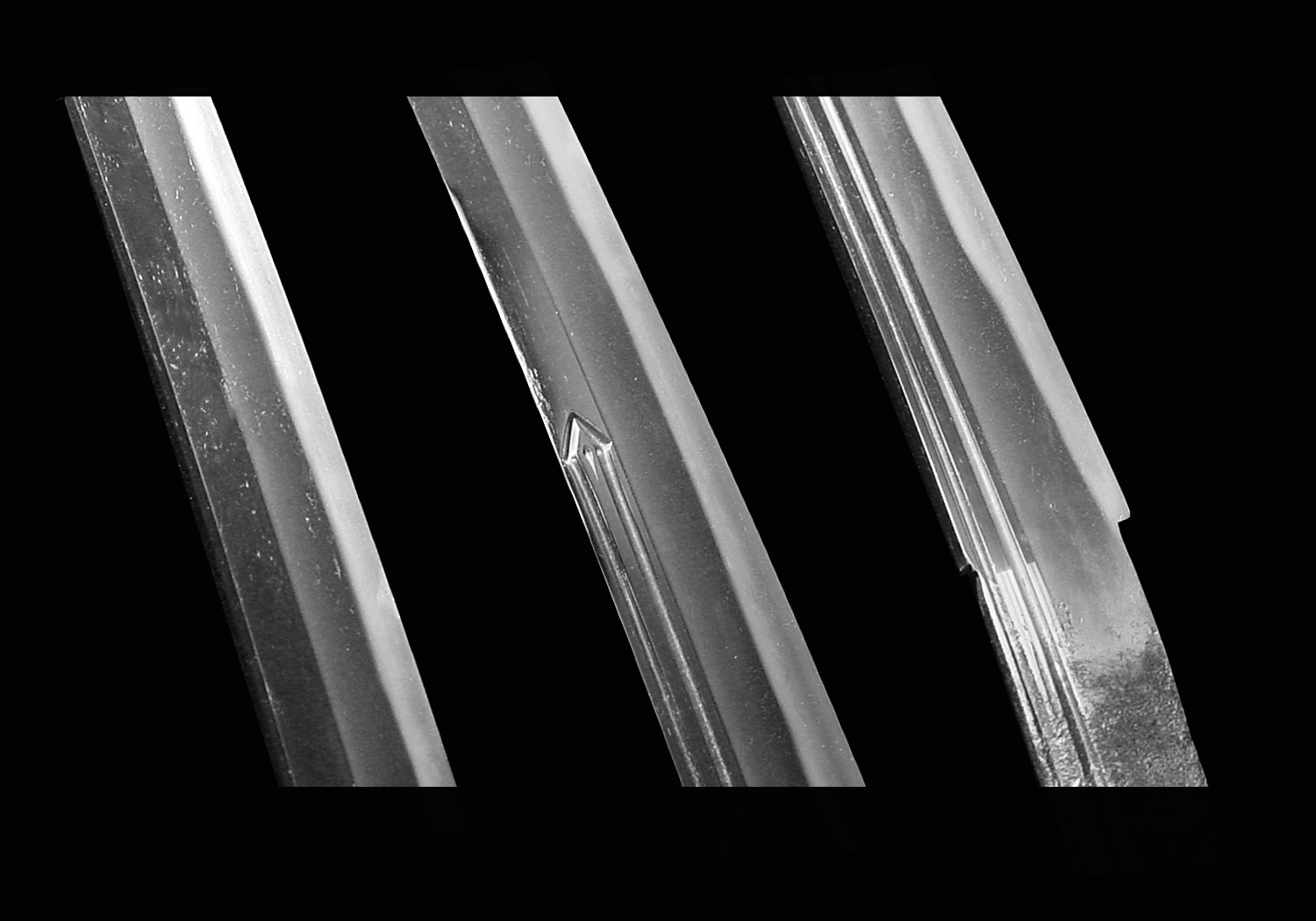
Horimono: on the haki-omote side a suken at the base
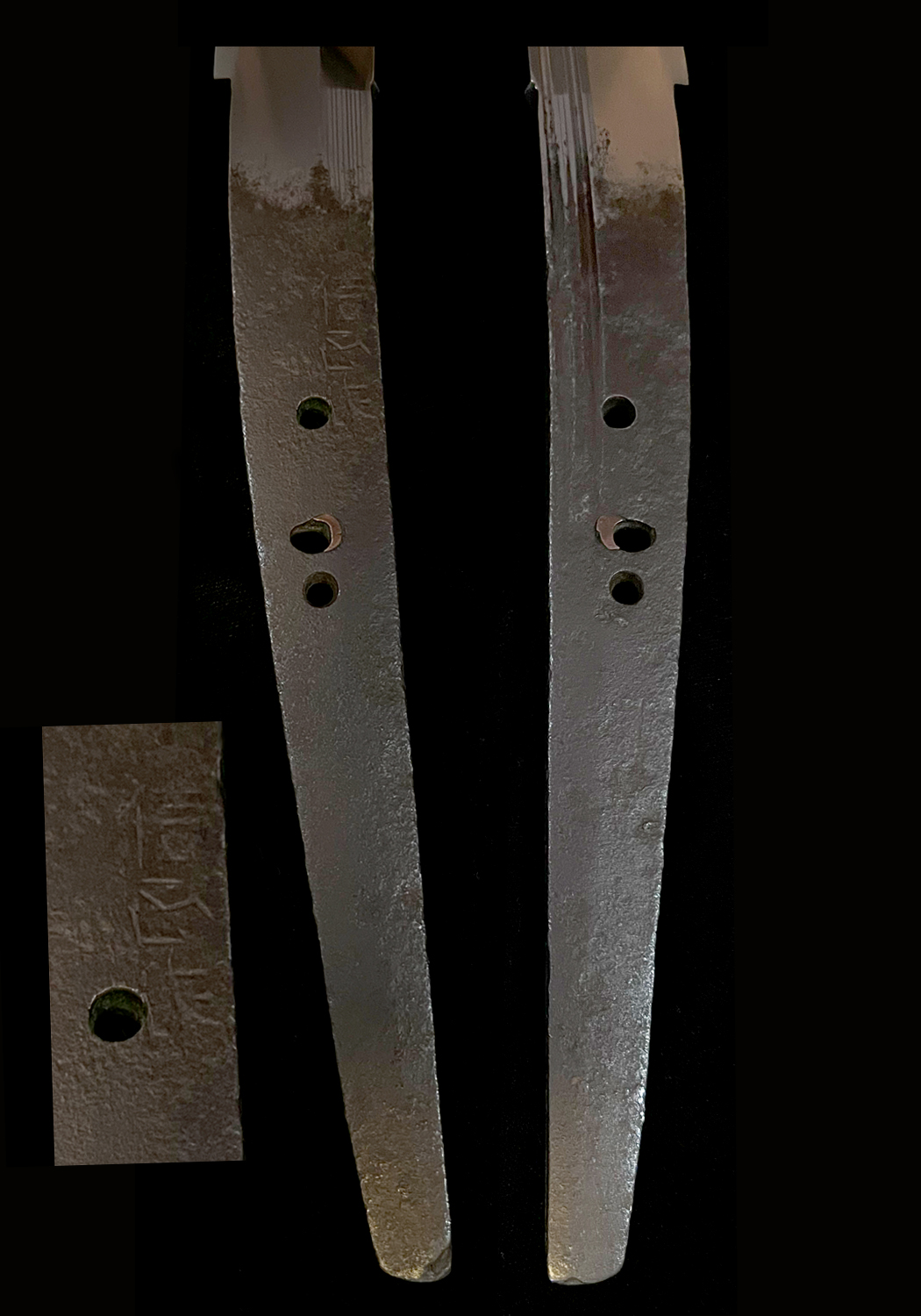
Nakago: ubu, ha-agari-kurijiri, katte-sagari yasurime, three mekugi-ana, the haki-ura side bears above of the mekugi-anaand towards the nakago-mune a relatively thickly chiseled sanji-mei
Explanation
According to the Meikan, Nobumasa (信正) was the son of Bizen Fukuoka-Ichimonji Nobufusa
(福岡一文字信房) and active around Jōei (貞永, 1232–1233), and one theory suggests that he was the same smith as Nobumasa (延正), who wrote his name with a different, but homophonous character for Nobu, although this topic needs further study. Only very few authentic signed works of Nobumasa exist, and this is even more true for such that are perfectly preserved with an ubu-nakago as this blade. With its deep koshizori, funbari, and ko-kissaki, this blade is of an elegant and highly dignified tachi-sugata. Its jiba reflects in many aspects what are referred to as the classical aesthetics of the Ko-Ichimonji approach, and the condition of its jiba is strikingly healthy. Among all known signatures of this smith, the mei here belongs to the smallest examples, and what makes it rare is that it is placed on the haki-ura side.
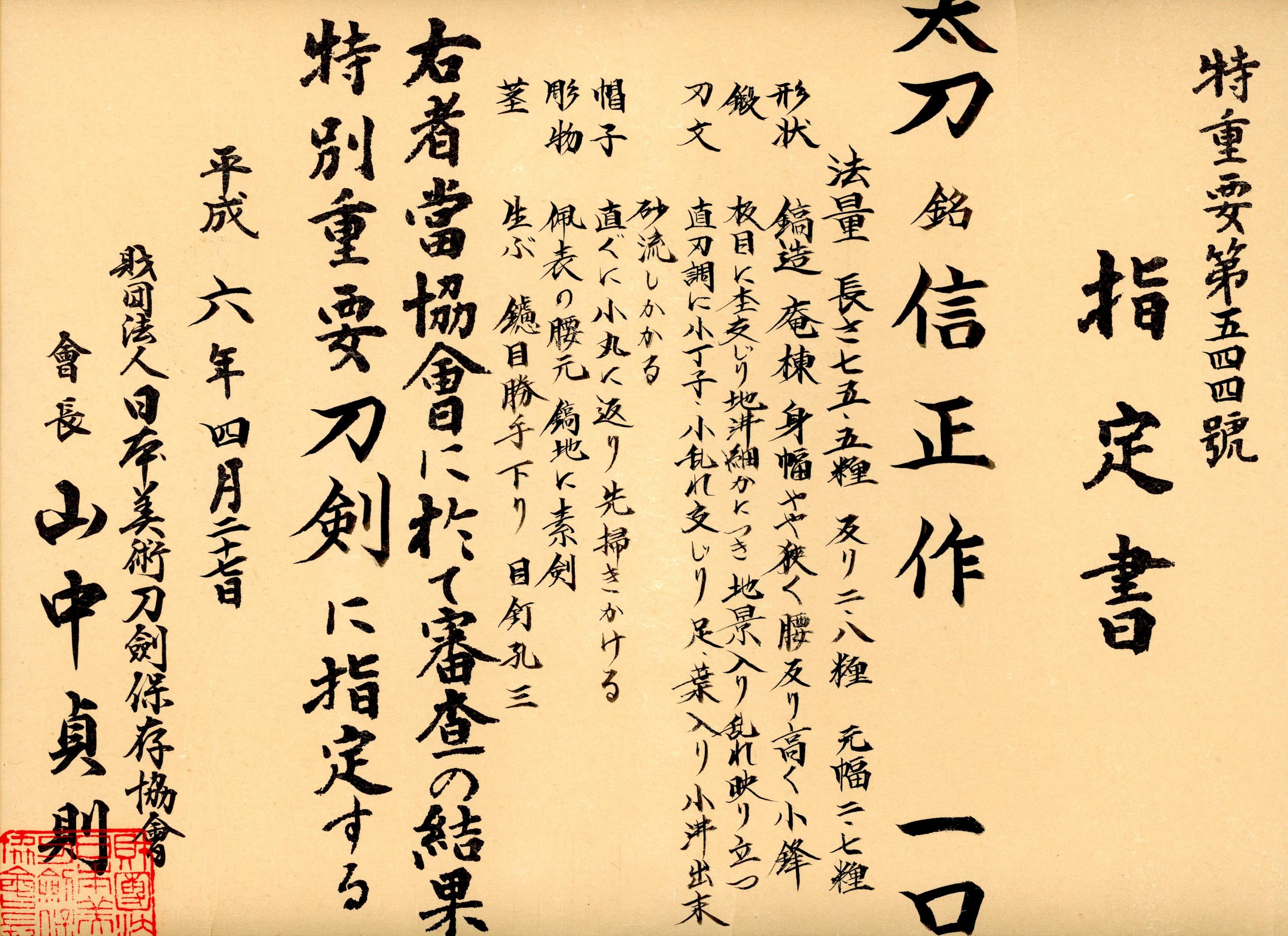
In April of 1994 it was submitted to the Tokubetsu Jûyô shinsa and it passed. This was the first Tokubetsu shinsa since it was awarded Jûyô Tôken and it passed easily on the first submission. Below is the translation of the Tokubetsu Jûyô setsumei:
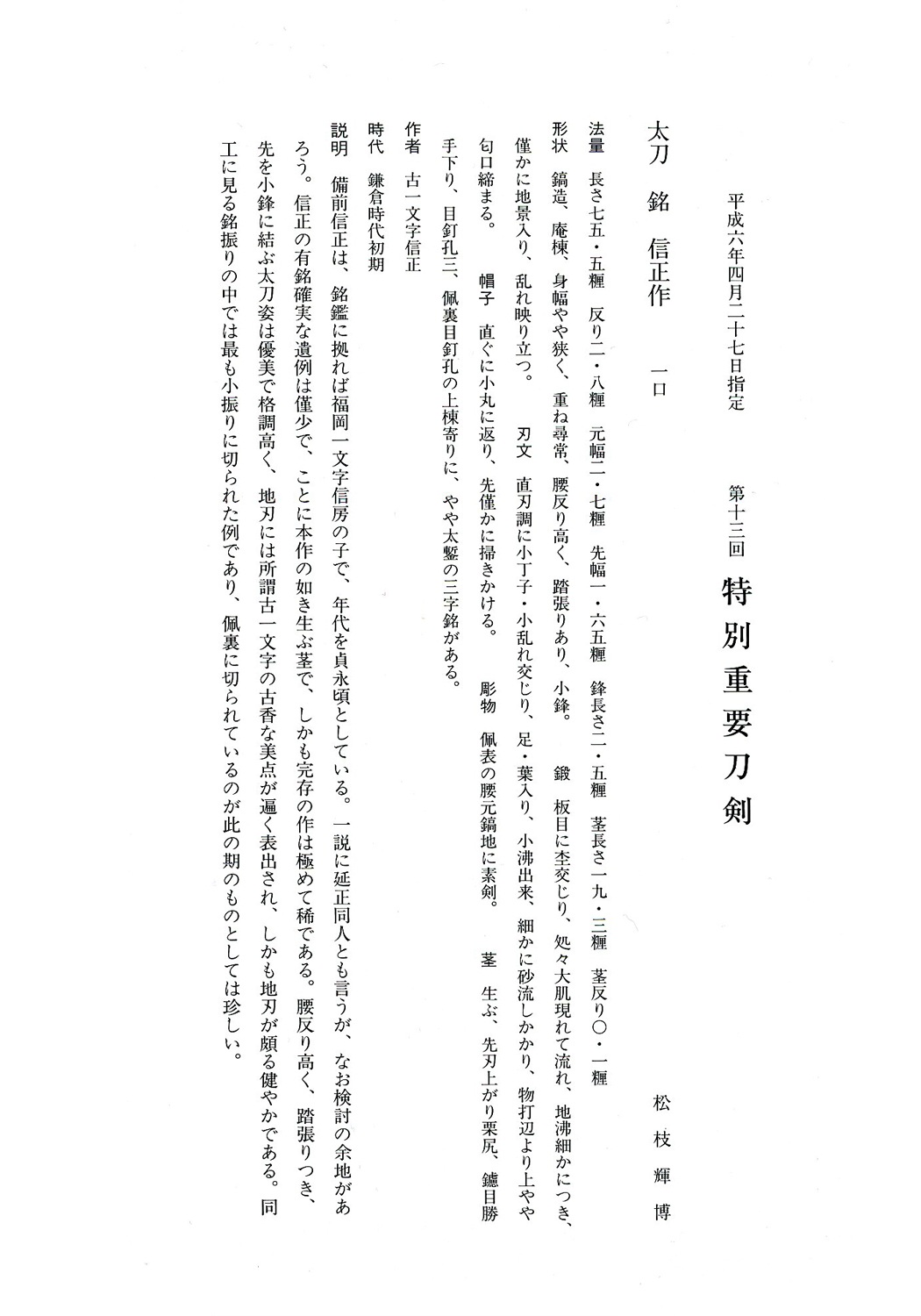
Tokubetsu-Jūyō Tōken at 13th Tokubetsu-Jūyō Shinsa held on April 27, 1994
Tachi, mei: Nobumasa saku (信正作)
Measurements
Nagasa 75.5 cm, sori 2.8 cm, motohaba 2.7 cm, sakihaba 1.65 cm, kissaki-nagasa 2.5 cm, nakago-nagasa 19.3 cm, nakago-sori 0.1 cm
Description
Keijo: shinogi-zukuri, iori-mune, relatively slender mihaba, normal kasane, deep koshizori, funbari, ko-kissaki
Kitae: itame that is mixed with mokume and nagare-based ō-hada in places and that features fine jinie, a little bit of chikei, and a midare-utsuri
Hamon: suguha-chō in ko-nie-deki that is mixed with ko-chōji, ko-midare, ashi, yō, and fine sunagashi, and the nioiguchi becomes somewhat tight from the monouchi upwards
Boshi: sugu with a ko-maru-kaeri and a few hakikake at the tip
Horimono: on base of the haki-omote side a suken in the shinogi-ji
Nakago: ubu, ha-agari-kurijiri, katte-sagari yasurime, three mekugi-ana, the haki-ura side bears above of the first mekugi-ana and towards the nakago-mune a relatively thickly chiseled sanjimei
Artisan Ko-Ichimonji Nobumasa
Era Early Kamakura period
Explanation
According to the Meikan, Bizen Nobumasa (信正) was the son of Fukuoka-Ichimonji Nobufusa
(信房) and active around Jōei (貞永, 1232–1233). One theory suggests that he was the same smith who signed his name with the homophonous characters (延正), but further research is necessary to either confirm or dismiss this approach. Only very few authentic signed works of Nobumasa exist, particularly such that are perfectly preserved with an ubu-nakago as is the case here. This blade has a deep koshizori with funbari and a ko-kissaki and is thus of a graceful and dignified tachi sugata.
The jiba reflects all the classical aesthetics of what is referred to as the Ko-Ichimonji style, and
both ji and ha are perfectly healthy. Among all signed blades known, this blade bears one of the
smallest mei, and it is rare for this time period for the signature to be positioned on the haki-ura side.
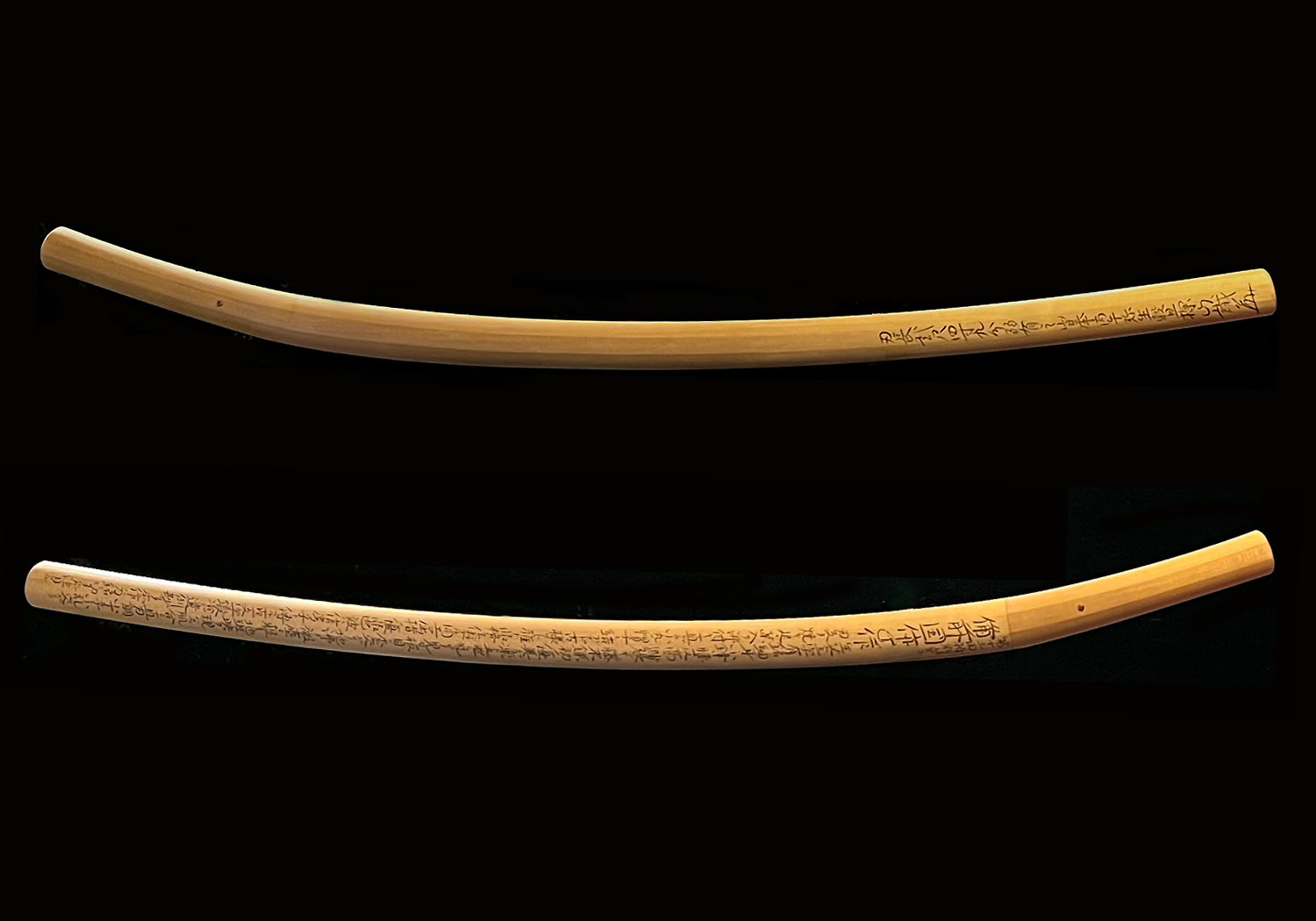
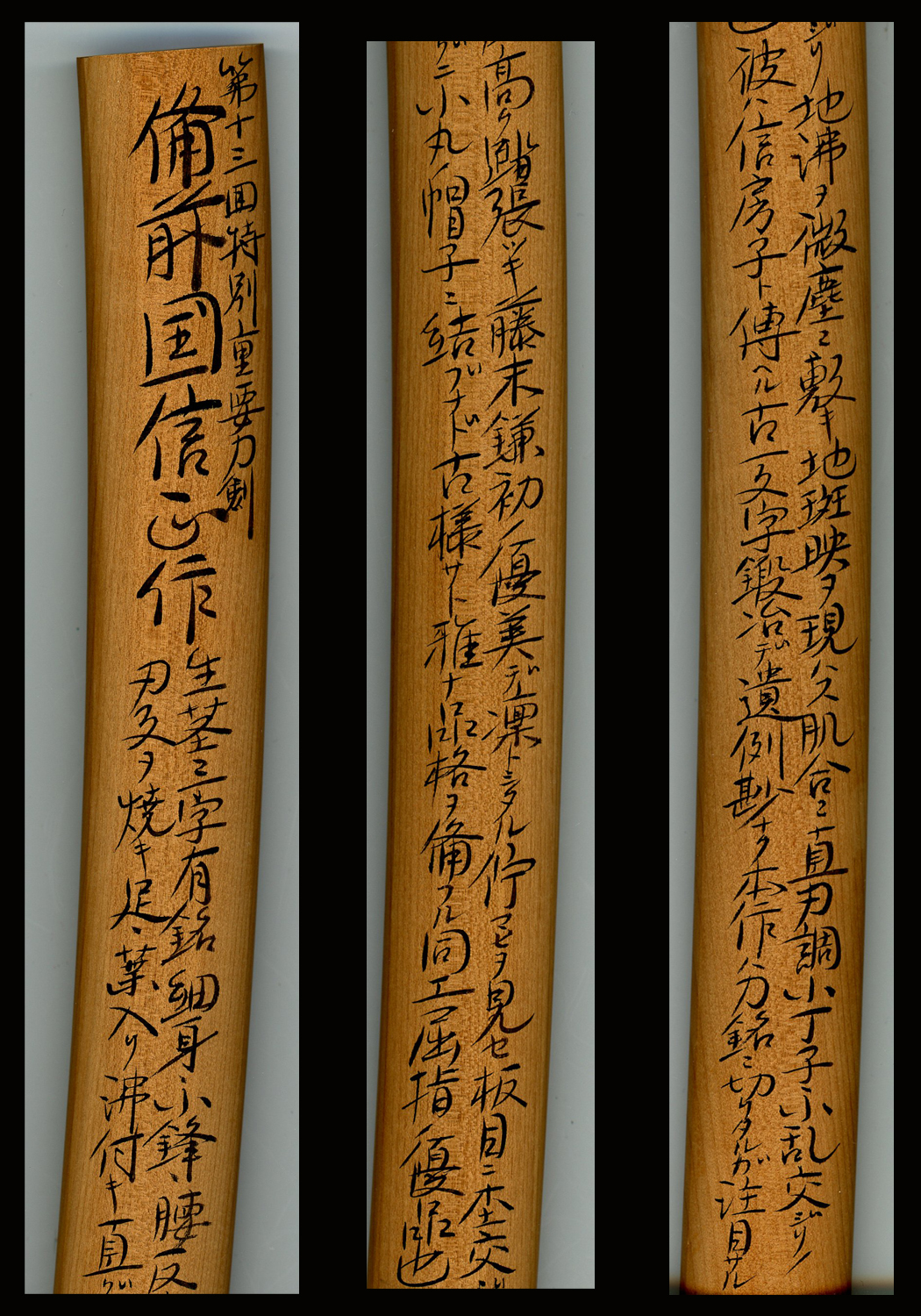
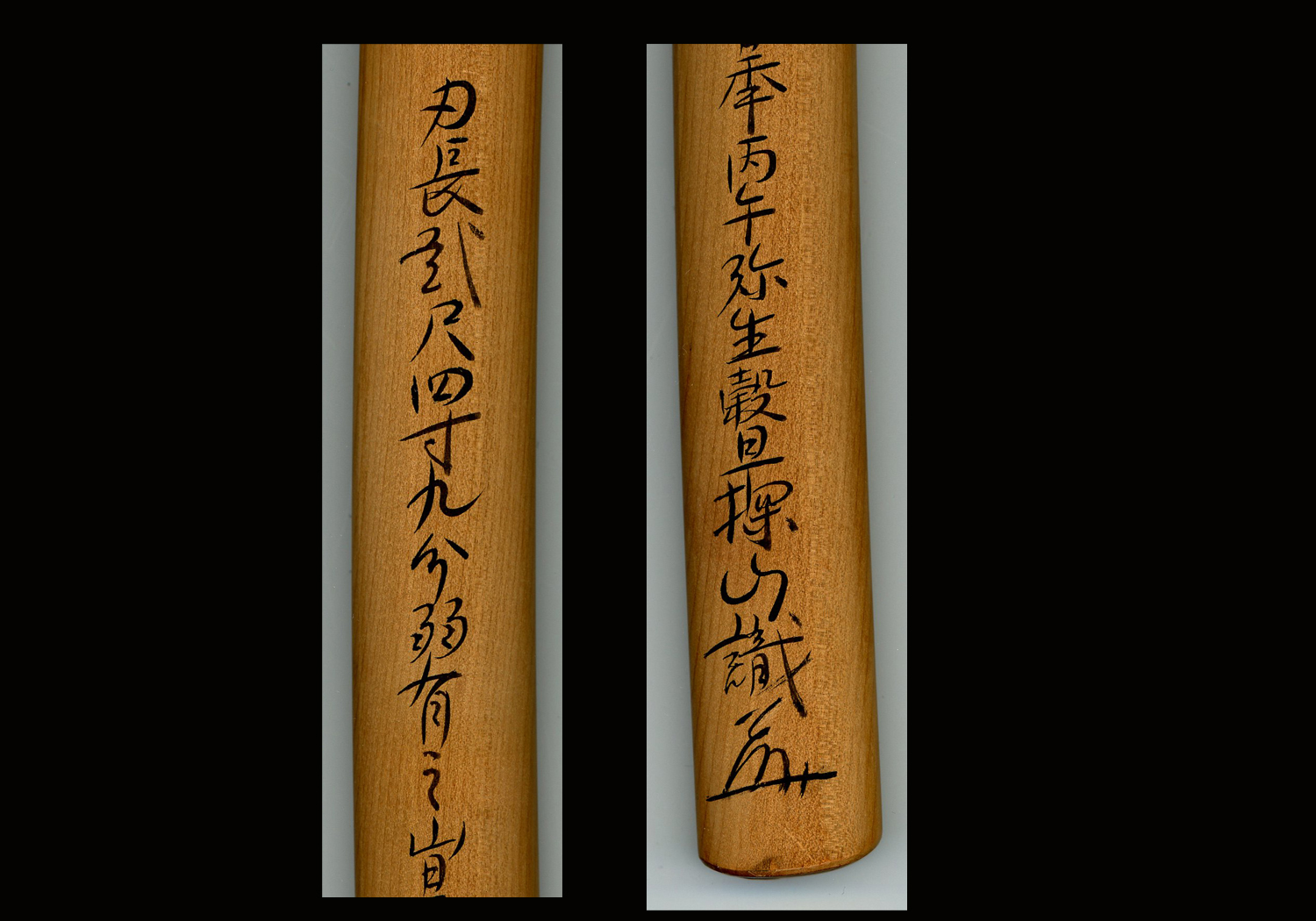
This sword comes in a shirasaya with an extensive sayagaki by Tanobe Sensei formerly of the NBTHK. The sayagaki contains the following information:
Tokubetsu-Jūyō at 13th Tokubetsu-Jūyō Shinsa
Made by Nobumasa from Bizen province
This blade has an ubu-nakago, bears a three-character signature, and displays with its slender mihaba, ko-kissaki, deep koshizori, and funbari the elegant and graceful shape from the end of the Heian and early Kamakura period. The forging structure is an itame mixed with mokume that features fine ji-nie and a jifu-utsuri, the hamon is a nie-based suguha-chō mixed with ko-chōji, ko-midare, ashi, and yō, and the bōshi is sugu with a ko-maru-kaeri. Thus, we have here an elegant and dignified blade of classical elegance, which can be regarded as an outstanding masterpiece of all works known by this smith. According to tradition, Nobumasa was the son of Nobufusa, and he is classified as a Ko-Ichimonji smith. Surviving works of his are rare, and it should be pointed out that this blade is signed in katana-mei.
Blade length ~ 75.5 cm
Written by Tanzan [Tanobe Michihiro] on a lucky day in March in the year of the horse of this era (2026) + monogram.
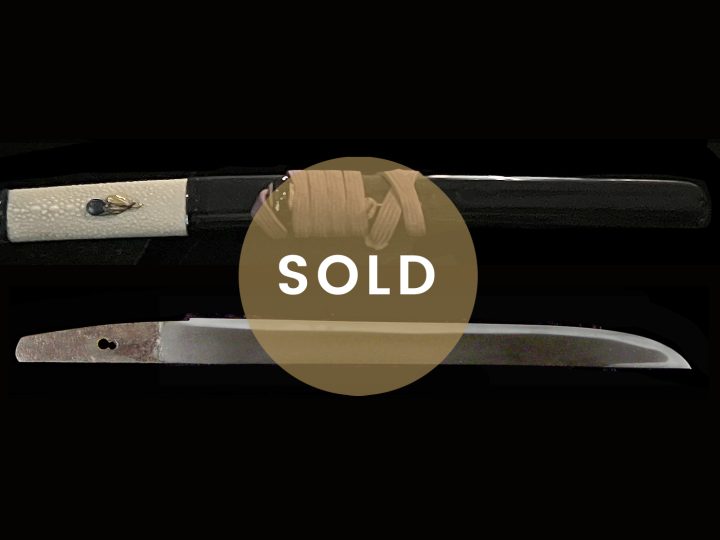
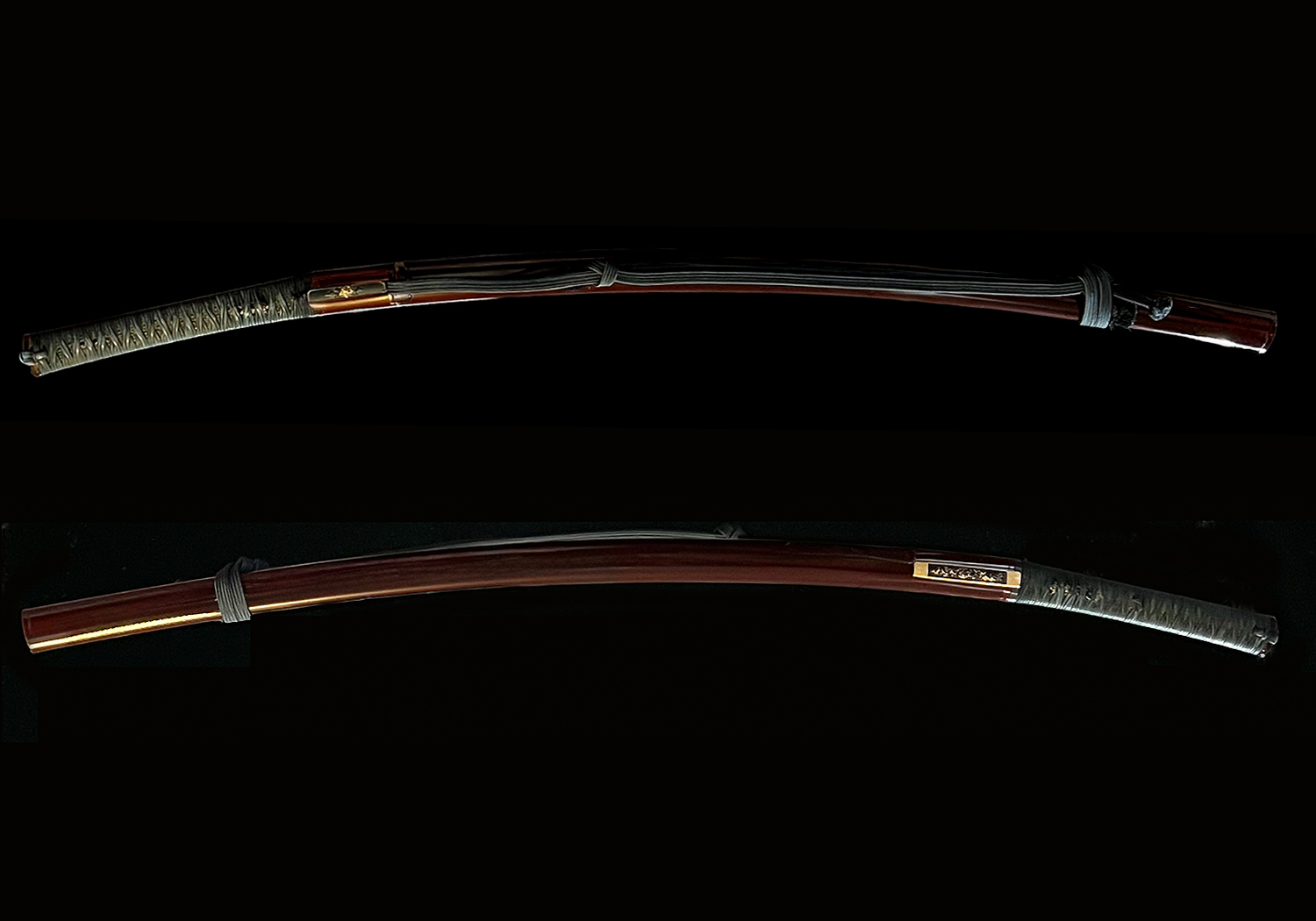
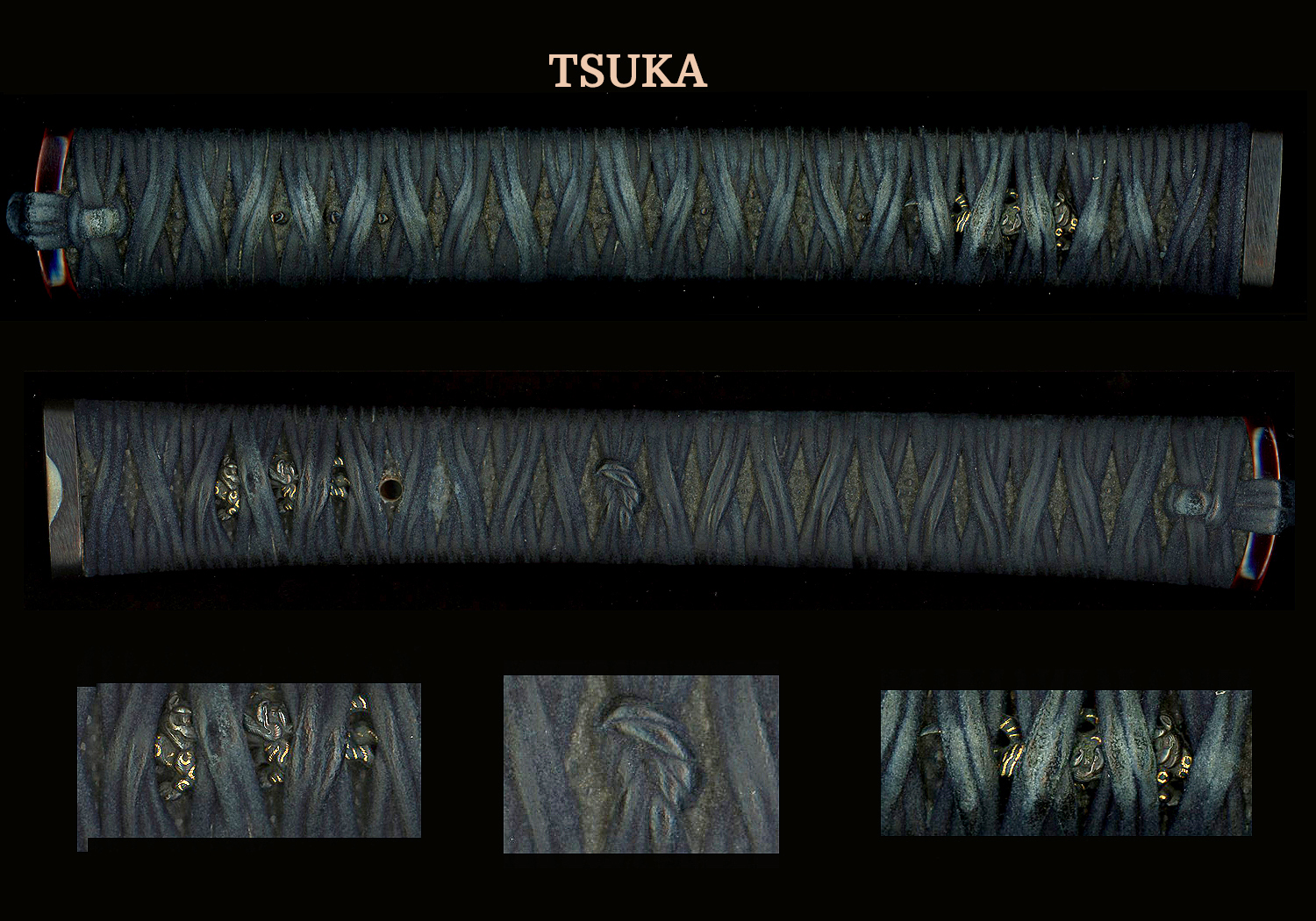
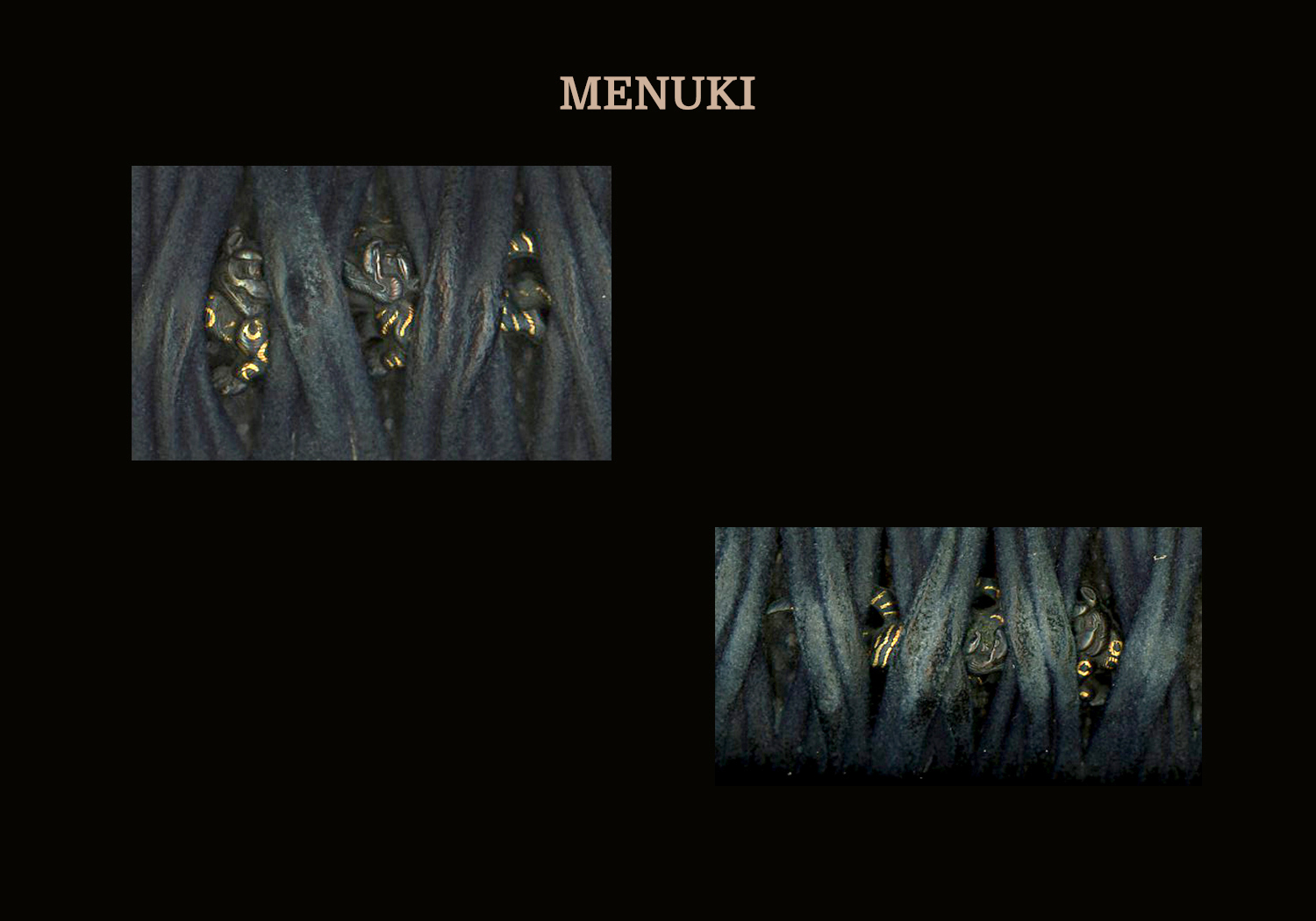
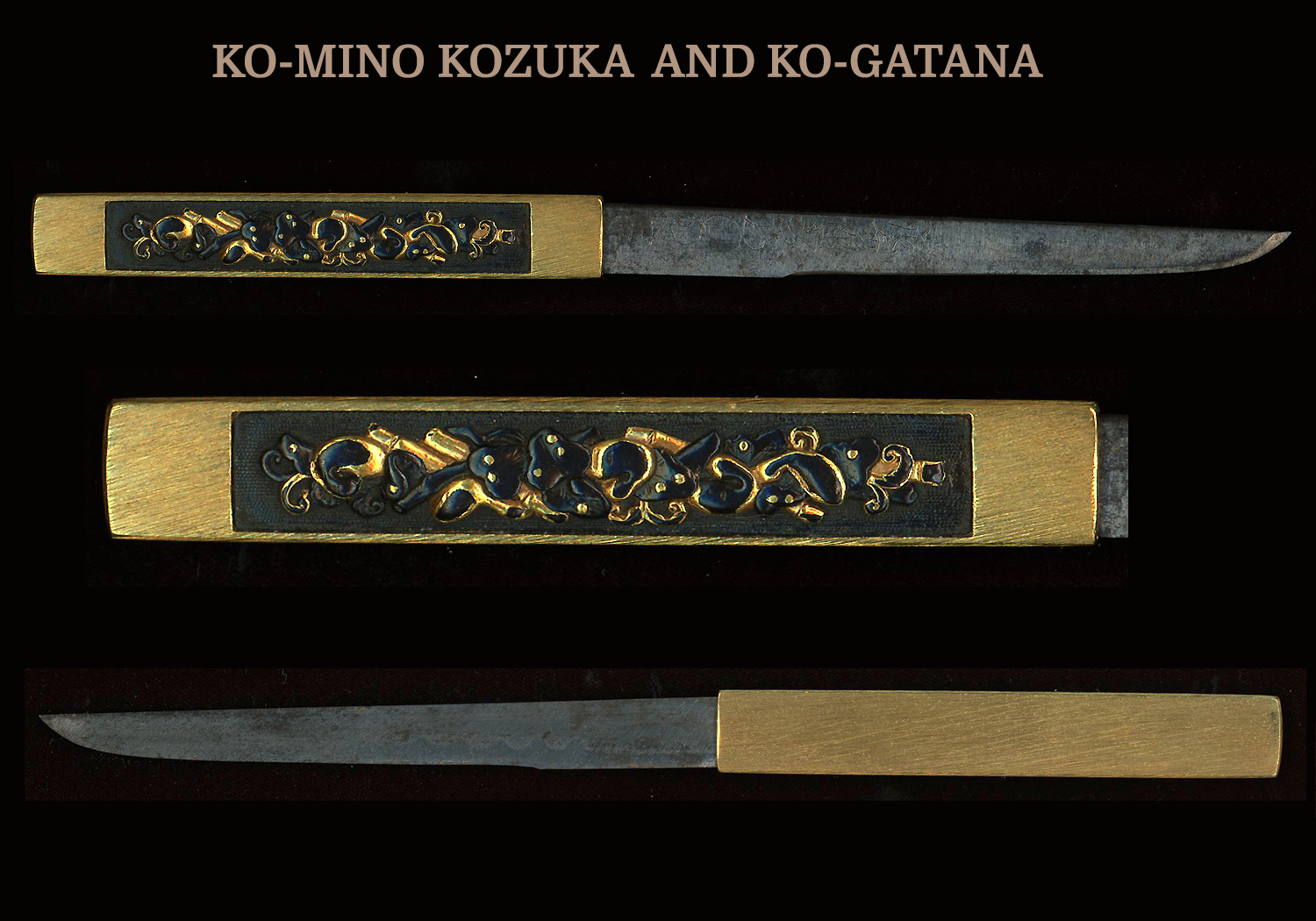
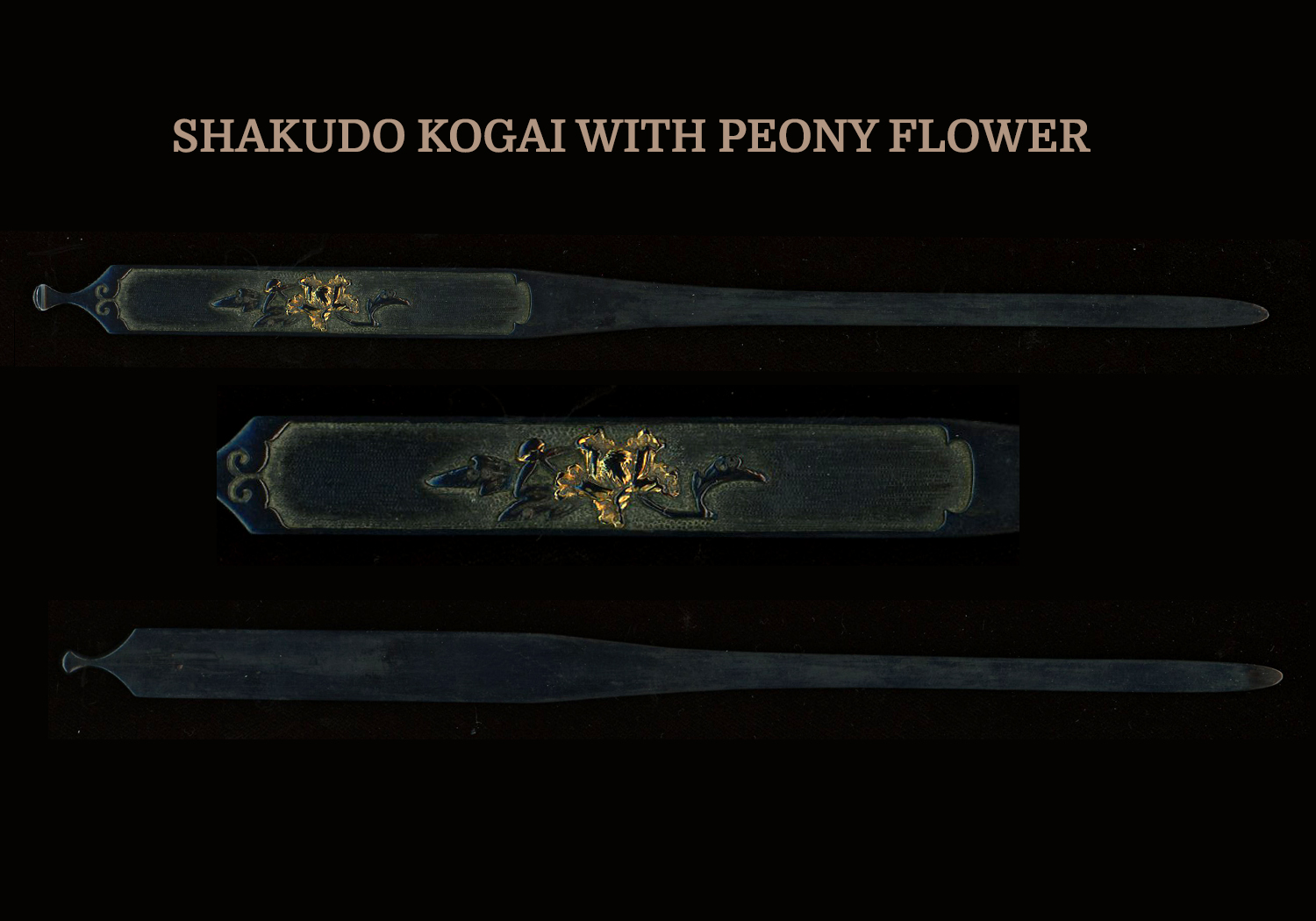
This blade is also accompanied by a beautiful koshirae known as a Kenshin koshirae. It is a late Edo copy of a famous koshirae owned and created for the famous Sengoku Jidai Daimyo, Uesugi Kenshin. The original koshirae of this design was used by Uesugi Kenshin to house the famous Sanchômô Ichimonji blade now a part of the Setouchi City Bizen Museum in Okayama Prefecture, Japan.

KENSHIN KOSHIRAE
JÛYÔ TÔKEN CERTIFICATION DOCUMENTS
TOKUBETSU JÛYÔ TÔKEN CERTIFICATION DOCUMENTS