
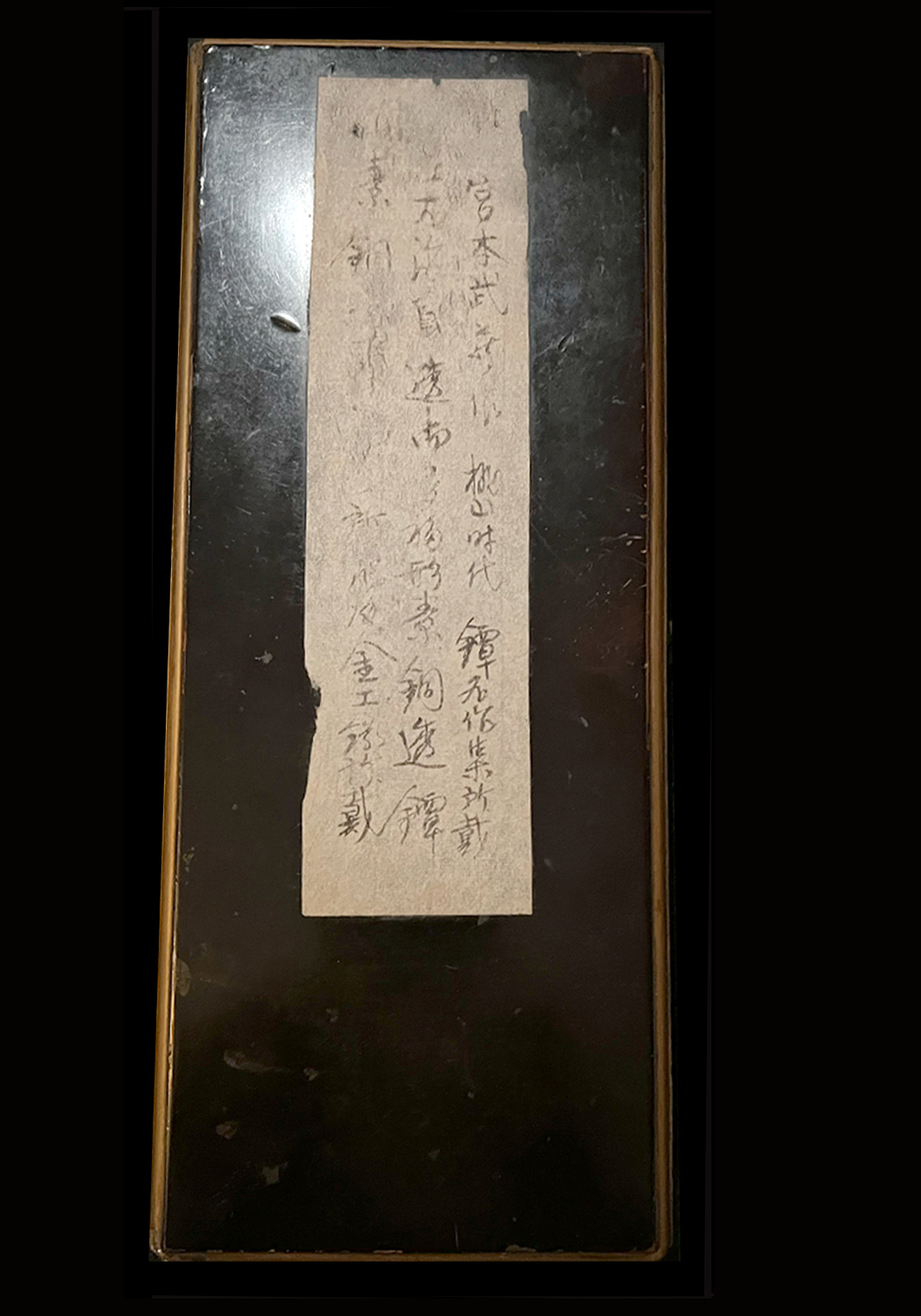
Miyamoto Musashi was born in the twelfth year of Tensho (1584) and he died on the nineteenth day of May of the second year of Shohō (1645) at the age of 62. He was the most famous Japanese swordsman, in history as well as a strategist, artist, and writer who became renowned through stories of his unique double-bladed (a sword in each hand) style of swordsmanship and had an undefeated record in his over 60 duels.
In the seventeenth year of Kan-ei (1640), he accepted an offer from lord Hosokawa Tadatoshi, and moved to Higo where he taught military strategy. In his later years he also became well known for his paintings and carvings. The perfection and strong determination reflected in art work conveys to the observer a sense of Miyamoto Musashi’s mastery of the sword and his search for perfection.
Aside from paintings and carvings, Musashi also made several tsuba and other sword fittings during his six-year residence in Higo. During that time, he reputedly became acquainted with several famous tsuba smiths and kodogu makers including the first Jingo, the second Hikozo, the first Kanshiro, and Hayashi Matashichi. He would certainly have developed a strong interest in designing and making tsuba and other fittings. The works of Musashi are not severe but have warmth and sophistication, the same artistic sense as his painting; strong and mature with the restrained taste of the times. They were made in several mediums including both iron and soft metals such as suaka (copper).
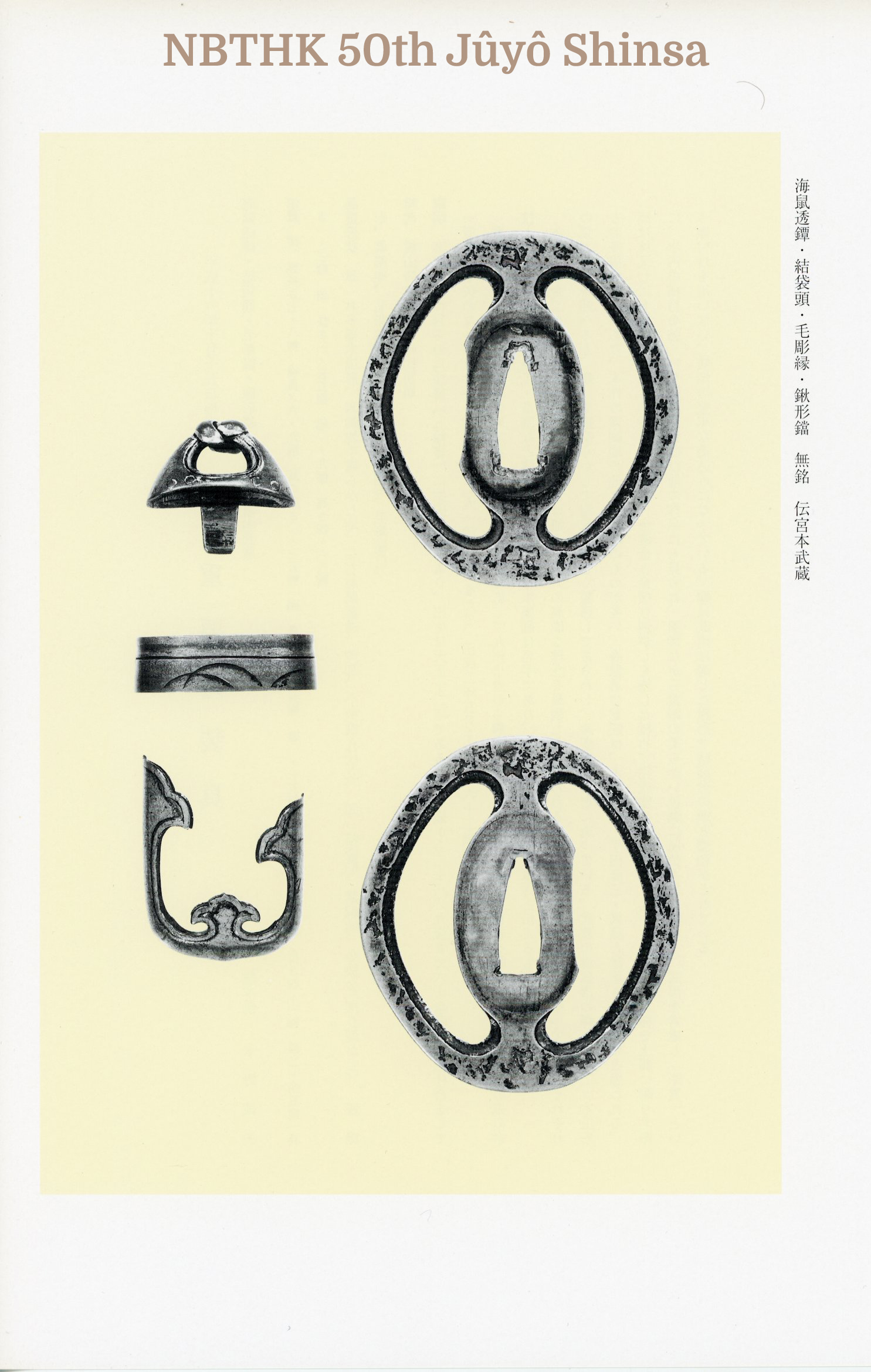
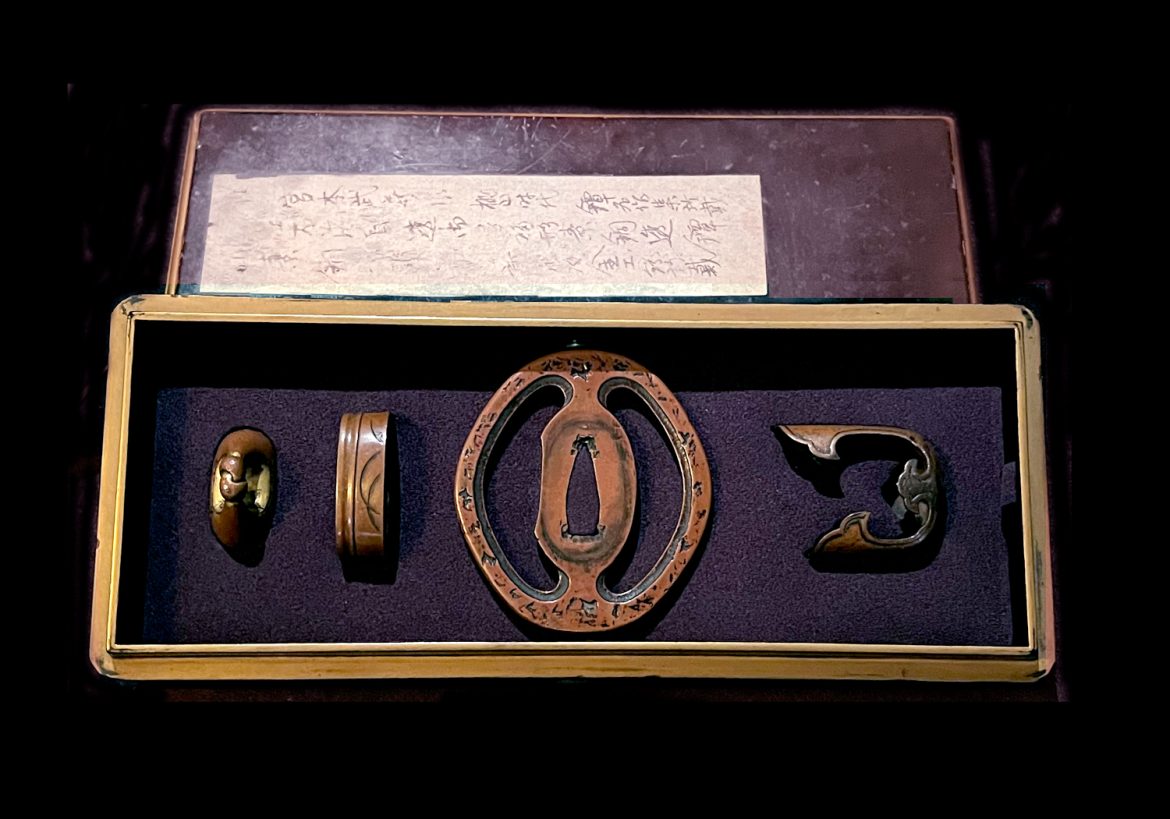
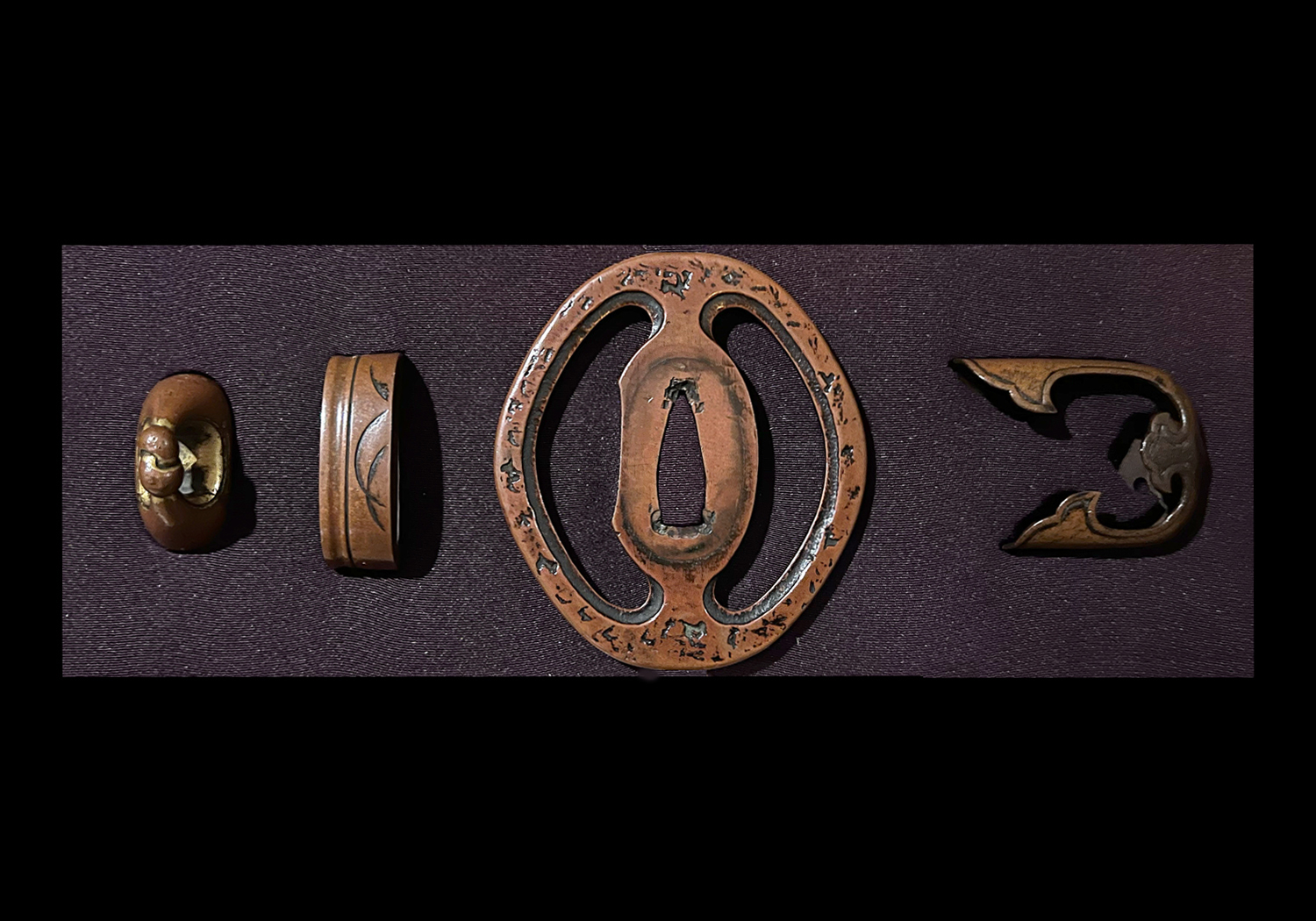
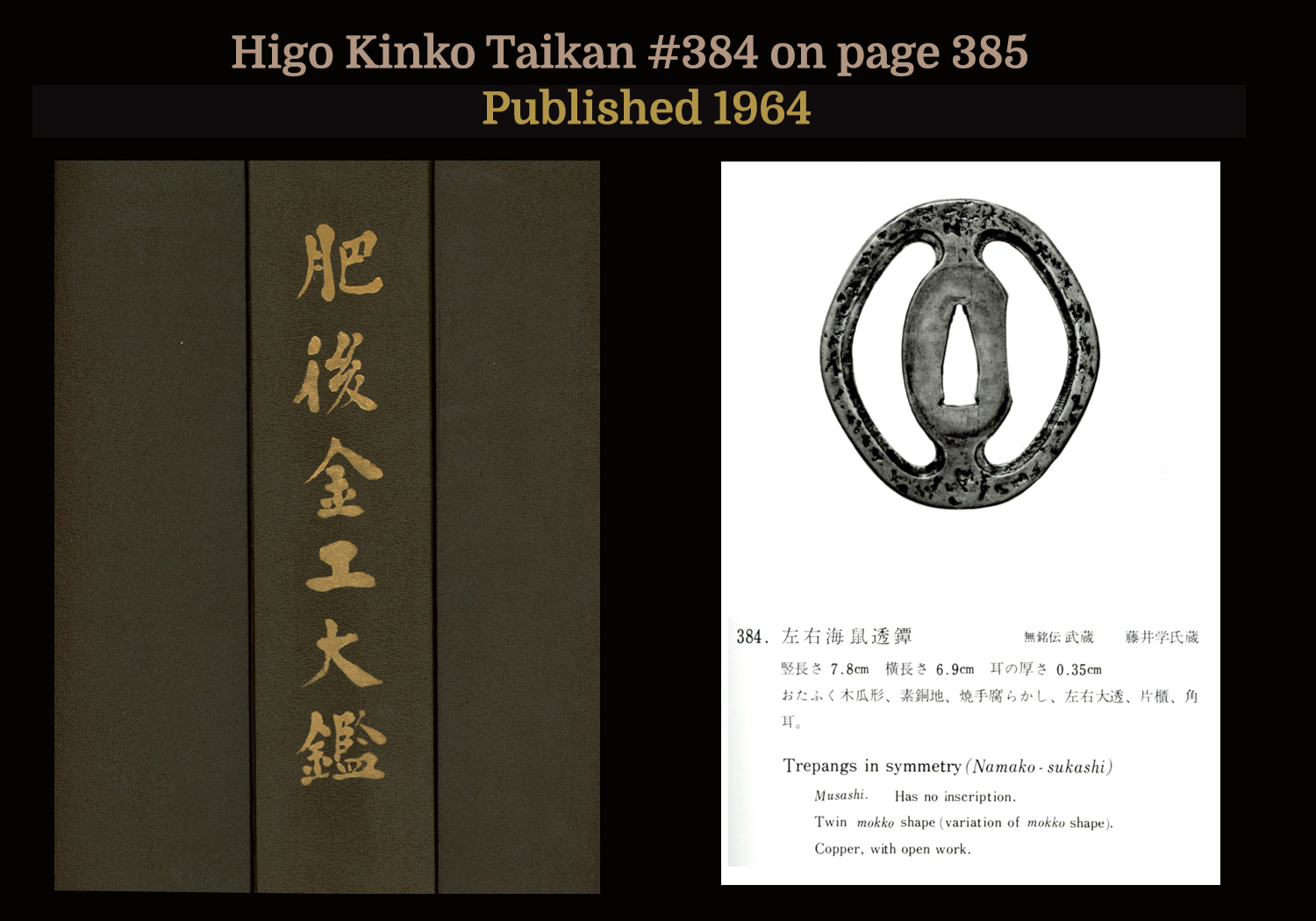
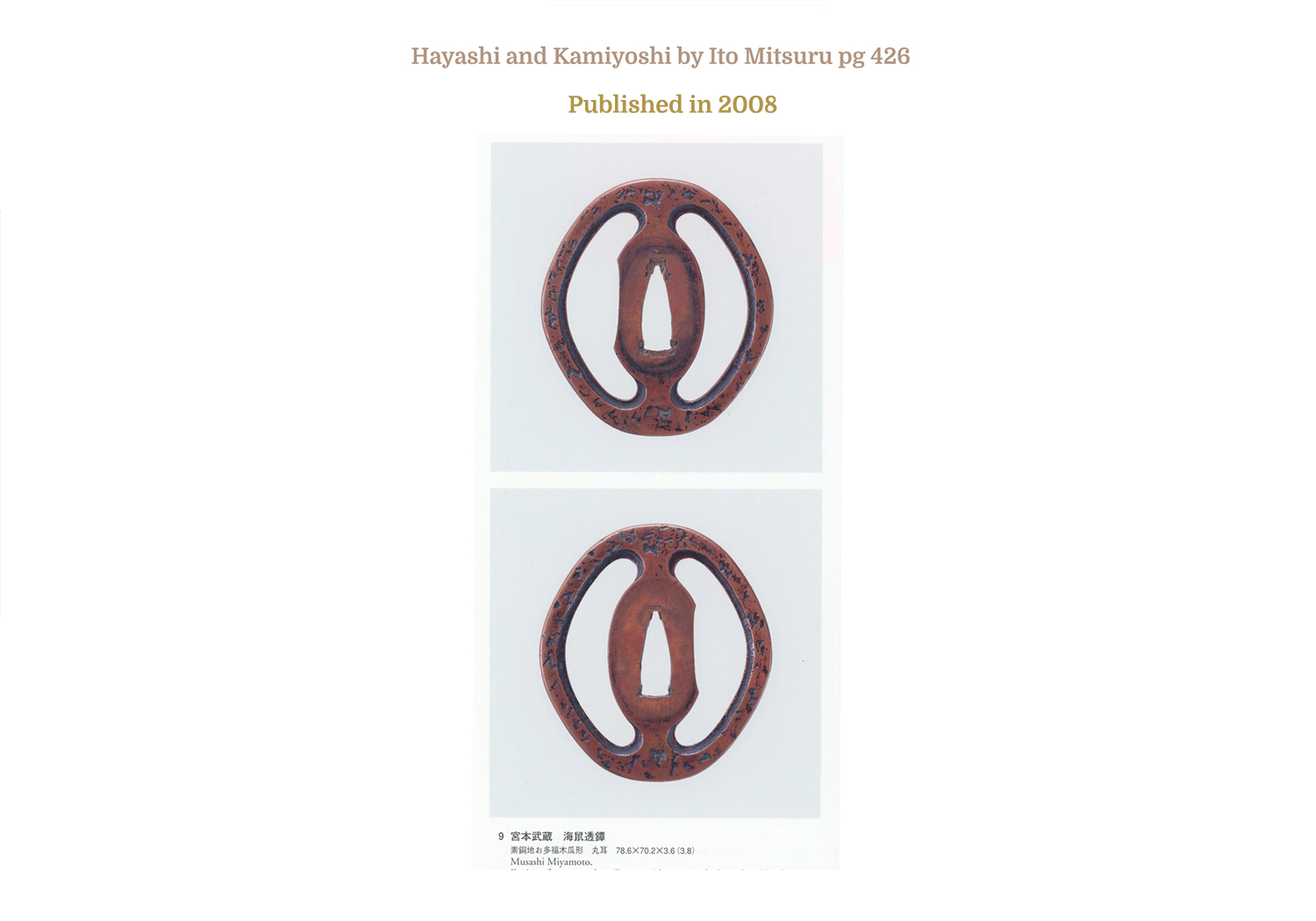
The pieces comprising this set of fittings are made of suaka (pure copper). The tsuba is made in what has become to be known as his sea cucumber design that has become synonymous with Musashi himself. The inside of the openings is beveled and treated with fine chisel strokes whereas the entire remaining surface is rather peculiar and shows irregular hammer punches.
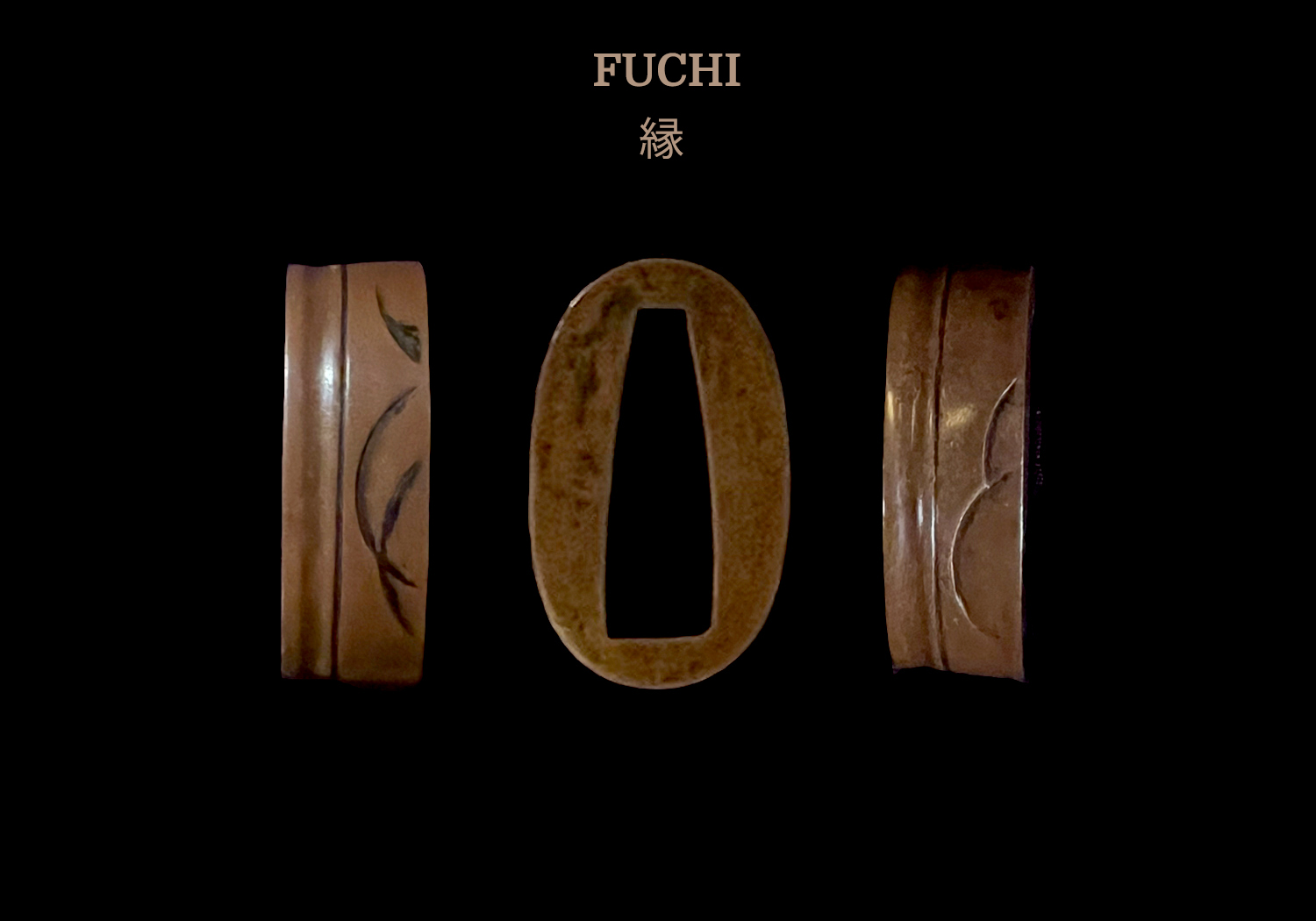
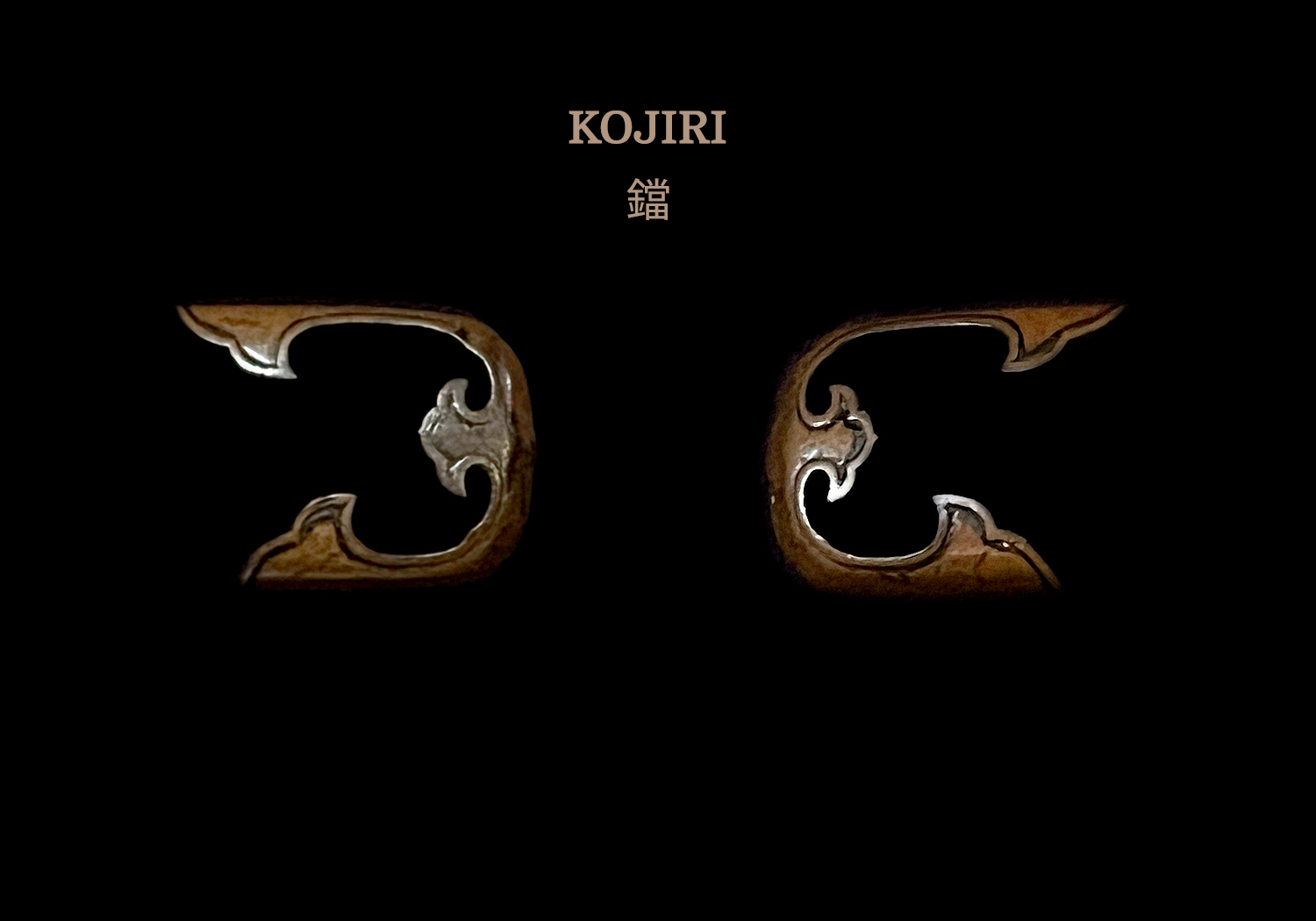
The fuchi with its rather high waist is reminiscent of older fuchi. Of the Muromachi era. The patterns on the surface are either applied by a hammer or a chisel and are strong and tasteful. The kashira is carved from one lump of pure copper. Professional metalworkers make such a complex shape through embossing but Musashi preferred to create it by carving it out of one piece of raw material. Further, the kashira is gilded which is easier to apply than iroe. The kuwagata-kojiri is made by the same technique as the fuchi and the hammer punches along its surface are rough and powerful.
All of these pieces date to the early 1600’s. Further, they have been certified as genuine by the NBTHK in Tokyo and have been awarded the high rank of Jūyō Tōsōgu (Important Sword Fittings). This is their second highest rating.
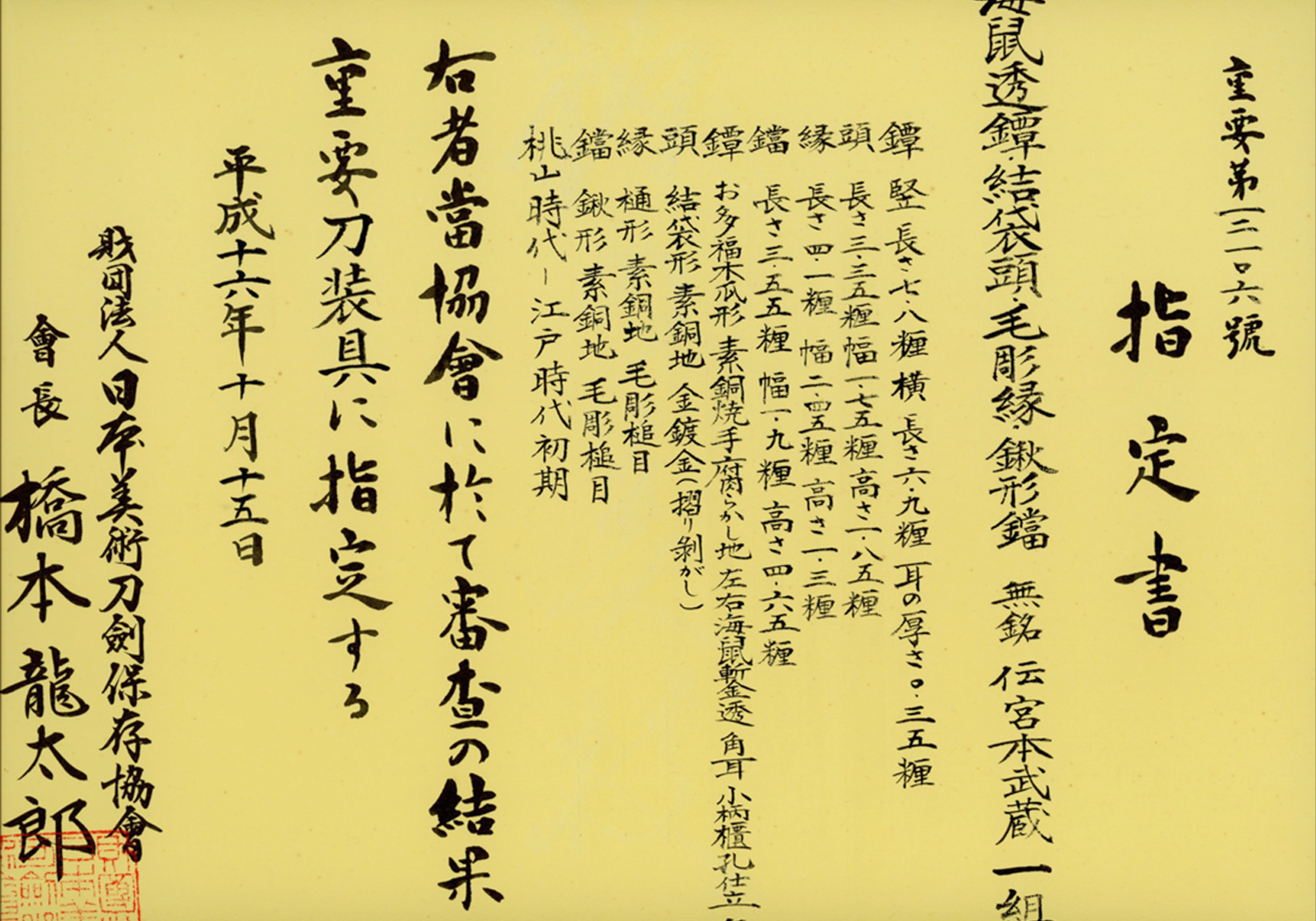
These fittings passed shinsa and were awarded this rank in the 50th shinsa which was held on October 15, 2004. The following is a translation of the certification papers translated into English:
Jūyō-Tōsōgu at the 50th Jūyō Shinsa held on October 15, 2004
Namako-sukashi tsuba, musubi-bukuro kashira, kebori-fuchi, kuwagata, kojiri hitokumi (海鼠透鐔・結袋頭・毛彫縁・鍬形鐺 一組) – One set of fittings comprised of tsuba with openwork design of sea cucumbers, kashira in the shape of a tied bag, fuchi with kebori engravings, and kuwagata-style kojiri
Mumei: Den Miyamoto Musashi (伝宮本武蔵)
Measurements
Tsuba height 7.8 cm, width 6.9 cm, thickness at rim 0.35 cm; kashira length 3.35 cm, width 1.75 cm, height 1.85 cm; fuchi length 4.1 cm, width 2.45 cm, height 1.3 cm; kojiri length 3.55 cm, width 1.9 cm, height 4.65 cm
Interpretation
Tsuba in otafuku-mokkōgata, of suaka, with yakite-kusarakashi finish, chiseled namako-sukashi to the left and right, kaku-mimi, and kozuka-hitsu-ana; kashira of musubi-bukuro type, of suaka, gilded (with artificially abraded surihegashi finish); fuchi of grooved higata type, of suaka, with kebori engravings and tsuchime finish; kojiri of kuwagata type, of suaka, with kebori engravings and tsuchime finish
Era
Momoyama to early Edo period
Explanation
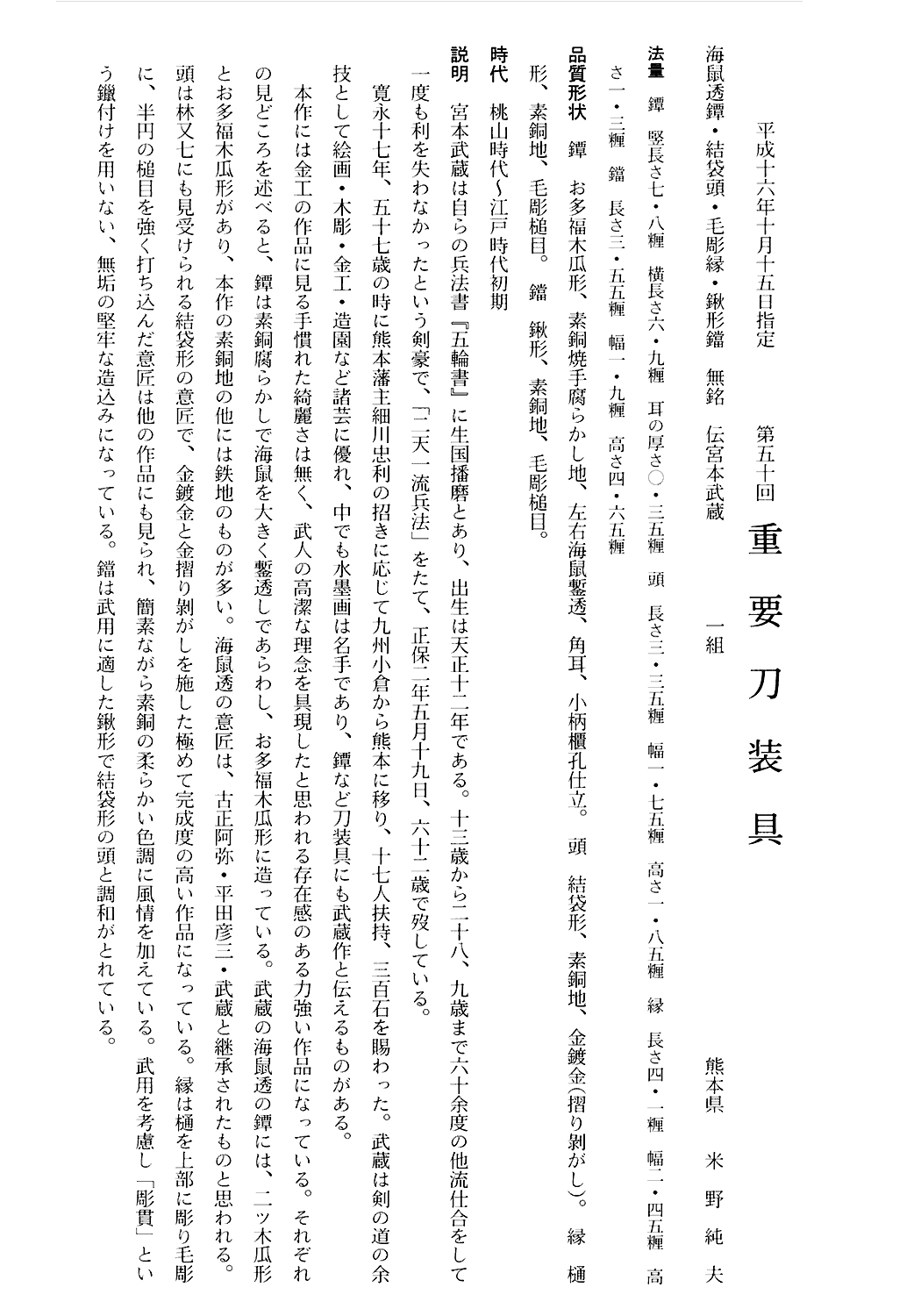
According to his own statement in his book of strategy Gorin no Sho (五輪書), Miyamoto Musashi (宮本武蔵) was born in Harima province in Tenshō twelve (天正, 1584). From the age of nine to about 28, 29, he won about 60 duels with men from various schools of swordsmanship and eventually became a master swordsman himself, establishing his own style under the name Niten-Ichiryū Heihō (二天一流兵法, lit. “the school of the strategy of two heavens as one”). Miyamoto Musashi died on the 19th day of the fifth month Shōhō two (正保, 1645) at the age of 62.
In Kan’ei 17 (寛永, 1640), at the age of 57, he moved upon the invitation of Hosokawa Tadatoshi (細川忠利, 1586–1641), the Daimyō of the Kumamoto fief (熊本藩), from Kokura (小倉) in northern Kyūshū to Kumamoto, where he received a stipend for the support of 17 persons, plus 300 koku of rice. Aside his swordsmanship, Musashi also excelled in painting, woodcarving, Kinkō metalwork, landscaping, and other traditional crafts, and several tsuba and sword fittings have been handed down as being works of his.
This set of fittings does not reflect the sophisticated type we usually see with Kinkō works, but has a presence and is of a power that embodies the noble principles of a warrior. As for the aesthetics of this set, the tsuba is of suaka in an etched yakite-kusarakashi finish, showing to the left and right large chiseled namako-sukashi openings, and forming overall a shape that is referred to as otafuku-mokkōgata. Musashi’s tsuba with namako-sukashi (lit. “sea cucumber openwork”) design come either in this shape, or in a more lobed futatsu-mokkōgata, and are apart from suaka more often made of iron. It is likely, that Musashi continued the namako-sukashi design of Hirata Hikozō (平田彦三), who in turn drew inspiration from Ko-Shōami (古正阿弥) works in this interpretation. The “tied bag” type of kashira is also seen with Hayashi Matashichi (林又七), and with the artificially abraded gilding, the piece reflects a very high degree of artistic perfection. The fuchi shows kebori engravings above of the groove, and the powerfully applied semicircular tsuchime can also be seen on other works of Musashi. Although simple, they add elegance to the soft color tone of the suaka. Because of considerations of practical use, no soldered-on décor was used, just engravings, an approach that is most sturdy and stable and that is referred to as horinuku (彫貫). The kojiri is of the kiwagata type, which is very suitable for practical use as well, and harmonizes very well with the musubi-bukuro shape of the kashira.
Now let’s take a look at the individual pieces that make up this set.
TSUBA


The description of the above image was taken verbatim from WORKS OF HAYASHI AND KAMIYOSHI, written by Itō Mitsuru and translated by Markus Seiko.
CHRONOLOGICAL REFERENCES![]()
FUCHI AND KASHIRA
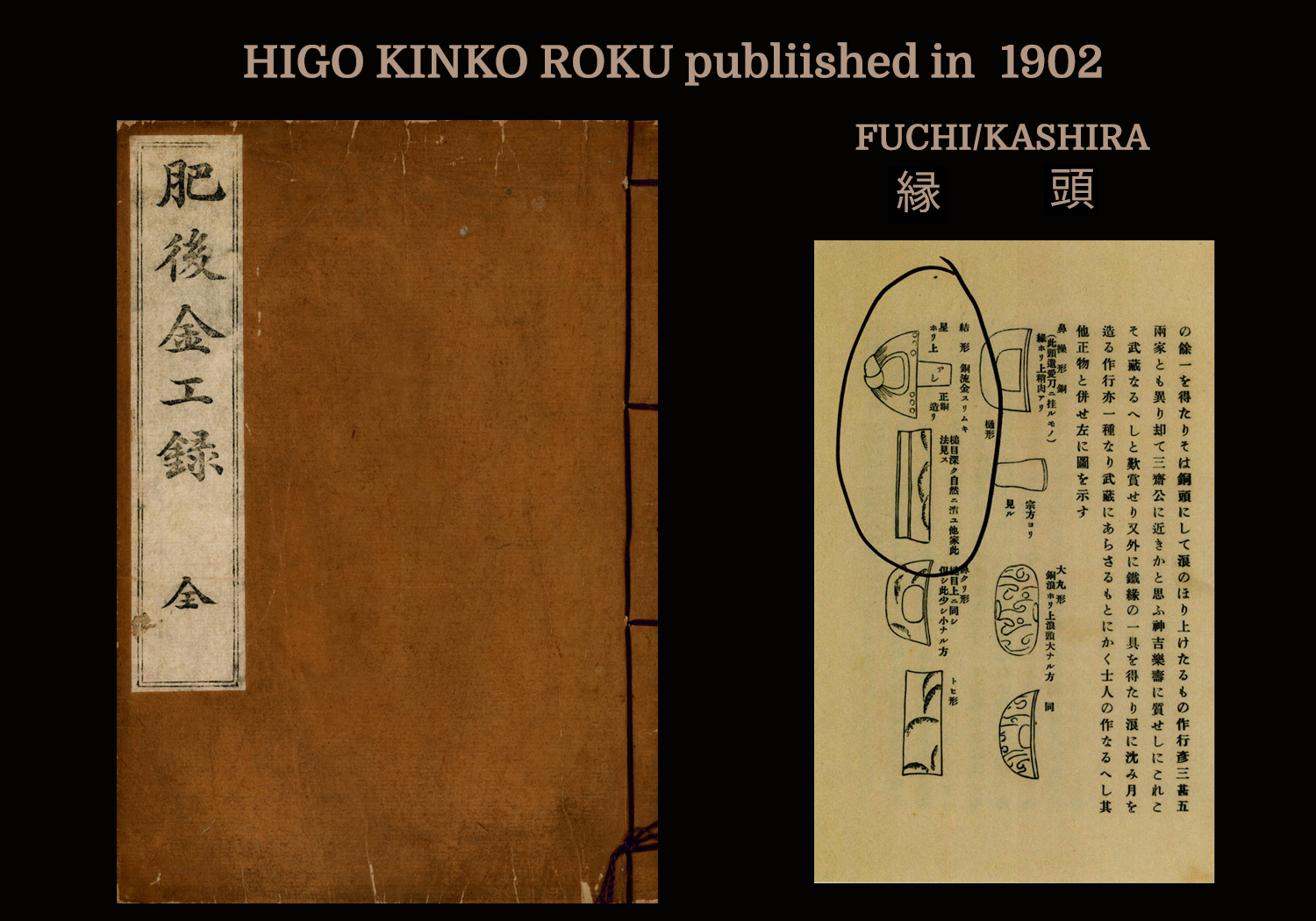
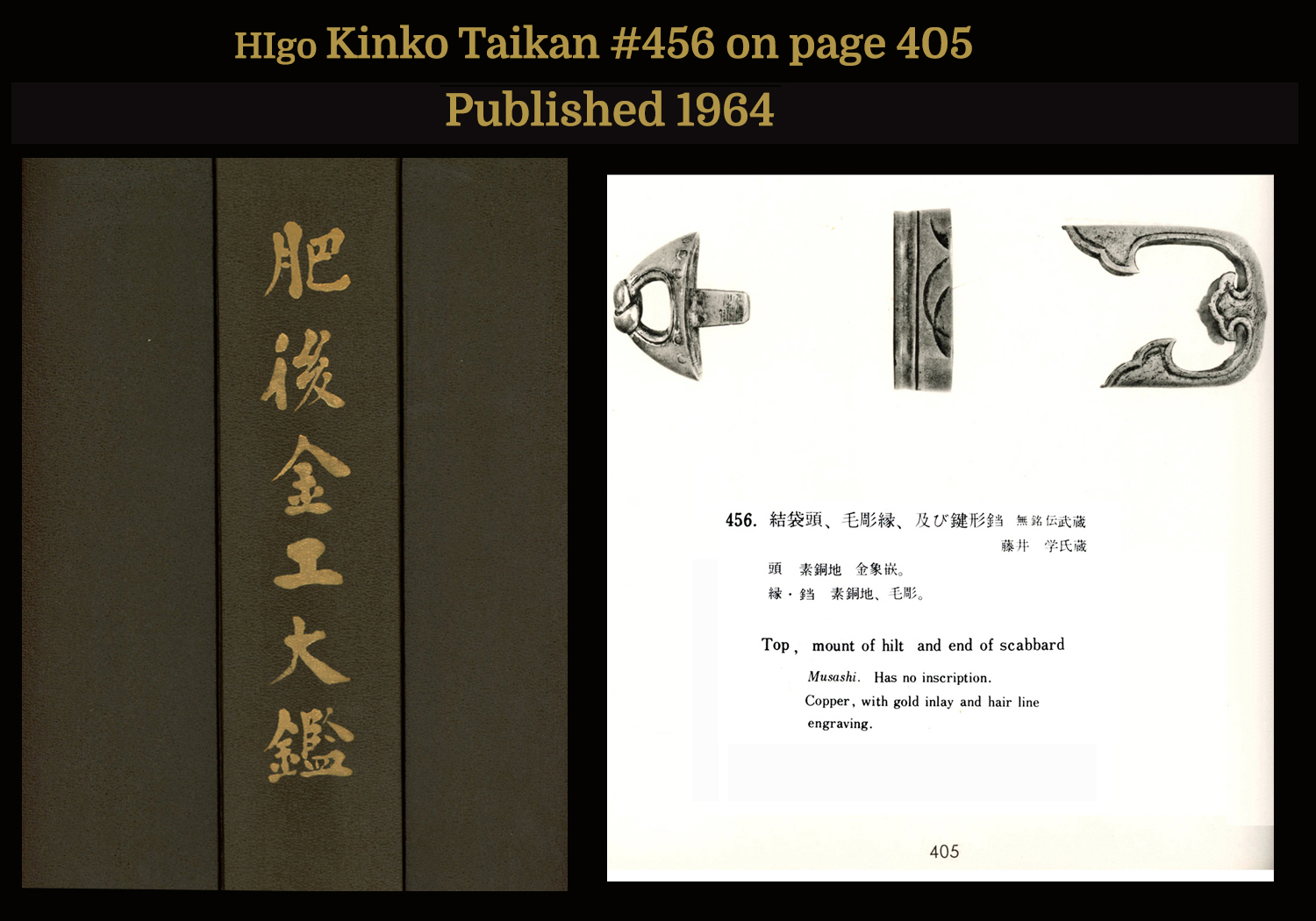
The fuchi with its rather high waist is reminiscent of older fuchi. Of the Muromachi era. The patterns on the surface are either applied by a hammer or a chisel and are strong and tasteful. The kashira is carved from one lump of pure copper. Professional metalworkers make such a complex shape through embossing but Musashi preferred to create it by carving it out of one piece of raw material. Further, the kashira is gilded which is easier to apply than iroe. As noted in the Jūyō setsumei: “The “tied bag” type of kashira is also seen with Hayashi Matashichi (林又七), and with the artificially abraded gilding, the piece reflects a very high degree of artistic perfection.”

CHRONOLOGICAL REFERENCES
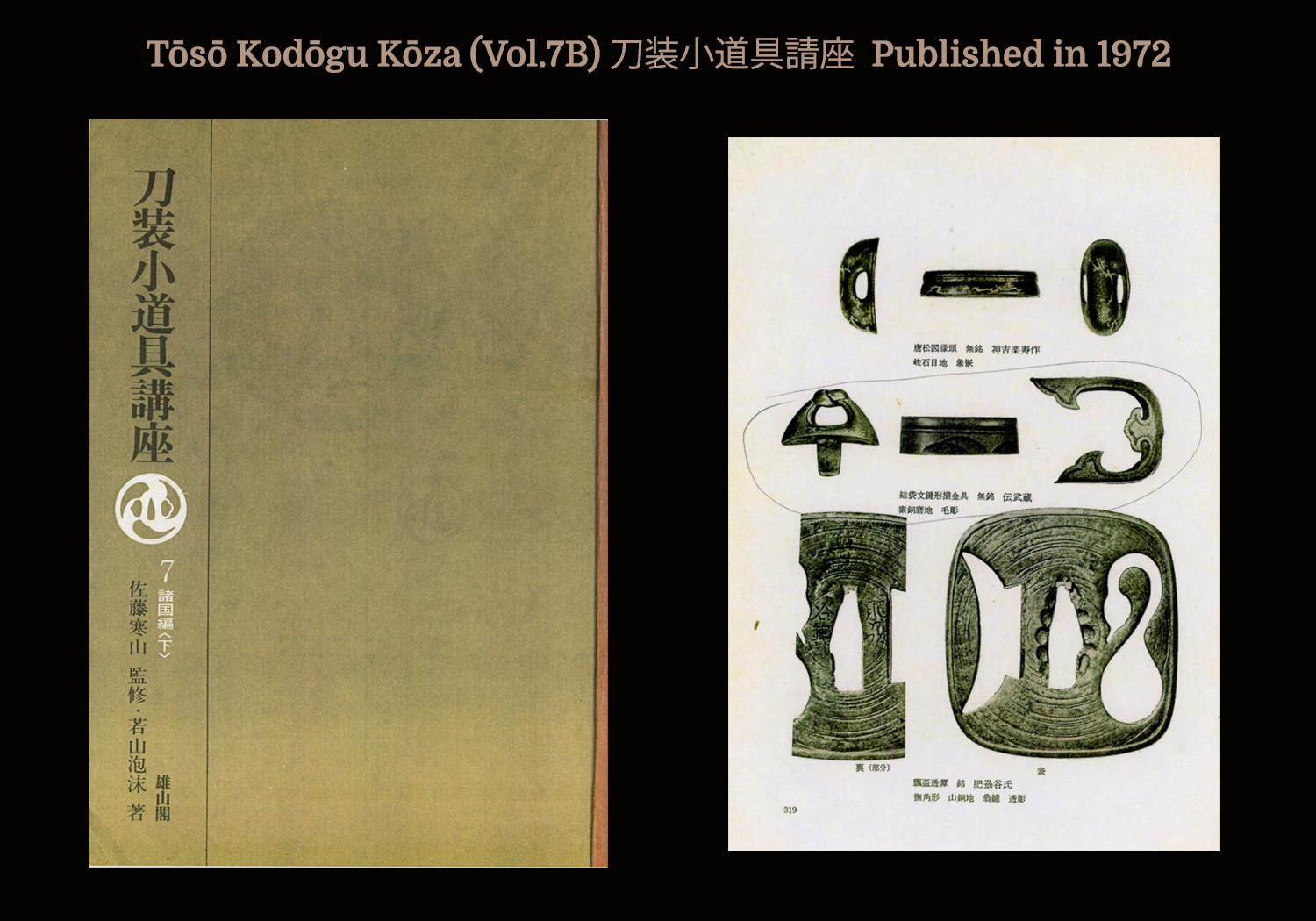
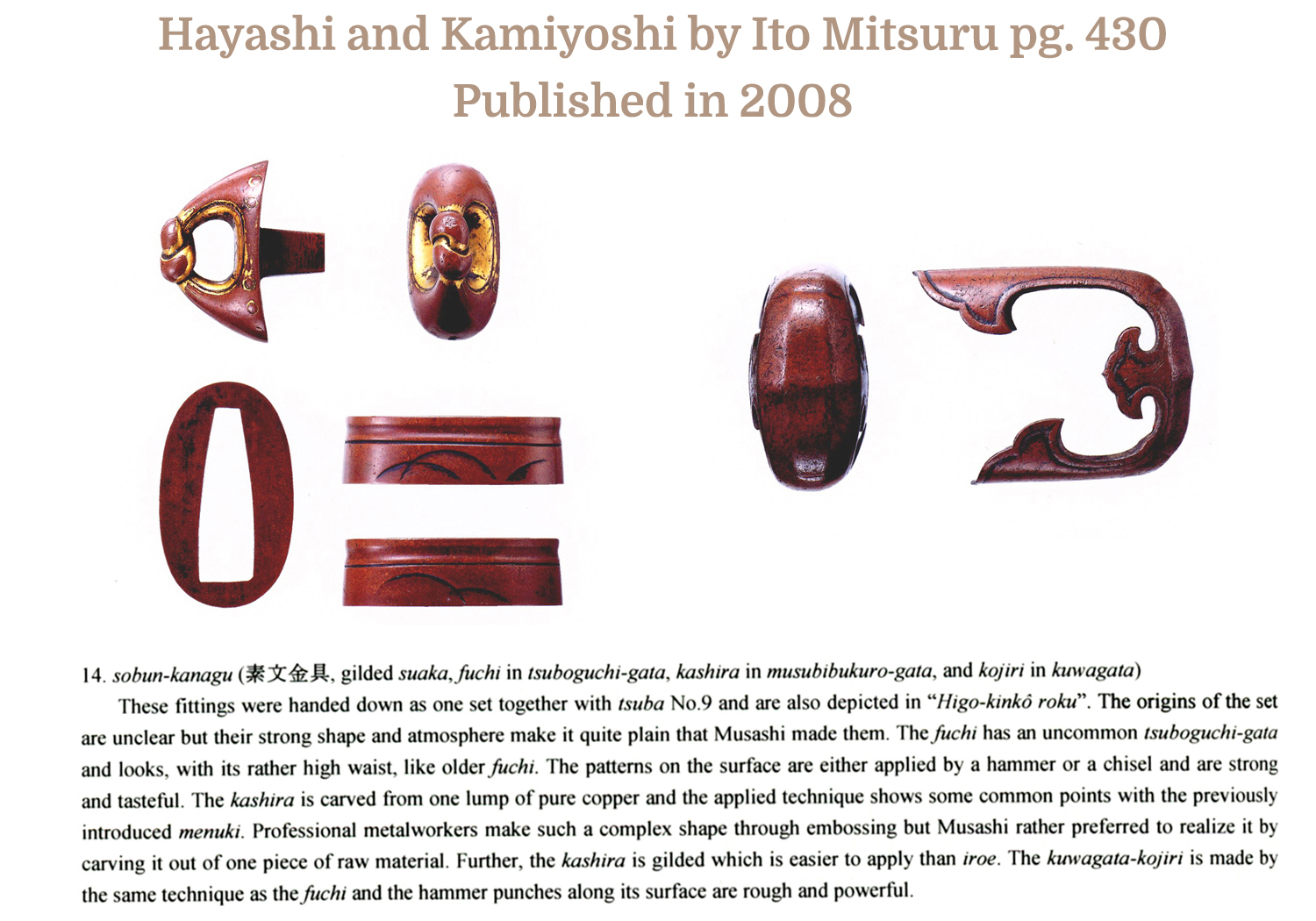
The description of the above image was taken verbatim from WORKS OF HAYASHI AND KAMIYOSHI, written by Itō Mitsuru and translated by Markus Seiko.
KOJIRI
CRONOLOGICAL REFERENCES
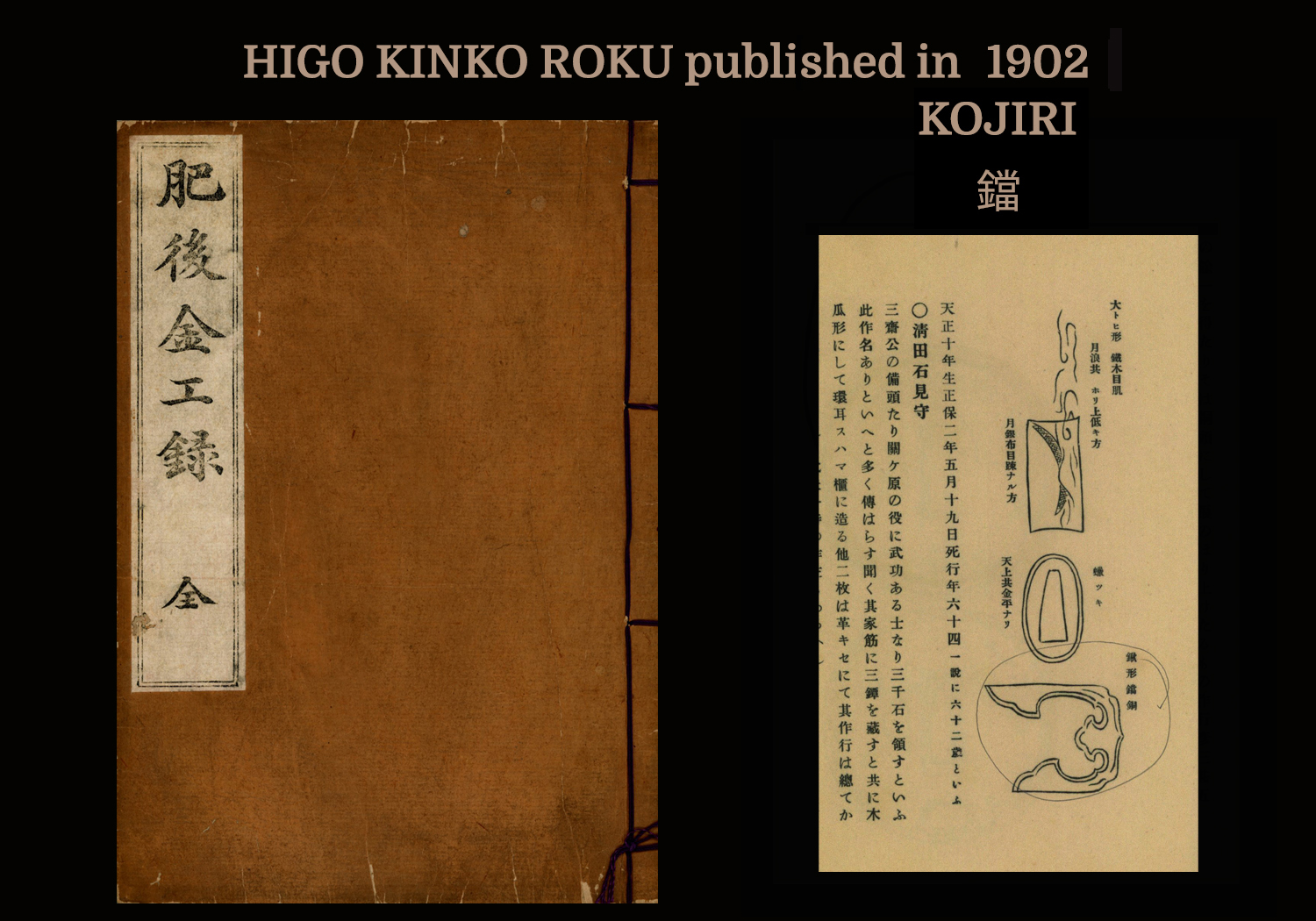
The description of the above image was taken verbatim from WORKS OF HAYASHI AND KAMIYOSHI, written by Itō Mitsuru and translated by Markus Seiko.
NBTHK JŪYŌ CERTIFICATION DOCUMENTS